François Badoux wrote:
Paul,

I had an interesting chat with Tracy Crook last night.  We agreed that, as
far as we both observed, detonation happens always on the same rotor (with
possible exceptions which neither of us had the chance to observe... after
all we are not trying to cumulate detonation events too much...).  This
rotor is the rear rotor for Tracy, the front rotor for us, but it IS the
SAME rotor as our engine is turned 180° from his!

A.      Do you know if it's a generally observed trend?

B.      Has anybody found out the reason for this seemingly strange
behaviour?
        We experimentally ruled out a number of theories.  Tracy and I agree
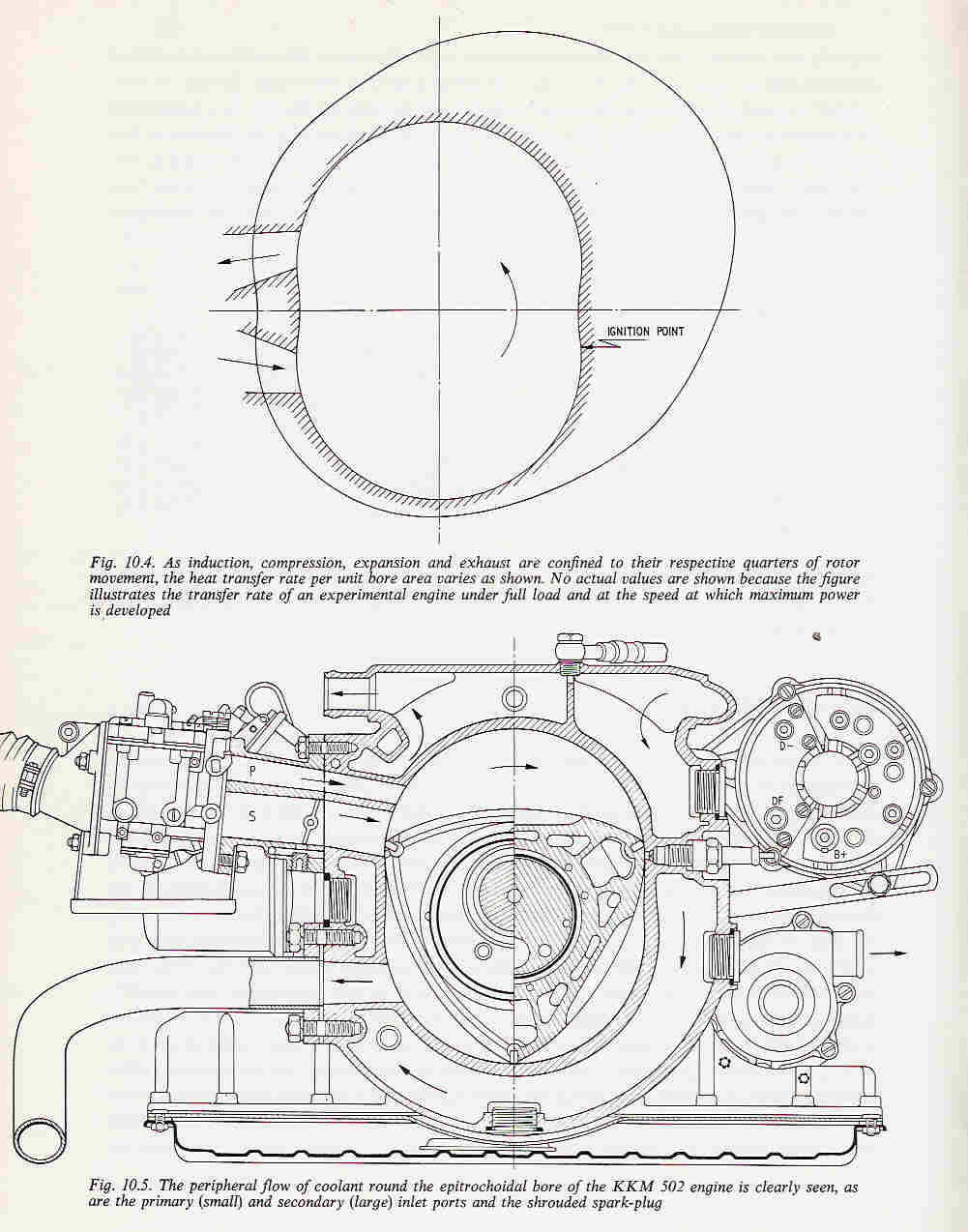
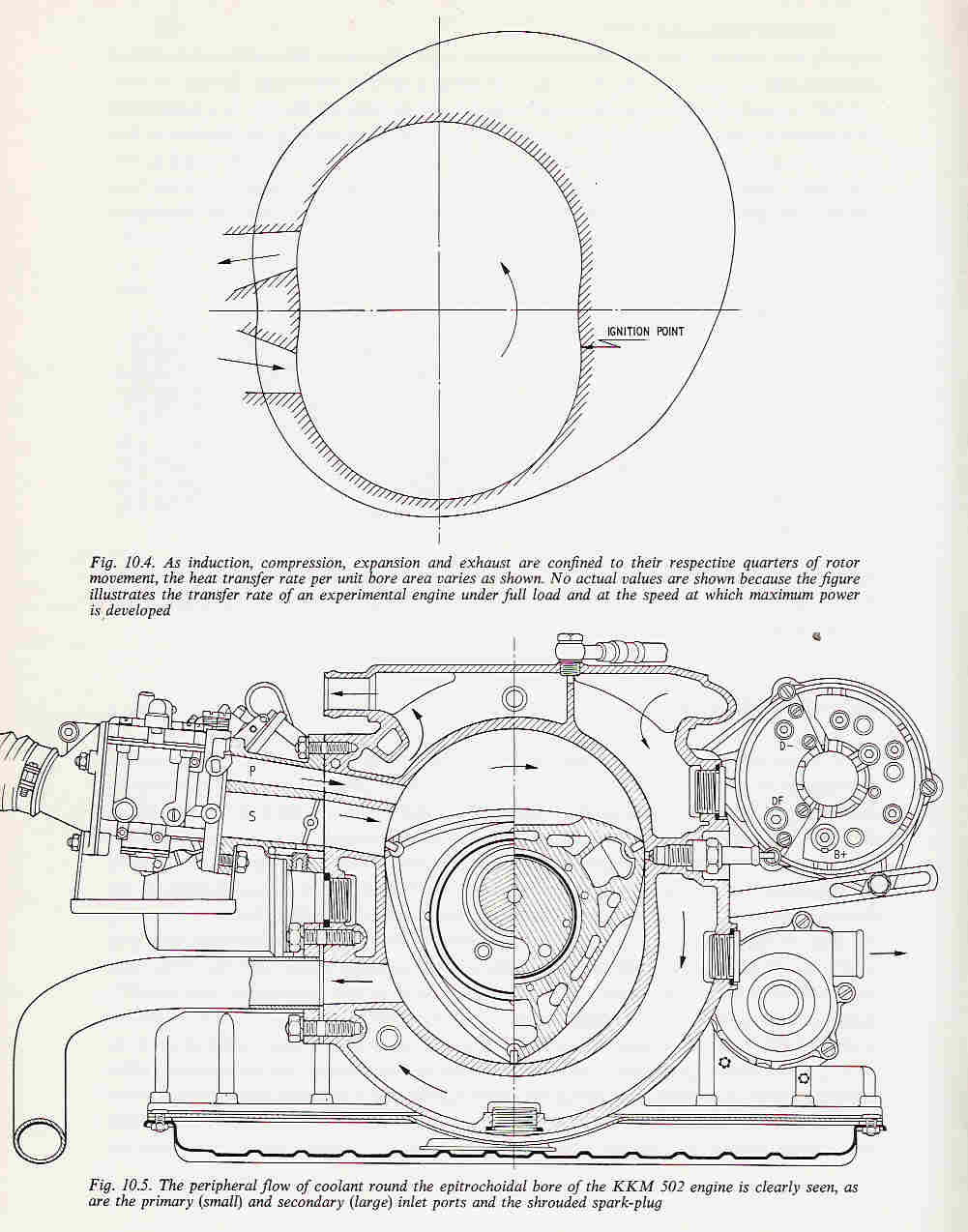
that it could be that the affected rotor's chamber is less well cooled as
the coolant flow hits it AFTER it has cooled the other rotor's chamber.  But
it's a tough nut to crack.  Has anyone done it as far as you and others
know?

C.  Has anyone found the solution?  (that's the really important question!)

Thanks for any info you might have.

Francois
I think your engine is turned the same way Tracy Crook's engine is turned.
Perhaps he is talking car and you are talking airplane.

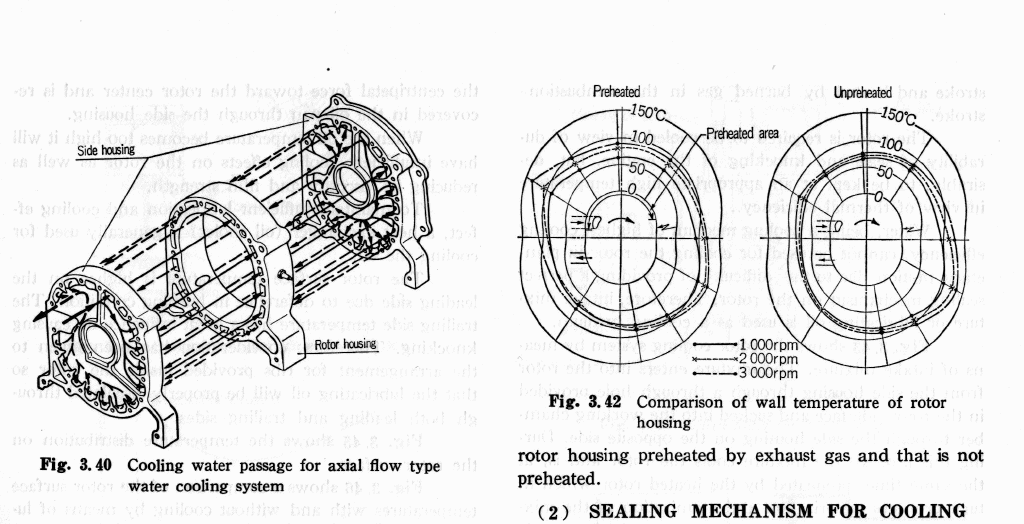
The rear rotor in the car runs hotter for one simple reasons. It is an axial flow
cooling system. Cool water comes in from the front of the car and gains
heat before it attempts to cool the rear rotor. Delta T is everything when it
comes to heat transfer. It is a well known fact that the
rear rotor (car) always detonates before the front rotor for this simple reason.

Every liquid cooled air craft engine in the world from day one used a parallel cooling
system where  all cylinders or rotors get the same temp coolant.
Only car engines use the axial flow cooling system. Curtiss Wright built most of
their heavy duty rotaries with parallel cooling systems. When Orenda converted
the Chevy V8 to an aircraft engine they converted the cooling system to parallel.

NSU and Mercedes used only parallel cooling system in their rotary engines.
Most recently Continental used parallel flow cooling in the Voyager series
of liquid cooled horizontal opposed aircraft engines.

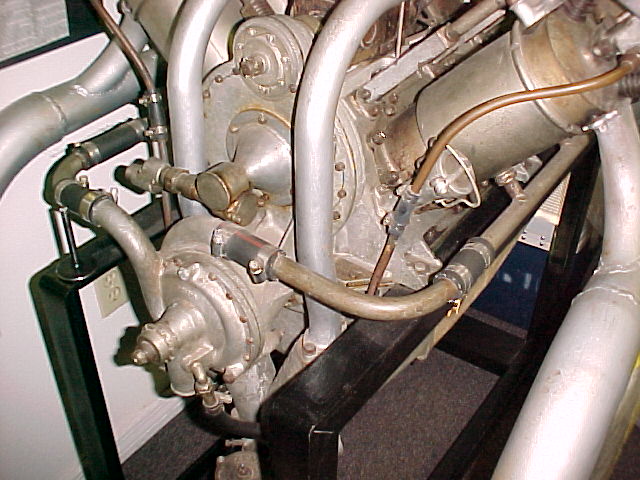
Here is a shot of an OX5 parallel cooling system.

Everett Hatch used a parallel system in his light weight engine with the
aluminum end housings. He introduced cool water into the center housing
on the hot side and removed it from the center housing on the cool side.
Only possible with a custom center housing.

You can thank Max Bentele for this screw up on the Mazda :)

Paul Lamar

The Rotary Engine NewsLetter.  Powered by Linux.
ACRE NL web site. http://home.earthlink.net/~rotaryeng/
Copyright 1998-2004 All world wide rights reserved.