Alan Tolle wrote:
Jerry

As has been noted, the adequacy of a 2000 rpm idle depends on the propeller
and gear box being used.  Powersport's first gear reduction which I flew
had a  ratio of 2.17 to 1 which necessitated an idle well below 2000 rpm.
For speed we also ran a very high pitch propeller (72 inch diameter with
106 inch pitch) which, as I noted before, demanded a very low rpm engine
idle if I ever expected to land the airplane.  I would agree that with a
gear ratio of 2.86 to 1 the 2000 rpm idle might well be ok if the prop
pitch was flat enough.

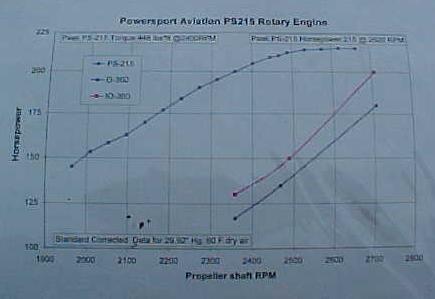
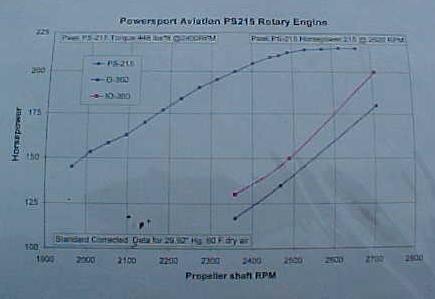
The 13B engine we started with was good for 160  horsepower, so said Mazda
and our dyno.  We ended up with 215 hp which I think is a gain of 55 hp.
Hardly insignificant and well worth the effort.   While a two rotor version
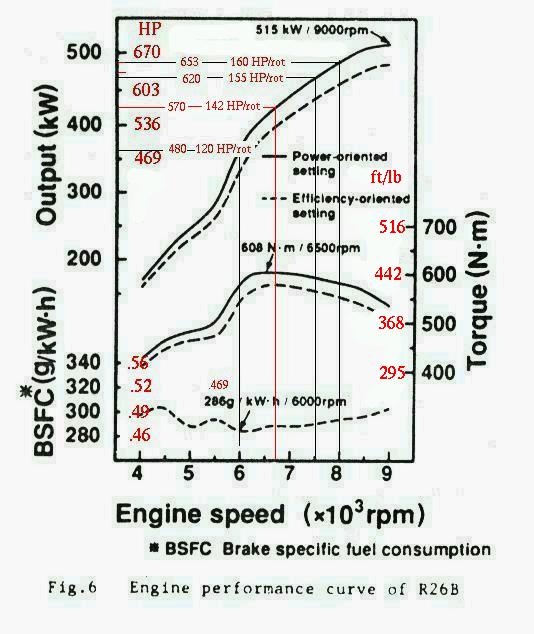
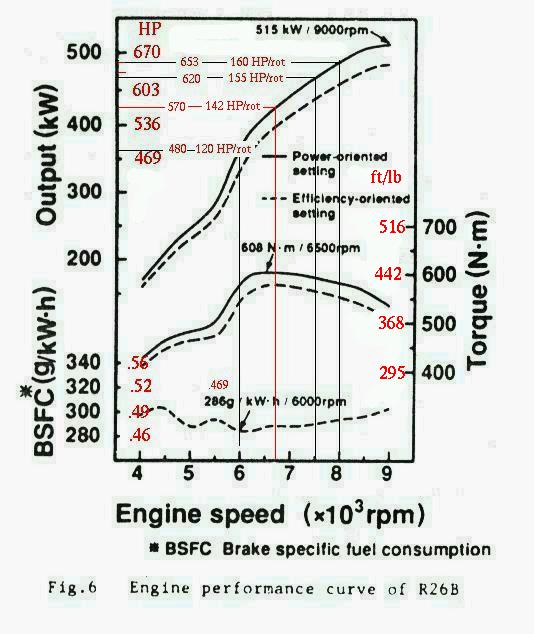
of the Le Mans engine might produce 240 hp (no one really knows that for
sure because that number is an extrapolation) remember that the Le Mans
engine cost millions and millions of dollars and had a lot of tricks which
we aircraft rotary engine enthusiasts will never have the engineering
and/or the financial resources to duplicate.   It was a mechanical marvel,
much to be admired, and fun to talk about, but impossible to emulate.

I should note that Everett Hatch took the lead from Mazda when he set the
diameter of the peripheral intake ports at 1.5 inches.  The apex seal rides
across an exhaust port opening in the trochoid housing that is 1.5 inches
across.  It seemed reasonable that if Mazda thought that the 1.5 inch
unsupported  apex seal length was correct for the exhaust, it should also
be correct for the intake.  We never lost an apex seal.

Jerry, if your engine idle proves to be unsatisfactory, at least through
this discussion you have some idea as to a possible solution to the
problem.  ,

Alan Tolle
I disagree Allan. The only trick the Le Mans engine had that would affect the power
and the BSFC was it had three spark plugs per rotor. This resulted in less than
a 3% improvement in power. The 1 1/2 inch pipes are too small as your engine
started to lose breathing (HP curve flattens) at 2500 prop RPM or 6000 engine RPM
with a 2.4:1 gear ratio. The Le Mans engine HP curve is still rising rapidly at
6000 engine RPM. 1 1/2 inch pipes are commonly used on side port
engines to feed the primary ports. Side port engine have two additional pipes
for the secondary ports of about 1 3/4 inch in diameter. Therefore total area is much
greater. The reason your engine developed 215 HP after the new Power Sport
added the bell mouths was the inherently better breathing of P-ports. A bridge
port engine or a radically ported six port will approach 215 HP at 6000 RPM.

No mechanical fuel injection that I know of can achieve the flexibility of
a look up table electronic fuel injection. The mixture can be set precisely
in milli seconds for any combination of RPM, intake air temp and intake
manifold vacuum over a wide range of full lean to full rich. When done right
flat spots and stumbles are completely eliminated. Also idle is greatly
improved using staged electronic injectors.

Top speed fixed pitch props always stall on takeoff and don't begin to bite until well
into the takeoff roll or even after actual take off. The saving grace is the power
to weight ratio of most experimental aircraft is so high it does not matter. Yes you
can tune the engine for more HP at prop stall but you sacrifice power at
the top end where it is really needed for top speed. One can also use a variable
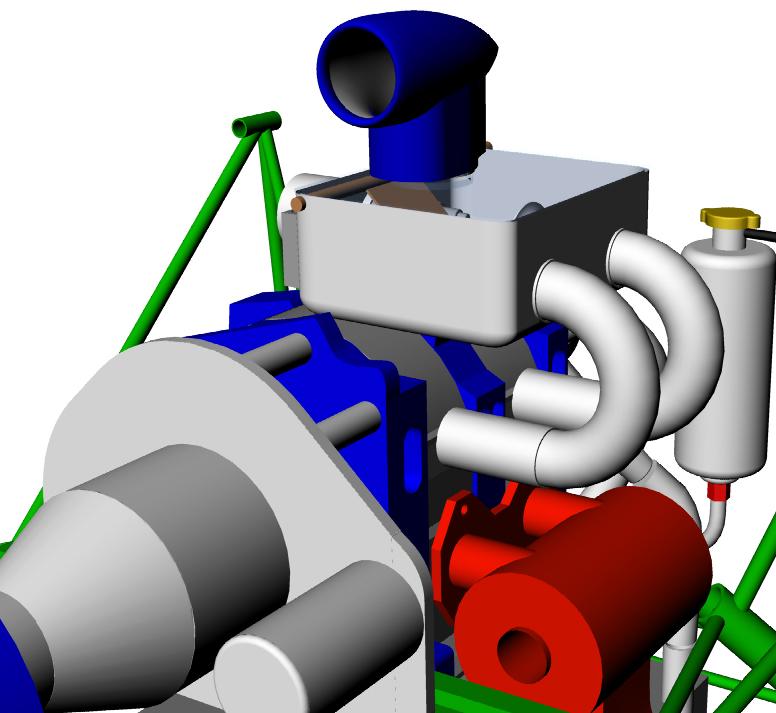
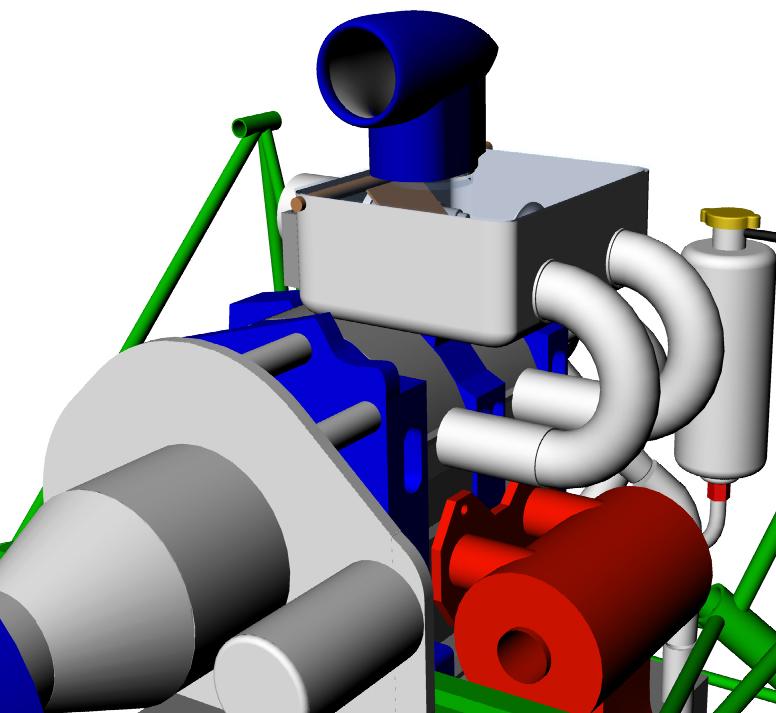
length tuned intake manifold and I have recently uploaded several designs for such
an animal. Just a few inches in and out of this Trombone intake manifold
can make a large change in the RPM where the HP is maximized. It can also be used
to optimize the BSFC at cruise RPM.  I am sure you know all this and I am preaching
to the choir. However we have a lot of new people on here that need to hear it.

Paul Lamar


The Rotary Engine NewsLetter.  Powered by Linux.
ACRE NL web site. http://home.earthlink.net/~rotaryeng/
Copyright 1998-2004 All world wide rights reserved.