Letter to the editor. Pilot@AOPA.org

Dear Sir or Madam,

Alton K. Marsh trashed the Mistral Wankel rotary in his Jan. 2005 AOPA Pilot
magazine article called Eagle Works on page 83.
The article was about the Embry Riddle skunk works known
as Eagle Works. Several paragraphs were devoted to the
development work on Mistral's Turbo Piper Arrow powered by
a Mistral turbo 13B Wankel rotary.

Alton'd lack of real knowledge on the rotary is indicated by some
of his comments.

Quote: "pulsed rotary engine"

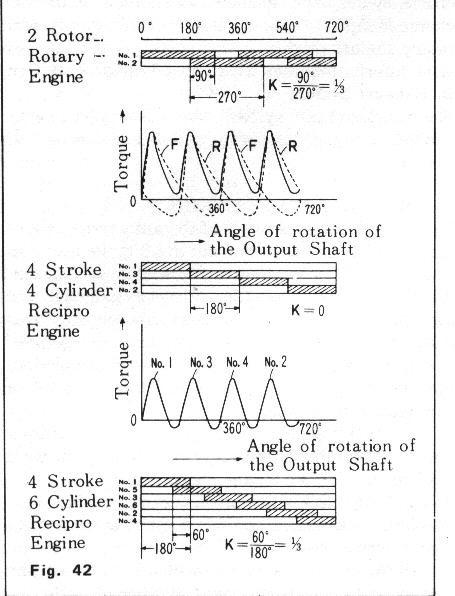
The Wankel is no more "pulsed" than any other four cylinder four cycle
intermittent internal combustion engine. In fact it is less "pulsed" than
a Lycoming or Continental engine as both have negative torque pulses between
positive torque pulses. The two rotor Wankel has no negative torque pulses
at all. See the attached chart. For this reason the engine is far smoother
than any four cylinder piston engine.

Quote: "one-pulse per-rotation engine"

It "pulses" two times per rotation and not once. The same number of times
a four cylinder four cycle piston engine "pulses".

Quote: "Aside from aviation companies, General Motors explored the engine's
potential. So did John Deere. All have left it on the shelf until now."

Just because these companies stumbled when attempting to develop and market
a viable Wankel engine does not mean there is anything wrong with the concept. Mazda
recognized the kinematics and structural advantages of the Wankel rotary early on
and perfected it. The latest version of the Wankel engine in the Mazda RX8
achieves 25 MPG at a steady 70 MPH and generates 240 HP while weighing less than
200 pounds. Mazda recently set 40 endurance records at over 130 MPH average
for 24 hours using the stock RX8 car. Mazda was the only Japanese company
to win the Le Mans 24 hour endurance race. They did it in 1991 with a four rotor
700 HP version of the 13B.

Unlike a finicky and fragile  air cooled aircraft piston engine the Wankel rotary
is extremely robust and durable with an overhaul time and power to weight ratio
comparably with a turbine engine while burning far less fuel for a given HP.
It is also far less costly with no high temperature moving parts except for
the turbo charged version.

Mazda rotary engines have been successfully  used in dozens of experimental
aircraft starting in 1973 with thousands of accumulated hours in the air.
Tracy Crook in his Mazda 13B powered RV4 has exceeded 200 MPH in the last
two  Sun 100 cross country air races. We expect a 13B powered airplane
to exceed 220 MPH in the upcoming annual race.

Sincerely,

Paul Lamar

The Rotary Engine NewsLetter.  Powered by Linux.
ACRE NL web site. http://home.earthlink.net/~rotaryeng/
Copyright 1998-2004 All world wide rights reserved.