Paul wrote:

Hi, fellow rotary enthusiasts....I flew my rotary powered SQ2000 canard
again today. With the smaller prop and my previous mixture adjustments
(enrichening), the engine is producing 5300 rpm static,
and is running very smoothly.  Takeoff roll was short, and climbout was
at 120 knots. Outside air temperature was 70 degrees F.  Now that I am
producing more power, I am producing more heat. I
climbed to 3000 feet AGL, and the water temp got up to 192 degrees in the
climb. Oil went up to 185.
These temps were higher than previously
encountered. The only solution I can come up with is
that the higher rpm's are producing more power/heat.  Fortunately the
temps came back down to 180 water and 175 oil once I leveled off.  I was
able to throttle back and just fly around and enjoy the
fruits of my labor for a while. I need to slowly increase my cruise
speeds and check for flutter (increasing 5 knots at a time), and do some
canard stall testing, but today I decided the heck with
testing and just relax and enjoy the flight.  Temps on descent came down
to around 160 and 155, but of course it wasn't much of a descent (3000
feet down to 1000 feet traffic pattern altitude).  The
aircraft is easier to slow down on final now that I can idle at 800
engine rpm's (365 prop rpm's with the 2.19:1 Ross).
I have received my
street ported 4-port engine parts, and I will soon be
putting this together with NA rotors and housings, and then I will swap
engines and probably be able to put the larger prop back on.  Keep
building guys....it's all worth it.  Paul Conner, 13b
powered SQ2000 canard in Mobile, AL
Got any pics of your rad ducting Paul? What was the climb out RPM Paul?
New prop size and pitch?

Paul Lamar
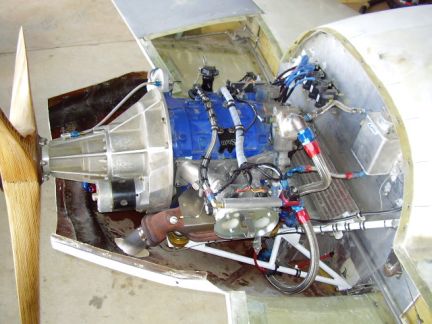
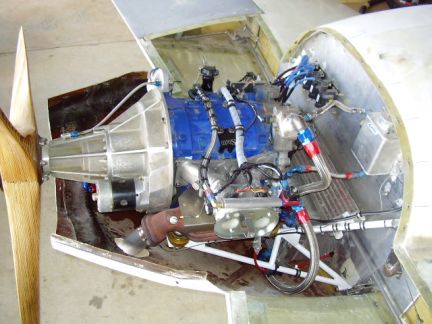
Hi, Paul....I need to take some up-to-date pictures of my radiator and oil
cooler.  Here are a couple of older pictures. Picture labeled number 006
shows the oil cooler mounted on top of the radiator. The radiator is
parallel to the firewall, with the oil cooler sitting on top of it at an
approximate 45 degree angle. I made two aluminum sides to make the plenum,
which attach to the firewall and extend to meet up with the vertical
radiator.  I need to seal the joints with some silicone or ?  The bottom
of the radiator is about 3/8" above the cowling, and that space also needs
to be filled, probably with some weatherstripping.
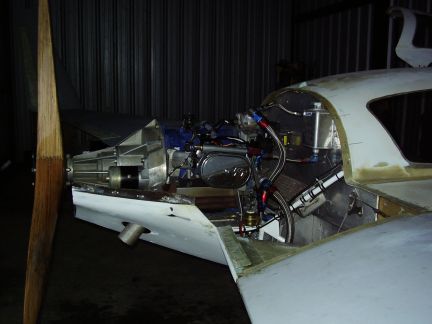
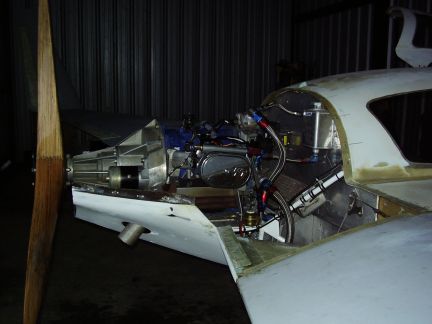
The second picture,
labeled sm3 is a better view of the angle that the oil cooler is mounted
at, and also you can see the aluminum plenum sides underneath the oil
cooler that extend from the firewall to the radiator.  The plenum sides
are an extension of the NACA duct sidewalls, or an attempt to extend the
NACA sidewalls all the way to the radiator, which is approximately 8
inches.  I'm assuming I can achieve better cooling efficiency once I seal
all the joints/gaps in the plenum.  So far, I am pleased with the results.
I no longer stare at the temp gages while flying. I now let the voice
activated engine monitor do it's job and alert me if either the water or
oil temps reach 200.
So far, I have heard nothing from the engine monitor
except one time while doing mixture adjustments on the ground at full
throttle, I was alerted to high water temperature. I shut it down at 210
degrees. let it cool off with a fan blowing up the NACA duct then resumed
adjustments. Unfortunately, I can't take any credit for the design of this
plenum... I shamelessly copied Al Wick's Subaru installation in his Cozy
MkIV.   I will take better photos next time I am at the airport.  Paul
Conner, rotary powered SQ2000 in Mobile, AL
Too hard to tell anything from these pictures.

Paul Lamar

The Rotary Engine NewsLetter.  Powered by Linux.
ACRE NL web site. http://home.earthlink.net/~rotaryeng/
Copyright 1998-2004 All world wide rights reserved.