Paul Lamar wrote:
Thanks Russell. I am still dumb founded on why we are getting
130,000 RPM with a exhaust velocity of only 420 feet per second.
Perhaps P1 = P2 = atmospheric is a false statement.

Russell Kent
It is but it does not account for the fact that I forgot to take
the 432 feet per second exhaust gas velocity and correct for the
reduction in turbo charger scroll area. Vance got it all right.
Thanks again Vance.

986 feet per second in the scroll will easily account for
the 130,000 RPM of the turbine measured by Francois.

It is like a zillion tiny bullets going near the speed of sound (in air)
impacting those poor little turbine blades. Now the question is; what
is the efficiency of the turbine converting all that kinetic
energy into rotating energy? If you combine the kinetic energy
and the heat energy in the exhaust you get roughly 50% of the total
energy in the gallon of gas burned. Therein lies the problem with
all internal combustion engines.

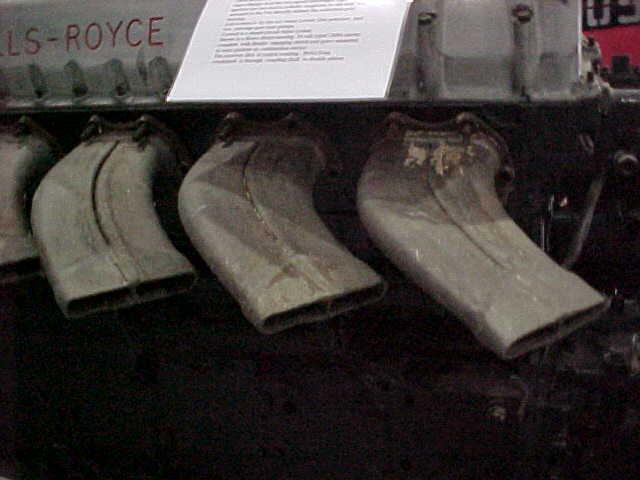
BTW Back in WW II the P51 RR Merlin engine generated the equivalent
of several hundred HP (as I recall) at top speed by merely squirting the
exhaust gas rearwards. The forward speed of the aircraft was in the
590 FPS ball park and the exhaust gas velocity being some what
higher due to the fishtail exhaust stacks used. The thrust was
small but the speed was high so the HP was substantial.
HP is of course thrust times speed.

I know you know all this. This is mostly for the new guys.

Paul Lamar

The Rotary Engine NewsLetter.  Powered by Linux.
ACRE NL web site. http://home.earthlink.net/~rotaryeng/
Copyright 1998-2004 All world wide rights reserved.