Hurant Karibian wrote:

I belive I said this before. In the navy flight engineer school we were told
the R3350 turbo compund produced no more exhaust back pressure as the space
between the turbine blades equaled the area
of what would be a normal exhaust system for that engine.
Thanks Hurant,

I didn't know that.

Say Paul what do you estimate the HP to be on the first jet turbine on the
charts?

Doug in Japan.
The HP of jets depends on how fast they are going.
19.8 pounds of thrust at 400 feet per second (270 MPH) = 7920 pound feet per second
or 14.4 HP. What is more interesting is the mass flow at .55 pounds per second
which is just about the mass flow of an RX8 engine at 3000 RPM and 40% volumetric
efficiency. In other words this tiny turbine is just about right for a car
turbo compound. The large one is almost right for an 13B aircraft turbo compound.

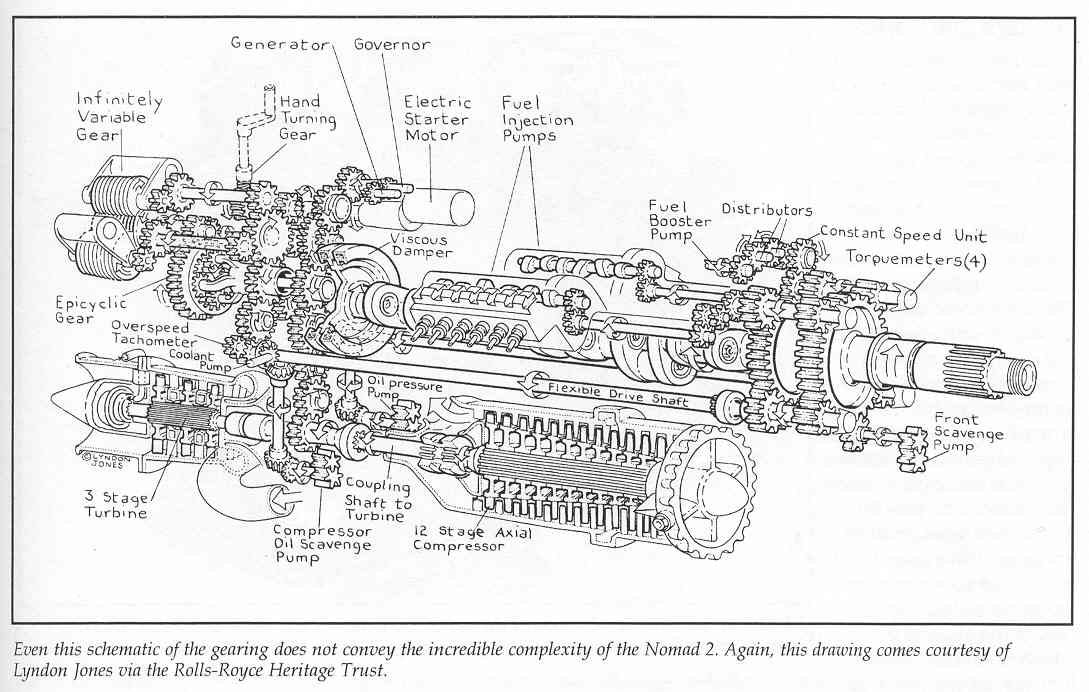
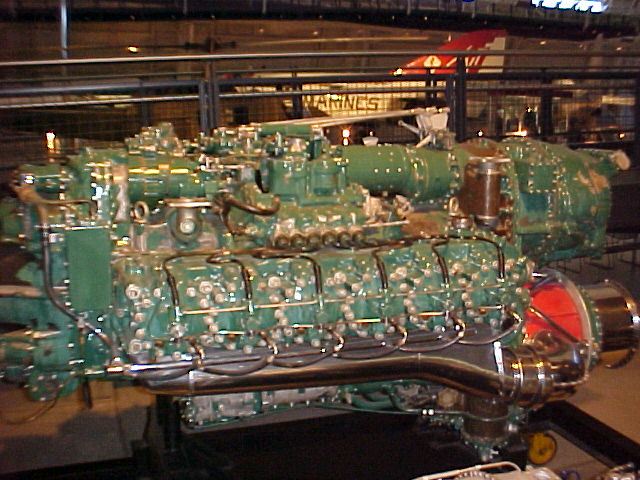
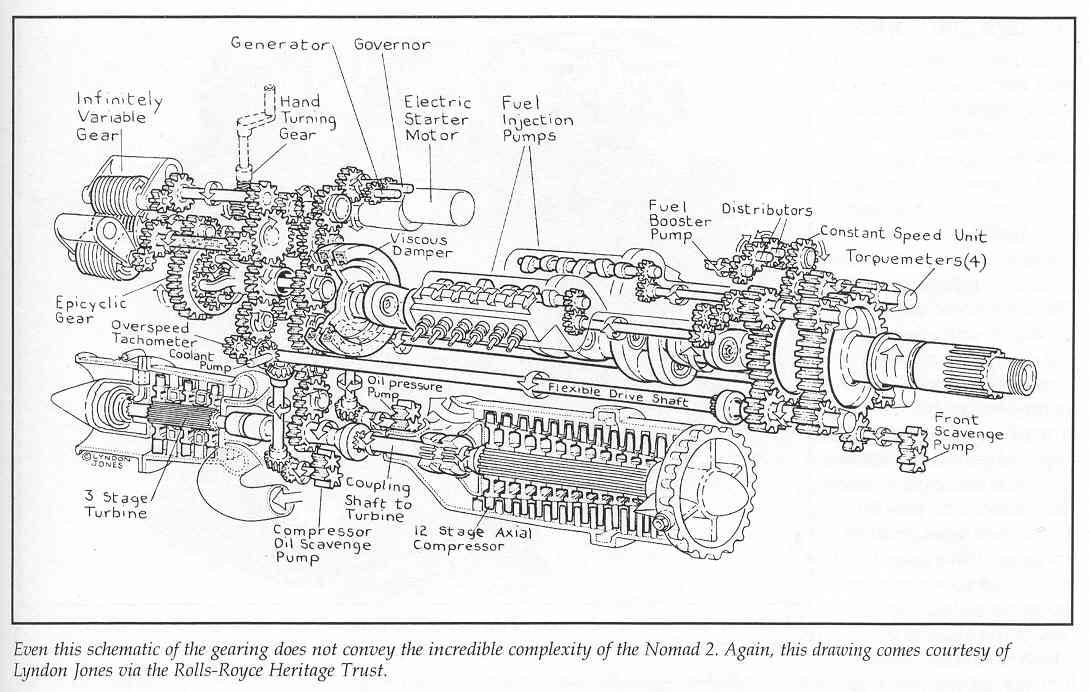
BTW using an axial flow compressor and turbine is nothing new for an aircraft
turbo compound engine. Here is a picture of the Napier Nomad turbo compound
two stroke diesel engine. Probably the most efficient internal combustion engines
ever built (not counting combined cycle engines). Perhaps half a century ahead
of its time :) The picture was taken in the Smithsonian at Dulles.
The scans are from H. Smith "A History of Aircraft Piston Engines".

Paul Lamar

The Rotary Engine NewsLetter.  Powered by Linux.
ACRE NL web site. http://home.earthlink.net/~rotaryeng/
Copyright 1998-2004 All world wide rights reserved.