Matt Prather wrote:
Let me ask this differently...  At low IAS, is more thrust going to be
available from accelerating a large volume of air a little bit (from
converting exhaust gas energy into propellor thrust), or by accelerating
a small volume of air a lot (directly, but efficiently ejecting the exhaust
gas stream)?  Somewhere I think I have read that this effect is why
turbojets don't work very well at low speeds.

Being an EE, I see this as analgous to impedance matching..

Regards,

Matt-
Matt Prather wrote:
Would it be safe to say that if you are building an airplane that will
spend most
of its life at low altitude, with high indicated airspeeds, don't
turbo compound,
but do try to take advantage of exhaust thrust power?  If however, you
are building a long distance, high altitude, low IAS airplane, tc is
the way to go?

Matt-
Turbo compound all depends on how much fuel money and extra range is
worth to you.

Exhaust gas thrust on the other hand is free.

Paul Lamar
Matt Prather wrote:
Let me ask this differently...  At low IAS, is more thrust going to be
available from accelerating a large volume of air a little bit (from
converting exhaust gas energy into propellor thrust), or by accelerating
a small volume of air a lot (directly, but efficiently ejecting the exhaust
gas stream)?  Somewhere I think I have read that this effect is why
turbojets don't work very well at low speeds.

Being an EE, I see this as analgous to impedance matching..

Regards,

Matt-
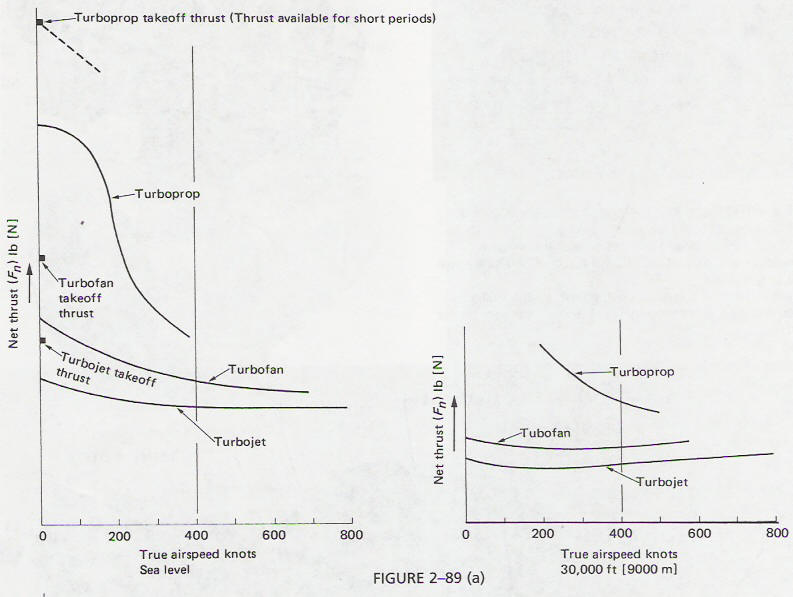
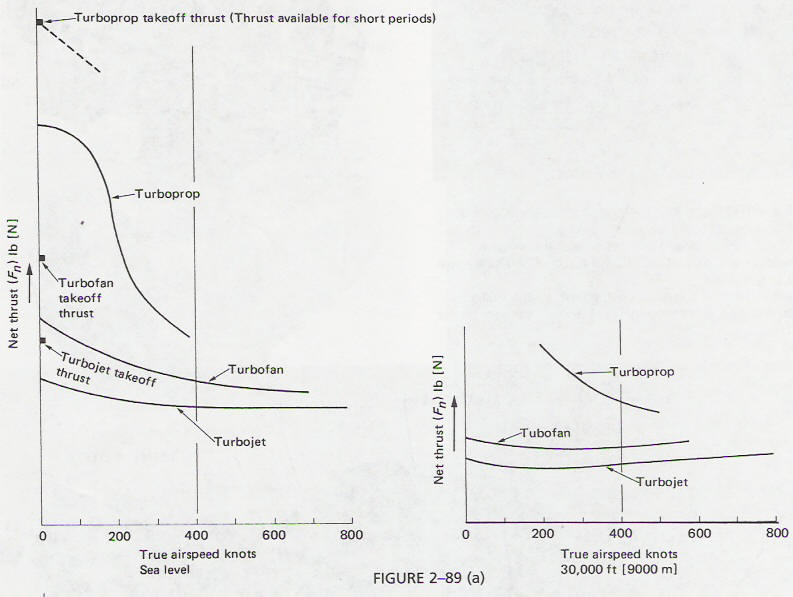
That is true Matt. The faster you go the more effective direct exhaust thrust becomes because
thrust is more or less constant. HP is thrust (pounds) times velocity (FPS) divided by
550. If you take the same thrust and feed it into a high speed turbine it becomes
a lot of HP regardless of how fast the airplane is going. You then feed it into
a large diameter efficient propellor and get a lot more thrust. Large volume
of air accelerated a little bit. A helicopter is a prime example.

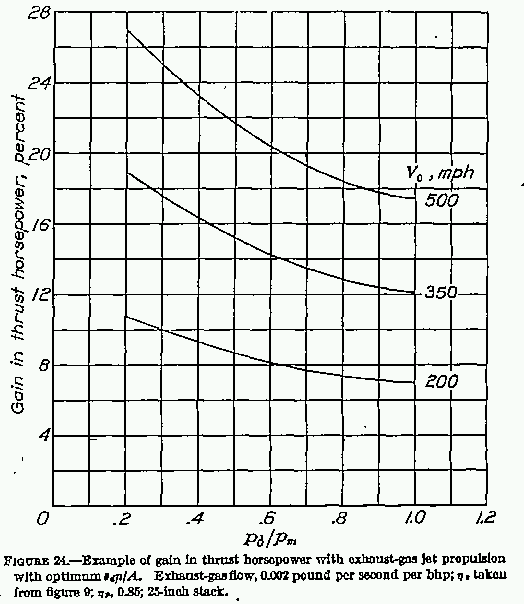
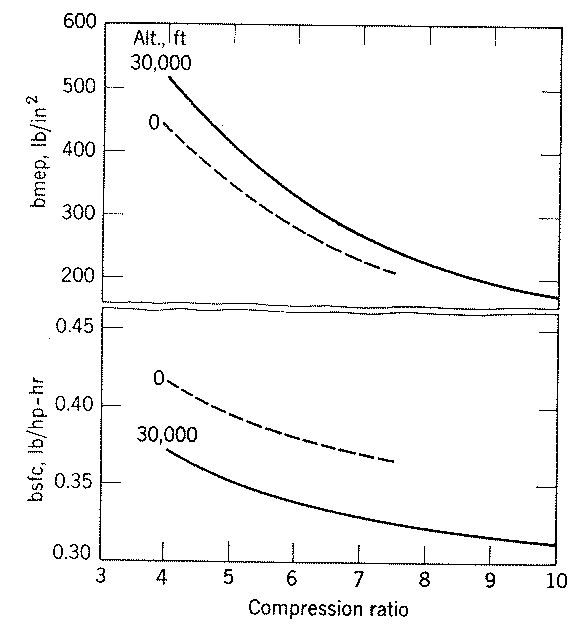
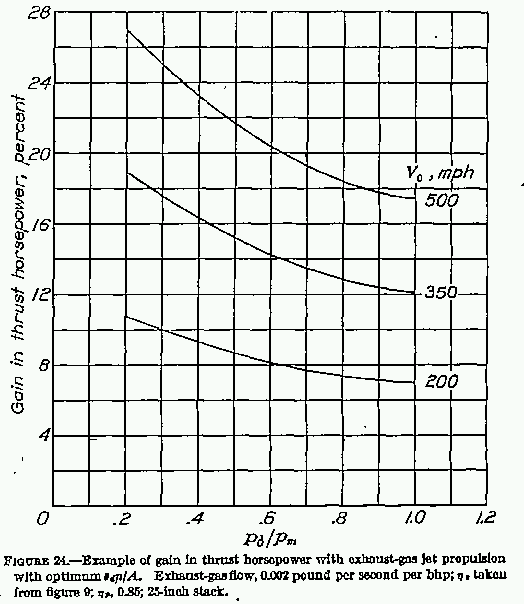
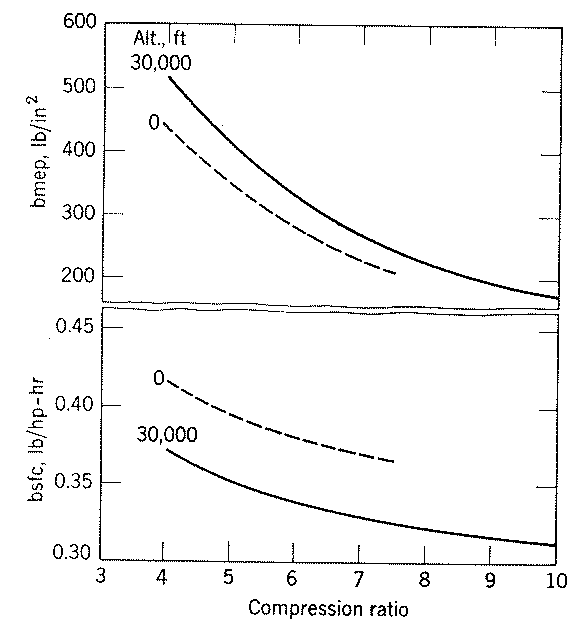
Looking back at these graphs the R3350 TC in the Connie at about 250 MPH
got 20% more HP or BSFC  at altitude while the P51 got about the same 20%
HP increase at about 375 MPH just using  the thrust directly. What the
Connie pilot chooses to do is back off on the HP and derive the benefit in
lower fuel consumption. You don't have that option with direct exhaust gas
thrust. If you back off on the HP the speed drops and so too the thrust
greatly.

You need to run the numbers in both cases to see the cross over. This
situation is also intrinsic on why a pure jet becomes better HP wise
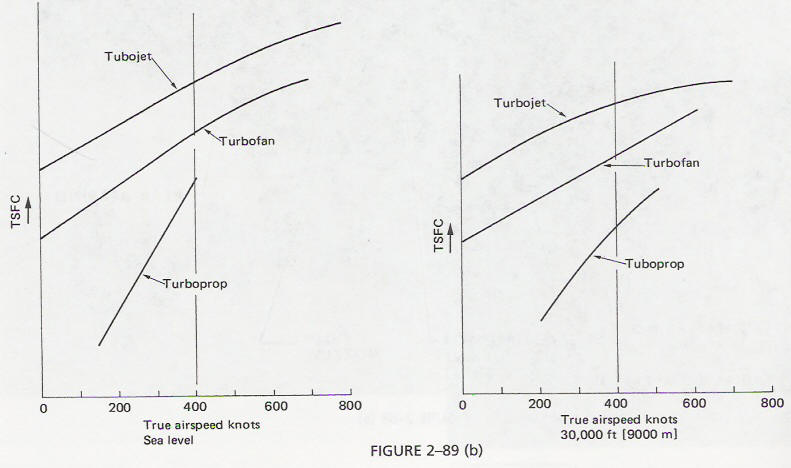
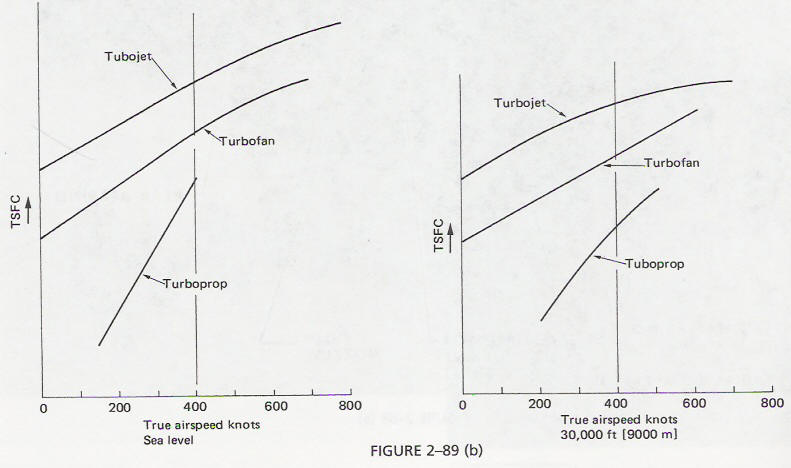
at high speed than a propellor. TSFC Thrust Specific Fuel Consumption
is a better way of comparing jets to props.

Does this answer the question or am I still not getting it?

Paul Lamar

The Rotary Engine NewsLetter.  Powered by Linux.
ACRE NL web site. http://home.earthlink.net/~rotaryeng/
Copyright 1998-2004 All world wide rights reserved.