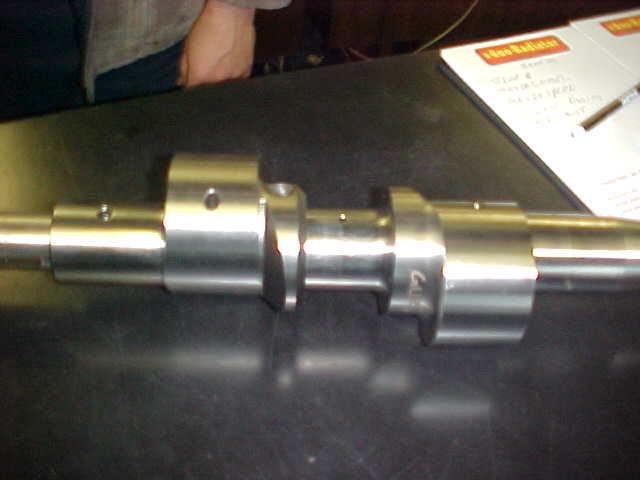
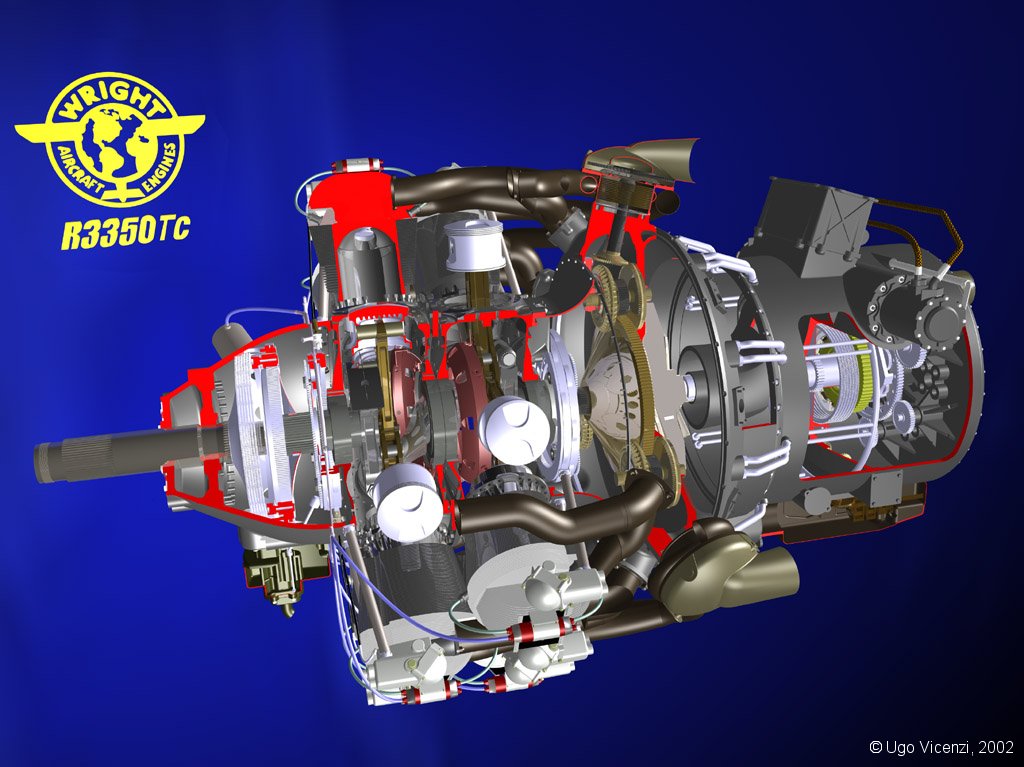
Eamon and I also talked about the center main bearing.
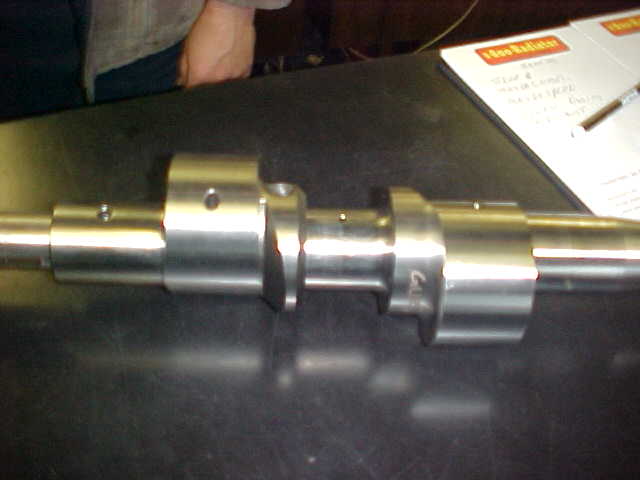
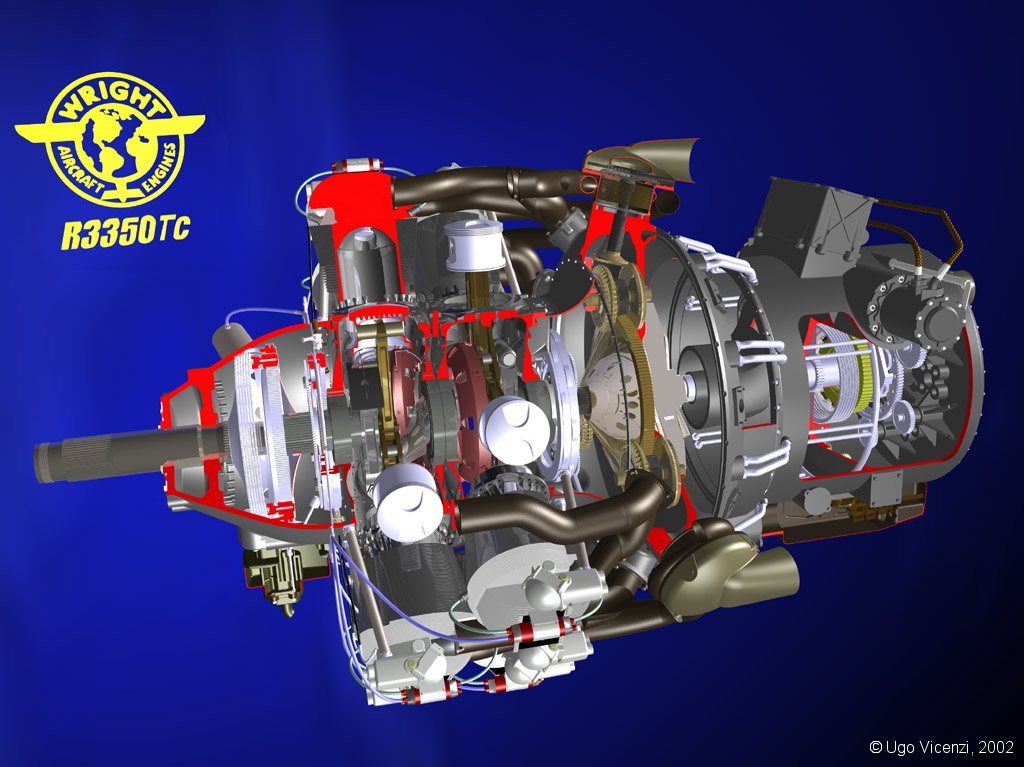
     Here is some shots of the Curtiss Wright version
     and a 3D of the CW bearing holder and a Mazda center housing.
     Getting the oil drain back and the center main bearing
     in there might be a good trick.

     Paul Lamar
Just curious... where did you get the pics of the C-W engine, and did you make the drawings of the split cones?

My two cents, having some experience with this design, is to STAY AWAY!

A number of year ago I visited with Jim Mederer at Racing Beat and asked him specifically about crankshaft problems he may have seen with high output engines. He told me that he had never seen a
Mazda crankshaft break. (Obviously Mazda does not use the center main bearing.) My experience with the center main bearing is the problems include:
1. The engine assembly must be line bored, which
is not the case with only two main bearings.
2. Assembly of the center main is tricky -- not only does it make engine assembly significantly more difficult, it is very hard to know that the split
cones have pulled up evenly and that the bearing is properly retained and located.
3. It's expensive hardware.

4. It's another potential failure point. (It's a solution without a problem!) I have
seen Deere engines (many) that have failed the center main bearing. Interestingly enough, the center main bearing was used partially because the Deere stress analysis showed a low safety factor for
a two bearing crankshaft.
But many three bearing engines failed the center main and kept on running for many, many hours with no crankshaft problems. A three bearing crankshaft running in only two
bearings is far weaker than a two bearing crank with its beefy center "gooseneck." No one ever figured out why the cranks didn't break after they were no longer supported in the center.
(There were
other reasons for using three mains also, but in my opinion none of the reasons apply to a Mazda engine, even when run at rather high output.) If you are thinking about the weight savings from a
three bearing crank, most of it gets consumed by the claptrap needed to retain the middle bearing.

As I said, my two cents!

Jon
Thanks Jon.

I took the pictures at Hayes Rotary Engineering who were charged with overhauling
a  CW RC2-60. It is the first  CW engine or picture or drawing of a CW RC2-60
I ever saw with a center main bearing. I was under the impression that the
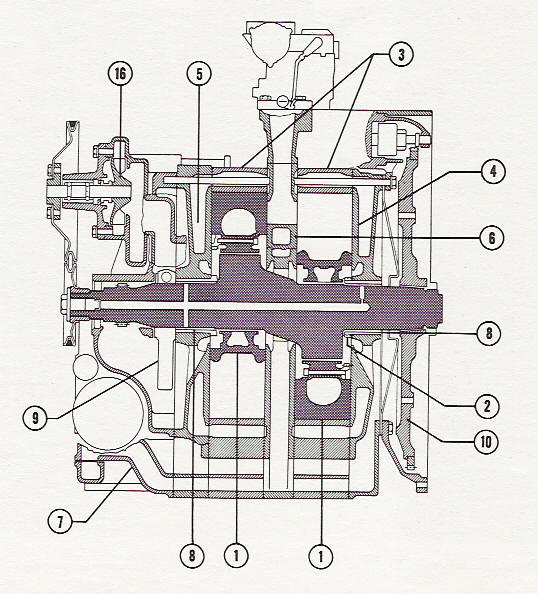
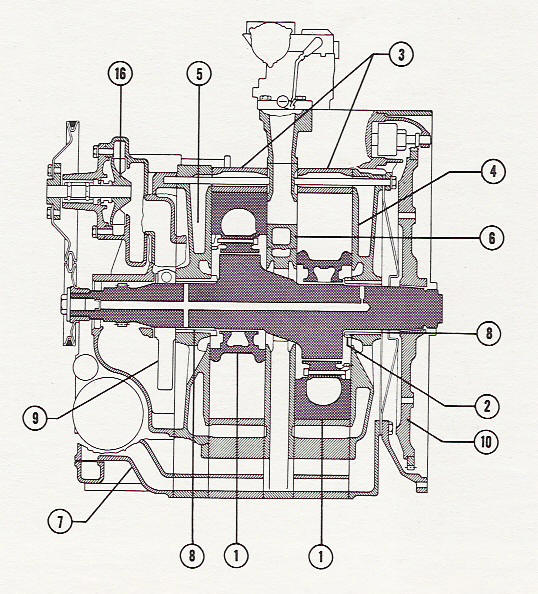
CW RC2-60 never had a center main bearing. All the drawings I have are of the 2
main bearing version. Here is an example.

The incentive for the center main bearing is the shaft is deflecting over
10,000 RPM and the rotor tips are rubbing on the end housings. Some taper
the rotors for this reason. Ken Welter among them. Road racers are again
experimenting with center main bearings. I have recently seen at least
one but I was sworn to secrecy.

I would be interested in seeing a drawing on the engines that have failed
the center main. One obvious fact is the torsional stiffness and strength
of the shaft would be reduced if the center main diameter was significantly
less than the current size of the material connecting the two eccentrics.
Perhaps the diameter or length of the failed center main bearing was not large
enough due to an underestimation of the loads it would see.

Two or more row radial engines have similar problems with center main
bearings and they typically have very large diameter roller bearings in
this location.

Paul Lamar

The Rotary Engine NewsLetter.  Powered by Linux.
ACRE NL web site. http://home.earthlink.net/~rotaryeng/
Copyright 1998-2004 All world wide rights reserved.