Paul,
 I believe this is a good idea, but, (Yea but), you will have two
problems. First: straightness, (and flatness) will be hard to get from sheet
metal. The second problem bears from the first which is getting a decent
seal, or small air leak will be tough. I am convinced that we DO need a
fairly airtight throttle body to get a reliable idle. That doesn't mean that
you couldn't do this with the hat sections made from aluminum or possibly an
off-the shelf extrusion. The last question was did you intend the bearings
to run against the sides of on of the pieces for side load?
Bill Jepson
Yes on the ball bearings. When you jam the throttle closed you have 15 psi
or so in the engine on the side of the slide. Two, 2 inch holes, 6.28
square
inches, 15 psi, 95 pounds of clamping force. That usually causes it to
jam.
I am not worried about the leaks. When the throttle is completely closed
I think the idle will be well under 1700 RPM. You can always put a bit
of  sticky back teflon tape in there to close up the clearances.

Since this thing is only about 12 inches long the flatness should be
adequate
if done on a press brake as opposed to a box or pan brake.

Paul Lamar
I seriously doubt that you will get a significant HP increase from a slide
valve
over a well designed butterfly - I have never neard of anyone that preferred
a slide valve SU  or an Amal over a Webber with butterflies . Those
slide valve Posa's are not so hot either.
Vance
You are missing a point here Vance. I agree with you if you had complete
design freedom to make the butterfly any size you wanted.

We are constrained however by getting two butterflies close to the
rotor housing for good idle purposes. That limits the size of the butterfly
to the same 1.875 inches diameter as the slide throttle. That means you have
to compare size for size.
Furthermore there is a secondary factor and that is the effect the shaft
and butterfly have being right in the tuned air column rather than one
end or the other.  I did not explain any of that but it is
the incentive I used to design it. Here are pictures of a couple of
engines that use slide throttles for these reasons.

Paul Lamar
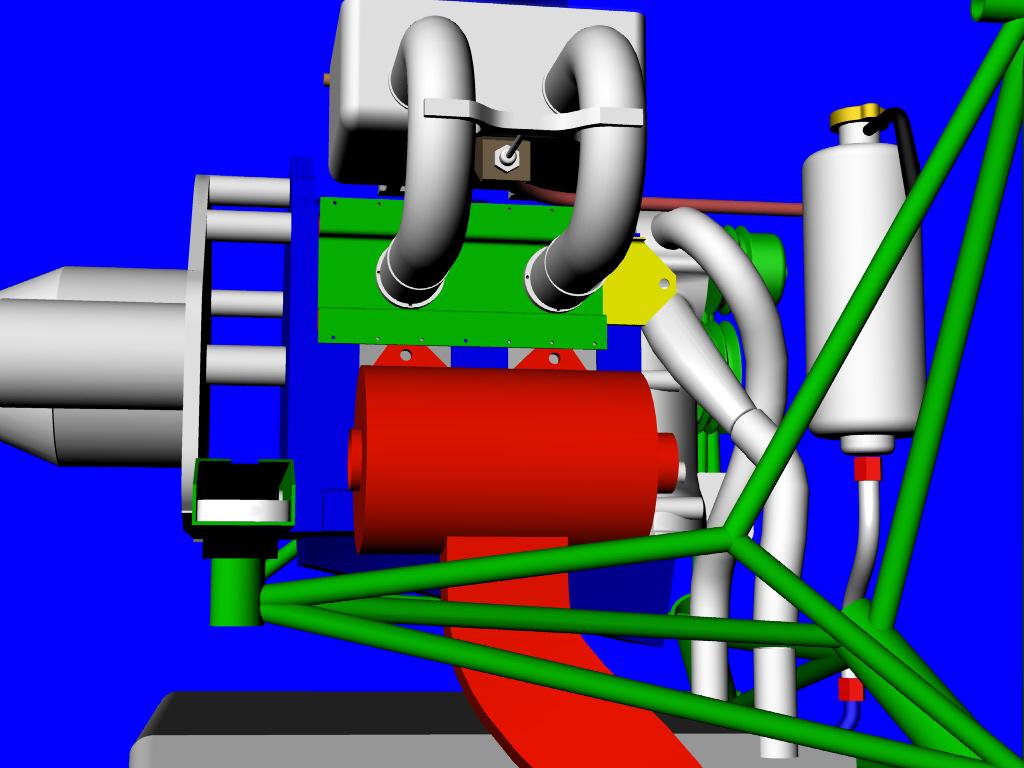
Here is the complete works with everything. It shows the slide throttle and
trombone intake pipe tuning for adjusting the peak torque RPM for good
cruise BSFC and take off HP. It also shows an alternate and ram air supply
for getting the last ounce of HP out of the engine at high speed and still
accommodating dusty runways. The two outer tubes on the slide throttle should
be machined out of teflon tubing for low friction trombone action.

It will be a while before I can do a drawing Kelly as my Windows computer
has a hardware problem and I need to get it fixed.

Paul Lamar
It occurred to me that this slide throttle is both cheaper and easier to make
than butterfly throttle bodies. Small ball bearings are about $4 each from
McMaster Carr, shoulder screws are as little as 72 cents each if bought ten at a time.
A butterfly throttle body requires shafts with expensive machining. If bought
new a single large throttle body can cost over $200. If made ten at a time
or more these low cost slide throttle sheet metal parts can be very cheap indeed.
I know of a shop in Torrance California (Talins) that can hold very tight sheet
metal tolerance with computer controlled shears, punches and press
brakes. If we get ten or more people interested I will get a quote
from Talins.

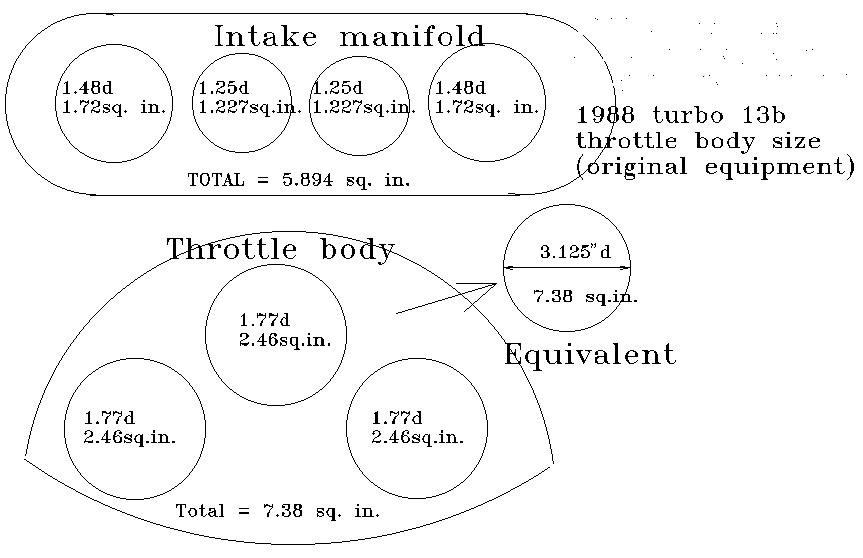
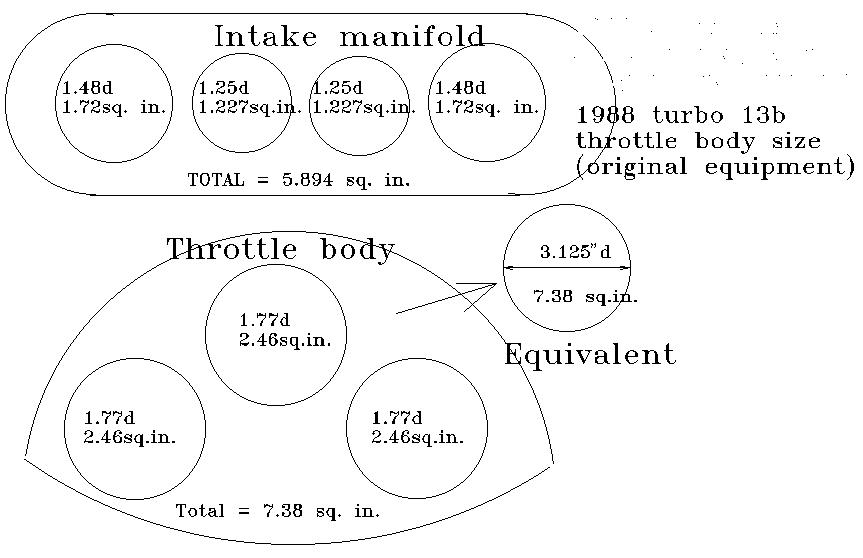
Here is a area comparison of butterfly throttle body sizes with runner sizes done
by Rino Lacombe awhile back. Two P-port 2 inch OD runners with .065 wall would have
an ID of 1.875 and an area of 2.76 square inches each for a total area of 5.52 square
inches. Actually less than the total area of an 1988 13B turbo four port.
Apparently the excellent flow coefficient of the P-port really pays
off despite having less total area.

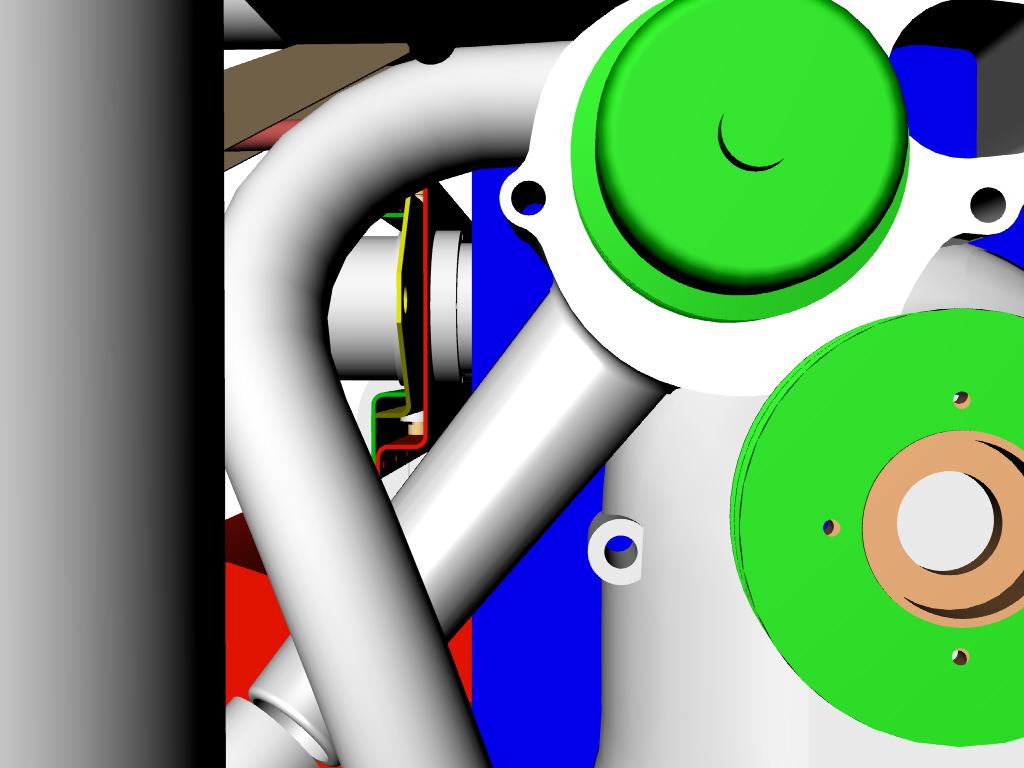
I also checked the clearance of the this slide throttle with the water
pump. Looks like I lucked out. It will work :).

Paul Lamar

The Rotary Engine NewsLetter.  Powered by Linux.
ACRE NL web site. http://home.earthlink.net/~rotaryeng/
Copyright 1998-2004 All world wide rights reserved.