> >> >> Paul wrote:
 >> >>
 >> >> Hi, Paul.  I noticed on the Racing Beat website that they claim the
 >> >> peripheral ported 13b with a Weber 51IDA is good for 300 hp.  Any idea
 >> >> what rpm they need to turn to get that kind of hp?
 >> >>       Also, I have noted that some of the Weber carbs are mounted
 >> >> vertically, and some horizontally. Does "side draft" Weber indicate
 >> >> that
 >> >> it can be installed horizontally?
 >> >>     I see that they also have a "down draft" Weber, and that is the
 >> >> one
 >> >> that is pictured mounted vertically.  I assume that the internal
 >> >> workings
 >> >> must be different, as the float inside a carburetor
 >> >> is typically orientated horizontally.
 >> >>      Last question....have you ever seen a successful modification to
 >> >> add
 >> >> a mixture lever to a Weber?  Sorry for the barrage of questions, but I
 >> >> was hoping you might be able answer some of these
 >> >> questions.  Thanks in advance for your reply.  Paul Conner
 >> >
 >> > My guess the HP peak on that engine is right around 9500 RPM.
 >> > You will need slightly longer pipes for 7500 RPM max.
 >> > providing you have a 2.85:1 gear box. My guess would be 250 to 260 HP
 >> > at 7500 RPM.
 >> >
 >> > Wow a 51 mm dual Weber! That is just about exactly 2 inches in
 >> > diameter.
 >> > Does that
 >> > sound familiar or what? :) Side draft and down draft never the twain
 >> > shall
 >> > meet.
 >> >
 >> > Back in the 60's Weber made a dual 58 mm side draft carb.
 >> > When I was working for Chaparral we wanted to run four Weber carbs on
 >> > our
 >> > big block V8. We wanted to run something like them in down draft mode.
 >> > So
 >> > the
 >> > Rochester Carburetor Division of GM copied the 58 mm side draft Weber
 >> > but
 >> > converted it to a down draft version for our use only. You should have
 >> > heard our Group 7 competitors complain.
 >> >
 >> > It is a float bowl orientation problem Paul.
 >> >
 >> > Paul Lamar
 >
 >> Thanks for that information, Paul.  Only one question missed....ever hear
 >> of
 >> a successful mixture lever mod to a Weber?   Thanks again.  Paul Conner
 > I know it has been done with a Holley but I never heard it done
 > with a Weber. I guess it is possible. I think the guys running Ford V6
 > are using some sort of mixture control on their carbs as I recall.
 >
 > BTW I can understand why you are interested in carbs. What are your
 > thoughts on this subject? Just for the record.
 >
 > Paul Lamar
 Hi, Paul....the primary reason is simplicity. I realize that the EFI has
 distinct advantages, such as being able to control the exact amount of fuel
 injected at various rpm's, and carburetor icing is not a concern (with the
 exception of the long intake runners that Mistral experienced icing in).  My
 problem is with it's complexity....It requires two high pressure fuel pumps,
 expensive injectors that can clog, programming maps, and a fuel return line
 for unused fuel. The system also places considerably more current demand on
 the electrical system. (Important if you should have an electrical failure,
 as it shortens the distance you can continue flying to an airport). The
 complexities of setting up proper maps for an ECU can also be time consuming
 and at times frustrating. I have found it difficult to find anyone who could
 assist in programming maps into my ECU. (Every A&P mechanic at our airport
 could help out with a carb).From what I am reading, there seems to be a lot
 of people using Webers on rotary powered cars, with many sites revealing
 proper tuning techniques/jetting, etc.
     There are advantages and disadvantages to both systems, obviously. I am
 personally drawn toward the simple nature of the beast, and I have had a lot
 more experience with carburetors on aircraft (all 7 of my previous aircraft
 had carbs). I was pleased with their performance and reliability. Just
> needed a throttle and a mixture control. If I could get the same kind of
 performance and reliability with a carb on a rotary, I would be just as
 pleased as I was with my previous Lycoming powered aircraft...No, make that
 MORE pleased, as I would have a carb equipped rotary instead of a carb
 equipped hand grenade. Just my opinion, and I could be wrong. (Again).
 Take care.  Paul Conner
   I have run a Weber on my coot now for 1300 hrs, I used a 51 mm DCOE
side draft for about 1000 hrs but switched to a 48 DCOE, they also
make a 55 mm DCOE and the best place to get Weber's is at Performance
part warehouse in New York.
  I switched to the 48 as it runs very smooth at the bottom end
compared to the 51 but I did lose some power on the top end but I do
a lot of slow speed water taxiing so its a tradeoff I will except.
   Also for leaning I use a controllable air ram that creates a
pressure difference between the float bowl and the Venturi thus
leaning the fuel mixture.
  I am with you on the simple thing, just hook up a fuel line and a
throttle cable and go fly, if you need jetting info I can give you
the jet numbers to put it dead nuts on.
  I have thought about playing with injection but I will use a Weber
as a throttle body so the if something goes wrong with the injection
I can just flip a switch to the Weber fuel pump and keep flying on
the Weber and worry about fixing the injection I get home or whenever
I get around to it.

   Ken Welter
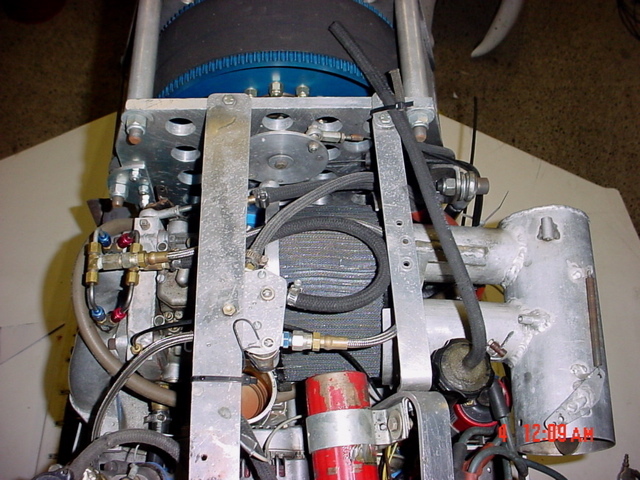
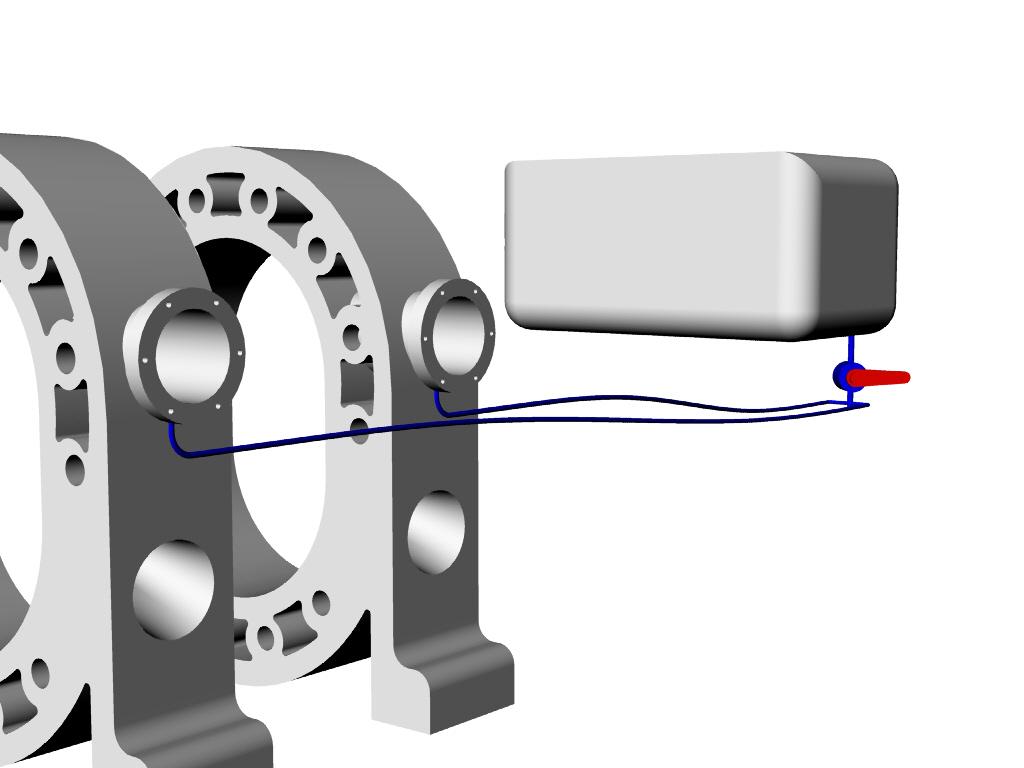
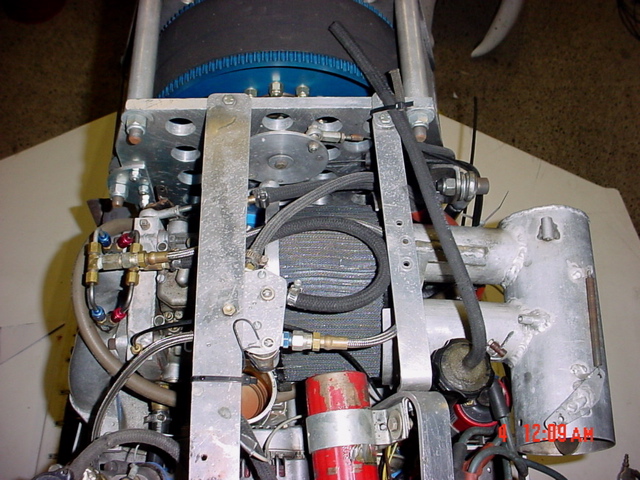
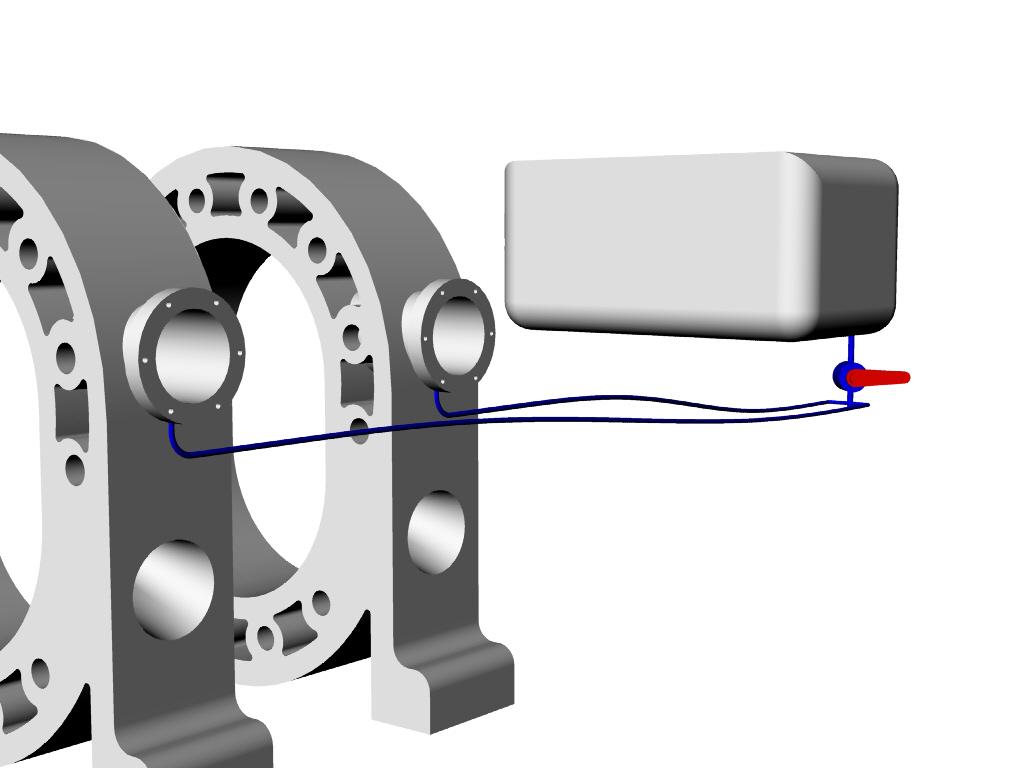
Heck you can use this system as a back up. Second picture.