Every time I pick up the Sky Ranch Engineering manual  I run across another
chart pertinent to the subject of the month. This is for a run of the mill
air cooled aircraft engine.

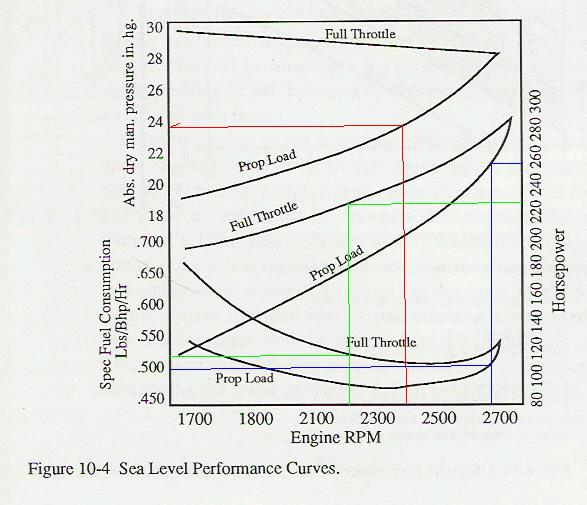
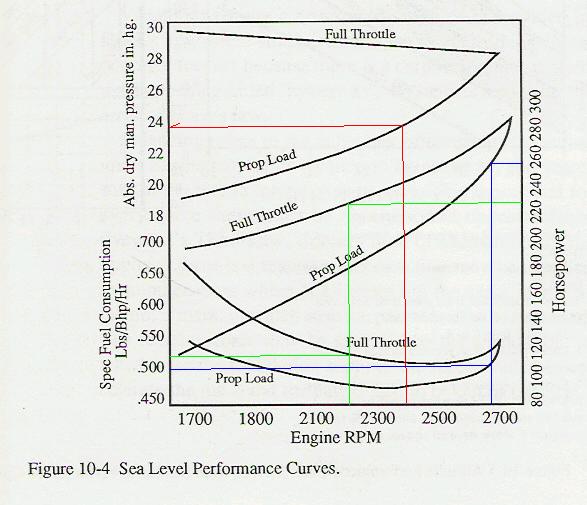
Here is the difference in BSFC and HP of an engine running on a dyno
with full load throughout the RPM range verses an engine driving a fixed
pitch prop.

The upper most curve shows a drop off in intake manifold pressure with
max load (dyno load) due to breathing losses expressed as pressure
drops.

Next curve down is prop load affect on the intake manifold pressure.
Prop load is way less than dyno load up until the two curves come
together.

The third curve down is HP verses RPM full load (dyno load). Note the BSFC is
roughly .65 at 1700 RPM. This is what you might have on climb out
with a variable pitch prop set to max pitch. In other words you are lugging
the engine. BSFC reaches a full load minimum of about .51 and then climbs
back up to about .55.

Finally the fixed pitch prop loads are shown as the bottom set of curves.
At moderate cruise RPMs  and HP BSFC is a minimum at about .47.
Just about what we are seeing with the rotary at full lean.

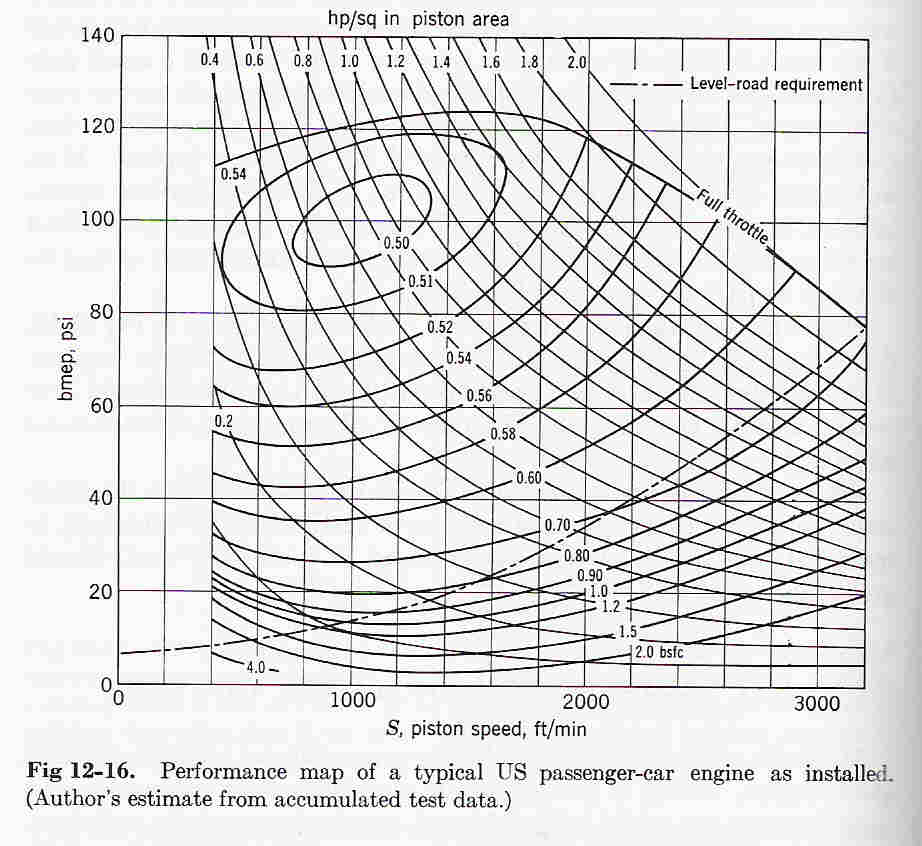
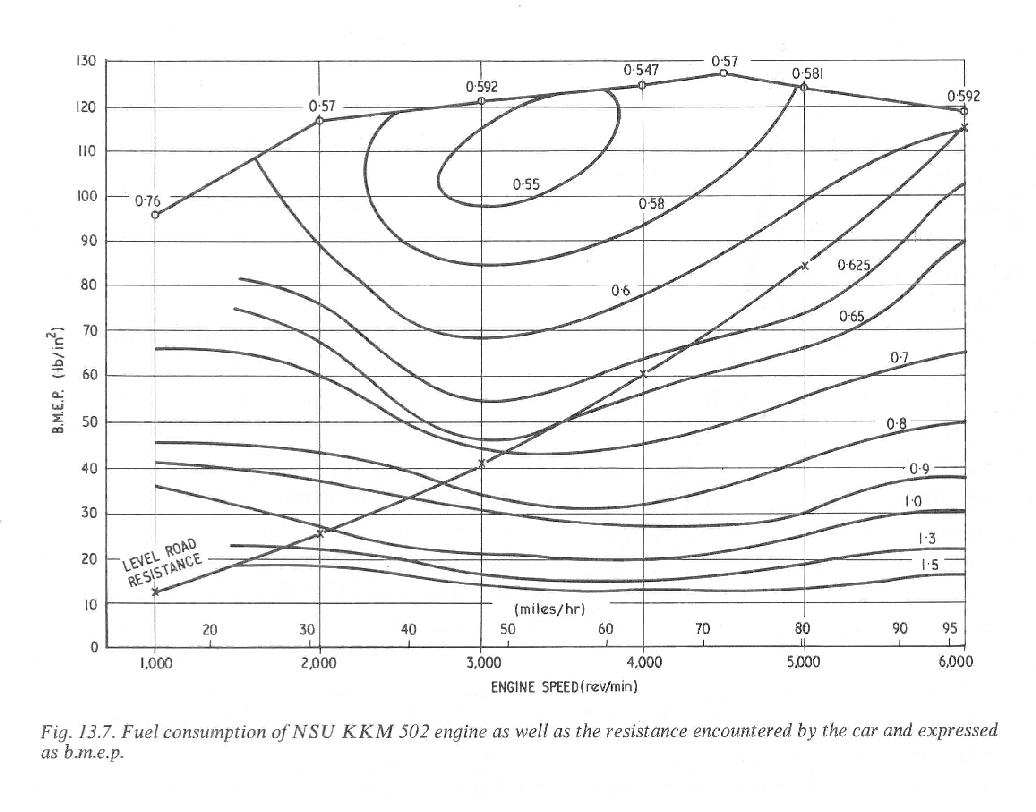
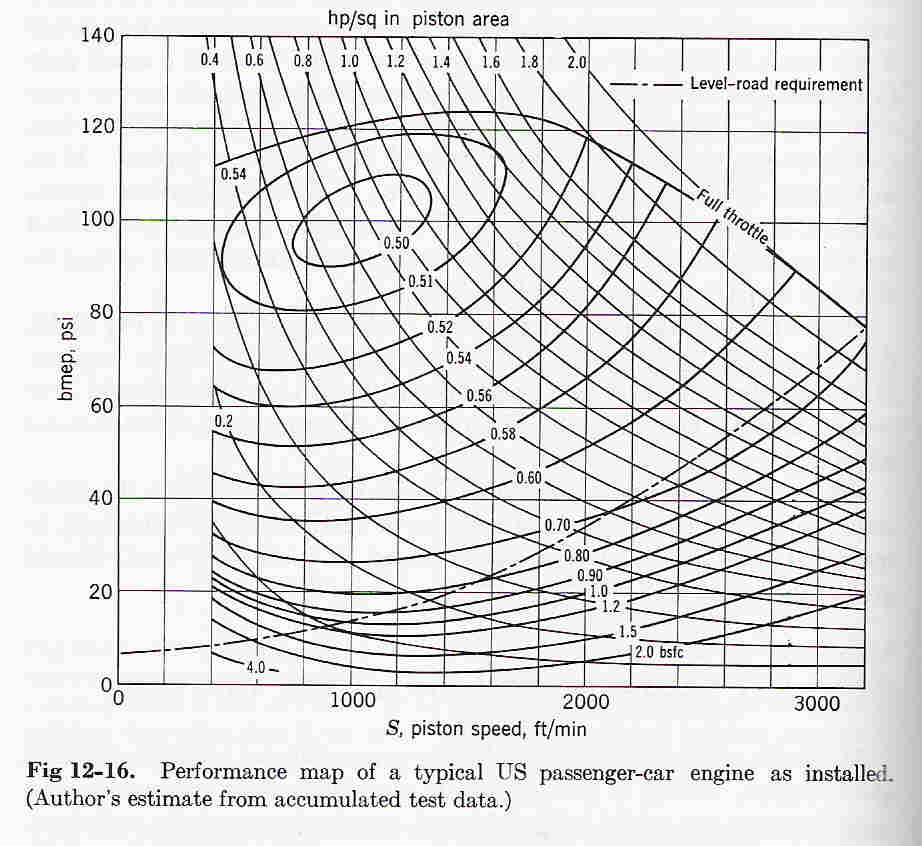
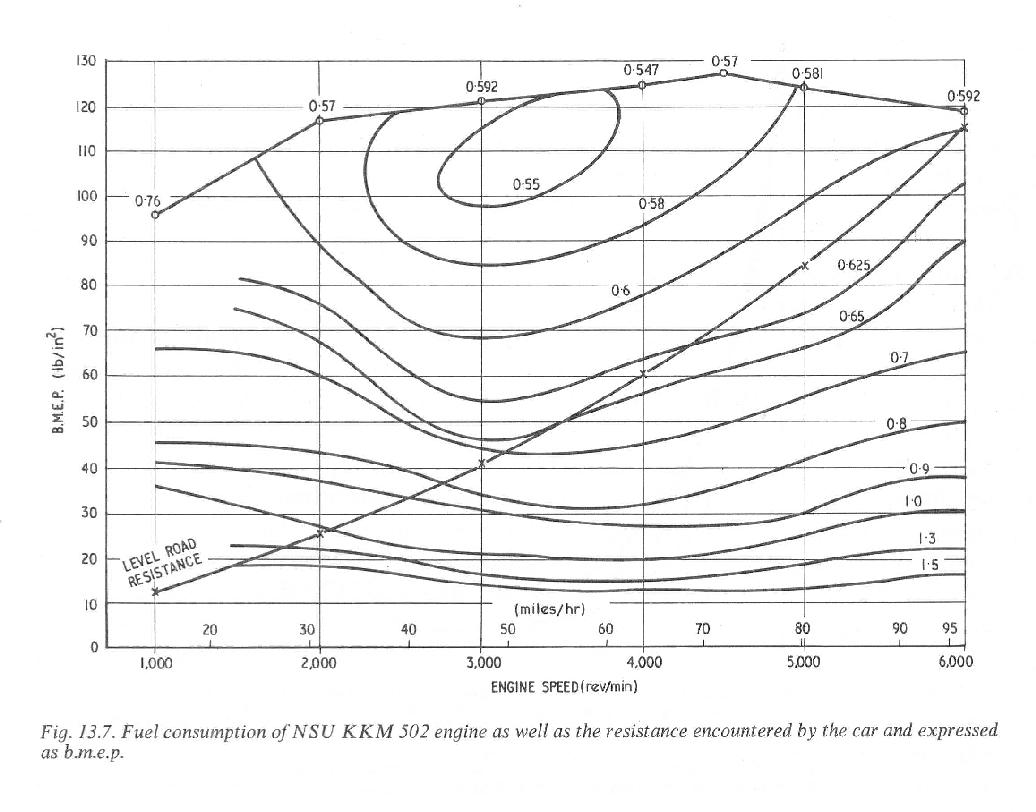
What we need and don't have is a BSFC map for the current Mazda rotary
tuned to our needs. Perhaps with a p-port. Here are some old such maps.

The final story is MPG. Not shown in these charts. The drag and HP
requirements drop off drastically with speed so best MPG is not necessarily
at best BSFC. Fuel consumption in pounds per hour is primarily depended on
HP needed and generated. BSFC is a secondary factor.

Paul Lamar

The Rotary Engine NewsLetter.  Powered by Linux.
ACRE NL web site. http://home.earthlink.net/~rotaryeng/
Copyright 1998-2004 All world wide rights reserved.