>
> Rotary Engine wrote:
>
> > I updated the intake manifold section showing the home made
> > p-port and low cost sheet metal slide throttle with Teflon
> > slide.
> >
> > Paul Lamar
Paul
On the manifold mounting flange at the rear end, what is the slotted area
for? Also you didn't answer my question previously that being, what
happens
to the disused side ports, are they just covered up by the mounting flange
or do you propose to fill them?
Tony Beaton
I don't follow you. There is no mounting flange.
First I assume you are talking about the P-port engine.
all disused side ports are filled with high temp epoxy. JP Weld can be
used
if you first heat the containers in boiling water to thin it out and then
mix it.
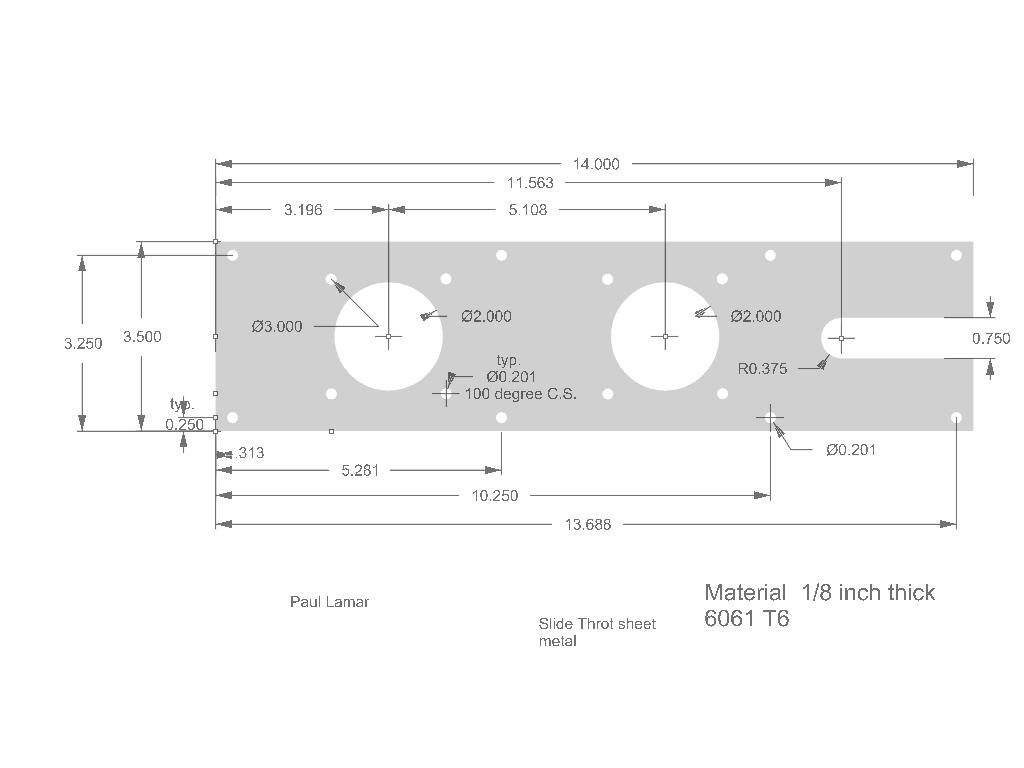
If it is the slot in the slide throttle then that is to accommodate the
throttle clevis that connects with the push pull rod going to the
instrument
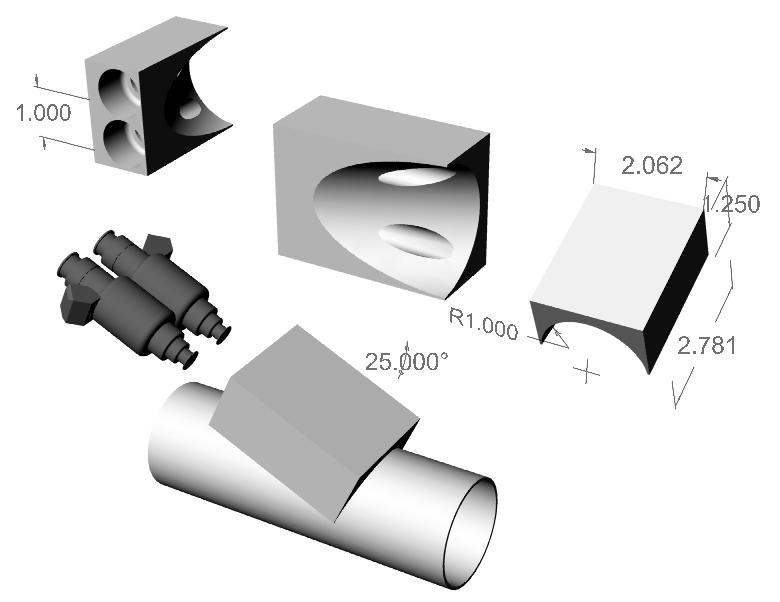
panel. Here are a few pics & 3D illustrations that hopefully will clear
things
up.
Paul Lamar
Paul
These pictures are very interesting.
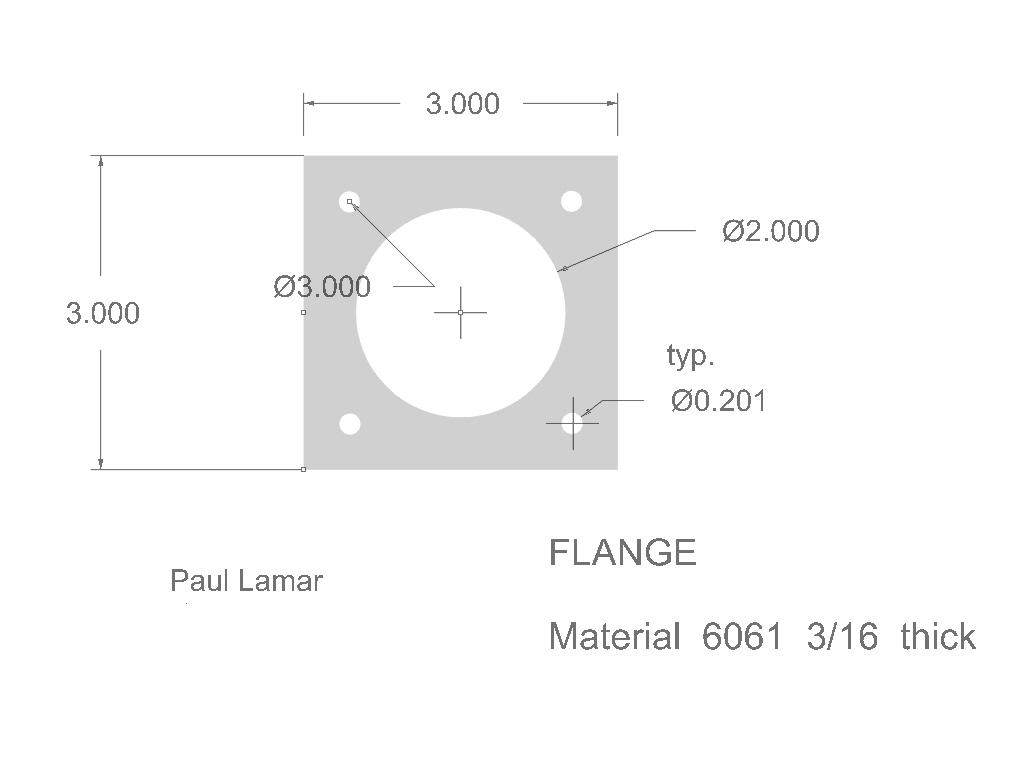
Do you have a dimensional sketch of the sleeve and it's flange and mounting?
I am guessing that the sleeve is pressed in, how is the flange attached;
press fit, welded or glued?
Do you have a dimensional sketch of the slide Teflon throttle?
Will you need to have a heat shield between the muffler and the Teflon?
A question on theory, should not the throttle be upstream from the injectors
in the clean dry air, otherwise It could be subject to gummy buildup from
the wet air/fuel mixture?
Tony Beaton
The sleeve is glued in with high temp epoxy. JP Weld will work if
first heated before mixing to lower the pourabilty. Flanges
are tig welded to the tubes. Hundreds of P-port engines have
been built this way for the last 30 years.
Yes on the heat shield.
The throttle is where it is because the P-port rotary does not idle
well if the throttle is upstream. The intake runners store
exhaust gas due to valve overlap causing erratic firing at idle.
No problem with deposits so far.
We have an NC hole punch and a computer program to punch the holes in
flanges and front and back plates. This brings the cost way
down.
Paul Lamar
The Rotary Engine NewsLetter. Powered by Linux.
ACRE NL web site.
http://www.rotaryeng.net
Copyright 1998-2005 All world wide rights reserved.