Hi, all....just wanted to share the results of my recent experiment. Dan
Cruger recently suggesting adding VG's in front of the NACA duct, as did
several other canard builders on another list. I decided to try it, and
here are the results.
First, let me provide the latest numbers from today's flight
immediately prior to the addition of the VG's.
With an OAT of 85 degrees, highest water temp durning climb was
210. Level flight provided a water temp of 205 WOT. (Oil temps never
exceeded 190 at any configuration)
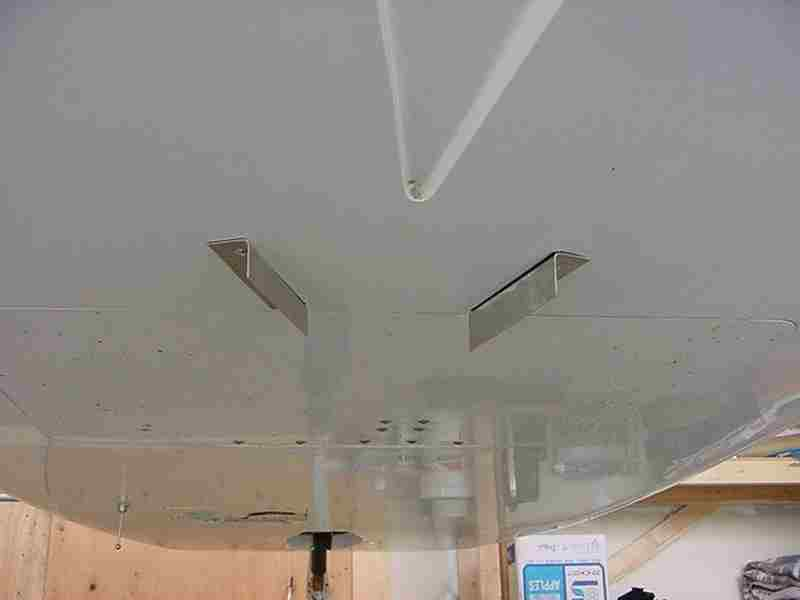
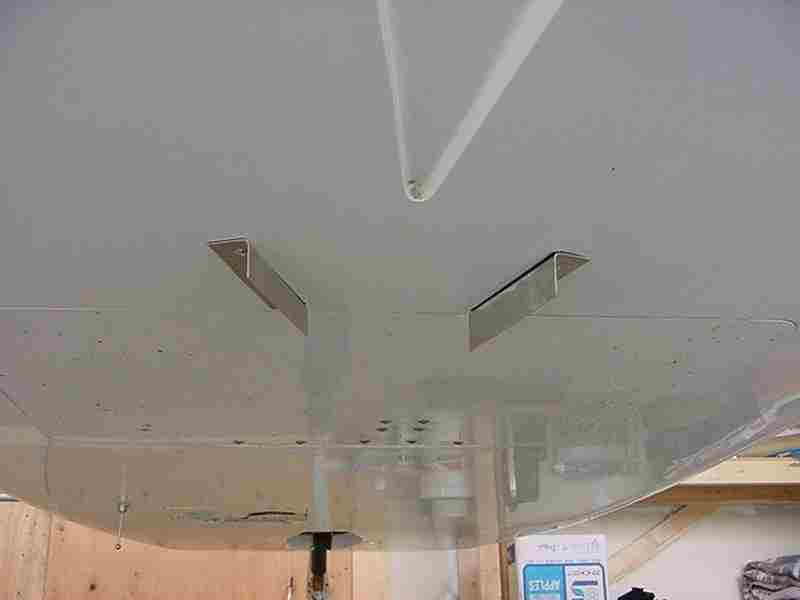
I landed and installed the thin aluminum VG's with 3 rivets each,
and took off again. Water temp during the climb maxed out at 190, and
took much longer to reach those numbers. I raised the nose to climb at
90 IAS and the temps slowly climbed to 195. I dropped the nose to climb
at 100 IAS and temps came back down to 190. After leveling off, water
temp was 180 at WOT. At approximately 3/4 throttle (cruise), water temp
was stable at 172 at 3000 AGL. After throttling back for descent, water
temps stabilized at 160 where they remained until landing rollout.
During taxi back to the hangar, temps rose back up to 182. Highest oil
temp during the flight (at any configuration) was 182.
It was a very humid, oppressive day. We were sweating just standing
around. It would seem that the VG's had a positive influence on the
cooling efficiency. Here is a link (with pictures) showing the mod that
I shamelessly copied.
http://users.telenet.be/westlandfamily/cozy/vg/index.htm It also shows
an oil flow analysis test. I don't profess to having knowlege regarding
how the VG's trip the airflow into the NACA duct... All I know is that
it turned my marginal cooling into a success story, and that's all I
can comment on. I should note that I did not retract the nosewheel, so
the plane had more drag and did not attain higher cruise speeds, but I
was trying to test it in the worst possible conditions, ie slow climb
speeds and nosewheel still deployed. I suspect that temps should drop a
few more degrees once the nosewheel is retracted and I hit higher
airspeeds at the same power settings, but this is assumption, not backed
up by actual test results. (I will raise the gear on the next flight).
I finally consider my cooling system experiments to be completed
(happy with the results), so I can now move on to other small details
necessary to finish the airplane (such as wheel pants, paint, etc). I
still need to replace my 7 psi radiator cap with a 22-24 psi cap, but
otherwise, I think I'll just go fly and enjoy the fruits of my labor.
Many thanks to all who contributed ideas and advice regarding my cooling
system. I can finally fly without staring at the temp gages. A very
happy Paul Conner in Mobile, AL
I certainly would not draw any conclusons from that test.
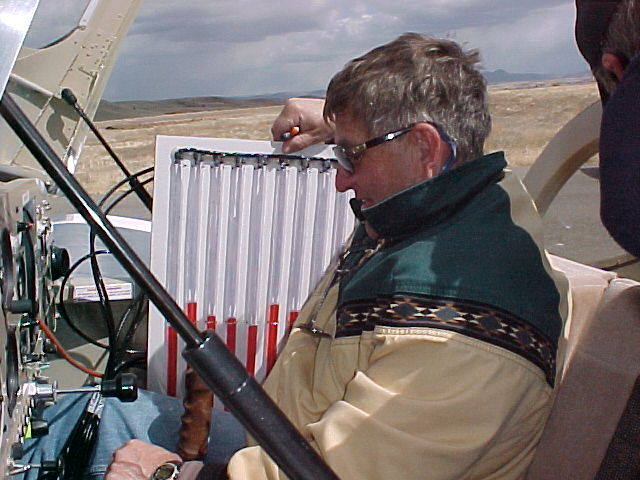
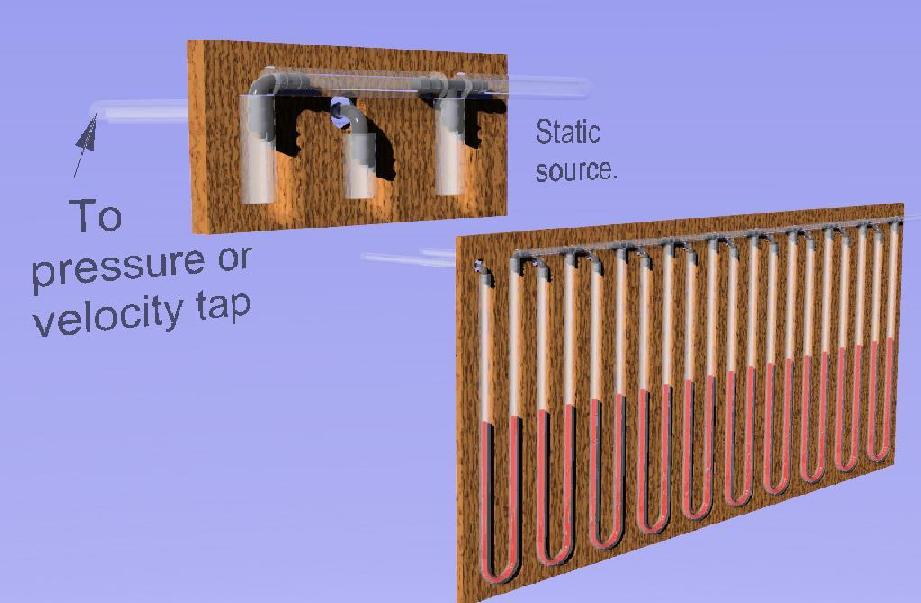
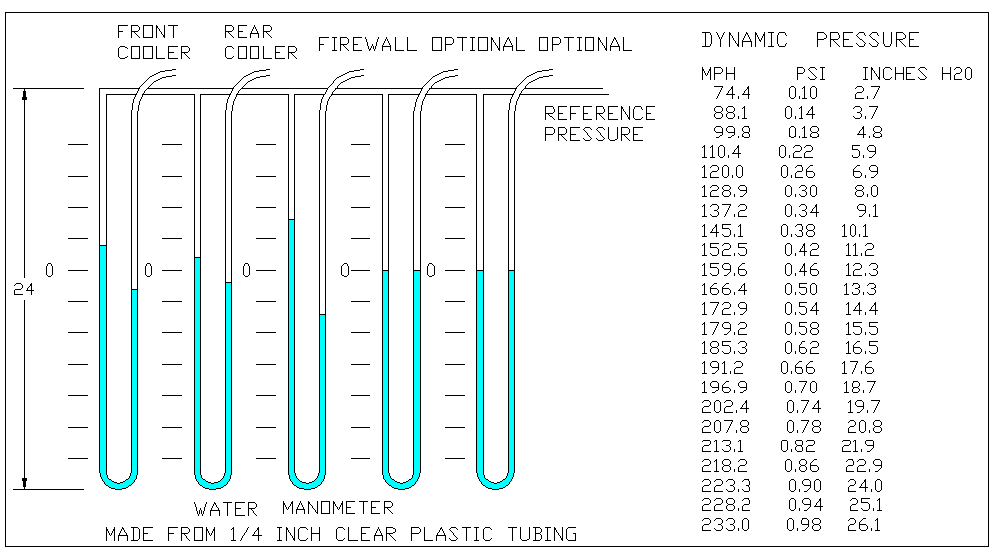
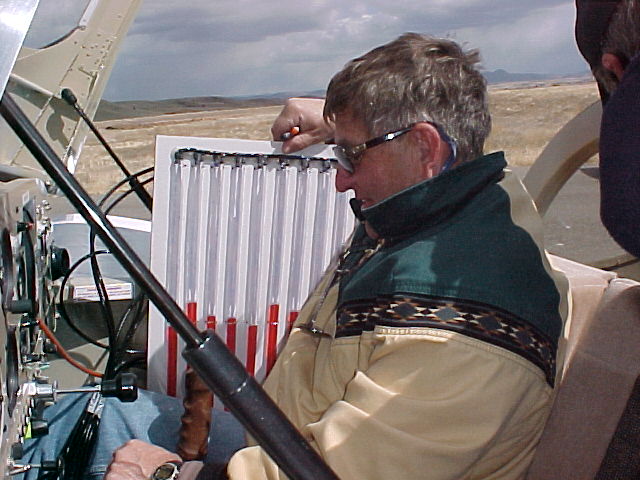
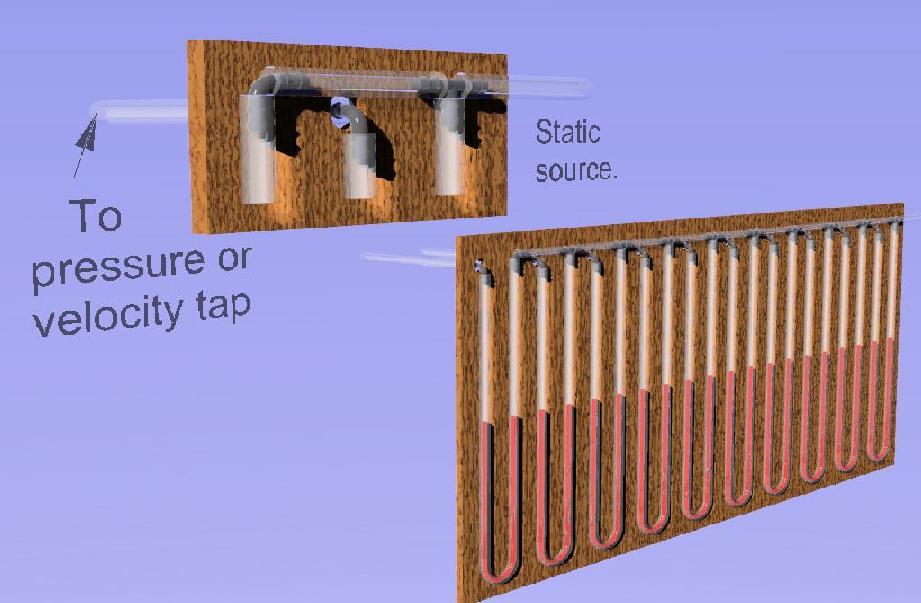
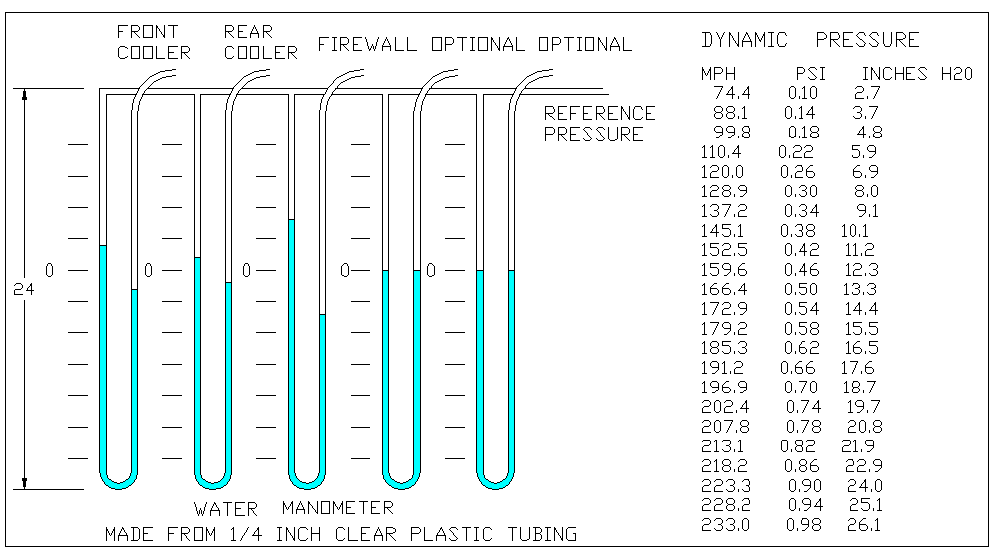
Too many variables. Why don't you build a water manometer
and measure the air pressure in front of the rad directly?
Paul Lamar
The Rotary Engine NewsLetter. Powered by Linux.
ACRE NL web site.
http://www.rotaryeng.net
Copyright 1998-2005 All world wide rights reserved.