Hi, all....just wanted to share the results of my recent experiment.
Dan
Cruger recently suggesting adding VG's in front of the NACA duct, as
did
several other canard builders on another list. I decided to try it, and
here are the results.
First, let me provide the latest numbers from today's flight
immediately prior to the addition of the VG's.
With an OAT of 85 degrees, highest water temp durning climb was
210. Level flight provided a water temp of 205 WOT. (Oil temps never
exceeded 190 at any configuration)
I landed and installed the thin aluminum VG's with 3 rivets each,
and took off again. Water temp during the climb maxed out at 190, and
took much longer to reach those numbers. I raised the nose to climb at
90 IAS and the temps slowly climbed to 195. I dropped the nose to climb
at 100 IAS and temps came back down to 190. After leveling off, water
temp was 180 at WOT. At approximately 3/4 throttle (cruise), water
temp
was stable at 172 at 3000 AGL. After throttling back for descent, water
temps stabilized at 160 where they remained until landing rollout.
During taxi back to the hangar, temps rose back up to 182. Highest oil
temp during the flight (at any configuration) was 182.
It was a very humid, oppressive day. We were sweating just
standing
around. It would seem that the VG's had a positive influence on the
cooling efficiency. Here is a link (with pictures) showing the mod
that
I shamelessly copied.
http://users.telenet.be/westlandfamily/cozy/vg/index.htm It also shows
an oil flow analysis test. I don't profess to having knowlege regarding
how the VG's trip the airflow into the NACA duct... All I know is that
it turned my marginal cooling into a success story, and that's all I
can comment on. I should note that I did not retract the nosewheel, so
the plane had more drag and did not attain higher cruise speeds, but I
was trying to test it in the worst possible conditions, ie slow climb
speeds and nosewheel still deployed. I suspect that temps should drop
a
few more degrees once the nosewheel is retracted and I hit higher
airspeeds at the same power settings, but this is assumption, not
backed
up by actual test results. (I will raise the gear on the next flight).
I finally consider my cooling system experiments to be completed
(happy with the results), so I can now move on to other small details
necessary to finish the airplane (such as wheel pants, paint, etc). I
still need to replace my 7 psi radiator cap with a 22-24 psi cap, but
otherwise, I think I'll just go fly and enjoy the fruits of my labor.
Many thanks to all who contributed ideas and advice regarding my
cooling
system. I can finally fly without staring at the temp gages. A very
happy Paul Conner in Mobile, AL
I certainly would not draw any conclusions from that test.
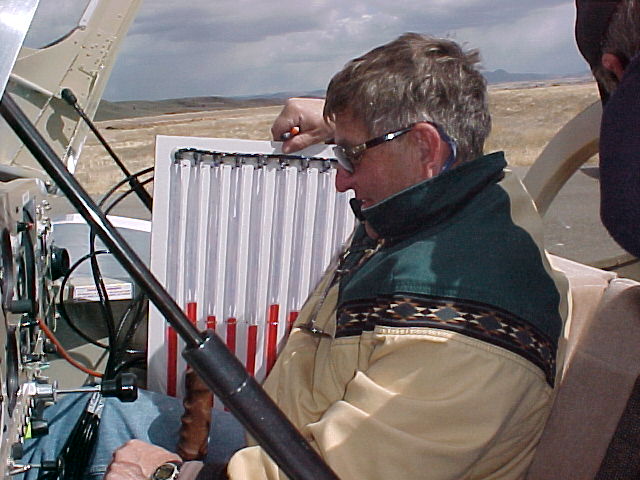
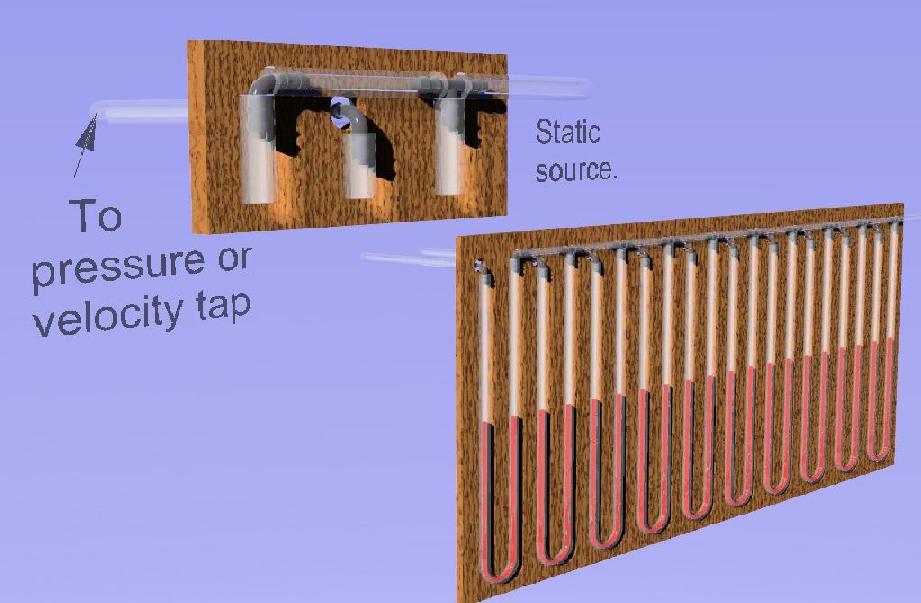
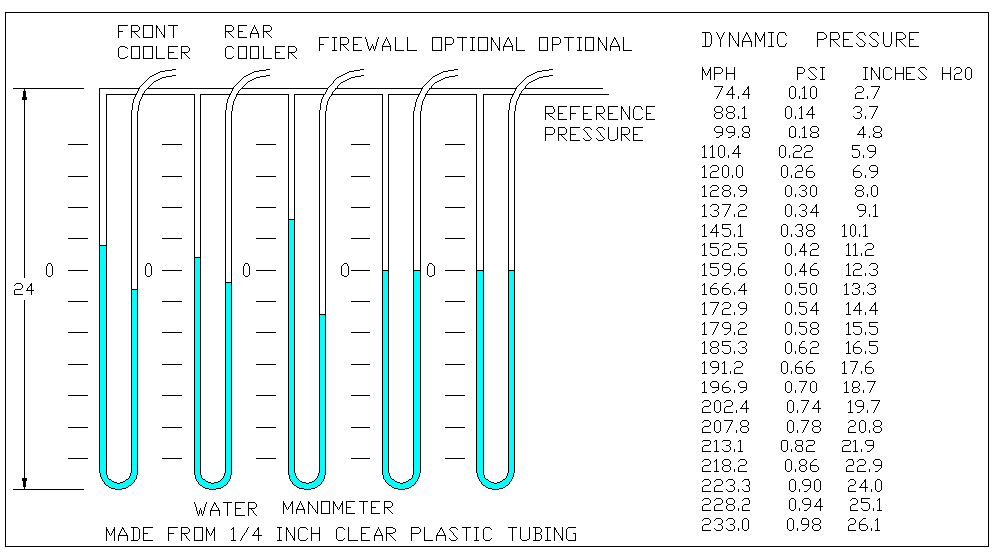
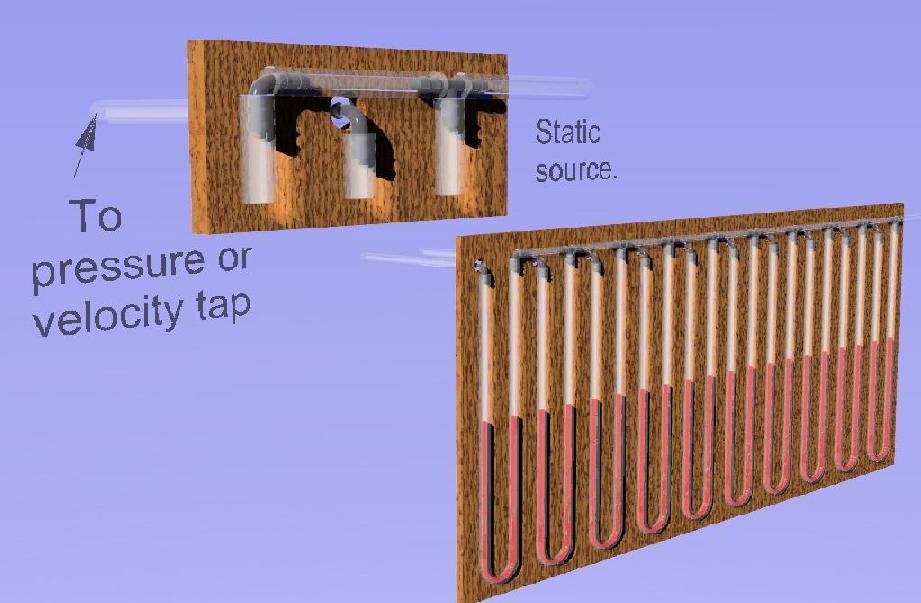
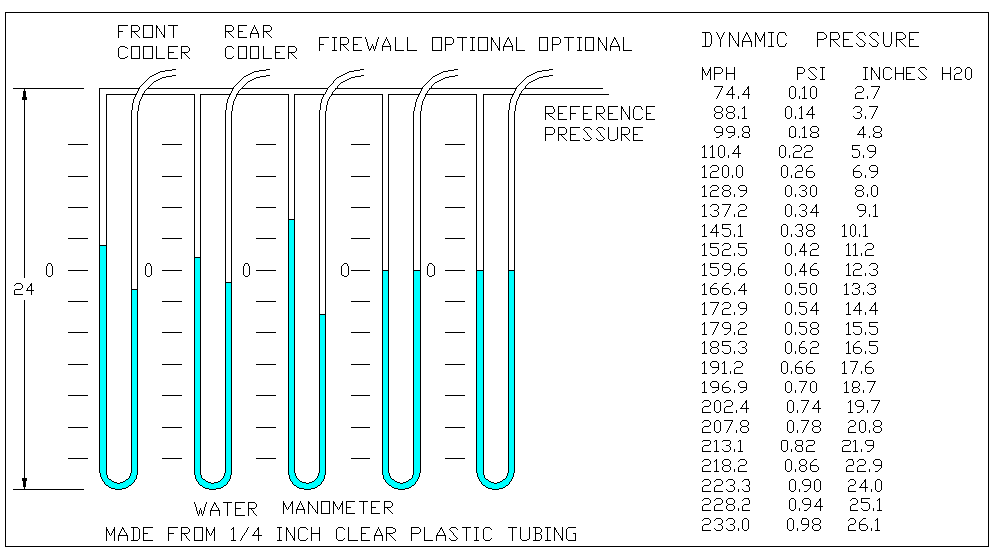
Too many variables. Why don't you build a water manometer
and measure the air pressure in front of the rad directly?
Paul Lamar
Very interesting, thank you for the detailed report Paul.
After thinking about it I realized that humidity should help cooling as
the air with more water vapor means more cooling mass for a given
volume, right?
Hans
Probably correct but I am not sure about that. Humidity does not
help a person cool off as sweat is less likely to evaporate.
When water evaporates it absorbs a lot of heat. That is the
reason that dribbling water over your heat exchanger works so well.
In this case the outside of the heat exchanger is.. or should be.. dry.
This is one of the many variables I was talking about. I am sure
many things changed between the time Paul took off, landed, added
the vortex generators and took off again. Little things like
angle of attack can make a large difference to a NACA duct located so
far back on the aft fuselage. One can be easily fooled into thinking
one made some improvements when further experience will show nothing has changed.
Extensive experience in the last 6 or 7 years from others that have tried
to use engine temperatures for scoop and diffuser development
have failed miserably. The best and fastest is to measure
the pressures directly. Paul has a huge heat exchanger it should
be over cooling even on a 85 degree day during climb out.
Paul Lamar
BTW here is a recent testimonial on the use of water manometers
to develop cooling systems.
Paul:
You are absolutely correct. This is so easy to do and teaches so much
regarding such questions as: mass airflow sufficient?, pressure drop across
heat exchanger?, dynamic pressure recovery at heat exchanger face (diffuser
efficiency)?, pressure in the cowl downstream of the heat exchanger
(pressurized cowl from other inlets)? uniformity of pressure across heat
exchanger face? and.....if one has the inlet and outlet coolant temperature
as well, 95% of all the issues are at hand in order to create an exceptional
installation.
My friend spent three months installing two different systems and over $700
in materials alone...which both failed for different reasons. But.....both
"looked like they should work"! The radiator shop that built the brass
"king kong" radiator was "absolutely certain this will work" (insufficient
fin area, but low delta P!). An expensive lesson.
We spent less than one day, built a water manometer as you direct above and
knew what needed to be do by sundown. Now it cools at 85 deg F, WOT climb,
115 mph as long as one wants...and even cools on the ground. The
installation is an underslung located right on the CG. A little ahead of
the "best place" at the approx. 2/3 chord of the wing, but other
installation issues dictated that location.
Note: We learned a lot on the ground with the manometer before we even flew
with the "designed with information" system. By this time he was a bit
tired of 250 deg F while trying to climb high enough to make a normal
pattern and get back on the ground with the first two systems! Reduced the
pucker factor by a factor of at least 4!
The digital camera is a great idea. Make certain TAS & O/S temp is recorded
at the moment of photo. (Humorous note: The owner did over speed on one
trial and spit red food dye and water all over himself since we had one or
two of the tubes open to cockpit pressure-he didn't think it was too funny).
It is very important to record accurate speed and O.S. temperature readings
in order to compare changes. We didn't record cockpit vs. O/S static
pressure which had us scratching our heads for a bit, but the lessons were
so obvious it didn't matter as it turned out. Cockpit was approx. 0.5" H2O
lower than static, and speed dependent.
It is GREAT to be able to cool in all flight conditions and then be able to
make modifications to reduce drag by working back (too cool) toward the edge
of the "maximum efficiency: cooling capability vs. drag" envelope rather
than the other way around from the "too hot" side.
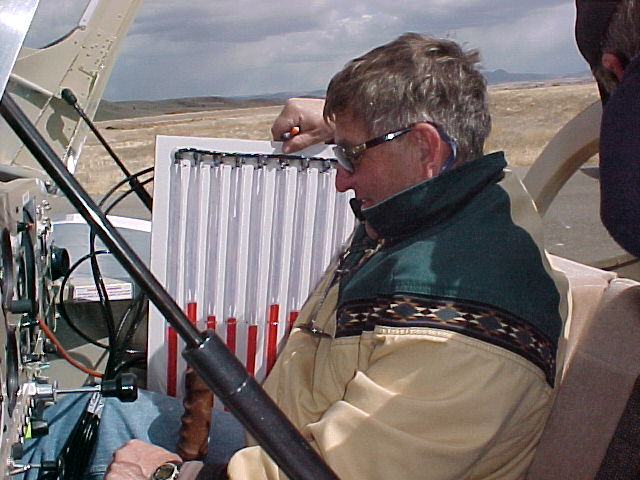
Great advice and good pic of manometer board. We just used high quality
duct tape (plane unpainted at the time) to protect the pressure lines that
were routed along the outside of the fuselage. Worked for us.
Doug in CO
The Rotary Engine NewsLetter. Powered by Linux.
ACRE NL web site.
http://www.rotaryeng.net
Copyright 1998-2005 All world wide rights reserved.