Paul,
Since you have already invested the time and effort to set the engine
up on the dyno, I would suggest using one of Vance's "horsepower
required" plots that you have posted recently. Advance the throttle
and set the dyno incrementally to absorb the horsepower indicated for
each RPM setting. Then set the mixture for whatever criteria you
decide (best BSFC, certain EGT, maximum power, or whatever), advance
to a new horsepower and RPM and repeat the process until you have
covered the complete RPM range. This would simulate a certain fixed
pitch prop and would give you a pair of data points to set into the
dyno. The result would be a set of data elements that traced
diagonally across the mixture array. (I prefer not to call it a map
to avoid confusion with the Manifold Abs. Press) You could then guess
at the numbers for the remainder of the array to give a safe array to
work with.
Aubrey Thompson
Unfortunately we have kind of wasted the past few days by
using a Innovate mixture monitor that was unreliable.
We were severely misled.
We are now paying more attention to BSFC for an indication
of what the mixture should be. We are going to try to get it
near the ball park and do some high RPM runs. Final tuning should be
done in the air with prop load.
Paul Lamar
It would seem to me that it should be much easier, and more meaningful
to map an engine's
characteristics with a dyno than with even a controllable prop. In
addition to the extra physical
hazard of a flailing propeller and hurricane class winds, the propeller
would give you
a smaller range of control. The classic bhp curve is a full throttle
curve, with the load
varied to limit rpm. Then you can vary mixture within safe limits to see
how the power
shifts with lean, power rich, and over rich conditions. I suspect from
your limited
data that you are not very much over "power rich" at your data points. I
do not believe that
you will be able to significantly increase power as you lean. Get data!
lots of points!
and map them out later.
Vance
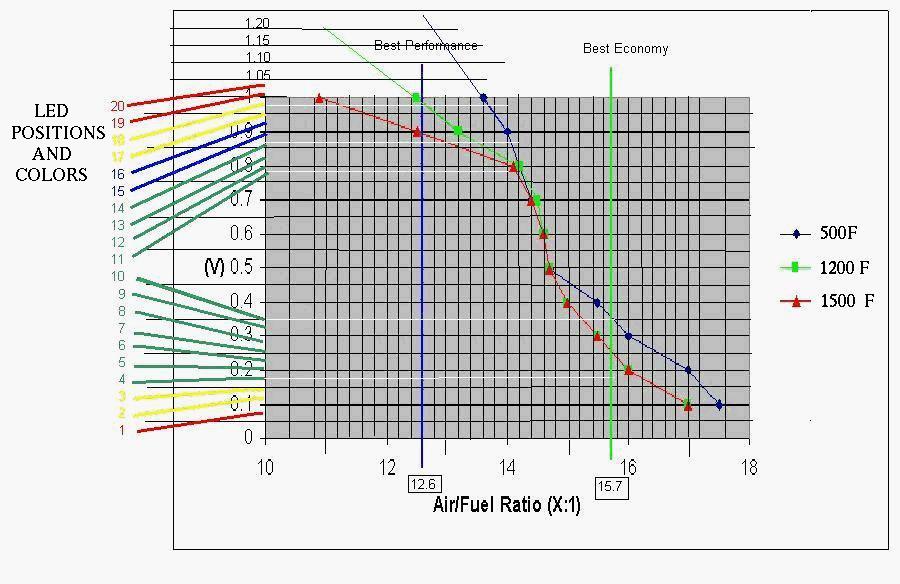
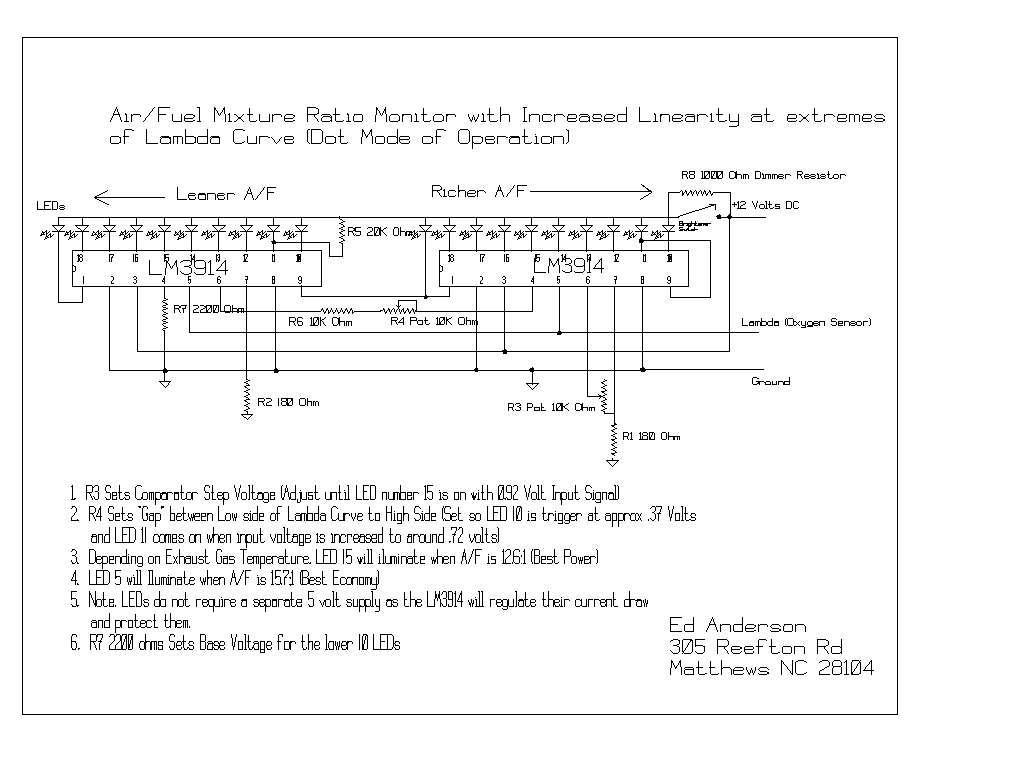
So far Vance the mixture monitor has scared the heck out of
us by suddenly going full lean without warning. We are worried
about detonation and fractured apex seals. I need more confidence
in the mixture monitoring area before I can make meaningful changes in
the map. If you want to observe come on down to Mazdatrix
in Signal Hill. I am in the process of talking Dave into
installing a conventional O2 sensors in each exhaust pipe and buying a
cheap mixture monitors at Napa Auto parts. That way we will
have several measurements that should correlate.
You might be right about getting much more power at the proper
12.5:1 mixture setting. I suspect the intake runners are too long. I
think the rate of HP increase with RPM is reducing indicating
the tubes are too long. I will know for sure when we do
a few more runs.
Paul Lamar
Seems like I have read that the common, two-wire 02 sensors are 2 state.
They don't have very good response when away from ideal mixture. Does
anyone know how the mixture monitors deal with this?
Regards,
Matt-
--
The Rotary Engine NewsLetter. Powered by Linux.
ACRE NL web site.
http://www.rotaryeng.net
Copyright 1998-2005 All world wide rights reserved.