> Matt wrote:
> > Paul will be the first to say that water cool aero engines make as
> > much sense as air cool submarines, but the fact is, all the potential
> > well engineered automotive core engines we have to choose from are
> > water cooled.
>
> If Paul ever says that ("air cooled submarines"), I'll be the first in
> line to thump him. If automotive conversions are "water-cooled", then
> Lycoming/Continental/Volkswagens are "aluminum-cooled". The "coolant"
> is just a thermal transfer mechanism. All non-marine engines are
> "air-cooled" and all marine engines (including submarines) are
> "water-cooled", regardless of the thermal transfer mechanism employed.
> To mock automotive conversions because of their choice of thermal
> transfer mechanism is to reveal one's own stupidity.
>
> And by the way, Ford/GM/Chrysler/Mazda/Toyota/Subaru/Honda/... have
> spent billions on engine research & design.
> Lycoming/Continental/Superior/... have spent millions. So the
> automotive engine people have spent several orders of magnitude more
> money studying the problem. Who do you think is more likely to have
> determined the right answer? :-)
>
> Russell Kent
>
I always thought Russell is a smart and good guy. However, he is an EE
and
we can forgive him, since aircraft cooling is a mechanical issue. No
offense intended Russell.
Aircraft are held up in the air by the wings that provide the uplift only
with a certain minimum air speed. In other words, there is always fairly
fast moving air available. Even on the ground roll as the propeller
provides a ‘wash’.
That is not so in cars. They are often stationary, there is little, or no
wind. Even a fan provides too little air flow and would be inadequate for
cooling above a certain power. Water cooling will be much more efficient
and provides a stable, even temperature. Nevertheless, there were some
low
power air cooled cars in the past (~40 hp). Once you go higher than that,
air cooling just won’t do.
As all the car companies you mentioned spent billions for zillions of
cars,
well almost, that money was spent to cool cars. If these companies would
build air craft engines, a good portion, if not the majority, would be
air
cooled, I dare to suggest.
The aircraft engine builder spent only millions, well first of all, there
is several numbers of magnitudes less piston engine driven planes than
there are cars. It is all in relationship to the total overall value in
dollars. And then, why spent more R&D on something that works?
All in all, air cooling for air craft does make sense. It is, that there
is
just no other field of mass produced engines that is suitable for air
cooling other then aircraft. So, using conversions we are stuck with what
is available, that is mostly water cooled engines build for another
purpose.
Of course, water cooling works in aircraft too. All I am saying is that
there is nothing wrong using air cooling for aircraft.
Rolf Pfeiffer
Come on guys please don't argue this point :).
What Russell meant was the cooling is ultimately done by
air flowing through the heat exchangers. Therefor Mazda rotary engines
are air cooled.
Paul Lamar
Not argueiing, BUT just imagine how one would get enough air around a
300hp
rotary. Even if you plaster cooling ribs all over I doubt you would be
able
to get all the heat away. It seems to me, at least with the higher power
rotaries you need the watercooling part to get the produced heat energy
away
fast enough. Once away from the engine you can expand the surface in the
radiator to whatever you desire.....
Thomas J.
Hi all
I have been Reading about rotary engine for aircraft for some time now.
Is there a magneto available for rotary's, I'm building an RV9 and plan,
to use a rotary, I but a 1988 13b, would like to now more about this.
thank you.
Henry.
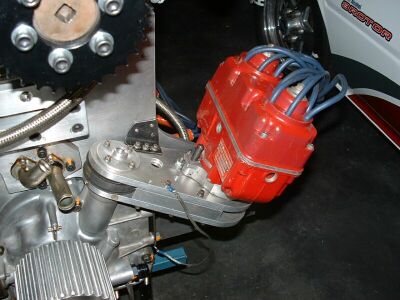
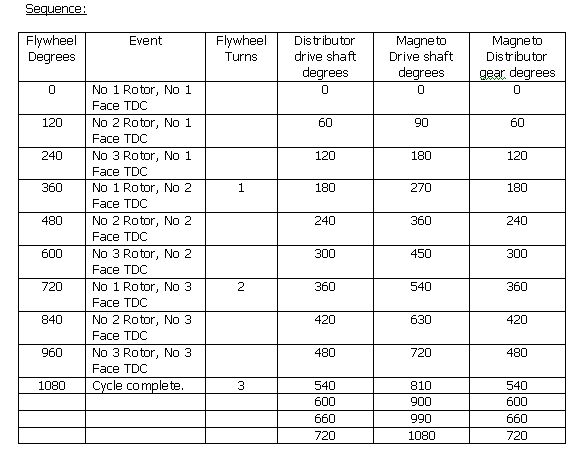
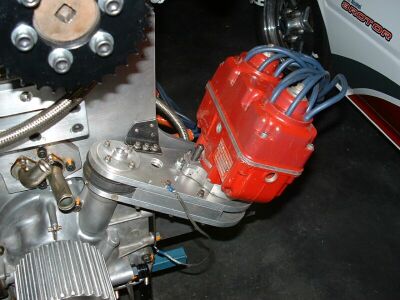
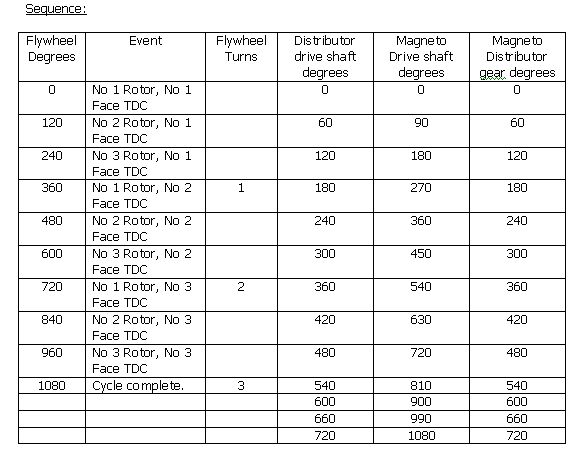
Unfortunately not directly. Paul Carey in WA has adapted racing magnetos
to a three rotor for racing purposes.
Paul Lamar
--
The Rotary Engine NewsLetter. Powered by Linux.
ACRE NL web site.
http://www.rotaryeng.net
Copyright 1998-2005 All world wide rights reserved.