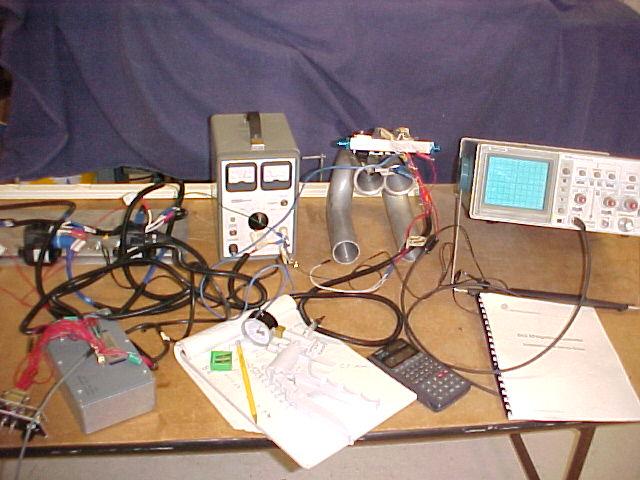
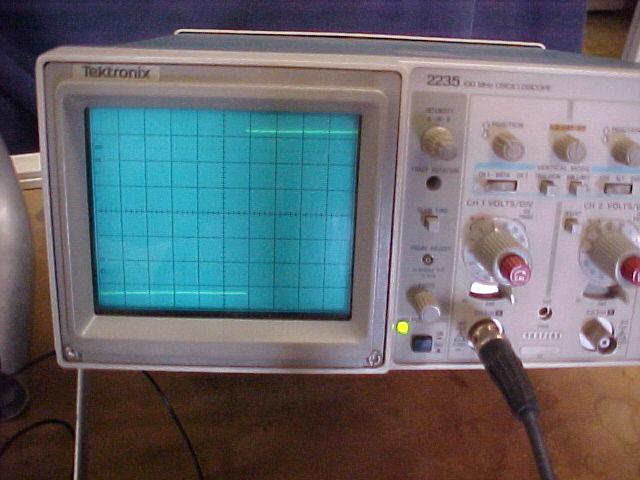
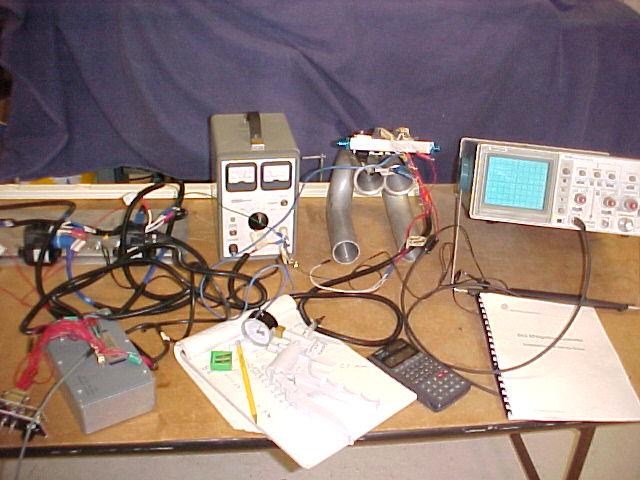
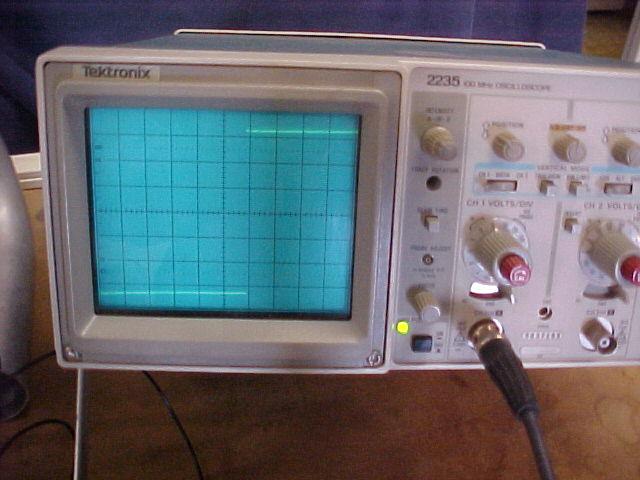
I set up Tracy's system in the hangar to measure the injector pulse
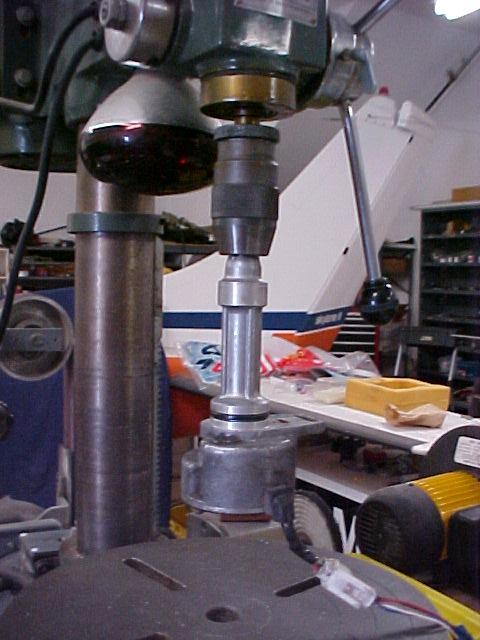
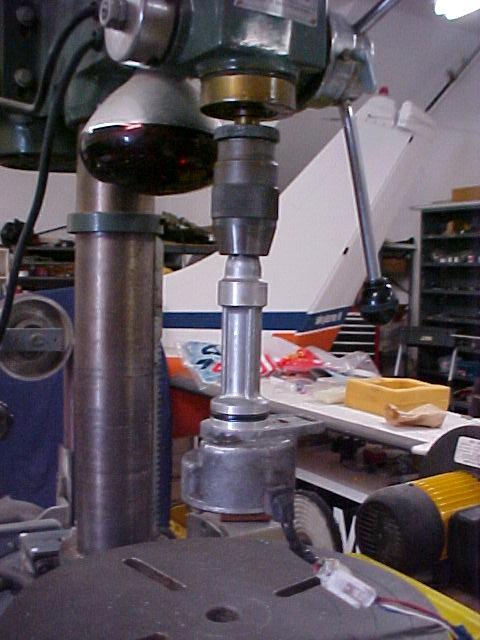
widths using my oscilloscope. I removed the drive gear from
a crank angle sensor and chucked it into the drill press.
Powered the whole rig using a 12 Volt adjustable power supply.
At 1200 RPM the whole system drew about 2 amps.
Ignition and EFI system. The current draw will go up with
RPM. In theory it will be about 4 amps at 2400 RPM and
so fourth and so on. 5800 RPM 8 amps.
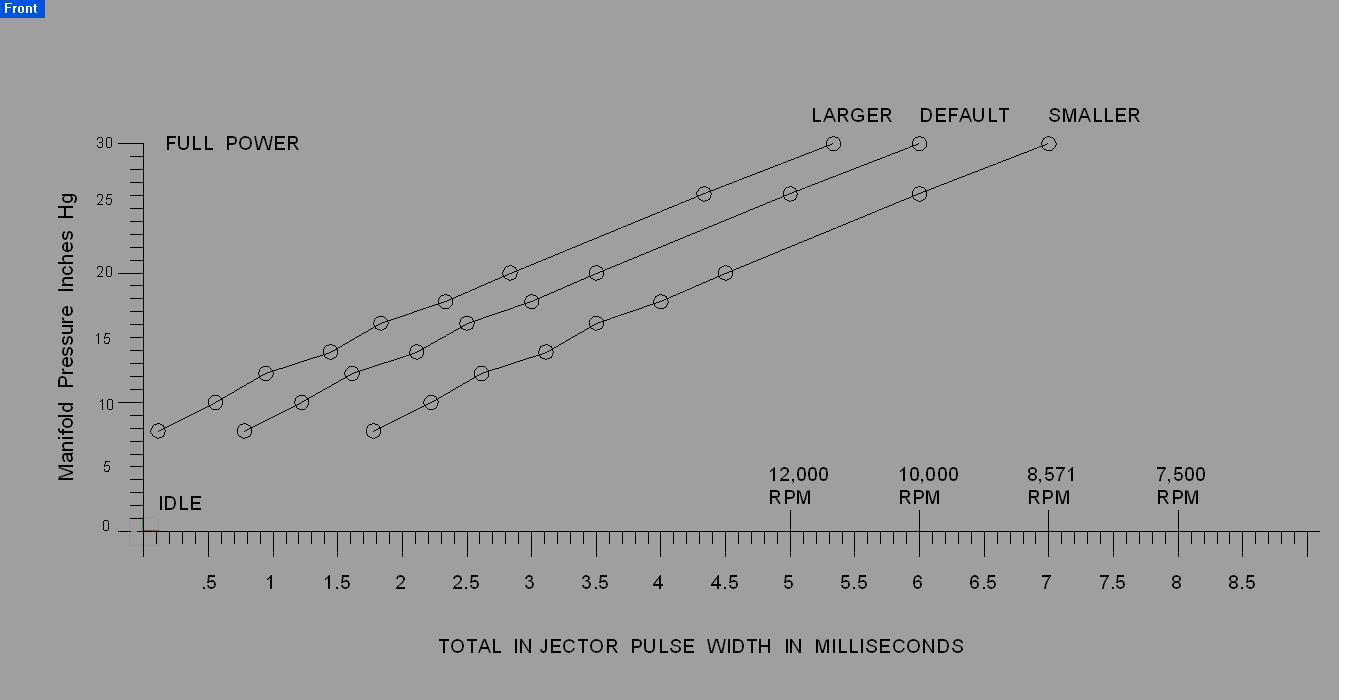
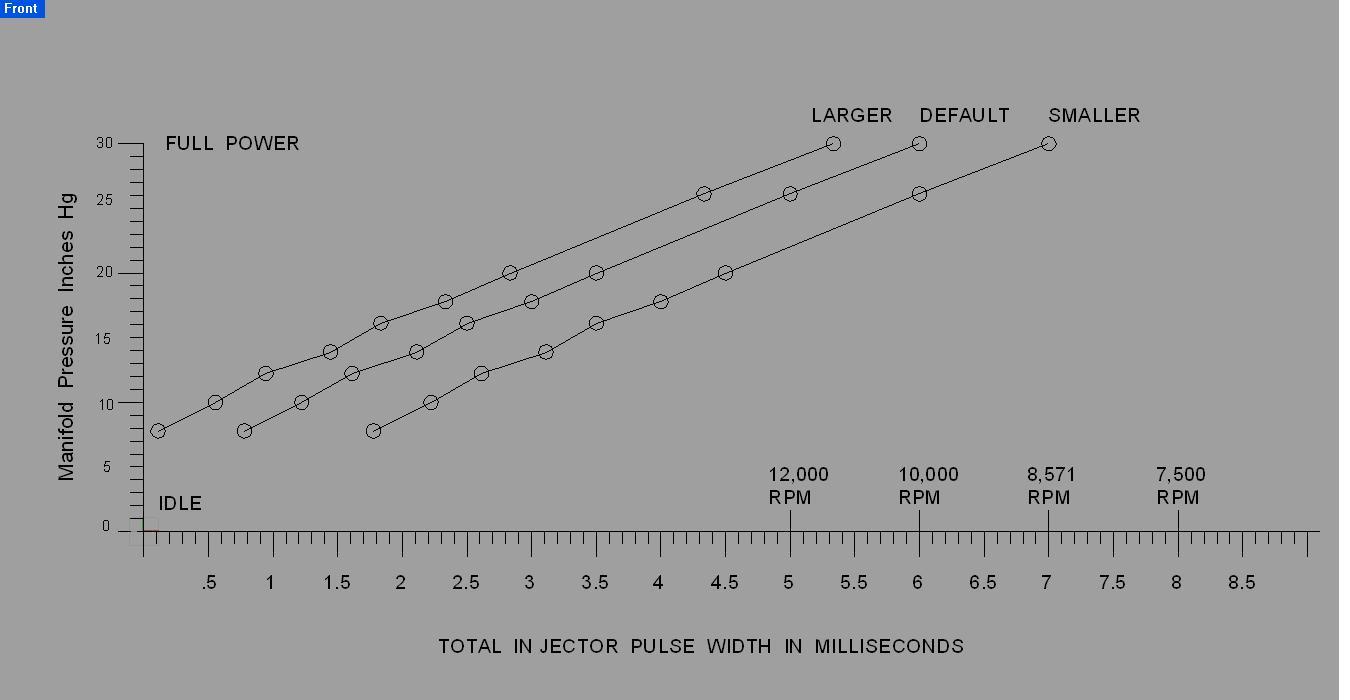
I bought a vacuum pump at the auto parts store and plotted
default total injector pulse widths from about 5 inches of
Hg to about 30 inches of Hg or full atmosphere pressure.
The hanger is 245 feet above sea level and it was about
an 85 degree day. Don't know the humidity but in SOCAL it is generally
below 25%.
This is total pulse width. Below about 15 inches of Hg only
the primary injectors work. Above 15 inches both sets of
injectors fire. Tracy adjusts the pulse widths so there is a
smooth transition at 15 inches of Hg.
The three curves represent what happens when you change
the injector size in Tracy's Mode 3. The stock injectors
default pulse widths is the middle curve. When you increase
or decrease the injector size or flow rate the curves shift
right or left.
Note; with the stock injectors you will run out of max pulse
width around 7500 RPM. That would be about the upper limit
using the stock injectors default pulse width. If the stock
injectors will not flow enough to provide the necessary fuel
for your HP generated at that RPM you will have to go up in injectors
size or flow rate. This is why I chose higher flow rate injectors
for the P-port engine.
Paul Lamar
--
The Rotary Engine NewsLetter. Powered by Linux.
ACRE NL web site.
http://www.rotaryeng.net
Copyright 1998-2005 All world wide rights reserved.