Bill, please credit the people you are quoting by including their names
at the end of their quote. Also it helps the new people on here if you
quote the entire message.
People have had problems in the past with all plastic runners.
Heat soak after a run can be a problem. Some have been known to burst
when the inevitable back fire happens. I think Tracy experienced that
problem as I recall.
Paul Lamar
What is really important is to choose the right composite for the
application. If you use polyester resin and glass to build an intake
manifold, you can expect all of the shortcomings and resultant problems you
mention. If, however, you use carbon fiber (mix) with high-temperature
epoxy, normal engine compartment temperatures and modest backfiring should
not be a serious issue.
The epoxy carbon fiber composite is as strong as steel (but weighs
much less.) If you mix in some Kevlar or glass, it also has good impact
resistance.
The epoxy chosen sets the maximum allowable temperature for the
finished composite. Typical epoxy has a service temperature of about 200 F.
It is not hard to find epoxy with a service temperature of over 400 F. (If
you are willing to pay the price, you can buy epoxy that will take 600 F.)
Of course, you pay a lot more for high-temperature epoxy and
carbon fiber than you would for polyester fiberglass. (About ten times
more.) The cost of the materials is a large fraction of my projected
(PIOMA) cost of $900.
It would be wise to put a heat shield between the intake and the
exhaust manifolds to keep the heat transfer under control, regardless of
what you make the manifold out of.
Bill Dube'
Carbon composite is only stronger than steel if it is filament wound.
If injection molded it is only a little bit stronger than the Epoxy resin.
Epoxy Resin is in the ball park of 5,000 psi while steel is 60,000 psi
to 300,000 psi. Furthermore Epoxy burns.
A heat shield does not help much in a heat soak situation.
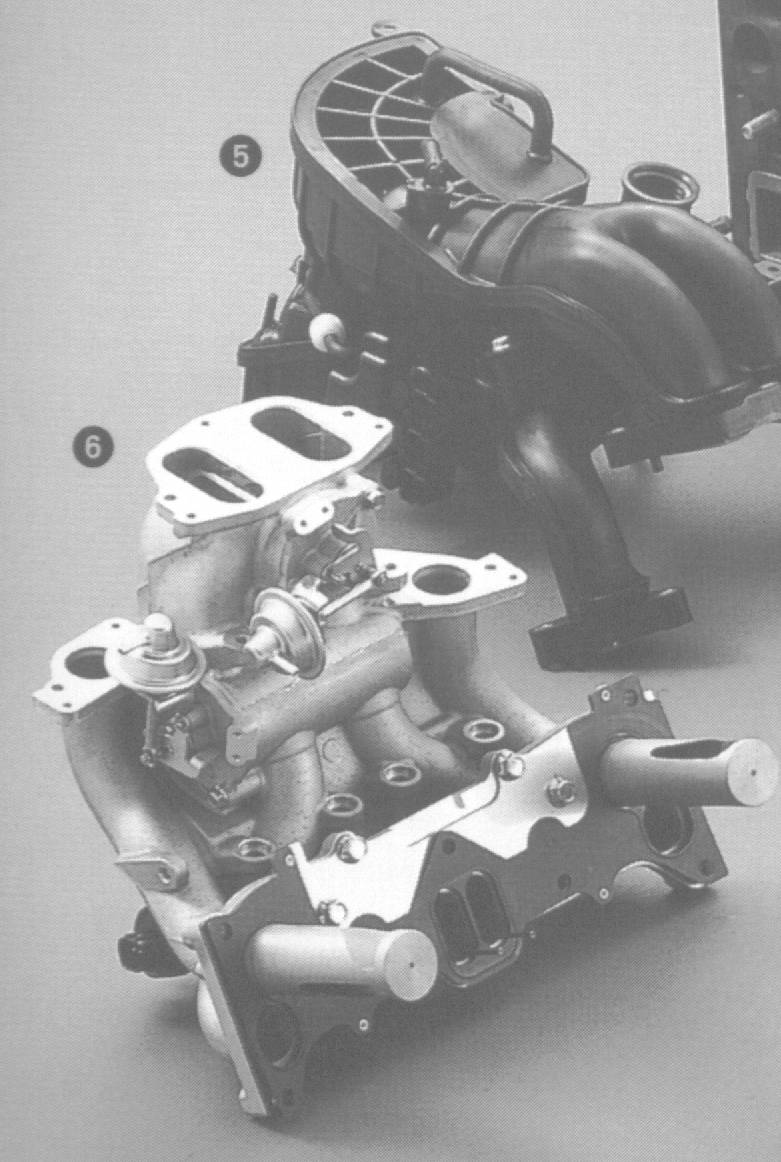
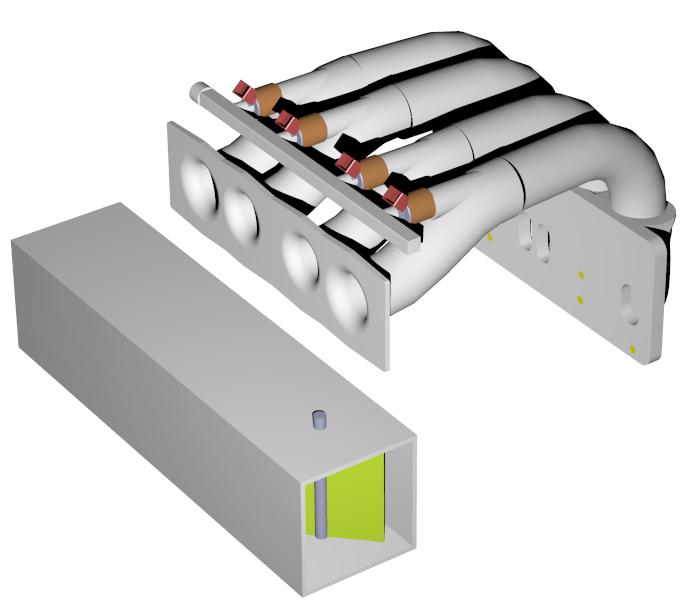
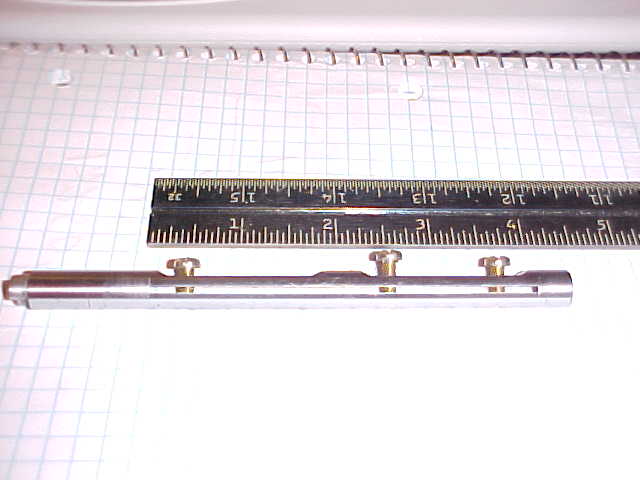
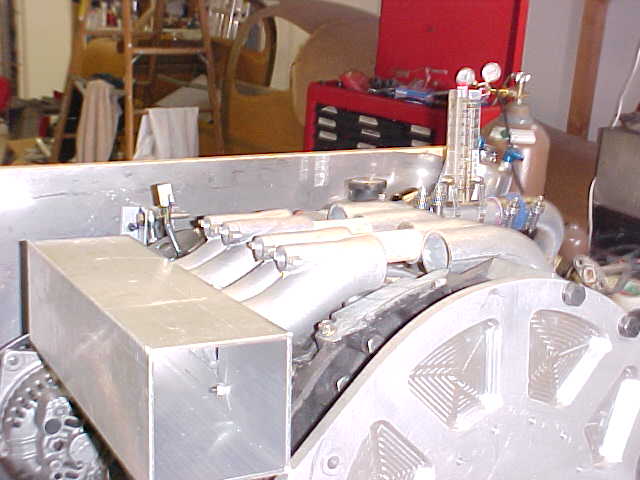
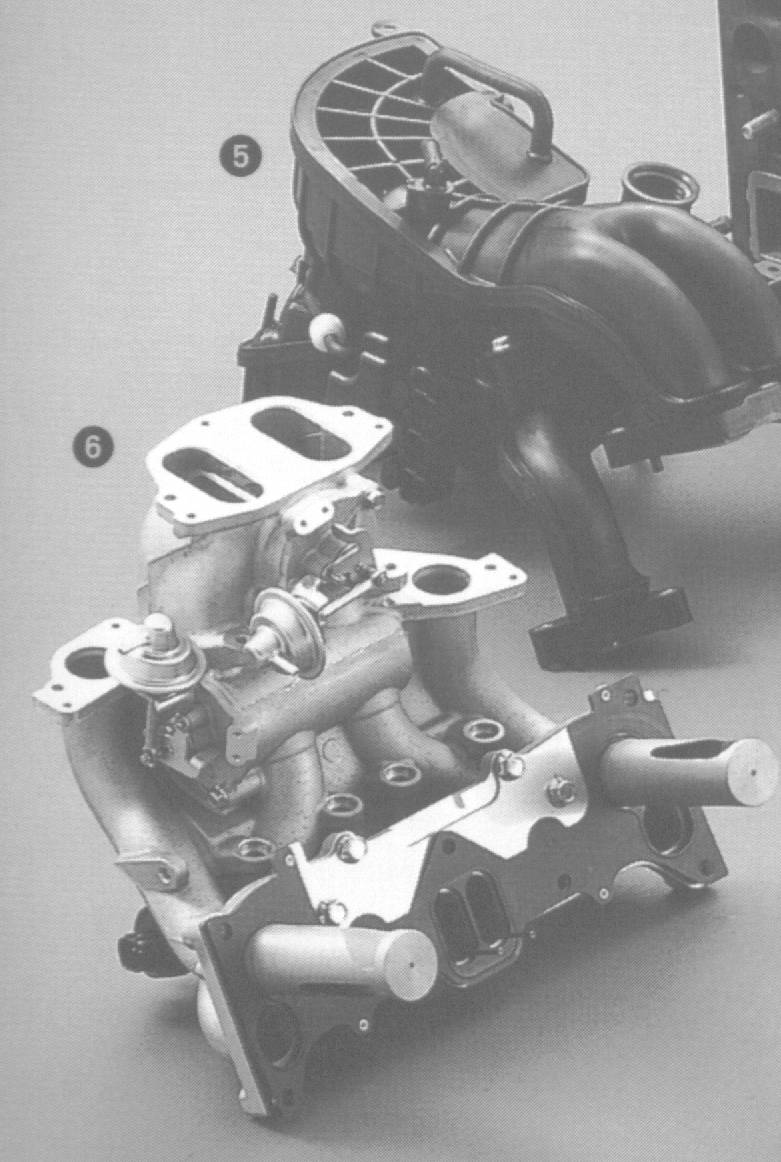
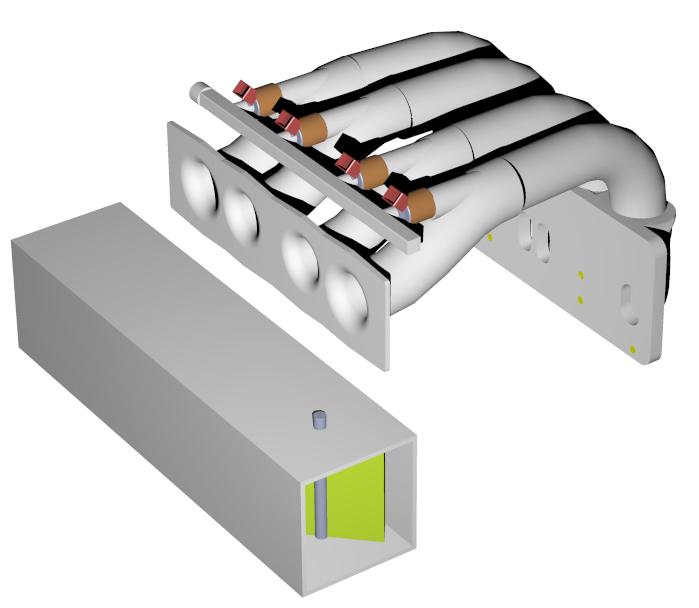
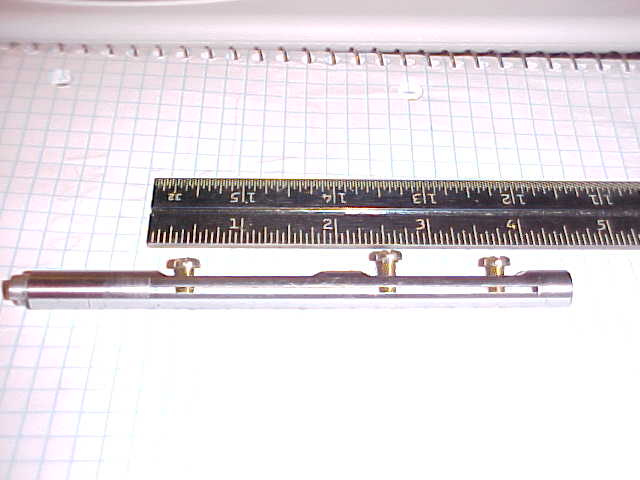
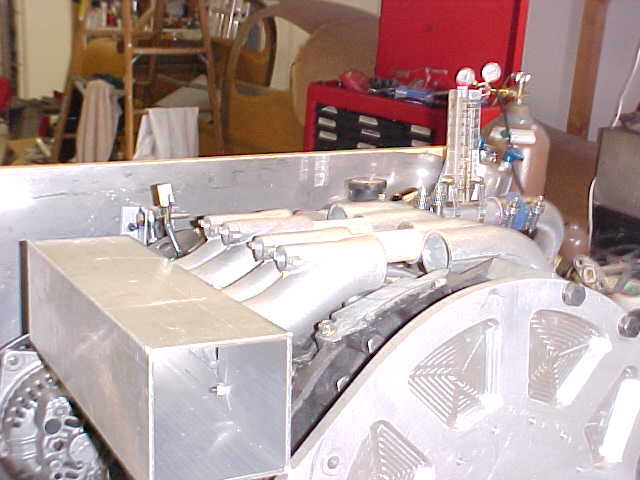
I am with Ian on this. Play it safe. Use the stock RX8 aluminum lower
manifold, cut it off, weld on some tubes and weld on a four inch square
aluminum extrusion for a plenum and call it a day. See the
second, third and fourth pictures.
Paul Lamar
The Rotary Engine NewsLetter. Powered by Linux.
ACRE NL web site.
http://www.rotaryeng.net
Copyright 1998-2005 All world wide rights reserved.