Paul L. writes:
My guess on P-porting once you have learned how to do it and
you can find someone with a mill is one half hour each
p-port hole in the rotor housing.
The six-port manifold is a bolt-on solution. Probably an hour or
so of your time. Let's cost out the P-port in that context.
I would guess that the machining cost would be several hundred
dollars. If I were to send you a pair of housings, how much would you
charge to return them to me with P-ports machined in them? I would guess
that you would charge me $200 or $300. (That is what my machinist pals
would charge.)
I would have to disassemble and reassemble the engine, to extract
and replace the housings, so you need to add that cost as well. Unlike a
junk yard RX-7 engine, there is no need to tear down a new (or very nearly
new) RX-8 engine. Thus, this is a genuine cost to be added to the P-port
application on a Renesis.
Gaskets would cost $100. The mechanic costs would be something
like $500, likely more.
$50 bucks for slide throttle sheet metal parts and
$60 for two 180 degree tubing bends, $80 bucks for enough
Teflon from McMaster Carr to make four and what ever the
welder charges to weld it together.
If you were to sell a complete bolt-on P-Port manifold, with
injector hubs, throttle plate, and fuel rail, how much would you charge? I
would think that it would cost $400 to $500.
Even setting aside the teardown costs, the bolt-on version of the
P-port would not be less expensive than the composite manifold approach.
If the aircraft implementation of the P-port actually demonstrates
more HP than the stock Renesis, then it would be worth the extra time and
money.
Since I have not produced a manifold yet, and you have not tested
your aircraft P-port set-up, I guess we'll both have to wait for the final
results.
If all goes well, I think I might have a manifold to test in a
couple of months. When will your P-port be ready to test?
Bill Dube'
------------------------------------------------------------------
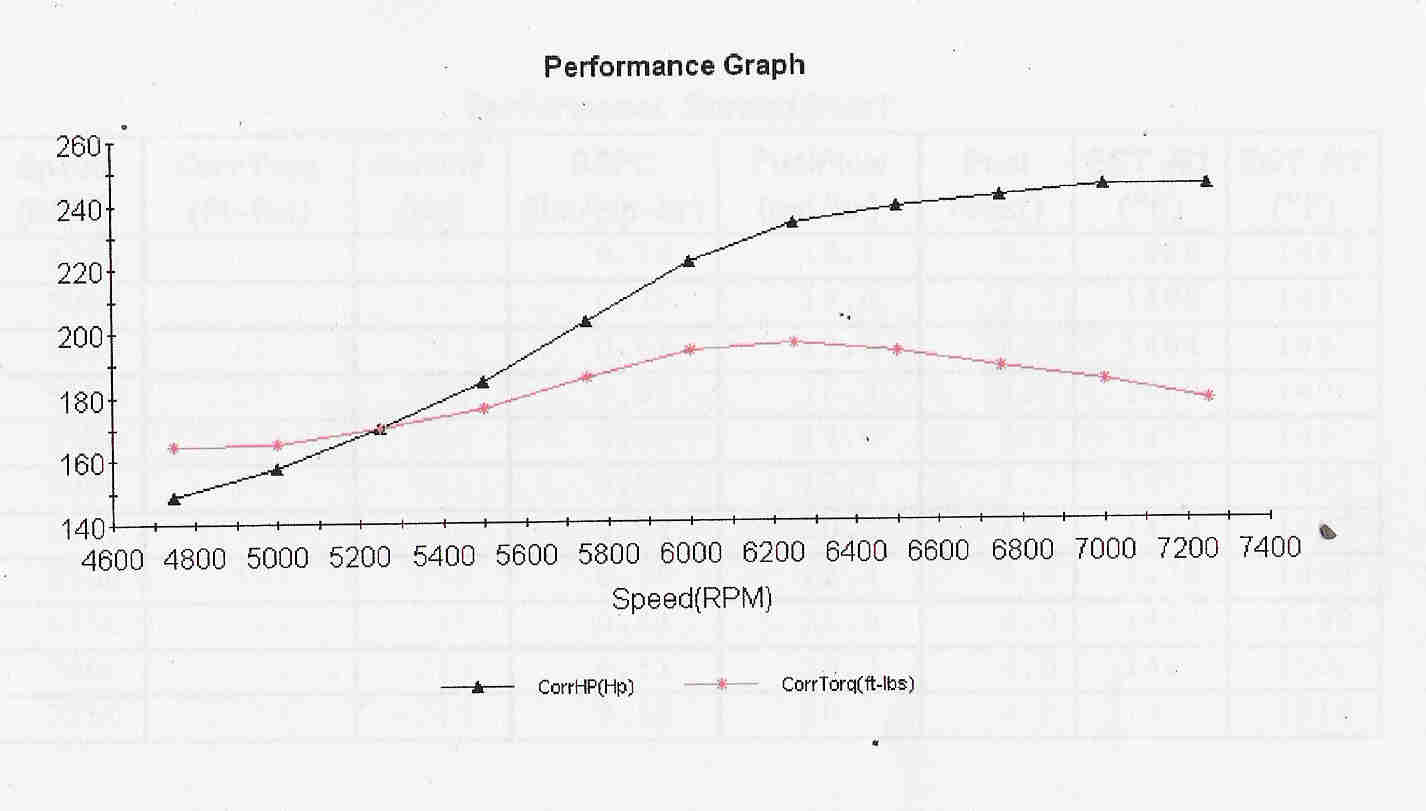
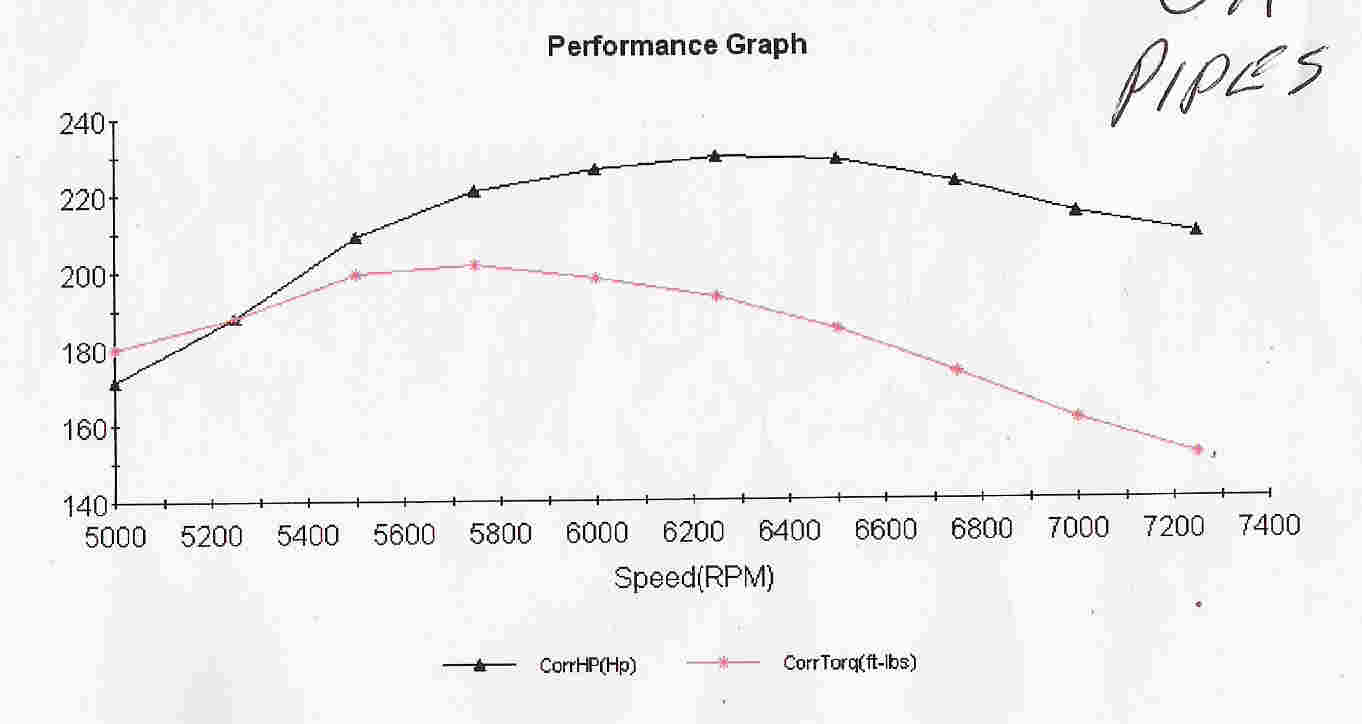
There is no question a p-port will generate more power. If you study the
jpg's I uploaded and the web site info I think you will be convinced
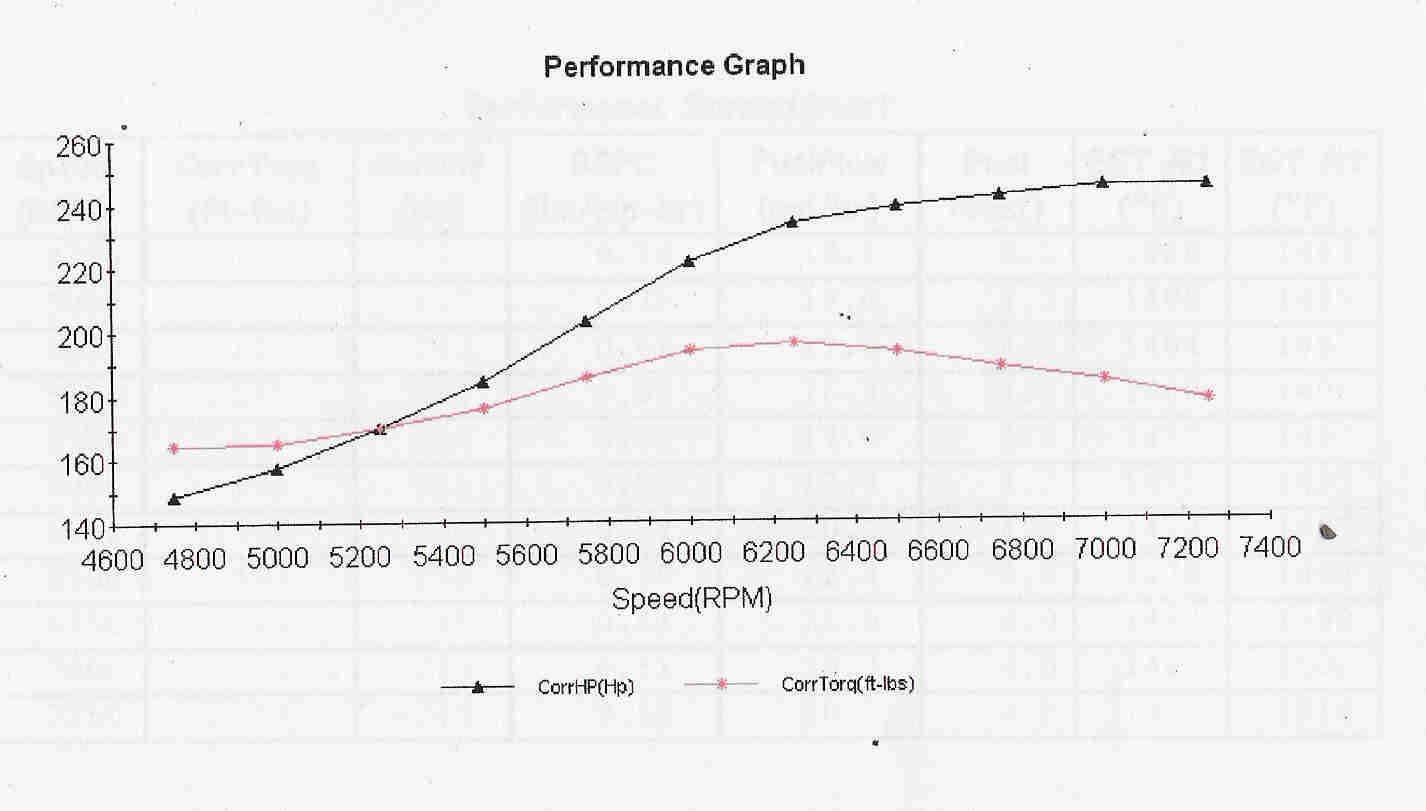
of that. We demonstrated 250 HP at 7000 RPM with a carb on the dyno
so far.
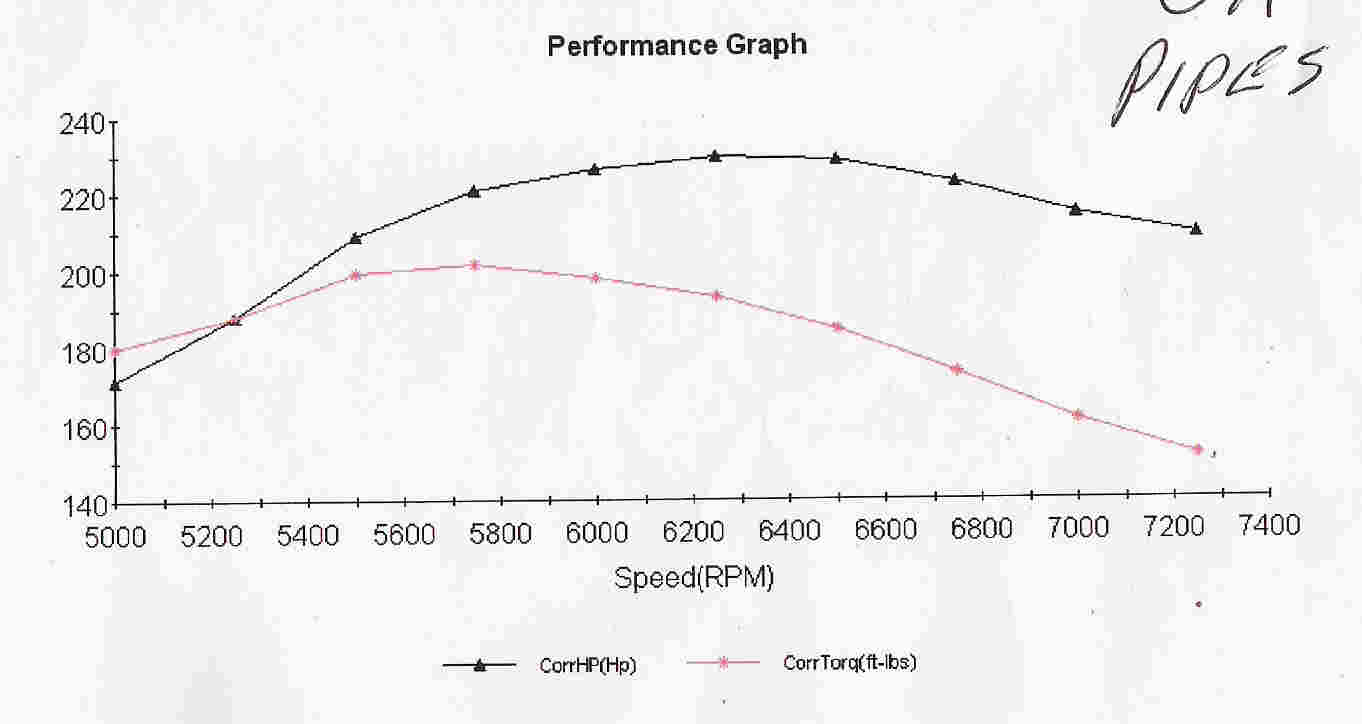
Here are a couple of dyno curves with the long and the shorter
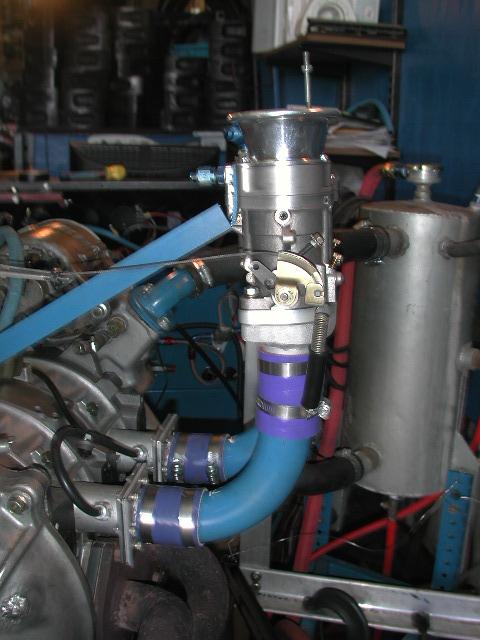
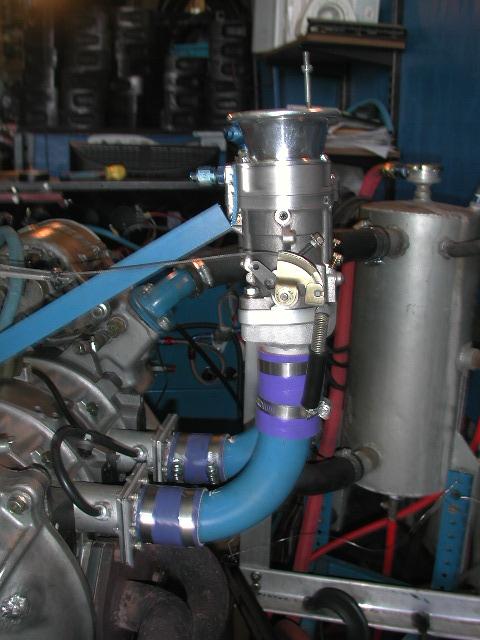
runners. Still too long IMHO. Also a picture of the engine on
the dyno with the carb set up.
Paul Lamar
--
The Rotary Engine NewsLetter. Powered by Linux.
ACRE NL web site.
http://www.rotaryeng.net
Copyright 1998-2005 All world wide rights reserved.