Here is another much simpler and much more accurate method of
determining
how much fuel should be injected. Sample the pressure in the intake
chamber directly, right after the intake port closes using the
currently
unused apex seal oil injector hole. No software or hardware changes
required other than moving the time the pressure sample is taken.
No effect on the current plenum system other than this is a way more
accurate way of doing it. What you are doing here is directly measuring
the total amount of air that actually made it into the engine.
It will probably even work in a piston engine and is far cheaper
than a mass air flow sensor.
Now that is a multi million dollar patentable device if I ever saw
one and if it were not for the fact you are reading about it at this
very moment :)
next day --------------------------------------------------
Forget everything that went before. This is the final answer.
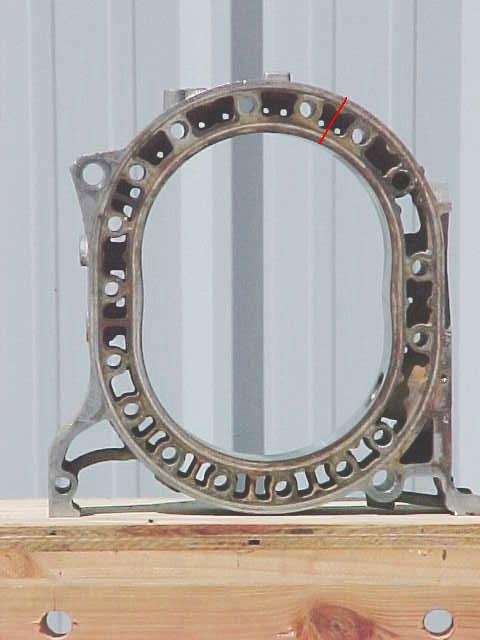
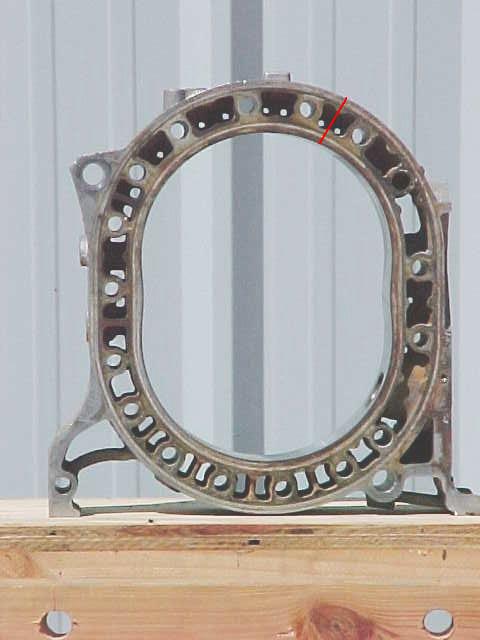
Mark, I am going to make up a couple of these pressure tap fittings
for you that screw into the oil injector holes. Just so there is no
mistake. This jpg shows where the intake manifold taps go. Total
quantity or mass of air is automatically measured given the air
temperature going in.
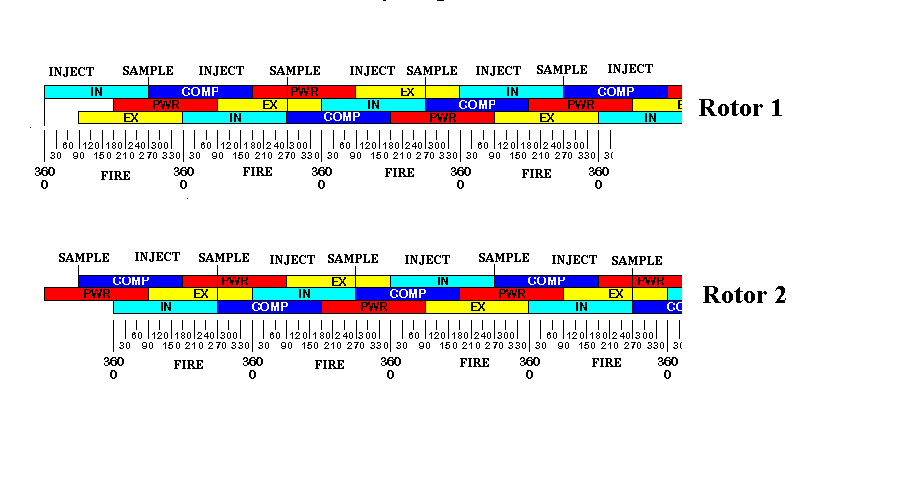
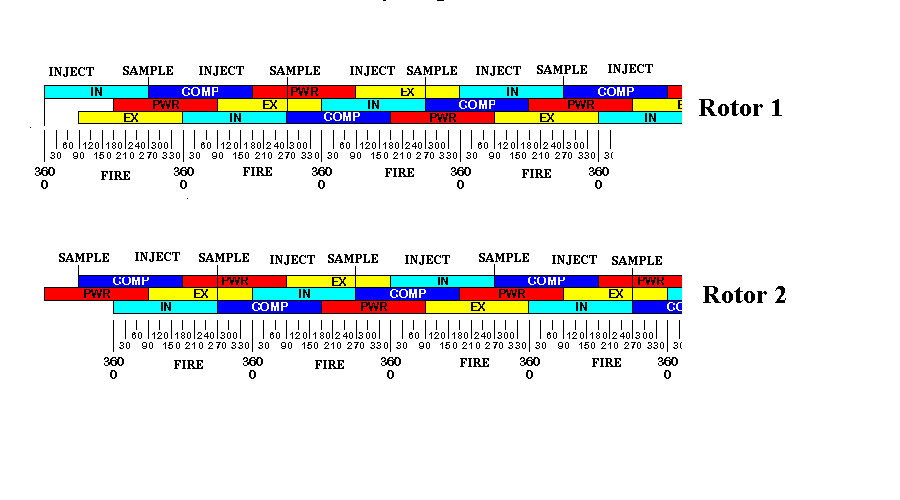
If Tracy changes the point where he samples the data to about
a 30 degree e-shaft window where the intake port is closing and
the apex seal oil hole is still open this will work gangbusters.
Right after the first apex seals passes this oil hole the pressure
will start to drop rapidly and build up again until
the next apex seal closes the intake port again. Should be a
nice pressure spike in this hole.
Anything close to closing and before the oil hole is passed should
work great.
BTW this will work very very well with a rotary but not so hot
with a piston engine. A piston engine, unlike a rotary
uses the exact same chamber for intake, compression,
expansion and exhaust consequently there is a huge pressure spike
when the engine fires. The pressure sensor therefore must
be extra robust.
I am really excited about this. This is a major breakthrough.
Paul Lamar
Paul, I'd like two pressure tap fittings too. Thanks, Jerry
I don't know. We will have to find somebody to mass produce these
things. I was going to drill a hole in a metric screw and JB Weld epoxy
in a small copper tube. I am committed to getting Mark's p-port engine
to run right what ever it takes and the R&D but I am not interested in mass
producing pressure taps or slide throttles for that matter unless
all else fails. Tom Weber is doing a good job on the latter.
I just checked McMaster Carr and they carry 1/8th inch hose ID with
1/4 pipe thread hose barbs. Page 204. The current hole is 8 mm metric or
0.3150 so a 1/4 pipe tap (0.47739 drill) might work.
Drill it out for 1/4 inch pipe thread.
Paul Lamar
BTW you don't have to use the oil injector hole.
You could drill an 1/8 inch diameter hole in the rotor
housing the next bay up and JB Weld in a 1/8th inch copper tube.
See the attached picture with the red line where the hole
goes. This has the advantage of giving Tracy a longer
E-shaft degree window to take a pressure sample
between the time the intake port closes and the apex
seal passes the pressure tap hole.
I think this may be even better as it will work with
RX8 rotor housings that don't have apex seal oil injector
holes in the middle of the rotor housing. Also will work
for those people insisting on on using the stock Mazda
oil injection pump.
Tracy's software would then work with everything.
Paul Lamar
--
The Rotary Engine NewsLetter. Powered by Linux.
ACRE NL web site.
http://www.rotaryeng.net
Copyright 1998-2005 All world wide rights reserved.