Since I have been misquoted elsewhere, here is the last message
from me on the subject. In the mean time everybody and his brother
around the world are speculating on what the proper sizes might be.
If you have a question about this and somebody quotes me it would
be a good idea to contact me directly and check.
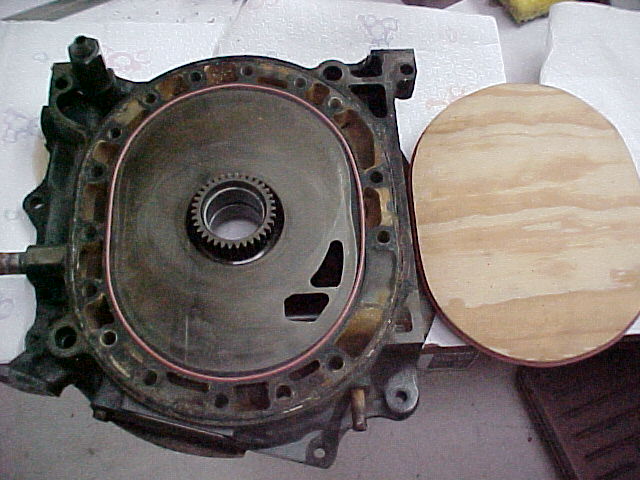
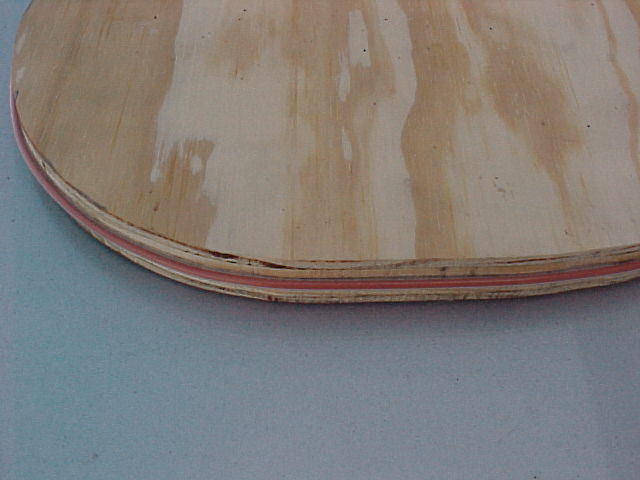
Please read all of this as it describes
a method of getting the O-rings to lie flat in the grooves.
Also double check my work as the wrong O-rings can destroy
your rotor housings. I also understand that the .098 size
mentioned is no longer available. I have a call in to Jeff
Chrysler at Creavey to verify this. The latest Creavey catalog
still list this size. I talked to Tina and he she said .098 is
still available.
http://www.creavey.com/brochure.html
The problem appears to be a
confusion over whether the diameters are ID or OD.
Go to the bottom of this message and measure the slots as outlined.
If you measure the ID length of the slots converting
the circumference by dividing by 3.1416 (pi) to the diameter
will lead to the ID of the O -rings.
Note Creavey calls the ID the shaft diameter and the OD the
grove diameter. If you use their terminology when ordering
it my reduce the confusion.
Paul Lamar
*************************************************************
-------- Original Message --------
Subject: O-Ring Housing and how to O-rings
Date: Sat, 03 Apr 2004 08:09:39 -0800
From: ACRE
<rotaryeng@earthlink.net>
Organization: ACRE
> > > > Bob Perkinson wrote:
> > > > >
> > > > > Attached is a picture of the Center housing of an 87 13B that I
> > have, as
> > > you
> > > > > can see the combustion o-ring housing is broken off. Has anyone
> > > > > successfully repaired the outer wall of the combustion O-ring
> > housing?
> > > Can
> > > > > this even be repaired?
> > > > >
> > > > > Bob Perkinson
> > > > > RV9A
> >
> > > > Common problem for that year engine. Yes somebody has repaired
> them
> > > > by brazing as I recall. I personally would not consider the repair
> > safe
> > > > for aircraft use however. These housing are interchangeably from
> year
> > > > to year somewhat. I would get another end housing from an 89 or
> > latter.
> > > > It think Mazda had a quality control problem or the design did not
> > allow
> > > > enough excess meat for minor core shifts. They fixed this problem
> in
> > later
> > > years
> > > > by modifying the casting patterns I think.
> > > >
> > > > Paul Lamar
> >
> > "Brian D. Cain" wrote:
> > >
> > > I've seen this a bunch of times on the front end plate of the 89-91
> year
> > > models.
> > > Same exact place, the iron for the inner water jacket o-ring land
> just
> > > disappears
> > > into space...
> > >
> > > B
> > > __________________
> > > Brian D. Cain -/- Grand Prairie, TX -/-
bdc196@killspam.comcast.net
> > Silicone rubber expands with tremendous force if constrained. If the
> > engine
> > is over hauled and these O-ring slots are not completely cleaned it
> could
> > be caused
> > by the stock Mazda square section silicone rubber O-rings expanding.
> >
> > Paul Lamar
> Well, I have really gone an done it now. I have been trying to figure
> out why I wasn't circulating any (or very much coolant). I finally
> thought I was getting there. I was doing a run up to work on setting
> the mixture map, coolant temps still very low, when once again I saw the
> familiar haze of coolant being blown over the top of the engine. At
> first I couldn't find where the leak was coming from, then discovered to
> my horror that it was coming from the oil vent line. :-( Yup, on shut
> down there was water coming out the exhaust too.
>
> That was 2 days ago. Today I pressurized the system and after about an
> hour I had begun to collect some water in the chambers. Just a little,
> but that is obviously too much. I was getting so close to flying I is
> really going to suck to take apart that engine.
>
> I figure that in the mean time I may as well install the Teflon O-rings.
> I know someone else just asked, but I missed. Anyone know where they
> are sold?
>
> David Leonard
> The Rotary Roster:
>
http://members.aol.com/_ht_a/rotaryroster/index.html
Yes you can order them directly from Jeff Chrysler at Creavey.com
http://www.creavey.com/
You might as well order the rotor oil seal O-rings while you are at it.
Chuck is running them now for at least a year with no negative feedback.
If it were me I would also use them in all places including the oil gallery
seals.
Make a new folder in your email program called "O-rings" and drag this message
over and drop it in. :)
I will outline what we are talking about.
There are four coolant sealing O-rings per rotor housing.
Two outer and two inner.
There are also four oil sealing O-rings per rotor. Two on each side of
the rotor proper. These are located on the flanks of the rotor.
Two per side.
Teflon encapsulated silicone O-rings are the best there is for this
application. Teflon is about the most inert material you can
find and it is resistant to most known chemicals. Unfortunately
it is not rubber like and that is where the high temp silicone
rubber core comes into play.
http://www.creavey.com/
> 1. Inner coolant oring -
>
> circumference = 28.625
> diameter = 9.111
> slot depth = 0.062
> slot width = 0.141
> section size = 0.098
> 2. outer coolant oring -
>
> diameter = 11.340
> slot depth = 0.062
> slot width = 0.110
> section size = 0.093
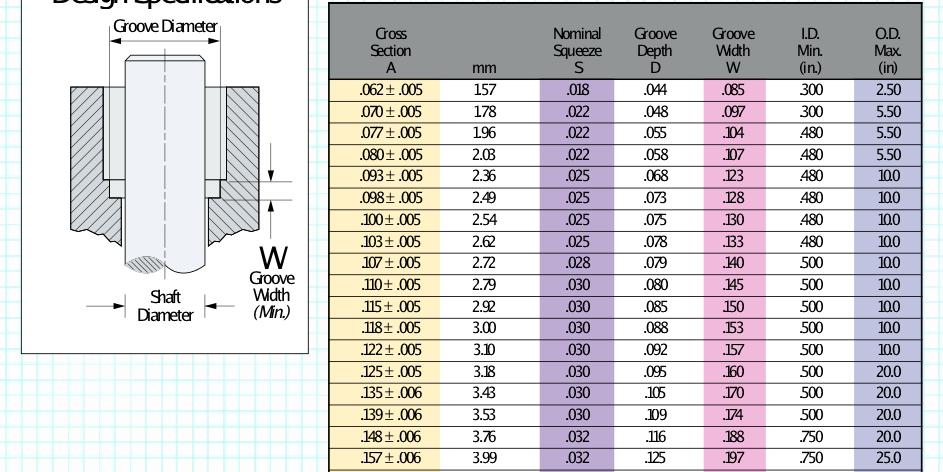
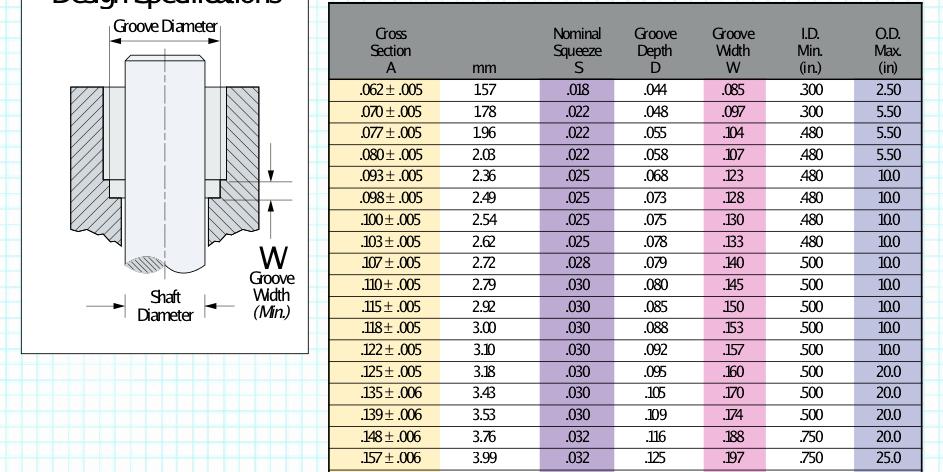
This is critical! The proper section size is .093. Not 3/32
as a 3/32 O-ring is bigger in section size than .093.
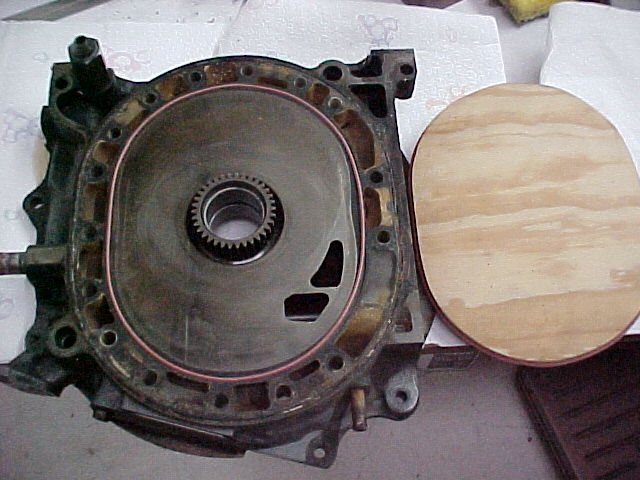
The TES O-rings are stiffer than the stock O-rings. It is harder
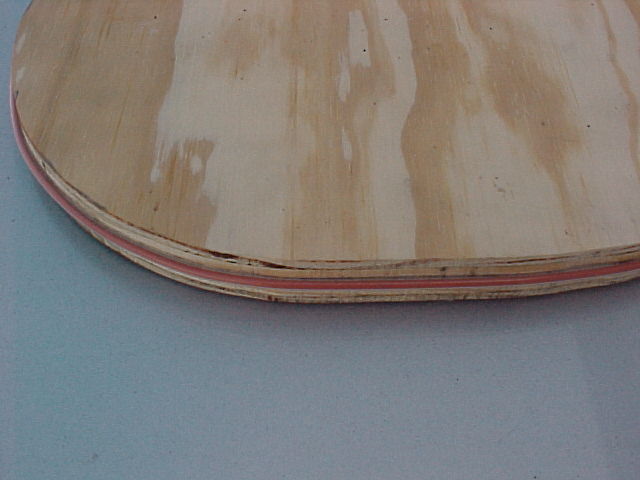
to get them to lie in the groove. Even with Vaseline. When you buy
them they don't come flat. I found that using a plywood
form to pre set the slightly under size TES O-rings for a few
days works well. Here is a picture.
--------------------------------------------------------------
Oil O-rings.
I checked the installation of the oil O-rings with the new
sizes I got from Creavey. They worked perfectly and were
very easy to install. You will need a little O-ring lube
and a 2 by 8 to install them. They were also easy to remove
with no signs of distortion.
One of the secrets is if you reuse the old oil scraper rings
they must be spotlessly clean inside and out. Soak them
in carb cleaner for a few days. If you use new scraper rings
this will not be a problem of course.
The second thing to watch out for is don't nick the
rotor wall between the two scraper rings when you remove them.
Very very important!!
These can be the same cost or just a little more than the
stock oil O-rings from Mazda.
The proper oil O-ring sizes are:
The proper oil O-ring sizes are:
0.093" section 4.68 inch ID
0.118" section 4.33 inch ID
I can vouch for the quality of the Creavey O-rings but some
of those water TES o-rings from Mcmaster Carr I have seen
are not as good. This is not to say they won't work. They just
don't look as good around the joints as Creavey O-rings.
Viton is good only to 400 degrees F. The center of the rotor runs
as high as 500 degrees F. I think 400 degrees F leave's too
little of a safety margin when 500 degrees F is available
in TES O-rings at the same price probably.
*********************************************************************
How-to-measure.txt
Here is how to double check my work. We will do a little reverse engineering.
The O-ring grooves are two half circles connected by straight sections
to form sort of an oval.
Measure across from side to side on the end housing to the inner edge
of the O-ring groves This then is the inner diameter of the half circle.
We will call this dimension SSL. For the inner O-ring this diameter is 7.5"
Outer diameter is is 9.75". These form two circles of 23.562 circumference
and 30.63 circumference. C = D X Pi (3.1416)
Measure the distance up and down to the inner edge of the O-ring grooves.
For the inner O-ring groove this dimension is 9.75 (confusingly).
Outer o-ring groove is right on 12 inches.
We will call this dimension VL for vertical length. VL-SSL gives us
the length of the straight sections. We have two straight sections
9.75- 7.5 or 2.25 inches in length for the inner o-ring slot
and 12 - 9.75 or 2.25 for the outer O-ring slot straight sections.
Therefore the inner circumference is 23.562 + 2.25 + 2.25 or 28.062".
Close to the number we got below. Divide by 3.1416 to get the
equivalent diameter.
For the outer o-ring slot the circumference is 30.63 + 2.25 + 2.25 or 35.13.
Also close to the number we got below.
Now to be real precise you must repeat these measurements for
the outer O-ring slot grooves.
In any event you want to err on the small side
as you are going to cut pieces of plywood the exact size
of the inside wall of both slots. Slip the o-rings over
this plywood form for for a few days so they will take a set.
Other wise you will play hell getting the o-rings to lie flat
in the grooves when you assemble the engine.
Paul Lamar
*************************************************************
The Rotary Engine NewsLetter. Powered by Linux.
ACRE NL web site.
http://www.rotaryeng.net
Copyright 1998-2005 All world wide rights reserved.