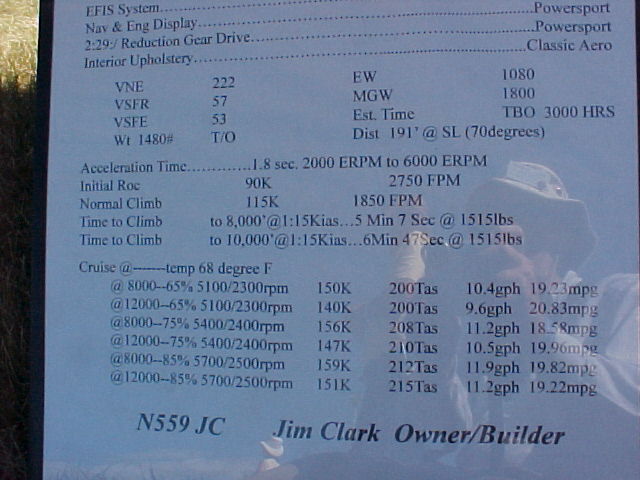
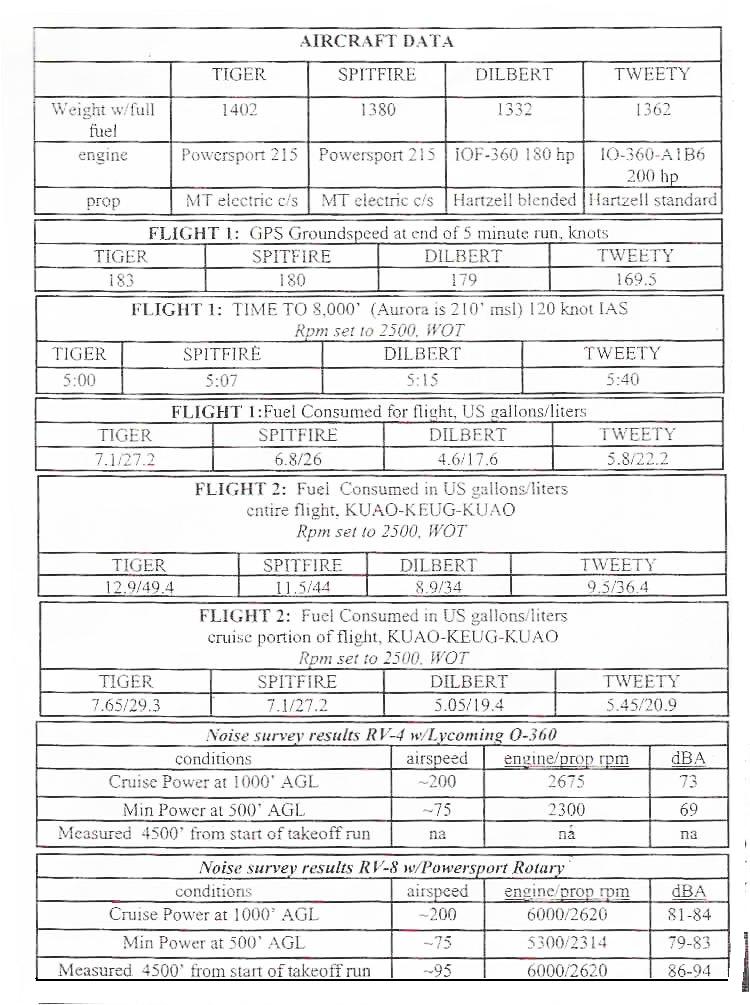
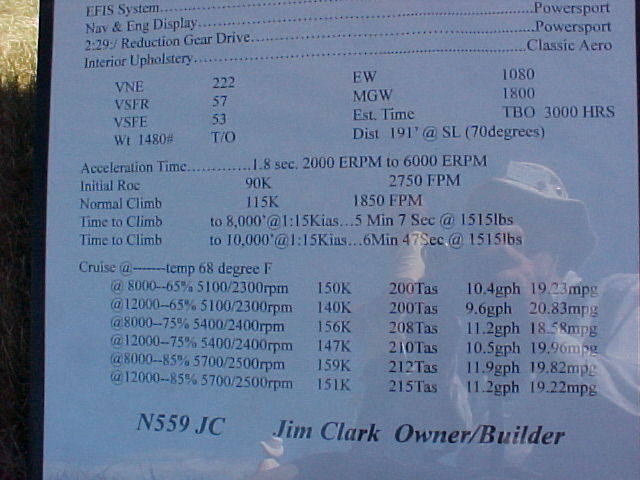
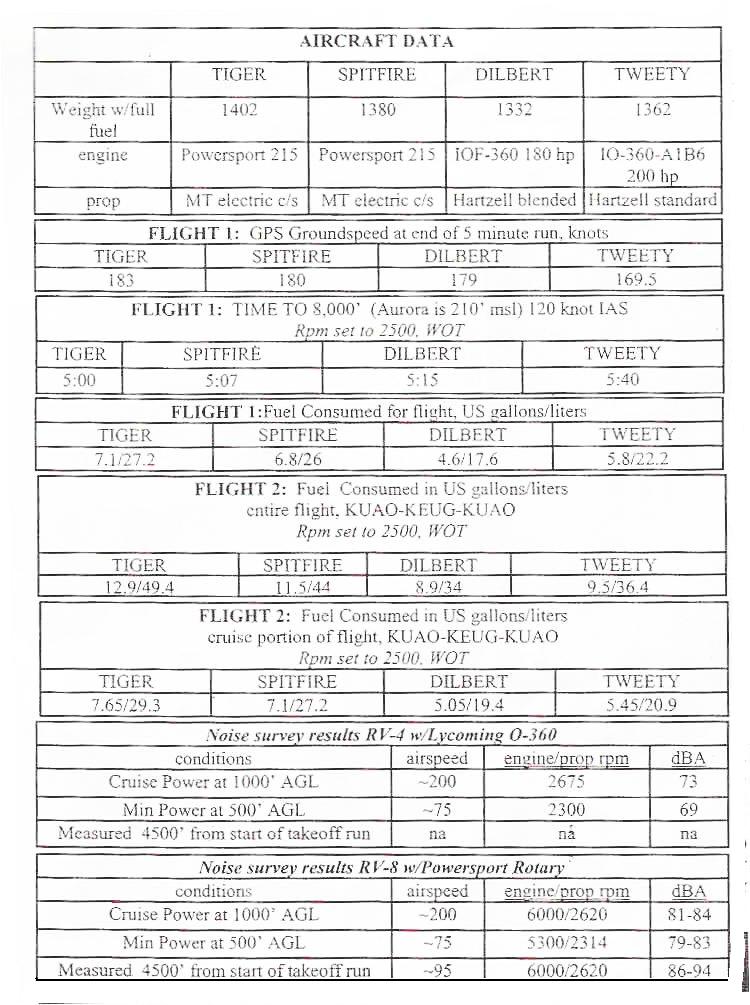
This is from the Power Sport P-port 13B engine RV8 installation.
The mixture was not necessarily optimally leaned on these
engines when this data was taken. The computer decided at
that time. Power Sport is rumored to be changing the software
so the engine can be manually leaned. It also reflects
a less than optimum MT composite (98% wood) electric
constant speed prop. Tracy Saylor tested this prop and
found it 10 to 15 MPH slower than a metal constant speed prop
on his 238 MPH RV6 race plane.
The second scan is from an article in the RVator news letter.
A muffler of sorts has also been added since this data was taken.
Paul Lamar
Not good. The p ports are only marginally faster while gulping
fuel and making a lot more noise. We will have to do better. I
don't mind burning more fuel as long as the performance is
correspondingly higher. Jerry
+++++++++++++++++++++++++++++++++++++++++++++++++++++++++++++++
I don't agree. At 200 to 215 MPH TAS 19 or 20 MPG beats the heck out
of the 13 MPG I get at 150 MPH in my 182. I think this is well
within the ball park of acceptable fuel burn performance. We have no idea
what mixture ratio any of these engines were running when that data was acquired.
I doubt seriously any side port rotary engine would generate much different
numbers than these engines when leaned properly. According to the Lemans
P-port engine data and results it gets the same BSFC as Tracy claims for
his leaned low power RX8 engine.
It would be interesting but not conclusive if Tracy flew in formation with these
airplanes all leaned to the same EGT numbers, all running at the same prop RPM
and all using the same props. As I said the efficiency of the props used makes
a large difference. Notice also in this regard the fuel burn difference between
Dilbert and Tweety. Dilbert is an RV8 with a FADEC equipped IOF-360 180 HP and a
state of the art Harzell prop while Tweety was an RV8A with a 200 HP Lycoming IO 360
A1B6 and a standard Hartzell prop. My contention is the main reason for the
difference, other than the leaning issue, is the props used.
Note also the difference in percentage of max engine power required. In one
case they were comparing a 180 HP engine with a 215 HP engine at the same
airspeed. Perhaps the 180 HP engine was running at the best BSFC minimum while
the 215 HP rotary was beyond its best BSFC minimum point. BSFC tracks peak
torque and torque of course varies with RPM and throttle opening.
The only way to really measure it accurately is fly side by side in identical
airplanes for hours and hours and then compare the fuel burned. Notice also the big
difference in seemingly identical rotary engines in identical RV airplanes.
This was a reasonably controlled test compared to the thousands of
unrealistic and uncontrolled test claims made by most people.
You can always get better MPG by slowing down just slightly because HP required
and therefore the fuel burn is proportional to the cube of speed.
Paul Lamar
The Rotary Engine NewsLetter. Powered by Linux.
ACRE NL web site.
http://www.rotaryeng.net
Copyright 1998-2005 All world wide rights reserved.