Greg wrote:
> Hello. I was advised to get involved here to possibly find out what the
> fuel consumption will ultimately be with Innodyn's turbines. I
> understand this is a newletter for rotary, but a saleman for a rotary
> company said I'd find out some interesting things about turbines via you
> newletter.
> Thank you, Greg Nus
>
> PS. I'm building an RV10 and am on the fence between a mistral G-230TS
> and innodyn 255.
>
>
> Alias N510RV
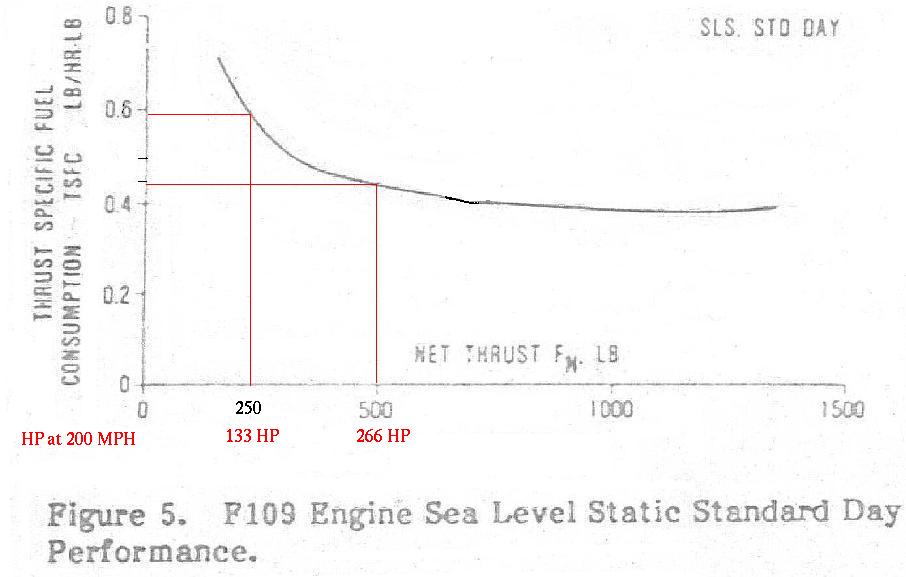
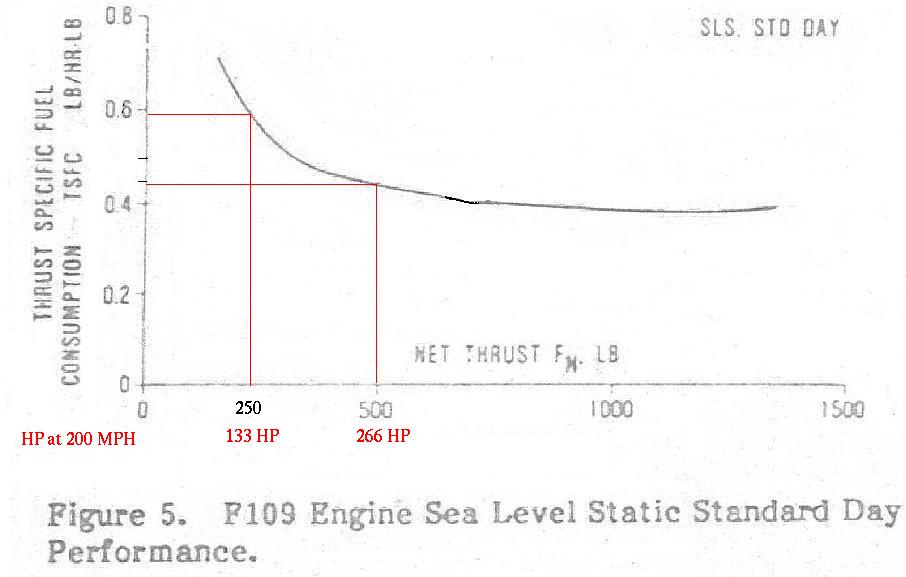
The finest small turbo prop engines in the world can barely
achieve, under ideal circumstance, 0.65 pounds of fuel burned per
hour for each horsepower generated in each hour. This a fact and
not anyones opinion. These engines are extremely expensive with
many stages of axial flow compression and probably a few stages
of turbines. You can ask any legitimate turbine company
such as Rolls Royce (Allison), Pratt & Whitney, Garrett and/or GE. They
will give you the data on the turbo prop engines they build.
This is the result of very expensive world wide gas turbine
R&D for the last 70 or 80 years.
In other words a small 200 HP turbine will require a minimum of
200 times .65 pounds of fuel per hour or 130 pounds of fuel
per hour. Since there are 6 pounds of fuel in each gallon that
is 21.66 gallons an hour.
Go to a large library and obtain a technical book on gas turbines
and research this for your self. Don't take my word for it.
I can recommend "Aircraft Gas Turbine Engine Technology" by
Irwin E. Treager Glencoe Mcgraw Hill. Third edition 1995
ISBN 0-02-801828-1
If some small company comes along and claims they are burning
significantly less fuel than this while generating the same HP
it becomes quite obvious they are lying. The smaller the turbine
the worse this ratio. In other words at 100 HP the ratio could
be one pound of fuel burned for every HP or 100 pounds of fuel
per hour or 16.6 gallons per hour.
A 100 HP piston aircraft engine like the Continental O-200 will achieve
half that or better. Probably around .45 BSFC or 45 pounds an hour or 7.5
gallons an hour. This ratio for piston aircraft engines is a good
number for piston engines up to 4,000 HP corn cob radial engines.
The number can go as low as .38 for a large turbo compound radial engines
used post world war II in airliners. See our web site below.
http://www.rotaryeng.net/turbo.html
The best the Mazda Wankel rotary engine can do so far is 0.47 however
it is far more reliable than an aircraft piston engine mainly
because it has no problematic exhaust valves and it is less costly
to buy which will compensate over time for the slightly increased fuel burn.
Paul Lamar
Hi Paul
Great explanation.
Thankyou.
The Innodyn people are claiming 7 to 8 gph / 100hp.
I'll believe it when I see it. They are pushing forward though so time will
ultimately tell..
Thanks again for the explanation.
bill
I would give them another 50 years :)
Paul Lamar
The Rotary Engine NewsLetter. Powered by Linux.
ACRE NL web site.
http://www.rotaryeng.net
Copyright 1998-2005 All world wide rights reserved.