> Greg wrote:
> > Hello. I was advised to get involved here to possibly find out
what the
> > fuel consumption will ultimately be with Innodyn's turbines. I
> > understand this is a newletter for rotary, but a saleman for a
rotary
> > company said I'd find out some interesting things about
turbines via you
> > newletter.
> > Thank you, Greg Nus
> >
> > PS. I'm building an RV10 and am on the fence between a mistral
G-230TS
> > and innodyn 255.
> >
> >
> > Alias N510RV
>
> The finest small turbo prop engines in the world can barely
> achieve, under ideal circumstance, 0.65 pounds of fuel burned per
> hour for each horsepower generated in each hour. This a fact and
> not anyones opinion. These engines are extremely expensive with
> many stages of axial flow compression and probably a few stages
> of turbines. You can ask any legitimate turbine company
> such as Rolls Royce (Allison), Pratt & Whitney, Garrett and/or
GE. They
> will give you the data on the turbo prop engines they build.
> This is the result of very expensive world wide gas turbine
> R&D for the last 70 or 80 years.
>
> In other words a small 200 HP turbine will require a minimum of
> 200 times .65 pounds of fuel per hour or 130 pounds of fuel
> per hour. Since there are 6 pounds of fuel in each gallon that
> is 21.66 gallons an hour.
>
> Go to a large library and obtain a technical book on gas turbines
> and research this for your self. Don't take my word for it.
> I can recommend "Aircraft Gas Turbine Engine Technology" by
> Irwin E. Treager Glencoe Mcgraw Hill. Third edition 1995
> ISBN 0-02-801828-1
>
> If some small company comes along and claims they are burning
> significantly less fuel than this while generating the same HP
> it becomes quite obvious they are lying. The smaller the turbine
> the worse this ratio. In other words at 100 HP the ratio could
> be one pound of fuel burned for every HP or 100 pounds of fuel
> per hour or 16.6 gallons per hour.
>
> A 100 HP piston aircraft engine like the Continental O-200 will
achieve
> half that or better. Probably around .45 BSFC or 45 pounds an
hour or 7.5
> gallons an hour. This ratio for piston aircraft engines is a good
> number for piston engines up to 4,000 HP corn cob radial engines.
> The number can go as low as .38 for a large turbo compound radial
engines
> used post world war II in airliners. See our web site below.
>
> http://www.rotaryeng.net/turbo.html
>
> The best the Mazda Wankel rotary engine can do so far is 0.47
however
> it is far more reliable than an aircraft piston engine mainly
> because it has no problematic exhaust valves and it is less costly
> to buy which will compensate over time for the slightly increased
fuel burn.
>
> Paul Lamar
> Hi Greg for all intents and purposes a turbine on a fixed gear
airplane
is absolutely impractical. A turbine is best served at altitude
unless the aircraft is being used for special purpose like
agricultural
spraying or fire fighting. A turbines fuel consumption goes way down
as altitude increases. My neighbor has a Lancair IVP with a Walther
601 in it.700SHP He has added a 20 Gallon header tank to the already
100 gallon wings. This is to give him 3 hours cruise with IFR
reserves.
His burn is 39 gal/hr at idle and 22 gal/ cruise. Of coarse he is
cruising at 330 mph. What is fun is watching the VSI at 7000
ft/min...LOL
Respectfully,
Doug Mueller
RX-6 13BT
N900DM
Boulder City, NV
thx Doug, I was thinking along those lines. It is great getting the
advice. Greg
Alias N510RV
Van will be much happier if you use the recommended Lycoming (and you will
be too)
Paul will kill me but in my honest opinion the Wankel conversions that are
in general
use and easily available are marginal for the RV10. The 10 is a good
airplane but
a bit power hungry, and if you cannot give it the equiv of 250 "airplane
motor HP"
you will not be happy with the plane.
If you could find a good used Rolls/Allison 250 it would be a blast and
probably fit
well - but the consumption would hit you in the pocketbook. The Innodyne -by
their
own admission - has not been Dyno tested and all numbers must be treated as
vaporware (i would say outrageous lies - but I think they have a lawyer at
the ready)
Vance
Vance
Why would one want to spend $40,000 on a Lycoming six when you will probably
have to spend a couple of thousand every 300 hours on a top overhaul.
Exhaust valves alone are $250 each. Either that or a run out, clapped
out, well used engine with a bunch of nearly fatigued parts.
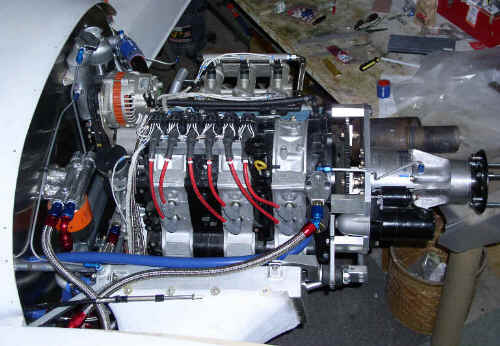
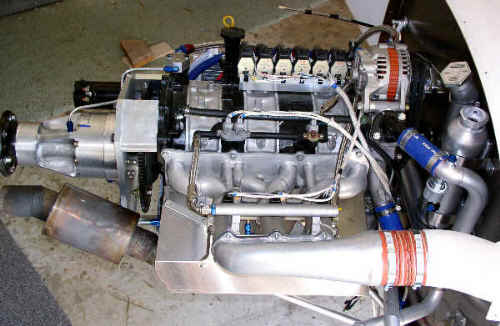
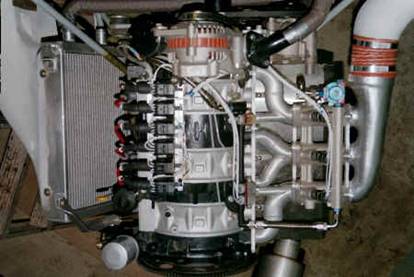
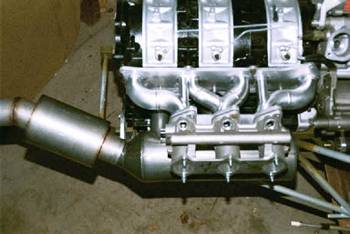
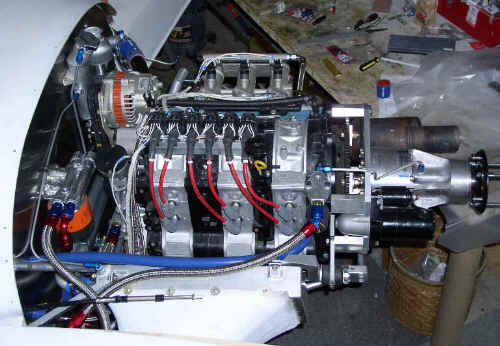
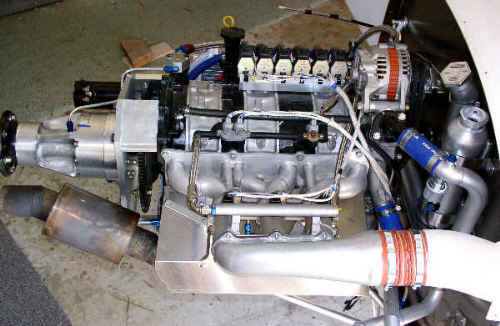
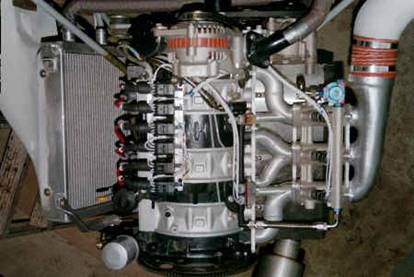
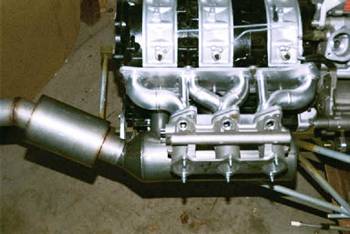
You are forgetting about the three rotor Vance. An easy 300 HP.
Three rotor engines are out of production but they can and are being
made (up to four rotors) out of Mazda and after market racing parts.
Mistral is also planning a Mazda style certified three rotor.
If you use their gear box now you can get a hydraulic constant speed prop.
Good for heavy haulers like the RV10.
Here are some shots from Al Gietzen's web site. I saw the airplane on Tuesday
in Vista California. Finest rotary engine installation I have seen yet.
http://members.cox.net/alg3/airplane.htm
Paul Lamar
The Rotary Engine NewsLetter. Powered by Linux.
ACRE NL web site.
http://www.rotaryeng.net
Copyright 1998-2005 All world wide rights reserved.