Rumor has it the upcoming 16B will have direct injection or
stratified charge.
Ideally stratified charge is a situation where the fuel/air mixtures in the
combustion chamber is not uniform. There are areas where the mixture is
stoichiometric and many other areas where the mixture is very lean. The combustion
chamber of the Wankel rotary engine is a thin rectangular crecent shape with a bulge
in the center. There is no way around this in the Wankel rotary engine. This is not
the ideal shape for a combustion chamber. The ideal shape is a sphere. Making the
rotor wider as in the 16B and Norton based rotary engines help as a square would be
better than a rectangle. The fire tends to go out around the the flat recesses around
the center bulge. Worse, precious combustion heat is lost to the metal in these areas
reducing the overall fuel efficiency. Therefore much research and development has
been expended on achieving stratified charge in the Wankel rotary engine.
Historically the research has focused on injecting the fuel into the bulge and hoping
it would stay there as the combustion chamber rotated around inside of the rotor
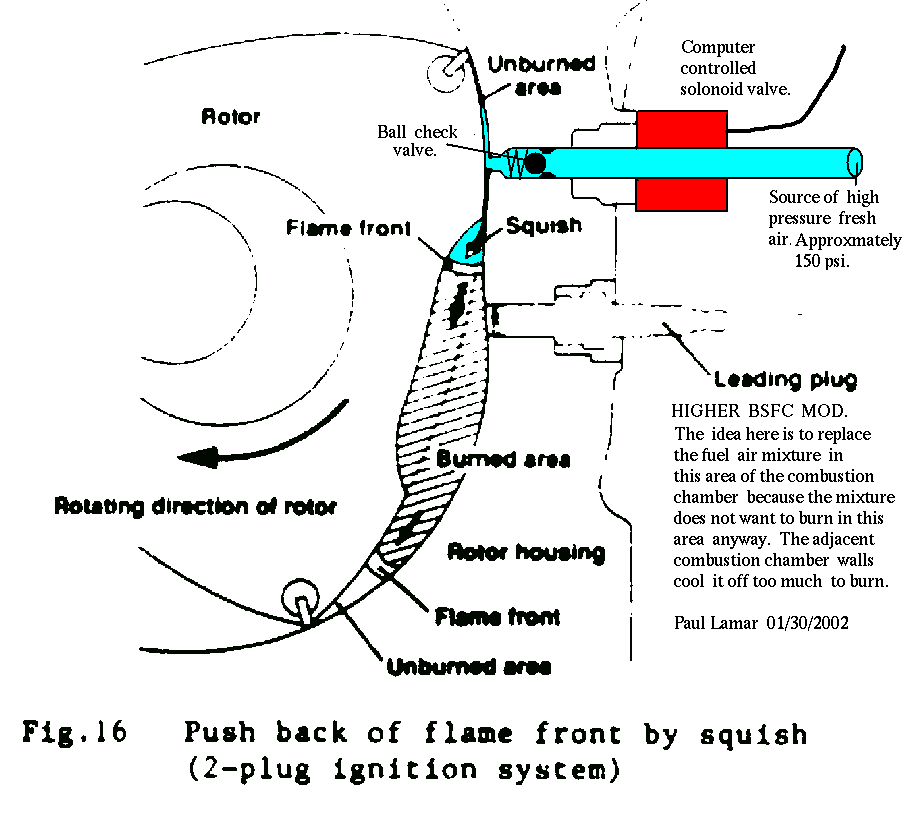
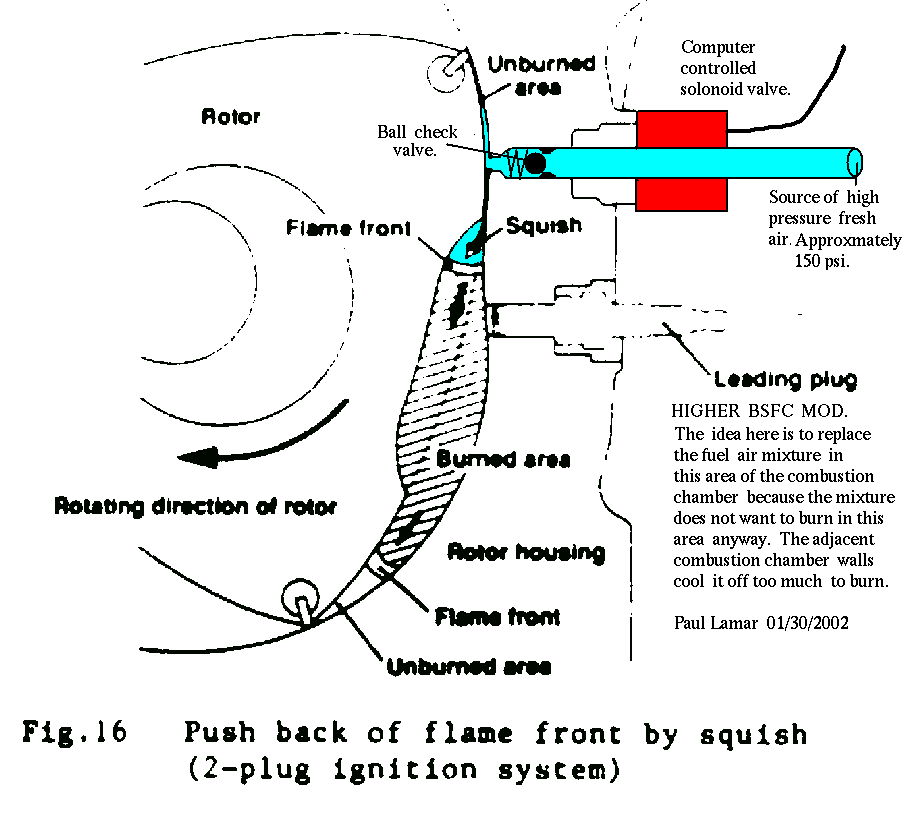
housing. Stratified charge may also be achieved by injecting fresh air into those
parts of the chamber that are unlikely to sustain combustion. This is an idea I had
awhile back about injecting fresh air to achieve stratified charge. In a way this has
a slight supercharge effect.
After thinking about it some more my air injection idea above may not work well as
combustion pressure may leak above the apex seal across the air injection hole. If I
move the hole up so the trailing apex seal just passes the hole before the plugs fire
there will be no combustion pressure leakage across the hole.
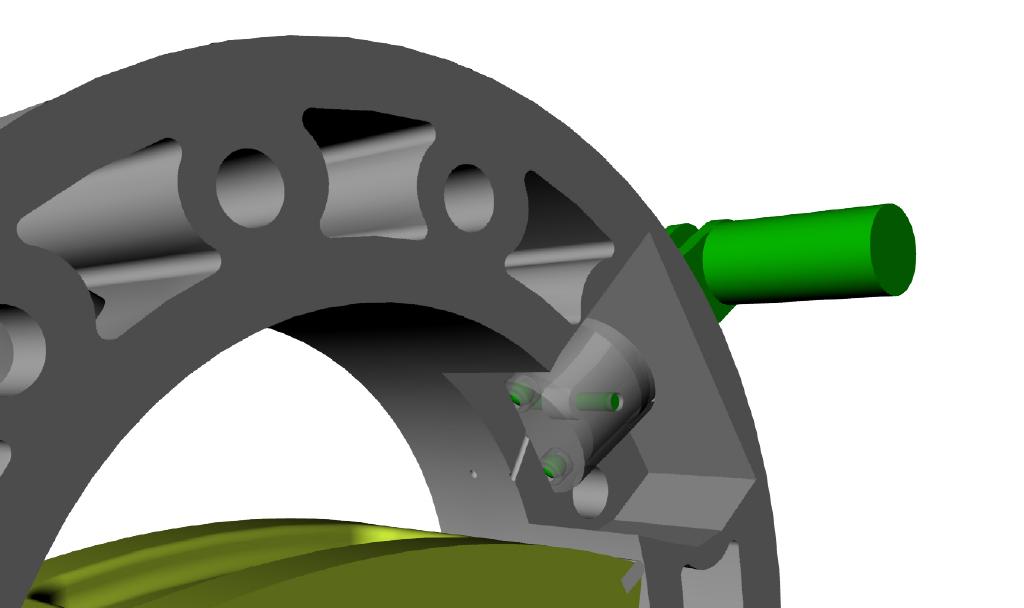
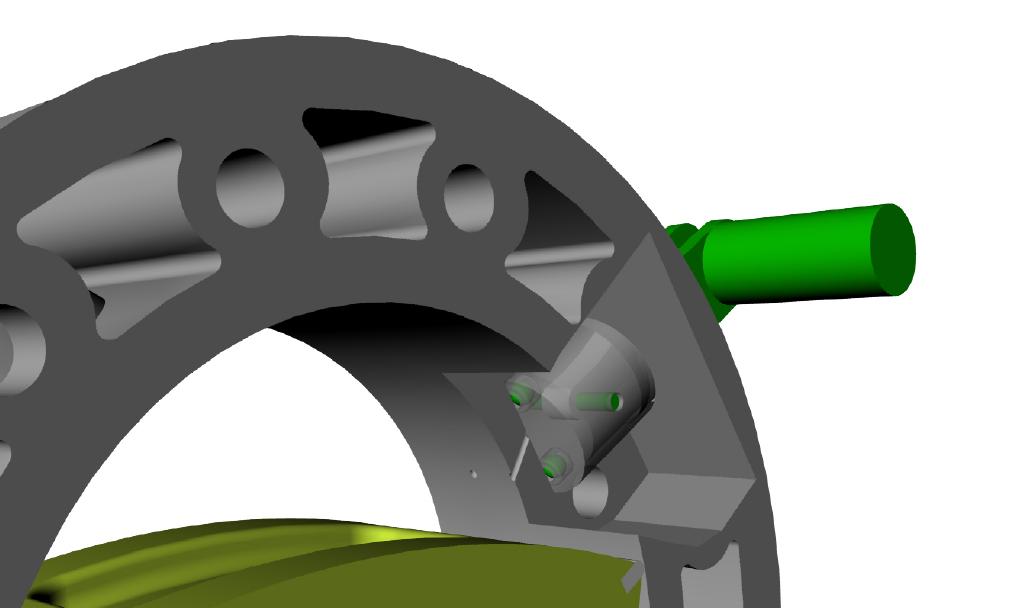
I have done away with the solenoid valve and replaced it with a synchronized piston
air compressor. The air injected must be over about 150 psi as the pressure in the
intake chamber when the rotor is in this position is approxmated 150 psi. Therefore
the compression ratio of the piston compressor must be 10:1 or above. Ideally much
above 10:1. The piston is phased such that the injected fresh air reaches max
velocity and pressure just before the trailing apex seal passes over the air
injection hole. The piston compressor is geared to the e-shaft of course. Here is a 3D.
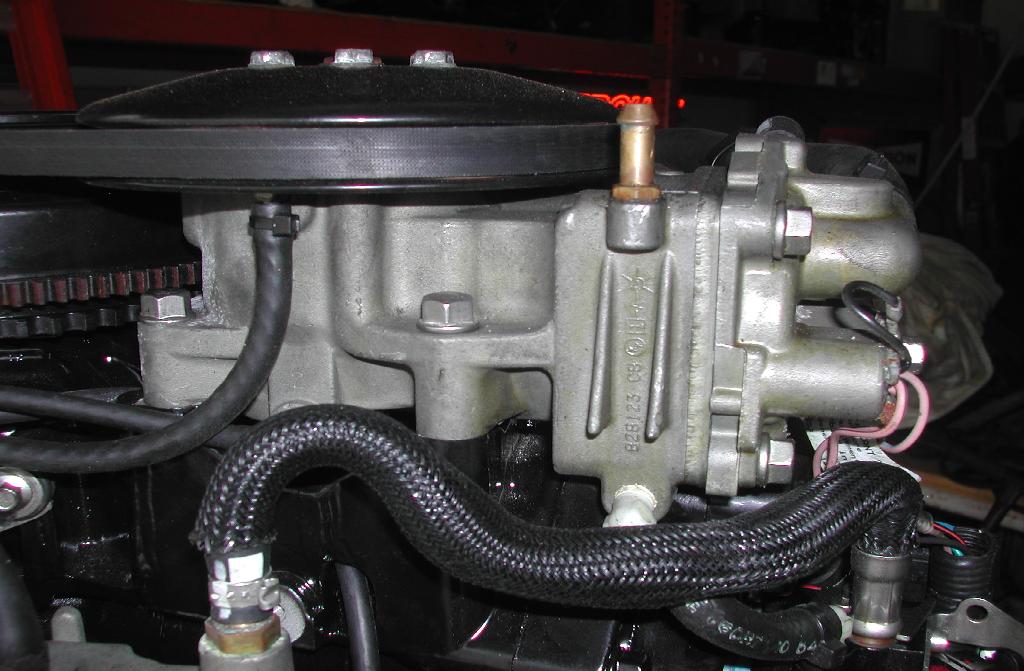
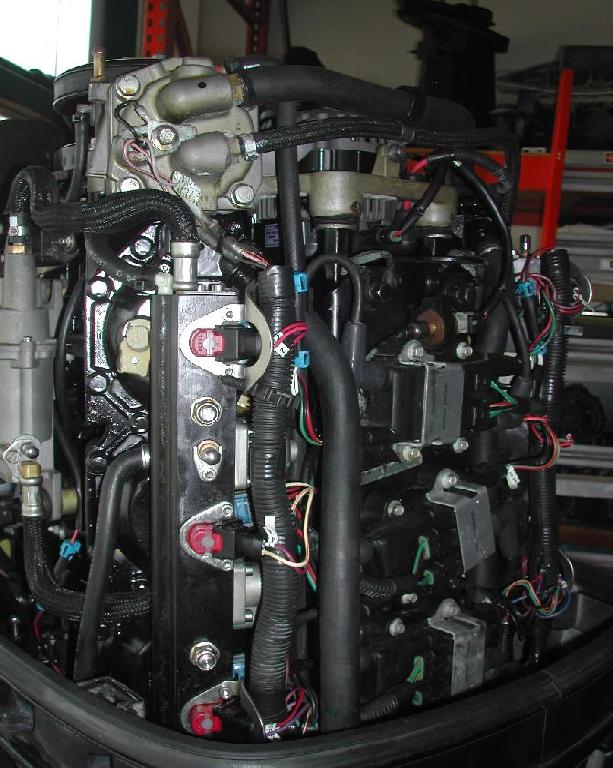
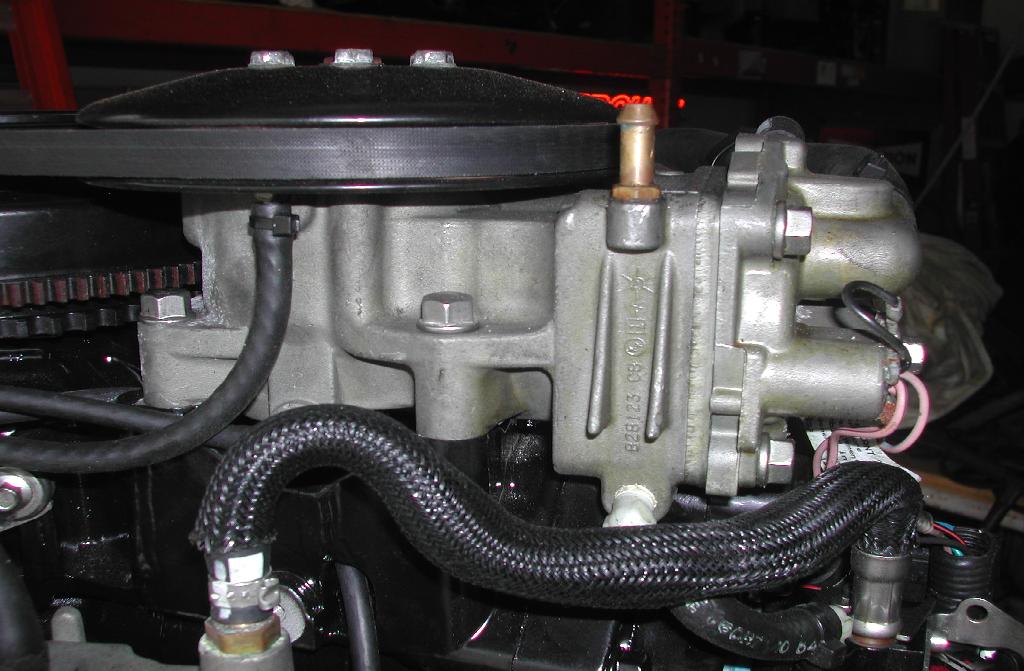
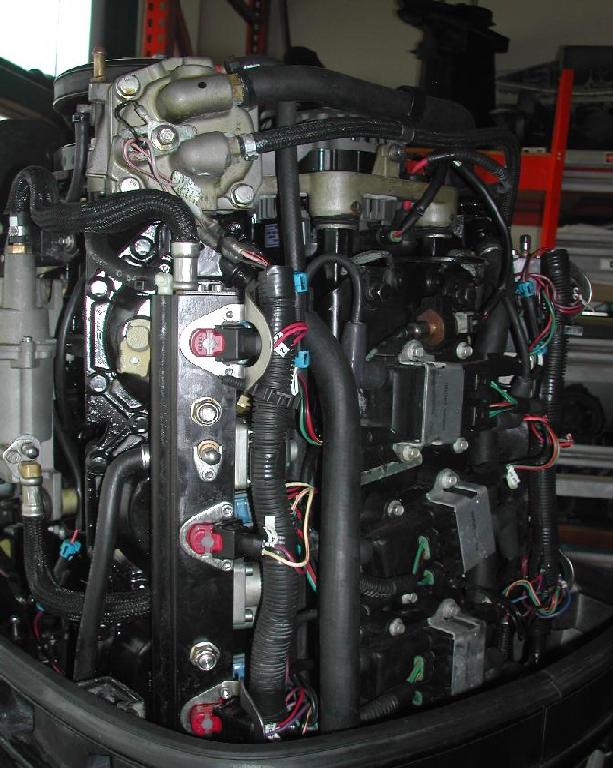
Turns out the Mercury Outboard uses direct air injection.
I did not know that. The compressor is upper right.
Paul Lamar
The Rotary Engine NewsLetter. Powered by Linux.
ACRE NL web site.
http://www.rotaryeng.net
Copyright 1998-2005 All world wide rights reserved.