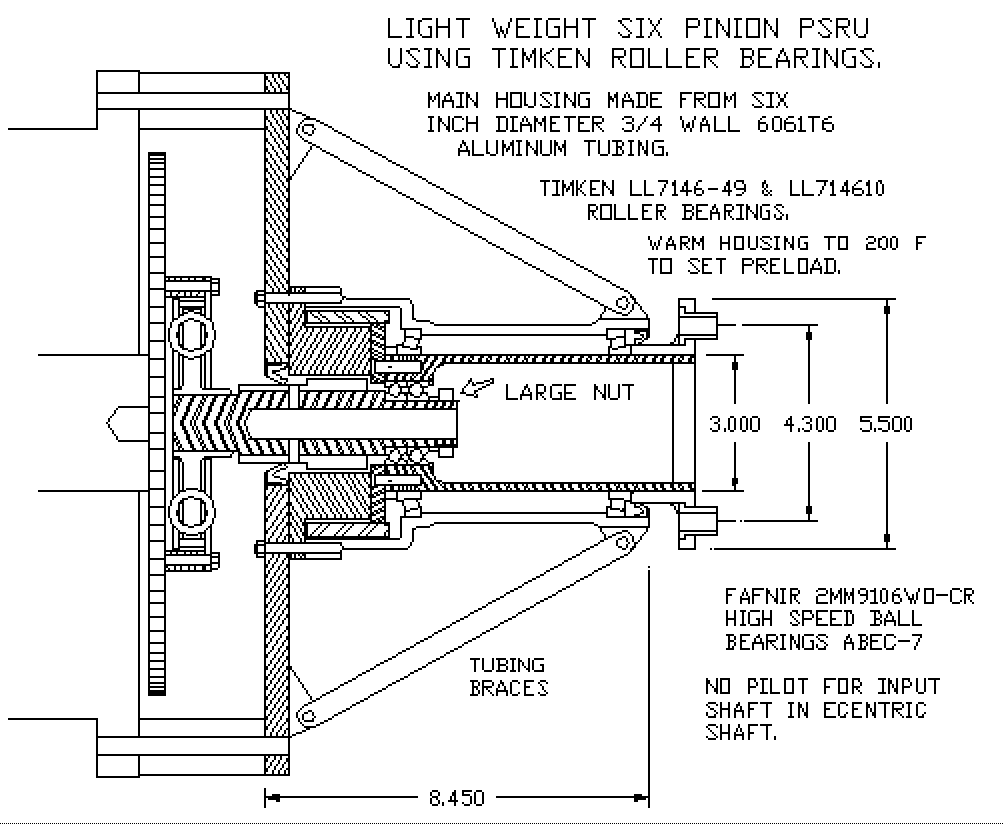
At one radian per second pitch rate the gyro loads are 650
foot pounds. In other words the nose drops 60 degrees in one second if
you stall the airplane. That is what I designed the bearings and
bracing for in any direction. That is also the number that will bend
a Lycoming engine's prop flange with a 50 pound constant speed prop.
Most props on experimental are half that weight.
Tracy's box is beefy because thick castings are cheaper than thin
casting. The entire Bell 47 gear box is lighter than Tracy's gear
box and it is designed for ungodly amounts of torque.
Paul Lamar
Paul(this may be dumb questions) the gyro load you mention as being 650ftlbs at 1
radian per sec pitch rate at stall. Is that a power on or power off stall ? Does it
matter? Also what about the recovery? power on power off? will the loads be greater
with power on as you pitch up say to the right or left? will g-loads affect the math
that determined 650ftlbs per 1 radian sec. I guess more to the point would be is 650
ft lbs enough if I decide to pullout of a dive or stall at 3 g's. I believe the
bearings can handle it but I'm struggling with the bracing.
Respectfully tony
I don't think you can pull out at 60 degrees per second in most airplanes.
I could be wrong. Perhaps if you are going very slow at high prop
RPM and you use the prop blast over the elevator to pitch the airplane
up.
The gyro loads are a strong function of prop RPM of course.
It matters to the prop shaft as the prop shaft is still experiencing
significant thrust at full power max RPM. Not much to the prop shaft
bearings however because in theory they experience no loads due to gear
separation forces when driven by a planetary unlike most other
spur gear designs both internal and external. One of the reasons
planetary PSRU are always lighter than spur gear PSRUs.
All gear separation loads are contained within the ring gear.
The bracing in that dwg consist four tubes. When the force vector
is between two tubes all four enter in to resisting that force vector.
BTW the plate shown is the same thickness as Tracy's and Tracy has no
bracing at all. The case and bracing are bullet proof as far
as gyro loads are concerned. The prop flange could be another
matter. What ever it is it is probably stronger than a Lycoming.
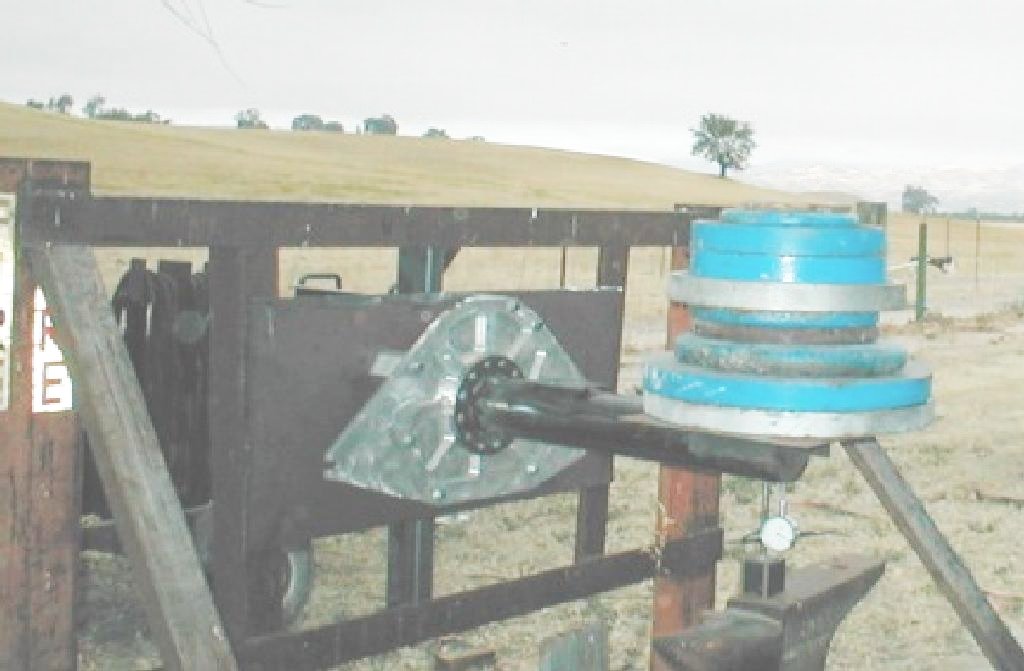
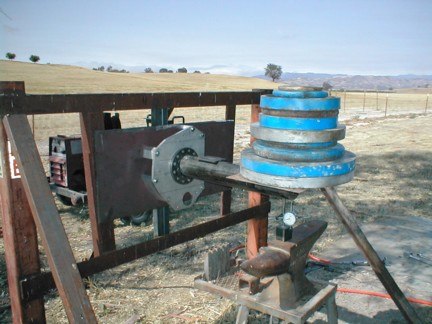
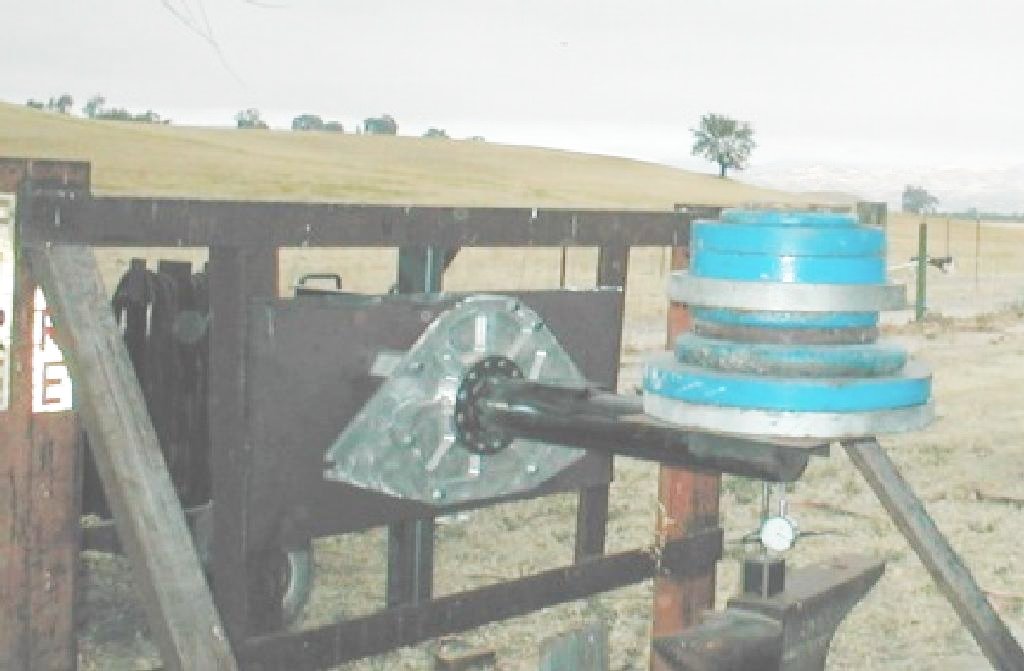
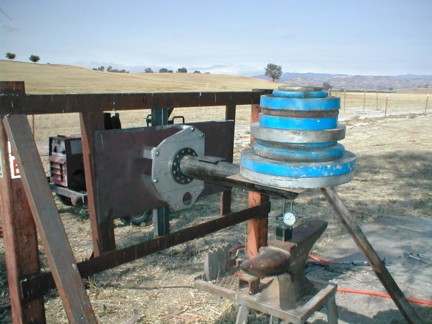
BTW Jerry Hey static tested a NC mill pocketed 1/2 inch plate for deflection.
Here is a picture.
Paul Lamar
The Rotary Engine NewsLetter. Powered by Linux.
ACRE NL web site.
http://www.rotaryeng.net
Copyright 1998-2005 All world wide rights reserved.