Paul,
Now planning the test program for the 1990 turbo13B.
Soon I want to know how much hp the compressor is drawing and how much power
beyond that there is to spare.
The turbo tach will give us the turbine rpms but for the torque?
We can measure temp., we know the exhaust pipe diameter, but velocity is per
speculation at this point. Perhaps Mazda engineers have data on exhaust
velocity. This would help us immensely in sizing the downstream turbine.
We may have to approach this challenge from the other end so to speak. IE
guesstimate the second turbine size and attach it downstream of the
turbo/charger, then attach a transducer to it and measure its torque output.
We will know the Hp. output of the engine and the intake air speed, MAP,
temp. and size of the intake pipe so we can use some deductive reasoning
about what is happening when we load the first and/or second turbine. From
there we can play with other turbine sizes and PSRUs.
Then how to increase the Delta P? The highest mountain road nearby will
allow me to bring the test stand to 8,000 ft. Perhaps on a hot summer day
the density altitude will be 10,000. It's not FL 25 but a start:)
Doug in Japan
For background on turbo compounding read
http://www.rotaryeng.net/turbo.html
Paul Lamar
Paul,
First thing I read:) Great theories. Time to test some of them. Not to
worry though, I'll see if Hisanori knows the answer on the exhaust gas
velocity. I'm sending you a MATEX planetary gear catalog soon.
Doug in Japan
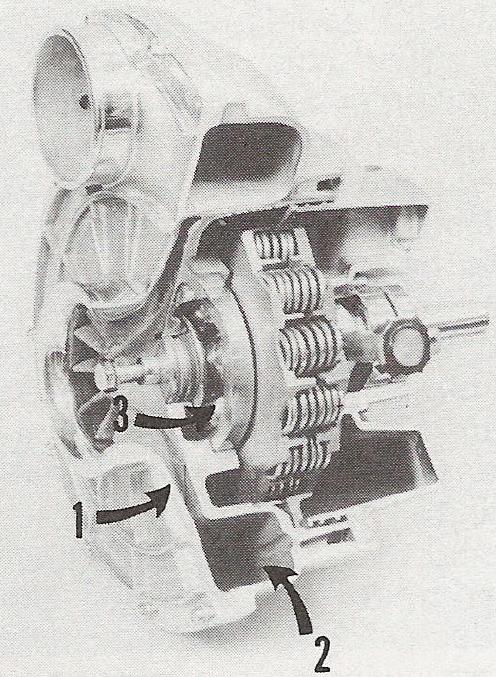
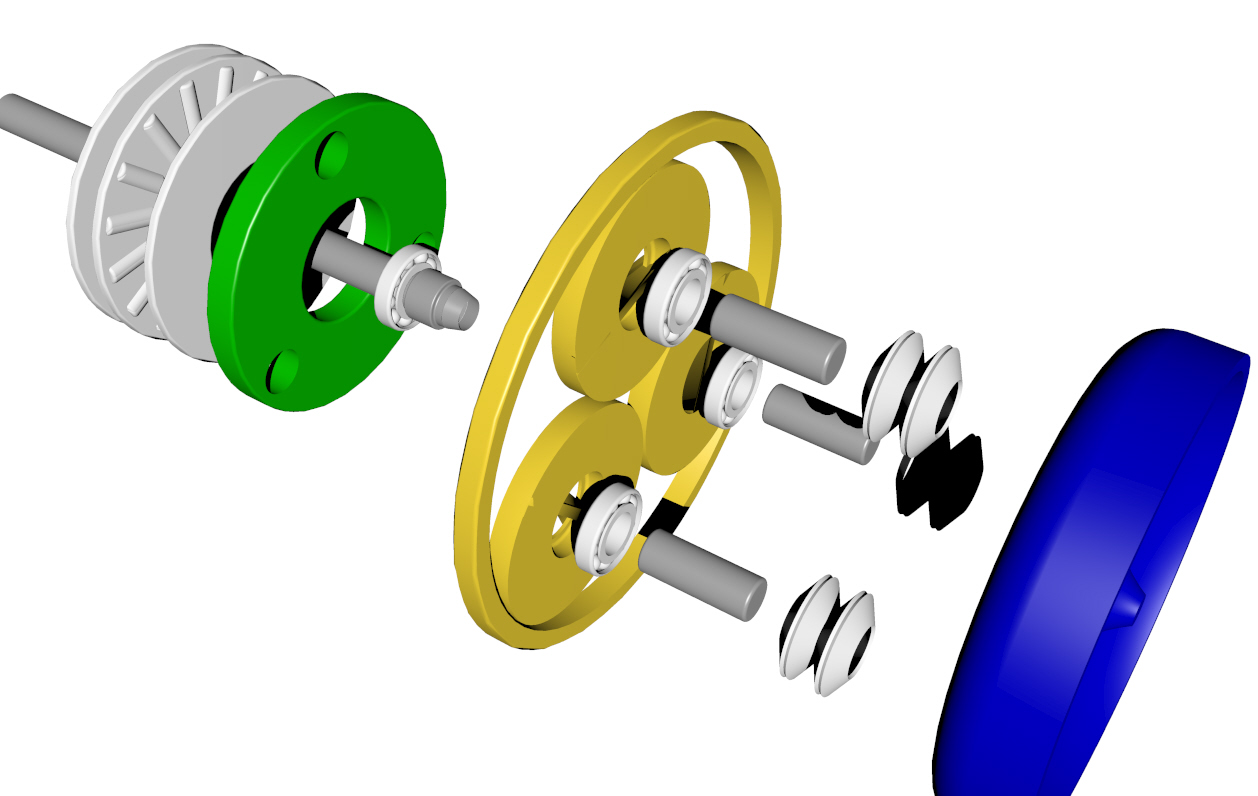
I think you should use a friction drive planetary. Paxton used a
ball friction drive planetary for 50 years on their geared up
centrifugal superchargers. I did a lot of R&D on gear mesh line
velocities and it don't look good so far. Maybe MATEX has it
figured out. The torque from the turbine is super low while
the HP is still significant because of the 100,000 RPM.
HP = Torque X RPM / 5252
This means you don't need a whole heck of a lot of friction
to transmit the minuscule torque. The other thing about friction
drive is a few torque pulses due to firing loads and rapid angular
accelerations won't hurt it. A lot of cars are now using friction
drive infinitely variable auto transmission.
Paul Lamar
The Rotary Engine NewsLetter. Powered by Linux.
ACRE NL web site.
http://www.rotaryeng.net
Copyright 1998-2005 All world wide rights reserved.