Displacement has been
defined since the beginning of the internal combustion engine as
the amount of air the engine pumps at a VE of 100% in one revolution
of the output shaft. It is arbitrary. It is not good nor bad or here
nor there... it is the LAW!
<snip>
Paul Lamar
I've removed everything else, because this is the crux of the issue. A
4 cycle piston engine requires TWO revolutions of the output shaft to
displace it's displacement. A two cycle piston engine requires ONE
revolution, but the rotary requires THREE revolutions of the output
shaft.
As I've said before, the issue is confused by trying to define
_EQUILIVENT_ displacements. Displacement is just displacement, and the
rotary engine is the only one I've seen where the proponents of smaller
displacement numbers don't want to run the engine thru a complete cycle
to define displacement. (I define a complete cycle as all of the parts
being back in their original positions.)
Since your LAW as stated above is incorrect, are you willing to concede
the point?
Bob W.
http://www.bob-white.com
N93BD - Rotary Powered BD-4 (real soon)
Prewired EC2 Cables -
http://www.roblinphoto.com/shop/
You are missing something here Bob. One rev and one rev only
for a four cycle determines the displacement. Does a four
cylinder four cycle 2.6 liter engine fire twice per revolution or not?
The 2.6 liter four cylinder four cycle fires twice per rev just like
a 2 rotor rotary and it pumps 2.6 litters of displacement in the
process. For a 2.6 liter one rotor it would have to be twice
as large and it would fire once per rev. A four rotor 2.6 liter
engine would have rotor housings half as large and fire
four times per rev. A 2.6 liter 8 cylinder engine
would have individual cylinder volumes half the size of the
four cylinder four cycle engine and fire four times per rev.
Therefore the number of firings per rev has nothing to do
with the displacement of four cycle engines.
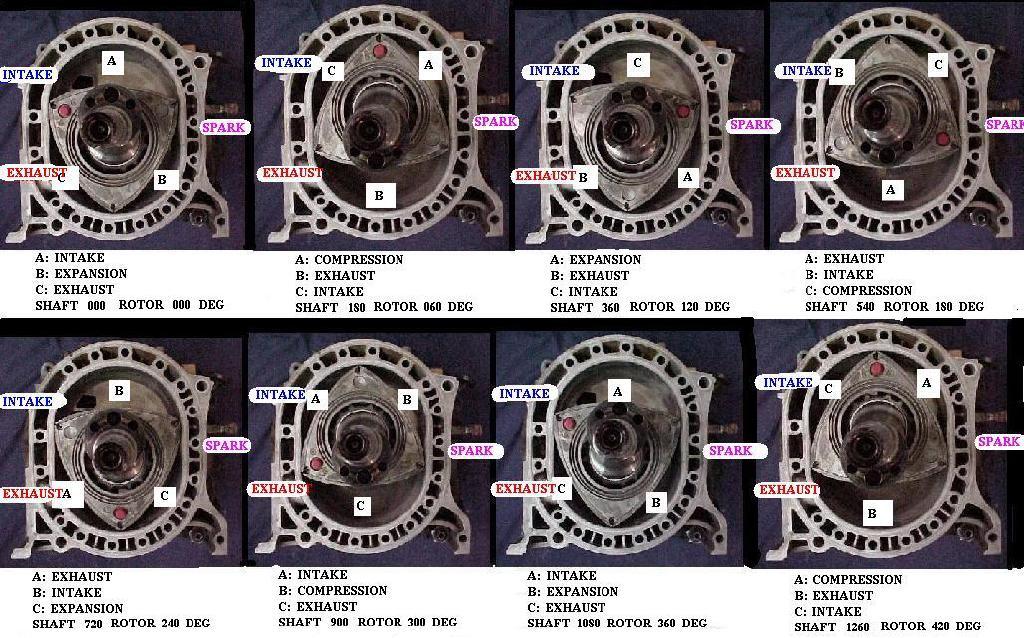
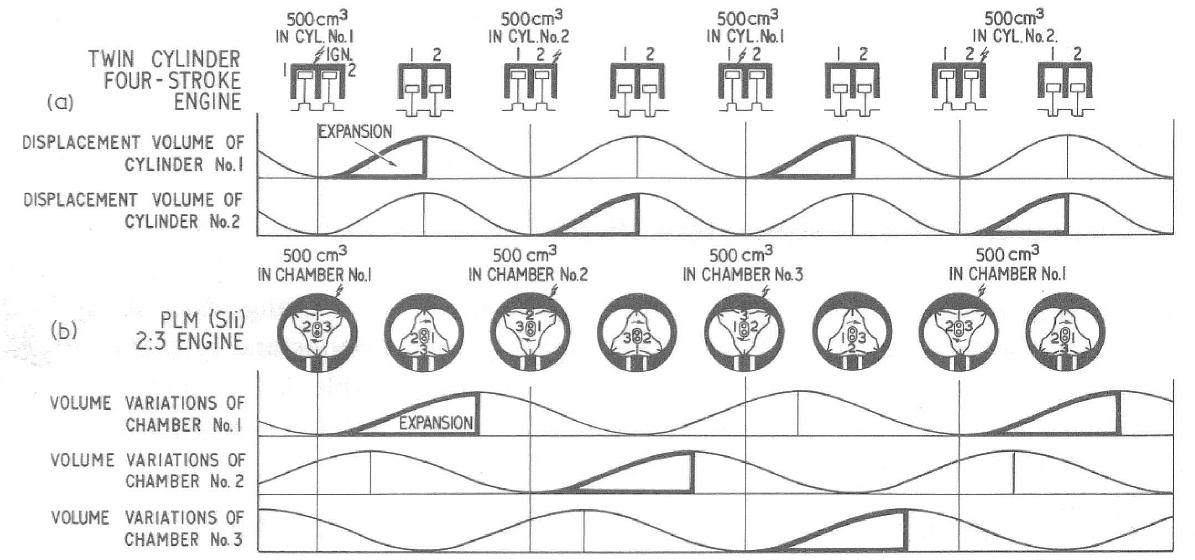
You are wrong about the rotary. It does not have to rotate
three times to pump 2.6 liters of air. It rotates once
and the rotors are repositioned 120 degrees in the process.
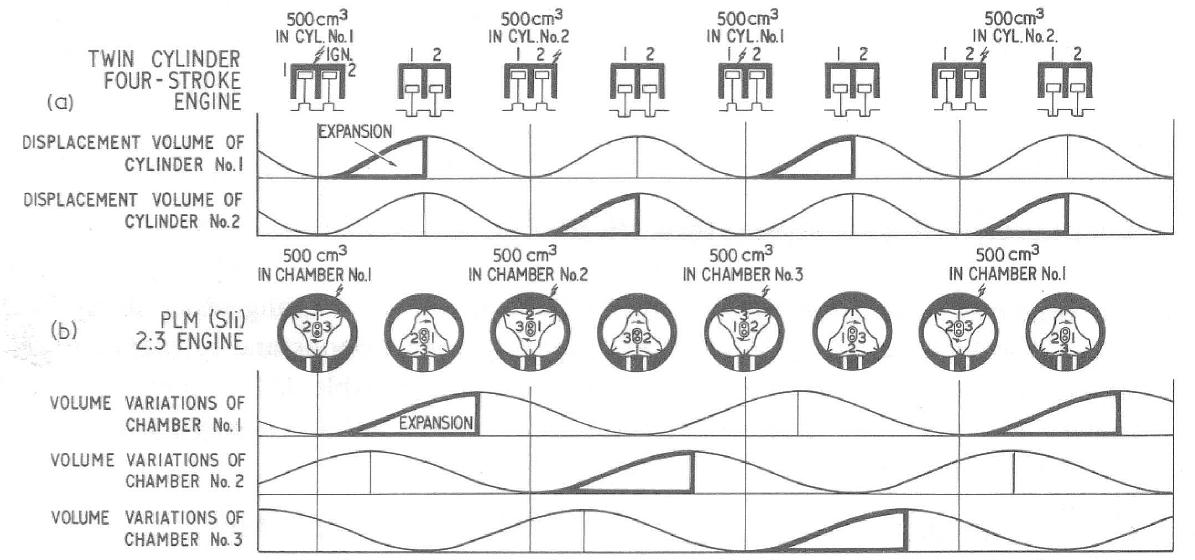
In a 2 cylinder 4 cycle piston engine both of the pistons are
repositioned 180 degrees. In a 4 cylinder engine four pistons
are involved in the process of firing twice per one rev. There
are three rotor faces that are involved in this process of pumping
air and burning it on any given cycle. Each has done their
fractional share when it comes time to fire the plug. They all
work together to complete the four cycles just as both piston
do in a equivalent piston engine.
It is as simple as that.
Therein lies the real genius of Felix Wankel's extremely simple
design.
Looking at just one chamber at a time or as a single entity is
misleading. Yes it takes more than one rev to have that one chamber
pump it its max volume and fire it but in the mean time other things are
happening. It is the ultimate multitasking engine if you will.
I know the rotary is hard to understand. There are zillions
of people out there that don't understand it including
my old friend Don Sherman who set records in rotary powered
cars and built the first 13B powered 1st gen RX7. I have seen
stuff published by Mazda themselves that got it wrong.
It it certainly is challenging to explain in words.
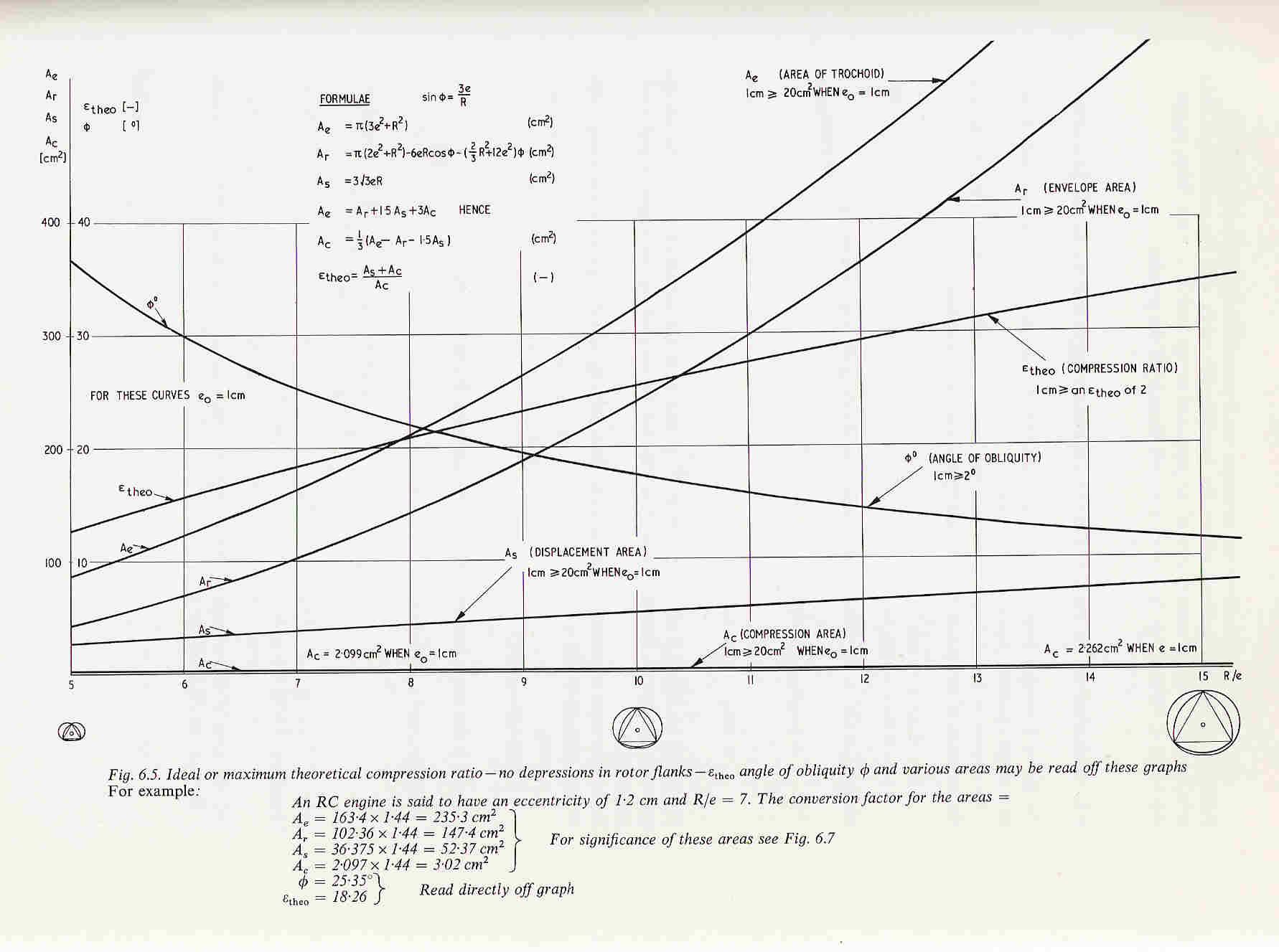
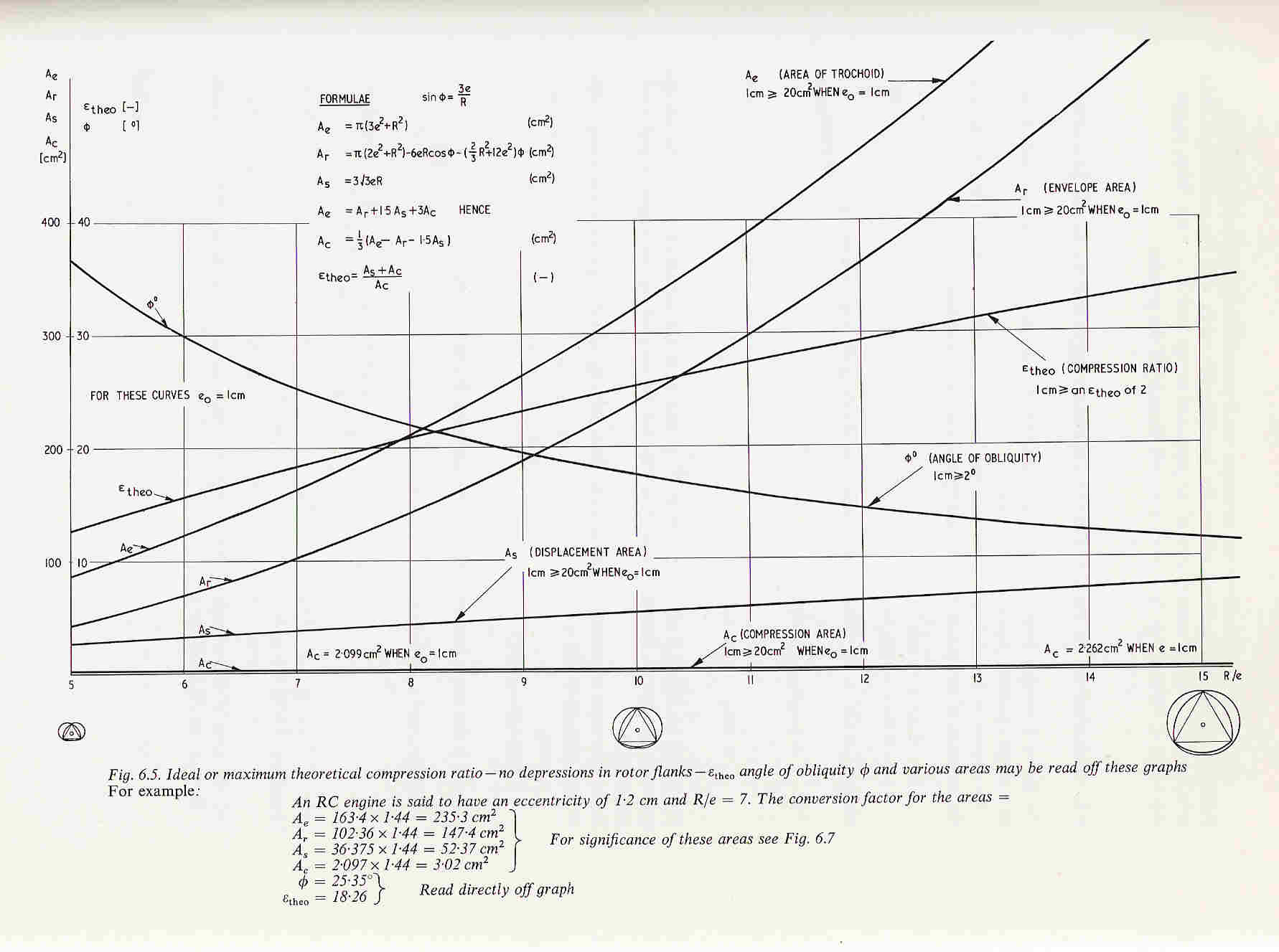
I think one of the problems is the formula required
to calculate the rotary chamber volume is not as simple
as pie r squared times the stroke.
Ansdale's book The Wankel RC Engine got it right. Unfortunately
the book is rare. Here are a few illustrations along with
one of mine.
Paul Lamar
The Rotary Engine NewsLetter. Powered by Linux.
ACRE NL web site.
http://www.rotaryeng.net
Copyright 1998-2005 All world wide rights reserved.