A four-seater rotary-engine sports car for the near future
For many years, Mazda has been the world’s only manufacturer of rotary-engine
vehicles. Among our many rotary-engine success stories, the RX-8 is the first sports
car to combine seating for four adults with the low weight, compact dimensions, and
high output of a rotary engine. The RX-8 has become a potent symbol of Mazda’s
innovative thinking and Zoom-Zoom spirit.
Meanwhile, we’re sensitive to the need for ever-better environmental compatibility,
safety and the need to address the different priorities of different generations of
car users. Consequently, we’re clearly focused on developing vehicles that meet
environmental and social needs while delivering Mazda’s hallmark Zoom-Zoom performance.
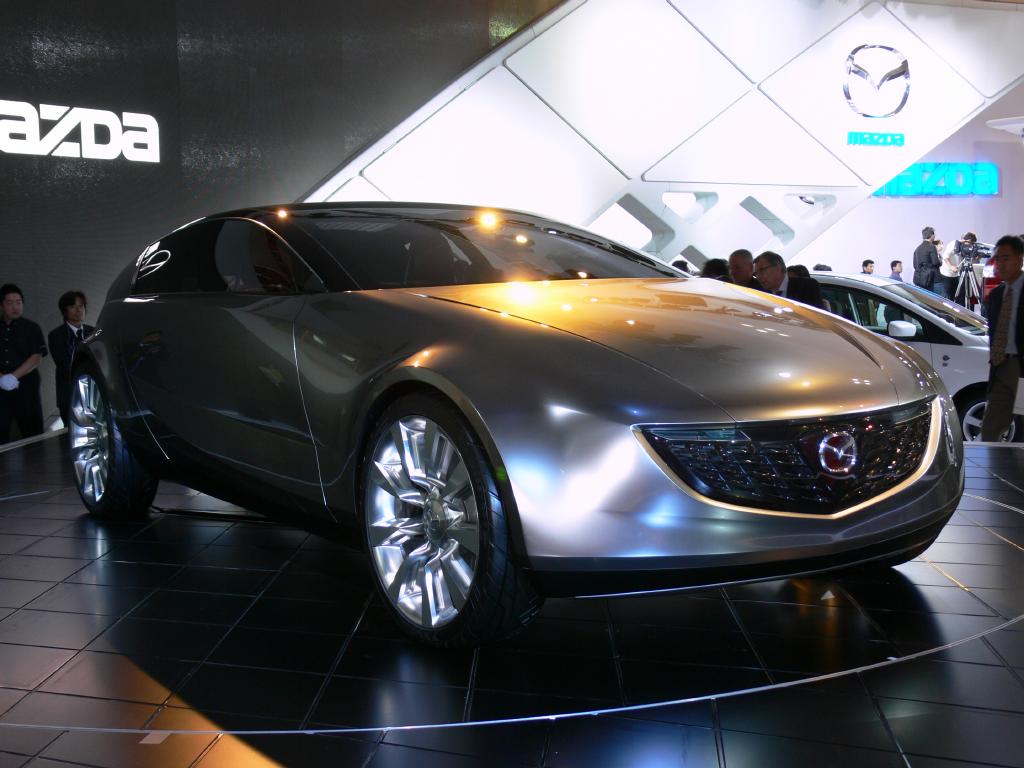
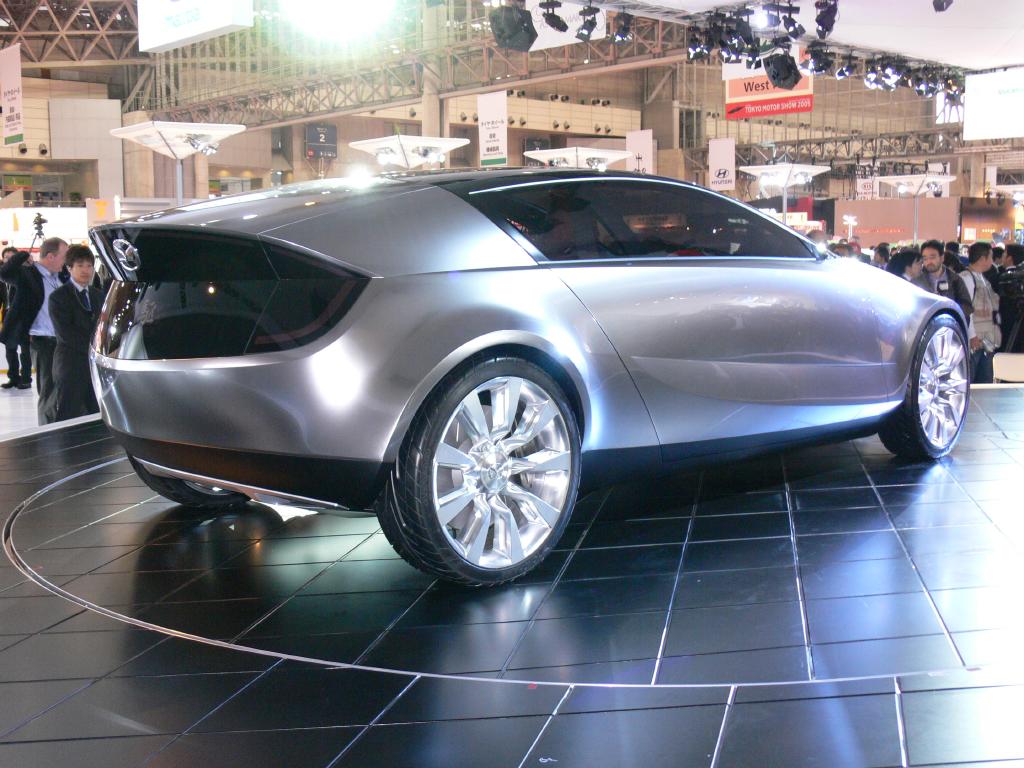
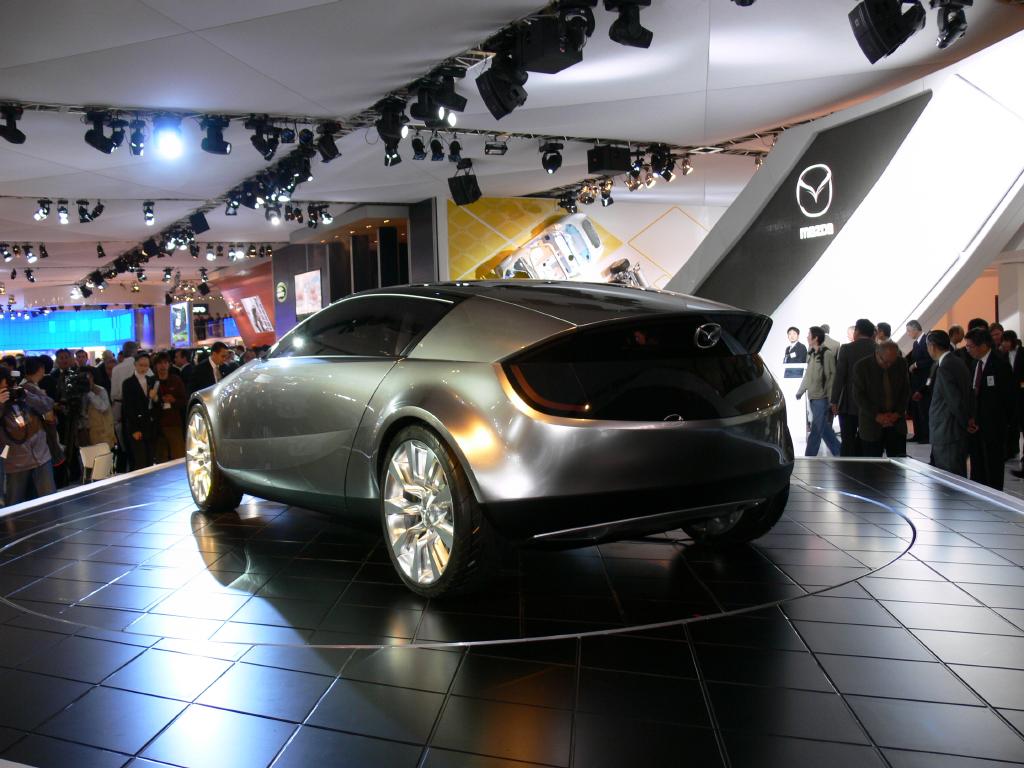
The Mazda Senku concept car on the Mazda stand at this year’s Tokyo Motor Show gives
a glimpse of one direction in which our thinking and priorities may take us.
Specifically, it reflects the outcome of a study on the development of a four-seater
rotary-engine powered sports car.
Newly emerging priorities among adult consumers
Today, consumers are focusing on personal satisfaction and self-expression more than
ever before. While valuing their bonds with friends, relatives and remaining
enthusiastic about their work, they increasingly desire space and time for
themselves. At the same time, they’re characterized by increasing selectivity about
physical possessions and by a strong desire for self-expression. The Mazda Senku
represents a proposal for a car that matches these newly emerging priorities.
Next-generation aesthetic values:
sharpness and mellowness
Following Mazda’s success in combining pairs of conflicting visual elements in car
designs, the design of the Mazda Senku reflects the fusion of sharpness and
mellowness—elements chosen for unprecedentedly rich visual expression. The overall
goal was creating a high-quality next-generation look and feel.
・ Exterior design
New proportions based on RE Hybrid architecture
In the Senku, Mazda’s innovative RE Hybrid architecture permits a long wheelbase and
taut-looking, minimal overhangs. Meanwhile, large tires help to give the Senku a
‘floating’ look that is complemented by a sleek, boldly chiseled form to create
unique proportions embodying dynamism and elegance.
Sharpness, litheness, and gracefulness
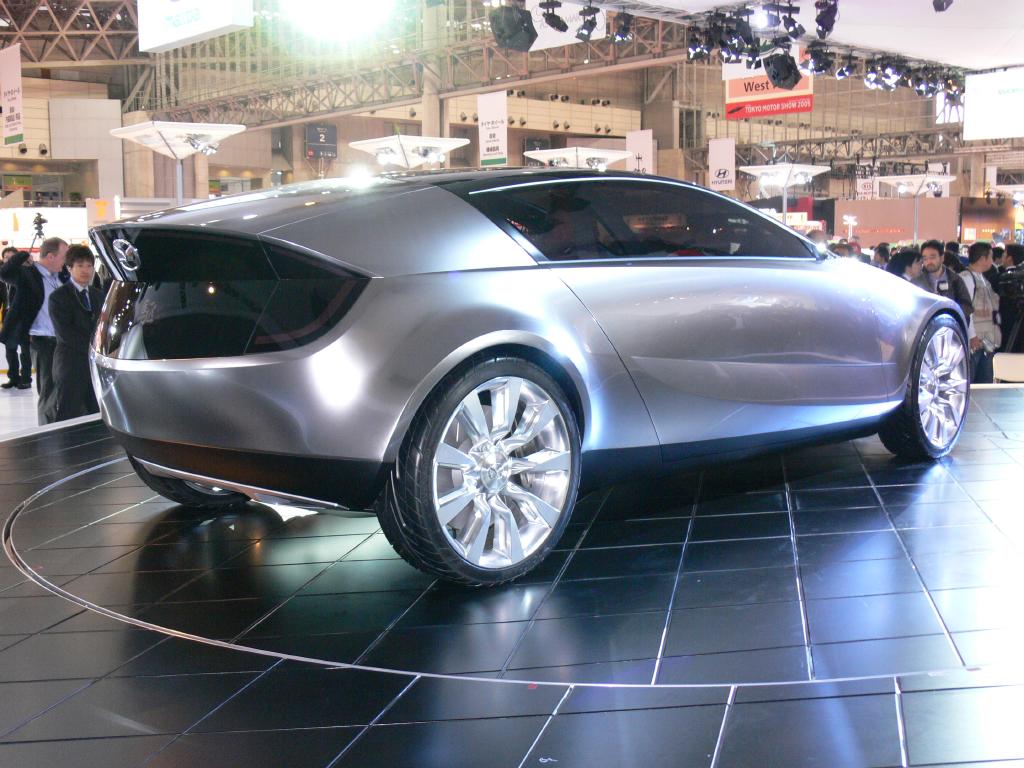
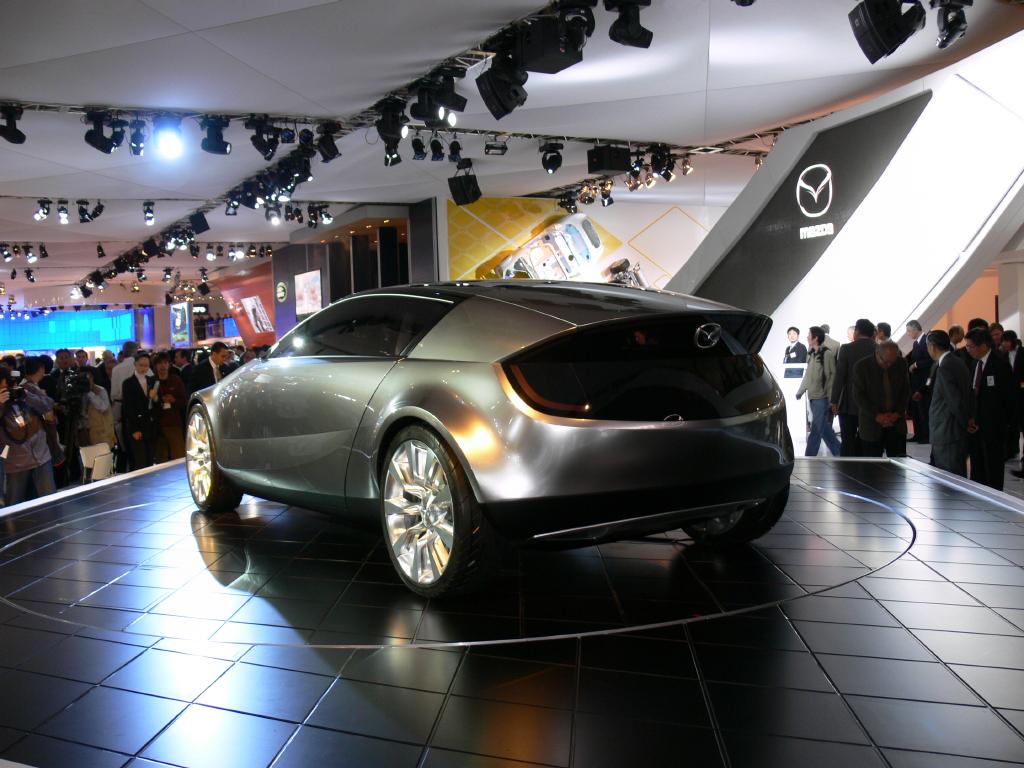
As can be seen most clearly in the shapes of the body sides and rear end, sharp edges
and soft curves are combined to give the Senku a kind of beauty with deep emotional
appeal. The graphic makeup of the body has just three key elements (simple body
surfaces, a glass canopy, and a five-point front grille) for a look of purity. The
door mirrors and other functional body parts (these include high-intensity
light-emitting-diode headlamps and tail lamps) are harmonized with the main graphic
elements in a way that expresses graceful simplicity.
Ingot Silver body color
A body color called Ingot Silver gives the Senku a look that is evocative of freshly
cast steel. It expresses tension and elegance, in line with the ‘sharpness and
mellowness’ design concept.
Lighting effects
The front grille is made of a see-through material. It gives a view of illuminated
rotary graphics that are evocative of a beating heart. (This lighting effect occurs
while the ignition is on.)
Large-aperture ‘flying wing’ sliding doors
Highlight features, combining emotionally appealing beauty and high functionality,
include left- and right-hand large-aperture, electrically powered sliding doors.
Dubbed ‘flying wings’ by Mazda, these doors each have an 800mm-wide aperture but do
not compromise the beauty of the Senku’s body-side contours. The wide apertures
combine with high front-seat hip points to allow smooth ingress and egress. Also, the
sliding (as opposed to hinged) nature of the doors enables the doors to be opened
when there is limited space on either side of the car.
Two powered rear gates
To permit the luggage area to be used like that of a station wagon within the body’s
unique proportions, the Senku has a newly conceived rear-gate arrangement consisting
of two powered rear gates: an upper gate that slides forward over the roof and a
lower gate that slides downward. Either or both of the gates can be opened as
necessitated by the size of luggage items. Also, the sliding nature of the gates
permits opening and closing under low ceilings.
・ Interior design
A stylish, comfortable space
In the cabin, the ‘sharpness and mellowness’ design concept is manifested through the
fusion of conflicting elements that simultaneously communicate carefree relaxation
and sporty tension, refined elegance and high-performance dynamism. A personal space
in which beautiful moments can be enjoyed is formed by original design elements
including sporty front seats that are mounted on an elegantly shaped base in an
arrangement that makes them appear to float in the air. A broad, seamless glass
canopy gives the cabin an airy look and feel.
Asymmetrical instrument panel
The dashboard is designed such that it curves forward toward the passenger side.
Consequently, the driver enjoys a sense of snugness that engenders a feeling of
oneness with the car and can easily effect control over the vehicle by means of an
advanced-interface cockpit in which the controls are concentrated in the
steering-wheel area. And the front passenger enjoys the comfort of an open space in
which he or she can sit with crossed legs while accessing passenger-dedicated
interface functions.
Jet-black and crimson color scheme
The interior color scheme is based on vividly contrasting jet black and crimson
(colors that play an important part in traditional Japanese art). The jet black,
which conveys quietness and forcefulness, and the crimson, which conveys passion and
gorgeousness, complement steel-colored metallic materials on the center tunnel and
seat frames to create an environment in which refinement and contemporary sportiness
are harmonized.
Top-quality materials
The dashboard, seats, door trims, and center console are finished with leather and
trim of the highest quality. The leather was tannin-tanned and aniline-dyed, so it
retains its naturally attractive look and feel and its breathability. It was
hand-stitched by a master craftsman.
Sophisticated seat arrangeability
The standard seat positioning in the Senku is based on a two-seater mode that
promotes enjoyment for one or two people. With this feature, space is prioritized for
the front-seat occupant(s); the area immediately behind the front seats can be used
for personal effects such as a jacket or briefcase. By tipping forward the top part
of each rear seatback, it is possible to create a full luggage mode that accommodates
more luggage. And by repositioning a panel, it is possible to realize a 2+2 mode that
accommodates four people.
・ Driving-assistance functions employing information technology
To promote safety and comfort through minimization of the effort required of the
driver, the dashboard incorporates a system that delivers information and warnings by
means of two lines of displays (upper and lower).
The upper display line consists of three panels that show images of the car’s
surroundings captured by onboard cameras. It enables the driver to confirm safety
around the car at a glance during standing starts, during on-road operation, and
during parking maneuvers. It also has a Night Drive Aid function that promotes
night-time forward visibility and a Lane Drive Aid function that helps the driver
stay in lane and perform lane-change maneuvers.
The lower display is based on an information-display concept similar to that
presented in the MX-Crossport. It incorporates a large panel showing the settings and
operating status of the navigation, audio, and climate-control systems. These systems
can be controlled by devices designed separately for the driver and front passenger.
Notably, the devices provide steering-wheel-mounted switches that the driver can use
while the car is moving and a control panel within the steering wheel that the driver
can use when the car is stationary. Consequently, the driver does not need to move
out of his or her driving position.
Most importantly, the displays, by providing relevant information to the driver in a
timely, appropriate manner, minimize the burden borne by the driver.
Advanced, dynamic running performance and up-to-date environmental performance
・ Powerful, clean performance delivered by a next-generation RE Hybrid system
The Mazda Senku is powered by a totally new RE Hybrid system in which a 13B-DI
next-generation gasoline-fuelled direct-injection rotary engine is combined with a
hybrid unit consisting of a generator, a motor, and a battery. The RE Hybrid system
is located within the wheelbase.
The 13B-DI rotary engine was developed specifically for direct gasoline injection.
Direct injection realizes optimal combustion, thereby enabling high power (essential
for Zoom-Zoom performance) and superior fuel economy.
The Mazda-developed hybrid motor system has an idle-stop function that further
enhances fuel economy and emission performance.
・ A handling feel reflecting the Mazda DNA
Whereas a conventional hybrid system has its battery mounted below the floor or near
the rear of the body, the Senku’s hybrid system has its battery mounted between the
engine and toeboard. The battery position combines with a front-midship layout (the
light, compact, rotary engine is located behind the front axle) to realize the ideal
50:50 front/rear weight distribution and low center of gravity that characterize
Mazda sports cars. The unique powertrain packaging is the basis of a sporty, refined
handling feel that communicates the Mazda DNA.
・ See-through solar-cell system
The rearmost portion of the glass roof incorporates a solar-cell system in which
pigment-sensitized solar cells, which allow light to pass through them, are located
between laminated sheets of glass. The pigment-sensitized solar cells used in this
system represent a next-generation technology offering low cost together with a high
degree of design freedom in terms of light transmittance and color tone. The system
itself is an evolution of the solar sunroof (the first of its kind) used by Mazda on
the Sentia in 1991. It supplies supplementary electric power to the RE Hybrid system
to promote fuel economy. While the car is parked or otherwise stationary, it serves
as a power source that promotes convenience for the driver and passengers.
Unique, advanced, safety-oriented body
・ Revolutionary ‘multi-frame structure’ concept
The front of the Senku reflects a totally new ‘multi-frame structure’ concept. With a
conventional frame, the front side members alone are used to meet demands for
impact-force absorption, rigidity, suppression of noise, vibration and harshness
(NVH), and powertrain support. This arrangement imposes restrictions on the
cross-sectional structures and materials used for the front side frames. With a
multi-frame structure, by contrast, each of multiple frames is used for a specific
role, meaning that the frame layout can be optimized for various performance
requirements. The multi-frame structure of the Senku is intended to meet the
following requirements:
1) Lightness
The use of multiple frames in a three-dimensional layout permits weight reduction
together with high levels of impact-force absorption, rigidity, and NVH suppression.
2) Impact safety
In the event of an offset or full-wrap frontal impact, frames that are designated for
impact performance multi-directionally disperse and effectively absorb the impact
energy. At the same time, they optimally control the behavior of the powertrain and
cabin. In the event of a side impact, they help to protect the battery.
3) Rigidity
Frames that are designated for maintenance of rigidity, link the front and rear
points of the lower suspension arms and the center points of the suspension towers in
a three-dimensional arrangement that ensures ample suspension rigidity.
・ Measures to promote overall body rigidity
Virtual B-pillars (one inside each sliding door) and rollover C-pillars (located at
the rear of the cabin) ensure high overall body rigidity despite the large apertures
in the sides and rear of the body.
Mazda Senku major specifications
Dimensions
Overall length
4,650 mm
Overall width
1,850 mm
Overall height
1,400 mm
Wheelbase
3,100 mm
Seating capacity
4 people
Engine
Type
13B-DI rotary engine (gasoline direct injection) + Mazda hybrid system
Transmission
Type
7-speed power shift (dry twin clutch)
Suspension (front/ rear)
Type
Double wishbone/multilink
Tyres
Type
235/40 R22 Yokohama ADVAN PROTOTYPE 005
Hisakazu Imaki
Representative Director, President and CEO
The Rotary Engine NewsLetter. Powered by Linux.
ACRE NL web site.
http://www.rotaryeng.net
Copyright 1998-2005 All world wide rights reserved.