Paul, or anyone,
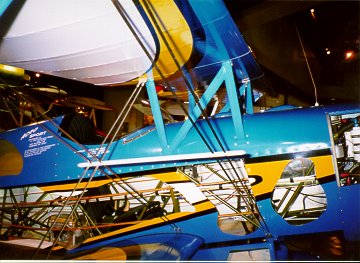
I have completed the wings and fuselage of an Acro Sport. An
aerobatic biplane slightly larger than a Pitts S-1. I am going to use
a n/a p-ported Renesis. I would like to take you up on your offer -
and will gladly make a $$ contribution to the cause - of doing a full
size layout for a custom cowling and an engine mount utilizing the S-
beam.
I have seen you ask for a firewall layout and distance from
firewall to prop flange to layout the cowling. My question is how do
I determine this distance? I have contacted several builders thinking
I could interpolate something if I knew their engine sizes and
firewall to prop distance but that hasn't worked out. About the only
thing I know is builders using an 0-360 Lyc. engine have an 11" long
engine mount and 12-15 lbs of lead at the tail post.
I would rather
chop off a finger than haul around a pound of lead in the tail.<< I
am considering a P-51 type radiator layout because of having very
little room under the engine and it would help transfer some of the
weight towards the tail. Plus, I would have the room to do a real
good entry/exit plenum for the radiator. Any and all suggestions are
greatly appreciated.
Thank you,
Randy
---------------------------------
What you first need to do is figure the weight and balance of the
engine
placement. We need to make a few measurements here. We need the
weight distribution of the entire airplane without the engine
resting horizontally on its landing gear. Then we need to know
the ideal position of the CG. That should be in the builders manual.
This will give us a prop position assuming you are using Tracy's
14 inch long PSRU. It sounds like we should move the engine as
far back as we can get it. Do you have a firewall drawing?
Paul Lamar ...No rotor no motor.
Paul,
Guess I am rushing things a little here. I thought I would be
able to start a cowling. It will be awhile before the plane is to the
point of doing that weight measurement. Seeing as this plane is
"stick built" and not a kit I have the possibility of fudging on the
firewall and fuselage formers to accommodate the rotary profile.
Thank you for the reply, I will contact you when I can supply the
needed information.
Randy
-------------------------------------------------------
Never too soon to plan ahead. Scan the plans for the firewall
or copy the firewall dwg sheet and send it to me. If everybody
that puts an O-320 in them have weight and balance problems
then something is wrong with the design using that engine.
Perhaps it was designed for an O-200 or O-240? 12 pounds on the
tail post is one heck of a lot of weight for a 1500 pound gross.
It also looks like it was styled by a stylist rather than designed
by an engineer:) It is a cute thing with that long nose.
Looks like they set the firewall position by using a stock
Piper Super Cub cowl.
Also looks like the firewall can be moved back about six inches
depending on the length of your legs. Along with moving the engine
back and a prop extension that might fix the CG problem.
That would give plenty of room for the rad up under the front
of the psru and prop extension. Rads in the back are harder
and more problematic than they look.
With this side view and overall dimensions (18'10") alone I can
probably come up with a pretty good set of 3D plans for the
fuselage :)
---------------------------------------------
Randy, Keep your eyes open for a Mazda 3rd gen RX7 1993 to 1995 auto
transmission bell housing and starter. Adapting Tracy's gear box to
that will give you an automatic prop extension. (pardon the pun John D) :)
Paul Lamar ...No rotor no motor.
The Rotary Engine NewsLetter. Powered by Linux.
ACRE NL web site.
http://www.rotaryeng.net
Copyright 1998-2005 All world wide rights reserved.