Wow Gordon,
That was a mouthful. Thanks. I did not realize the Connie's were
engaging
the turbo-compound down low. In the French reports some of the gains
cause
by using a supercharger were probably showing up because of increase
volumetric efficiency of the mechanical valve engine. We may not see
such a
remarkable effect with the rotary in this respect because it already
is very
good. However I understand your other points very well.
The main thing is that power rises "in direct proportion to the
*excess*
of inlet pressure over exhaust pressure." (my emphasis)
We definitely should go with the supercharger idea for boost. If
for no
other reason than it is much easier to explain:)
Yes my first hunch was to go with a 3 rotor and turbo normalize it
and that
is my fall back plan. There is a large weight, worse fuel mileage,
and HP
disadvantage however. By HP I would expect on ethanol it to
approach 400
HP. Running it at half power (200HP) would not be as fuel
efficient as
running the turbo normalized Renesis at that HP setting. Ethanol
gets way
worse fuel mileage than gasoline with low comp. rotors. It added up
to not
being able to fly from Ca. to Hilo Hawaii. I don't need that much
power even
though some guys are running around with 450 HP twin turbo I0-540s
and jet
turbines stuck on their SeaWinds. They can't fly more than a few
hours
either. They are overstressing the engine mount and tail
structure IMHO.
Flying a homebuilt around the world on ethanol is the challenge.
250 -
300Hp are what I need to take off from land. I know a 300hp I0-540 is
adequate to take-off from a 5,000 ft runway in a 4,400 lbs gross
overweight
condition.. It has been done repeatedly. Mine plane will be lighter
but the
plane is strong. But no water take-offs and hopefully no water
landings will
be done on first earthround trip. The boat part of the plane is only
there
for surviving a sea landing. After I do the trip and park the plane
in NZ or
USA I may put in another engine (the 16B?) that can run on easier
obtainable
fuels as well. This first trip is dependent on the cooperation of a
lot of
breweries and distillers I have been contacting in various
countries. The
Middle East route is still proving to be a difficult.
Back to work at hand. Call me a romantic but I love everything
about the
idea of "the little engine that could" theme. Turbo compounding
isn't going
to be easy to accomplished but if I wanted 'easy' I wouldn't have
chosen to
make a life in Japan:)
Sizing the turbocharger to work at altitude and using an automatic
blow off
valve and possibly some bypass valve and plumbing to control
supercharger
boost at sea level is a must also. If the supercharger is unloaded
then its
rpms reduce, hence the delta Ps and hp required also reduce.
Supercharger and turbo compound need manual controls.
Exhaust power turbine needs a auto wastegate.
Since this is a research project as well I want to measure MAP,
exhaust
turbo temp and speed, and power turbine torque.
Power input mount possible solution:
The two biggest input and outputs of power are the supercharger and
power
turbine. The supercharger faces forward to gain another pound or
two of
some rammed air. Its drive shaft could be coupled to a dual bearing
supported shaft, that contains an inner and outer pulley. Thus major
power
transfers happen on the same shaft. For example the inner pulley
would
connect to the serpentine engine belt (starter gen, water pump and
e-shaft)
and the outer pulley, outside the outer bearing and U shape support
bracket,
would connect to the exhaust power turbine V.R.T. belt.
I am calling Copenhagen tonight to find out more about the high
speed drive.
Doug in Japan
No turbo-compound no trip
-- Doug,
First let me say I love the idea of your trip. It is truly an
adventure.
I was wondering where you were going to get ethanol -- I thought
maybe
you might use the old bush pilot trick of arranging for fuel
drums along
your route. But breweries and distilleries? That should certainly
be a
first.
I've been thinking a little more about all this and I understand your
plan to use the smaller engine for lighter weight, etc. Also the
rotary
is a great candidate for boosting, considering the robustness of
its design.
However, it also occured to me that most airplane engines going for
reliability and economy use boost only to carry manifold pressure at
altitude -- normalizing in other words. I don't think the Super
Connies
actually used much boost on takeoff, if any.
A few years ago I had a chance to go up for a short hop in a fully
aerobatic Czech-made Zlin with a LOM superhcarged engine. This
superhcarger has a clutch so you can turn it on and off as you
please.
This inline inverted engine impressed me enormously with its
smoothness
and power. I can just imagine how smooth a turbocompound rotary
would be.
Here is my ideal setup. Start with a three-rotor engine that is
making
an honest 300hp normally aspirated. Let's say on ethanol it's making
another ten percent so call it 330. Hey, this is exactly one-tenth of
the Turbocyclone. So if our power recovery scheme is any good, we
will
get 60hp more.
Let's say we're not as good as the Wright guys, so call it 50hp.
So add
that 50hp to our 330 and we have 380hp for takeoff -- without any
boost.
We have a clutch on our Rotrex blower (the scooter clutch would work
nicely, but for simplicity we are using constant ratio pulleys).
At sea level the blower is off so it's costing us nothing. As we
climb
through six thousand feet we turn on the blower to mainatin 75
percent
power. This is only a few inches of boost. Even at 15,000 ft. it will
take maybe six inches of boost to keep us at 75 percent power. Maybe
less if we can devise a good ram air system to the blower mouth.
Those
few inches are costing us peanuts at the engine shaft.
Now cruising at 15,000 that big power turbine is probably still
kicking
in 50 horses, maybe more, even though we are only at cruise power. We
have good excess pressure in the intake compared to exhaust,
thanks to
our few pounds of boost.
Let's say we are cruising happily at 145kts. indicated (I have no
idea
of the performance numbers of the Seawind, so please correct me
if I am
way off). This trues out to 183kts. at 15,000 pressure altitude
and -15C
temp. (Yes, I had to get out my whiz wheel for that.)
We are maintaining 75 percent power, but 20 percent of that pwer is
free, maybe more. (The Wright Turbocyclone at sea level was getting 1
free hp for every 4.58 "paid" hp, or about 22 percent.)
If we are making 250hp at 75 percent power, that means we are only
paying for 200hp. We are burning 200hp worth of fuel -- the same
amount
of fuel as a 300hp Continental or Lycoming being run at 65
percent power.
Now the best thing about all this is that if you lose both the blower
and the power wheel, it doesn't matter. You can just continue
merrily on
your way as if nothing happened. You will simply burn a little
more fuel
and will probbly have to come down a bit.
To me this would be the most important consideration for the kind of
transoceanic voyaging you are planning.
The more I think about it the more I think I would stay away from
excess
boost. But if you use the smaller engine, you pretty much have to
boost
all the time. Sure it will still fly if you lose your boost, but the
ride will probably be more stressful.
This is why the diesel guys have to use a turbocharger in their
turbocompound schemes. They are counting on boost all the way
through --
it's an integral part of the architecture. They need all the
power they
get from the boost because it raises their power-weight ratio
appreciably. That is a significant issue with diesels which weigh
a lot.
So the turbocompounding is really an afterthought for them. They are
happy to get five to ten percent better fuel flows with it.
But in an airplane engine where you don't need boost except at
altitude,
it changes the picture in favor of the engine driven blower supplying
boost only at altitude.
If you do need the boost -- as in using the small engine -- then
maybe
the dual turbines is the way to go after all. But I would bet you are
not going to get the efficiency. That smaller Renesis running
with boost
is actually going to use more gas than the three-rotor loafing along
with a couple of inches and that turbine wheel kicking back lots
of free
power.
Regards,
Gordon.
PS: I haven't looked closely at the blower specs but if you are
cruising
at 15,000 feet the same volume of air going into your blower will
have
nearly half the mass. You can see how a bigger blower is going to
be a
lot more efficient.
Of course the flow charts for the turbos and blowers are at sea level
(they are intended for cars after all), so it would be a useful
exercise
to get out the whiz wheel and make some density altitude calculations
and see how that changes things.
Gordon
Are you still there? I have digested a lot of what you and a few other
advisors have said and I think the best compromise engine is the P
port 13B
with Renesis style rotors along with the usual system upgrades as
the best
way to get my honest 300+ HP. N/A. with ethanol. The 20B is just too
heavy.
Monty pointed out once that I can run way lean of peak and still get
decent
fuel mileage. As you correctly pointed out I can engage the supercharger
and climb high to try the turbo compounding unit. This way I am not
depending on the system though I sure want to play with it. How high
depends on the aerodynamic efficiencies of the prop and airplane
surfaces.
For an amphibian the plane is fairly slippery but can be improved
upon to
pick up a 5 knots in speed by eliminating the v cuff on the hull,
removing
the spray rails, and having a better designed cowl. For my long distance
cruise speed at this point I have calculated flight times and loads
using a
pessimistic average of 130Knots. Friends flying SeaWinds have reported
145+ knots at 55% power settings and about 163 knots at 75% settings.
I understand that one of the features of a turbo compounding system
is that
it can allow an airplane to take advantage of its design attributes.
That of
course assumes it has been designed to perform well at higher
altitudes in
the first place:)
poignant
In lieu of the other issues with using a supercharger to deliver a
little
boost to the P. port engine perhaps your idea of using a big ram scoop
feeding the supercharger inlet is the most poignant idea. The
supercharger
will boost the pressure that is delivered to it. Rammed air is a
cheap way
to supply a few inches of boost that the supercharge will multiply.
Ethanol
only need 9 parts air to one part fuel to burn but of course a
little more
fuel per squirt is needed to achieve the same hp when compared to
gasoline.
I am stopping in to see the ROTREX people in a few days. I'll pick up a
C30-75 unit to play with. Again thank you for this timely
information. If
the wheel box planetary works it could speed up the research project
immensely.
Cheers
Doug Fir
Hi Doug,
I'm pleasantly surprised that you are moving so fast on this. It sounds
like you have already visited the Rotrex plant in Norway, picked up a
unit and are now disassembling it. You sure have moved forward while
most of us have been lazing about during the holiday season.
I think you are thinking through all the right modes on this and I don't
really have much to add. I'm not that familiar with the Seawind anyway,
but I agree with your point about light weight being advantageous
vis-a-vis the sturctural issues with the fin-mounted engine.
I'm really pulling for you to succeed with this -- it would certainly be
a milestone to debut a new turbocompound aero engine of any kind, but
especially a rotary. I think it is full of promise, but the devil will
no doubt be in the many details you will encounter along the way.
Best of luck and keep us posted on your progress. I will be happy to
lend any assistance I can, or at least moral support if nothing else.
Regards,
Gordon.
Gordon,
Thanks for the encouraging words. Yes the engineers at Rotrex in
Copenhagen, Denmark were very supportive. I'm finally moving out of the
study/talking phase into the 'doing' phase of this project as more and more
of the solutions become apparent. Today I returned from a short vacation
and tested the traction box by applying some rpms to it. The good news is
that it works very smoothly and well in either direction while receiving
power from either side. The more challenging news is that the directions of
the input and output are reversed and the threads are biased to be operated
in one direction hence tightening the nuts and bolts holding the
pulley/power in coupling to the drive shaft. The thread on the compressor
side is long enough for a double nut but the pulley side shaft retaining
mechanism is unfortunately just a machine screw. I would prefer a square
shaft at least if a machine screw is used.
A more challenging item is that when looking at the front of the rotary
engine, the turbo compressor and the engine both rotate in a clockwise
direction. As designed the output of the Rotrex traction box needs to be
clockwise but the input needs to be spinning the opposite way. It is
easiest to visualize the traction box directions as if looking at it from
above.
Turning the traction box and the turbo/charger around and bringing the
compound power into the PSRU sun shaft will work in theory IF if the threads
on the Rotrex unit are also opposite of the design. A simple bench test
resulted in the pulley loosening up.
Perhaps the easiest solution is to find another power turbo running in the
opposite direction and make a custom manifold.
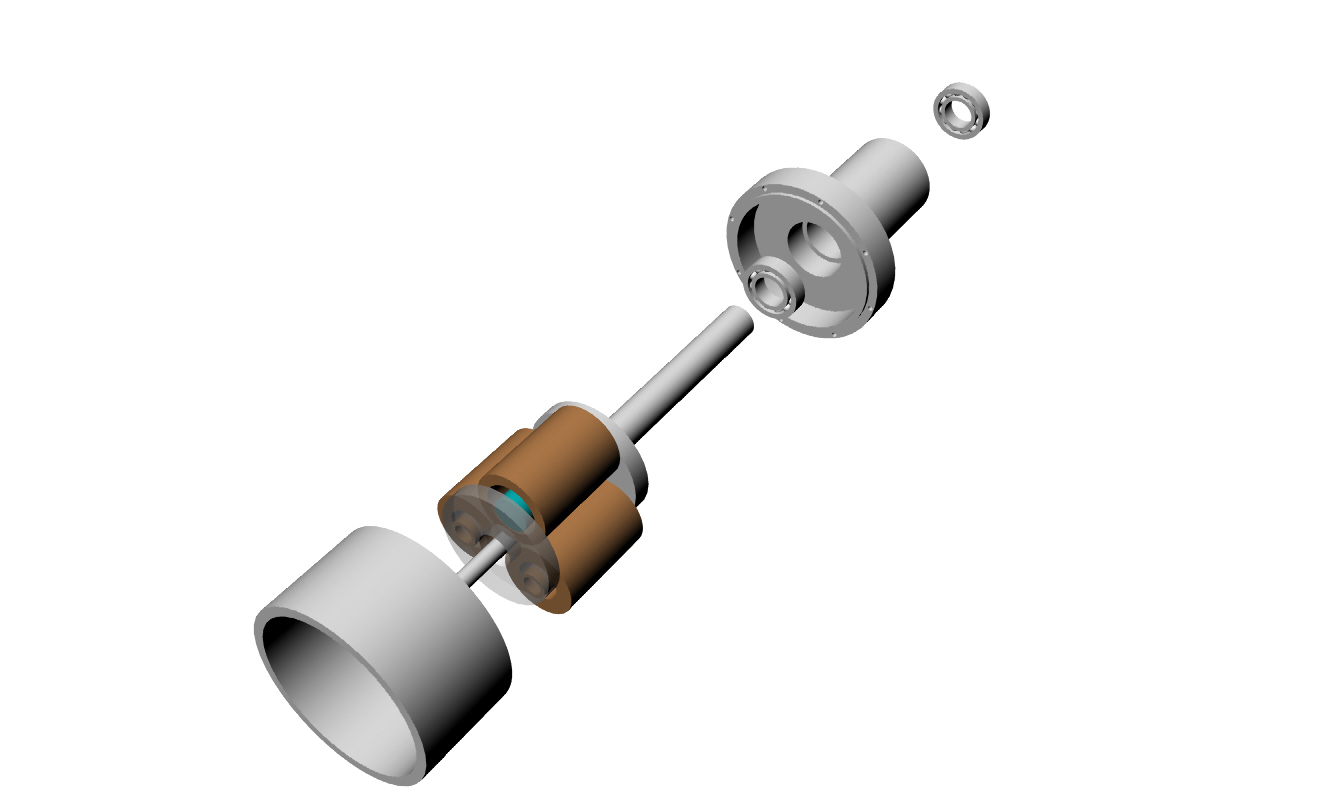
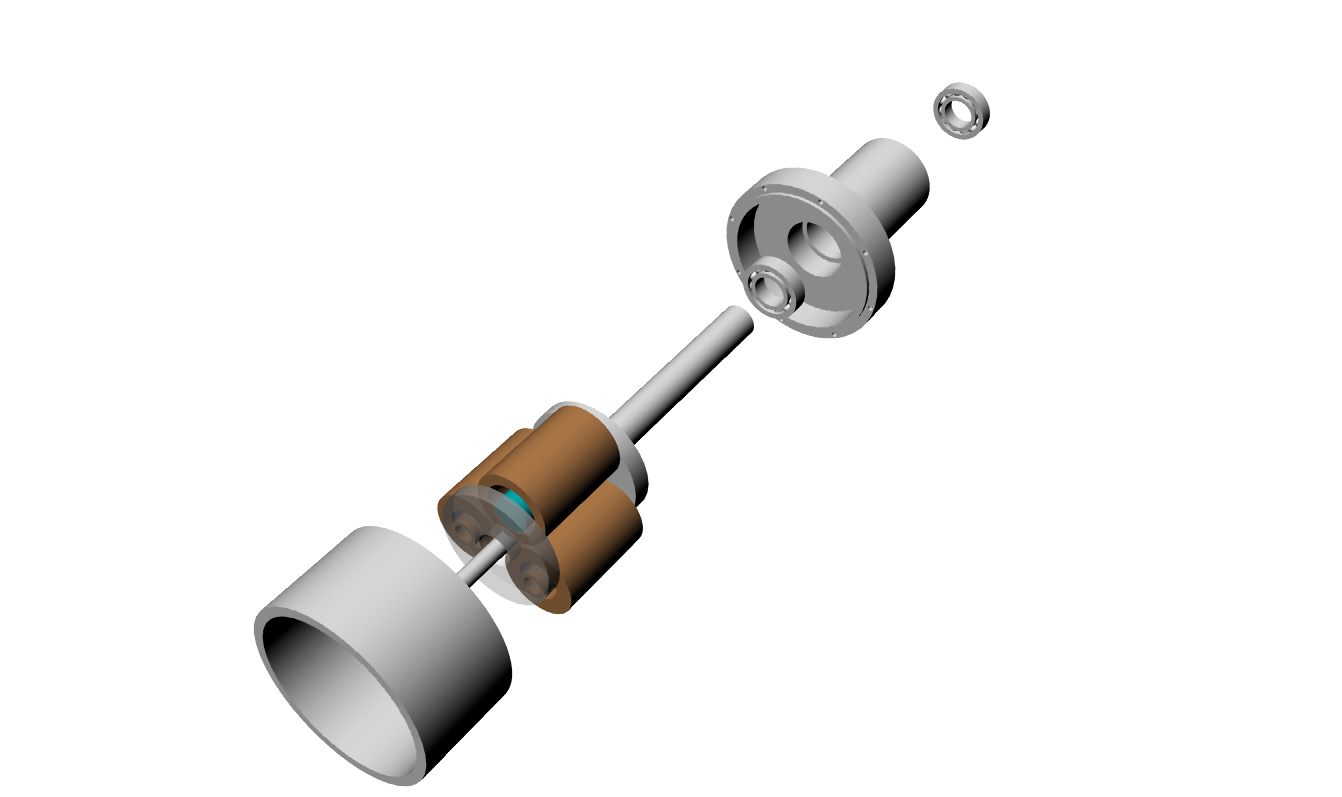
Paul The straight dimension from hole to hole is about 130mm. The inner
dimension circumference is about 100mm or 4 inches. I found a way to open
the unit up easily so I can have some more accurate dimensions and pictures
for you tomorrow.
Cheers
Doug in Japan
Great news on the pictures Doug. I can refine my design.
I am amazed they are taking power off the ring gear. Perhaps you can talk
them into building one that takes the power off the planet carrier and rotates in the
same direction. IMHO the Rotrex engineer, strange as it seems, missed this point.
Here is the formulas. Take the power off the planet carrier and you get
a bonus of one in the reduction ratio. I still say you should make you own
and you can thread it anyway you want.
--
Paul Lamar ...No rotor no motor.
The Rotary Engine NewsLetter. Powered by Linux.
ACRE NL web site.
http://www.rotaryeng.net
Copyright 1998-2005 All world wide rights reserved.