> Big Snip Of course we must control the heat input into the
pressure
cooker
> ....................ah
>
> .........................I have an idea a cooling system to get
rid of
> the excess heat :)
>
> .................................................... sorry about
> that.....................
>
> Regards David Gaze
>
>
> If you continue to heat the water the pressure will continue
> to build eventually bottoming out the piston and cause a major
> failure somewhere else. Steam boilers are known for blowing
> up from time to time.
>
> If you have steam coming out of your cowl in a simple pressure can
> system with a pressure relief cap you can back off on the power
and find
> a place to land while you still have some coolant left in the
engine.
> If you are lucky the engine temp will drop low enough at reduced
power
> to stop generating steam. In other words you have a warning.
>
> With an accumulator system the first warning is a burst radiator
> with all the coolant departing overboard shortly through the hole.
>
> Just like a steam locomotive engineer you need to keep your
> eye on the temp pressure gage.
>
> Paul Lamar ...No rotor no motor.
> Paul ..this is a VERY important safety consideration and needs
to be
repeated in case anyone slept thru the msg. DM
Dave,
first it is important to know the ultimate pressure the cooling
system can rise to without failure - hoses, radiator,heater, motor,
pump seal, etc. Set a pressure relieve valve to bleed off below
this max temperature-pressure. Also I think a redundant idiot
light would be cheap insurance, a few million cars on the road have
them.
Actually, the closed system would have more protection against
failure than the overflow system in that the higher pressure would
raise the boiling point of the coolant and also increase cooling in
the radiator because of the higher temperature differential between
the coolant and the air going thru the radiator.. Some people have
used A/C condensers which can withstand over 400 psi.
Joel
We have just in effect eliminated the traditional over flow system
since nobody
seems to like it :) Just so everybody is on the same page there four
systems
under discussion.
1)The traditional coolant recovery tank system AKA the over flow system.
Been around for 50 years.
2)The pressure tank system. Continental, Dave Leonard, Al Gietzen,
Mazda, Mercedes, Volvo, P51, P38, etc., etc.. with pressure relief.
3)The piston accumulator system with out pressure relief below the
piston.
(Air on top.)
4)Variation on 3. with pressure relief below the piston. Jerry Hey's
idea.
Paul Lamar ...No rotor no motor.
The Rotary Engine NewsLetter. Powered by Linux.
ACRE NL web site. http://www.rotaryeng.net
Copyright 1998-2005 All world wide rights reserved.
Paul,
Not to imply that I have changed my mind about the P-tank, but, it
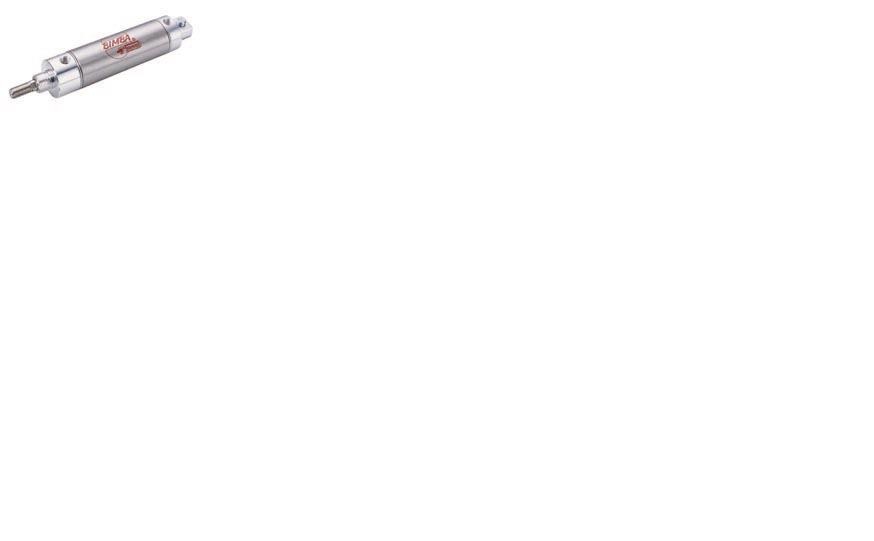
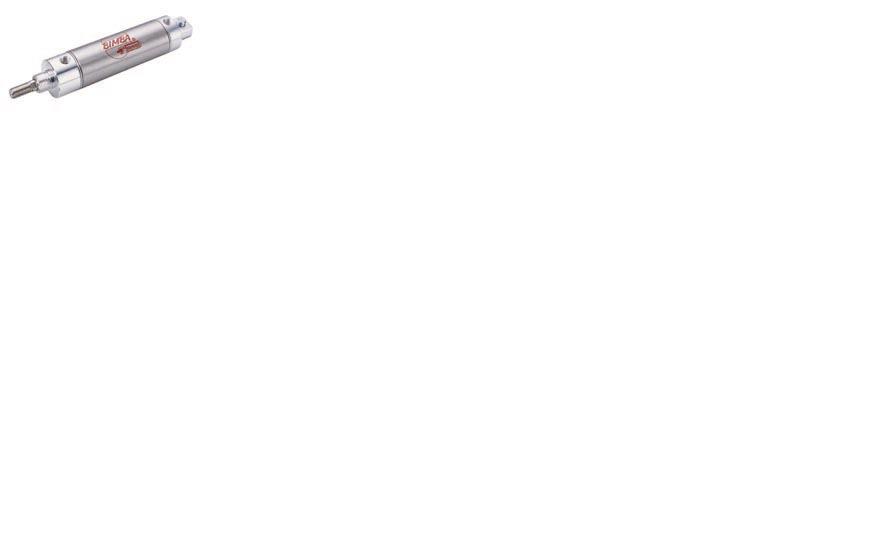
occurred to me that a 3" x 12" version of these Bimba cylinders may be
large enough. The weight would be about 6.5 lb, the cost around $150.
The rod would require space, but, would show the level of fluid. The
seal material is Buna-N, a higher temp. is available as an option. A
magnet in the piston is also available to activate an external reed
switch for position sensing. Using one of these would require only that
we fabricate a manifold with a pressure cap to connect the cylinder to
the cooling system.
The 70xx-D cylinder is on page 1.63 in the "Original Line" Bimba catalog.
http://www.bimba.com
Just food for thought,
Aubrey
The Rotary Engine NewsLetter. Powered by Linux.
ACRE NL web site.
http://www.rotaryeng.net
Copyright 1998-2005 All world wide rights reserved.