From the book
* Vee's For Victory! by Daniel D. Witney. An extensive and
comprehensive
book on the history and engineering of the Allison V-1700 liquid
cooled aircraft engine. 8.5 by 11, hard bound, 470 pages. $59.95.
Schiffer Military History. Atglen PA ISBN:0-7643-0561-1
Note: little has changed in the past 70 years.
Since nose up climb is the worse case Allison got it right
here with the pressure tank mounted at the nose.
Here is what I suggest at this point in time for our use.
Paul Lamar ...No rotor no motor.
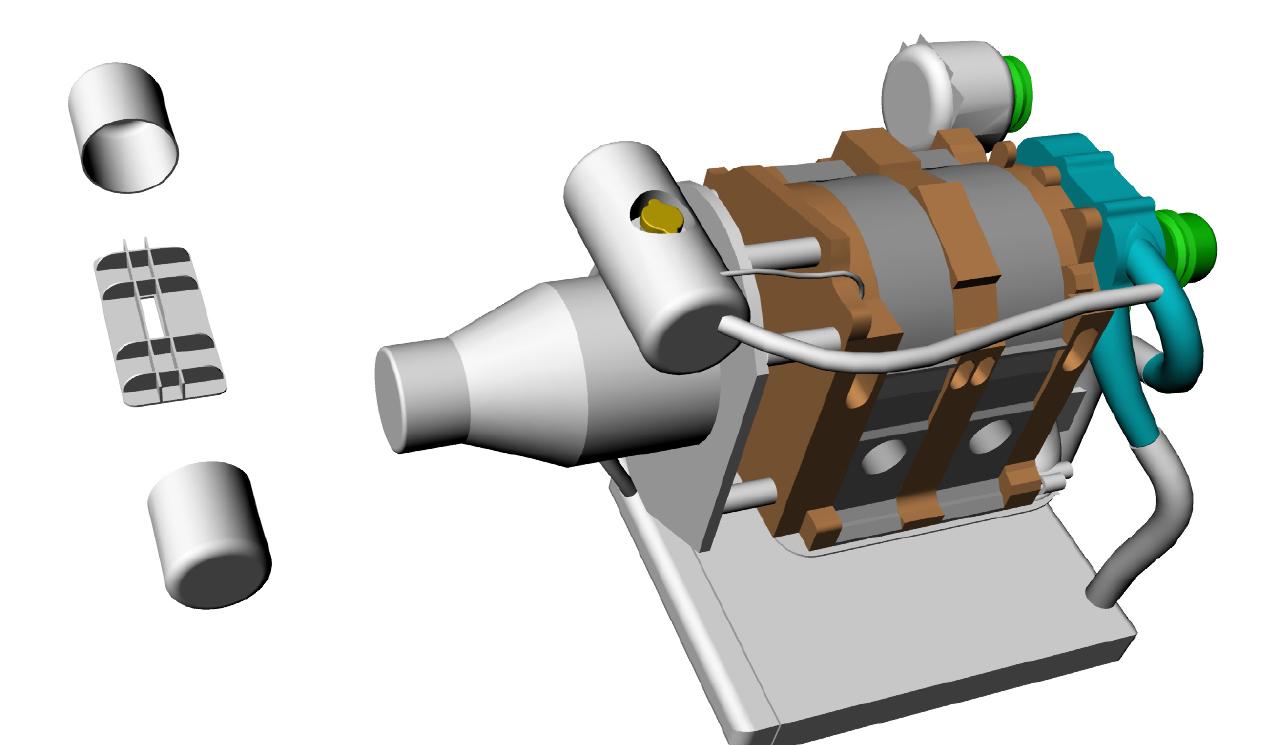
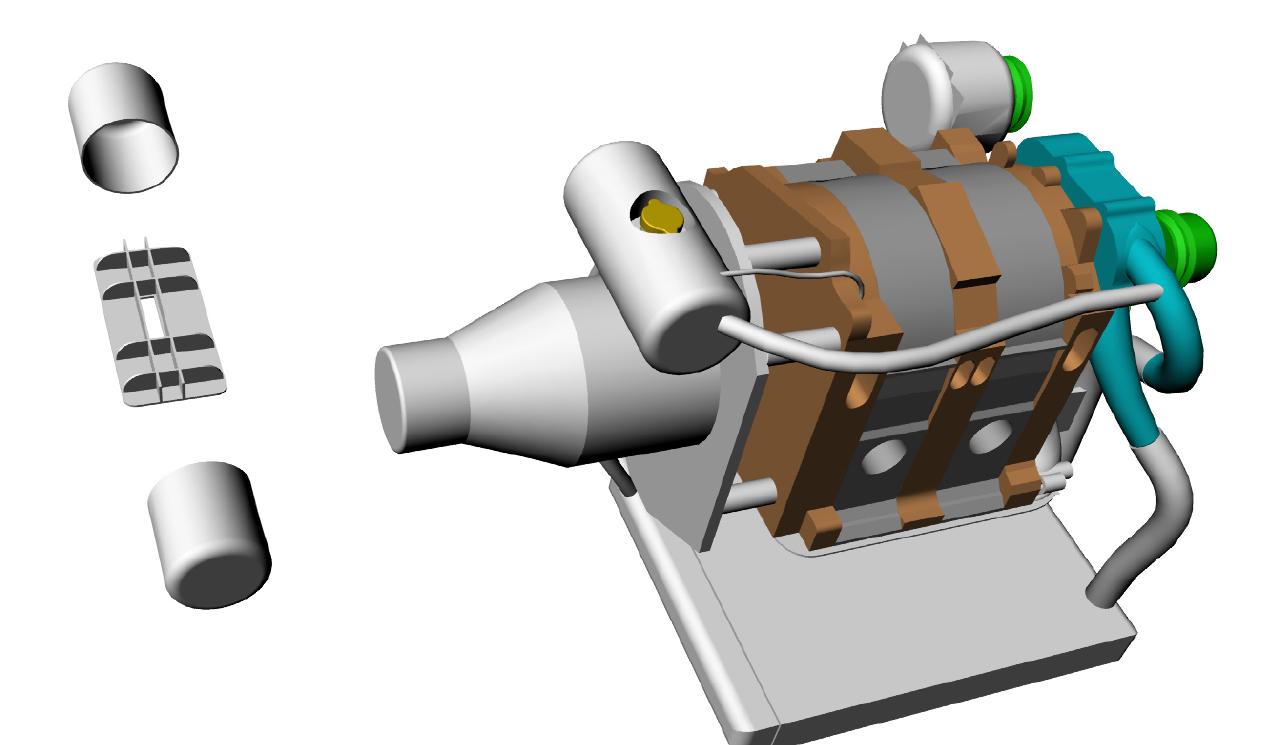
Ops not quite the 3D I wanted. Here it is along with the "Sniffle"
valve :)
"Those that fail to learn from history are doomed to repeat it."
Somebody other than me but I don't remember who.
Paul Lamar ...No rotor no motor.
So am I to infer that the idea of having a P tank and an A tank is no
longer necessary? I ask because the expansion & overflow tanks are the
last pieces I need to order before mounting and connecting all of the
engine plumbing. What capacity are we looking for in the P tank then?
I presume it is larger than the 2-tank scheme, in order to make room for
excess capacity / air gap.
Mark Supinski
I think you can get along with just a pressure tank and a 30 psi
pressure
cap. The RX8 does (15 psi pressure cap). BTW your firewall is so high
you don't have to worry about mounting on the front of the engine. Mount
it as high as you can get it on the firewall.
--
Paul Lamar ...No rotor no motor.
Actually, I was liking the front of engine position. My firewall is
completely jammed with various things already, so the front position
(which is absolutely clear) was sounding good.
Mark Supinski
Go for it. Ed Klepeis can weld you up something that looks
like the RX8 version.
BTW you can point the overflow vent stright up through the cowling
and then just like a Model T or Model A Ford if you start making
steam you will know it in an instant :)
Paul Lamar ...No rotor no motor.
The Rotary Engine NewsLetter. Powered by Linux.
ACRE NL web site.
http://www.rotaryeng.net
Copyright 1998-2005 All world wide rights reserved.