BTW, I ordered the new radiator. No choice but to go with a
2-row. I
kept the same exterior dimensions to make installation
easier. Volume
is going from 560 cu.in <http://cu.in> <http://cu.in>. to 900
cu.in <http://cu.in> <http://cu.in>!
(and airflow will go up by 50%).
--
Dave Leonard
Turbo Rotary RV-6 N4VY
http://members.aol.com/_ht_a/rotaryroster/index.html
< http://members.aol.com/_ht_a/rotaryroster/index.html>
http://members.aol.com/_ht_a/vp4skydoc/index.html
Okay Dave what am I missing here, how does the airflow increase 50% ?
John
Easy, because I am going to increase the inlet and outlet surface area
by 50%. :-)
--
Dave Leonard
Turbo Rotary RV-6 N4VY
http://members.aol.com/_ht_a/rotaryroster/index.html
http://members.aol.com/_ht_a/vp4skydoc/index.html
I got bad news Dave. You have also decreased the porosity of your
radiator so less air will flow through it at a given dynamic
pressure difference. What will happen is the pressure will build
up in front of your larger openings and the air molecules will
say "Screw you. I am not going to go into THAT cave. Too much air
pressure in there. I think I will just divert around the out side
of the opening." :) AKA external diffusion. All you are doing
is adding drag. Not only will your rad flow less air but so too
your oil cooler and inter cooler.
Paul Lamar ...No rotor no motor.
Paul,
Can't the outlet be designed in such a way as to increase the negative
pressure? Ie create a suction? Again at the expense of increasing drag.
Doug in Japan
-----------------------------------------------------------------
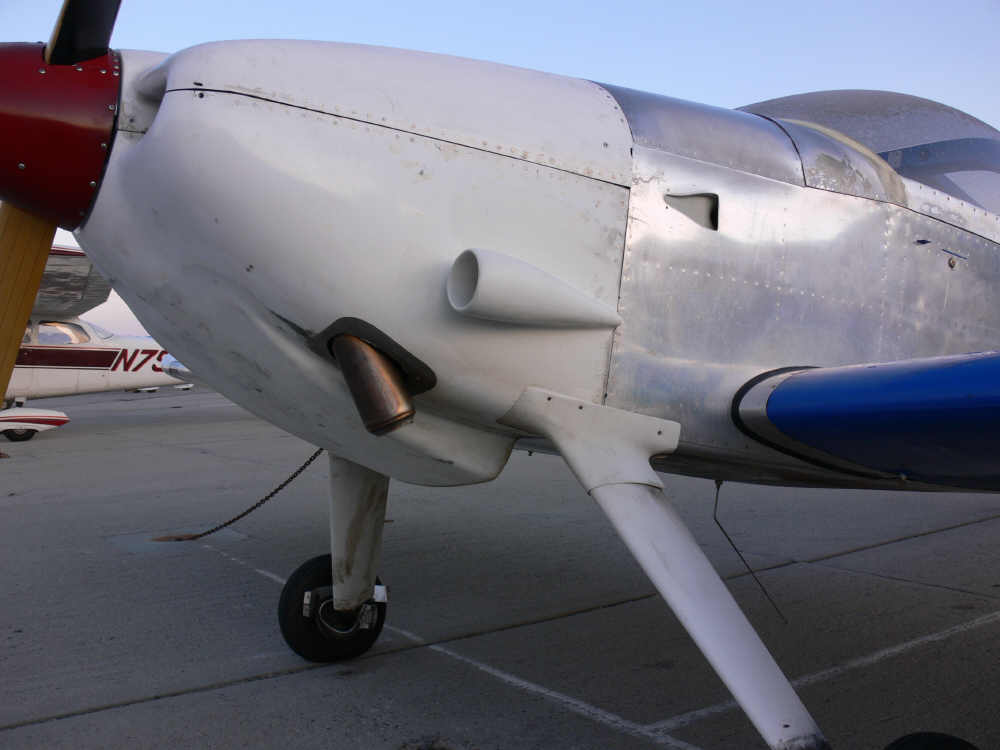
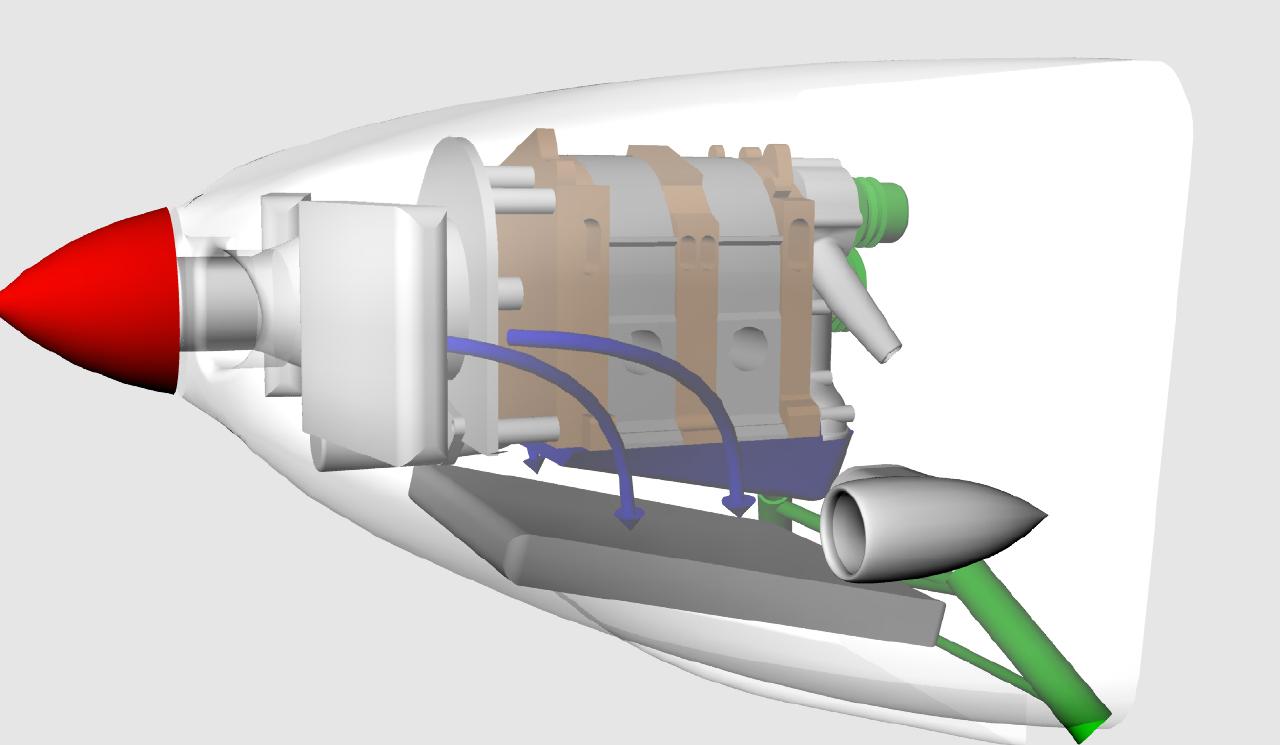
Up to a point using a 45 degree cowl flap but ultimately it is ambient pressure
surrounding the aircraft. With Dave's current set up it is strictly
ambient pressure as there is no cowl flap to speak of. Here are the
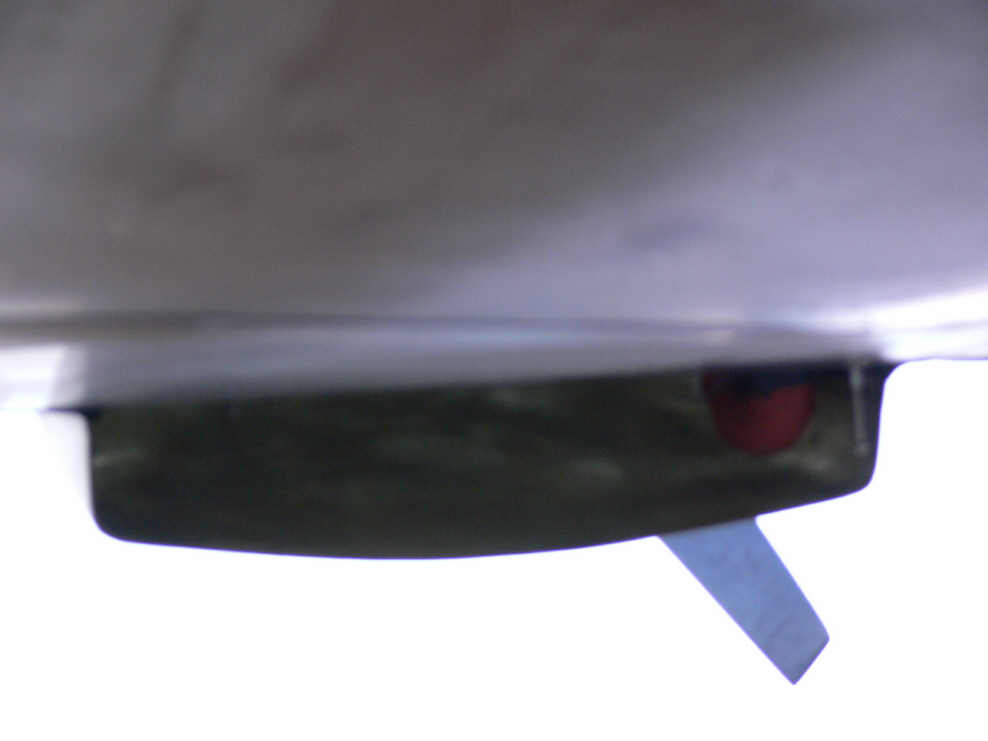
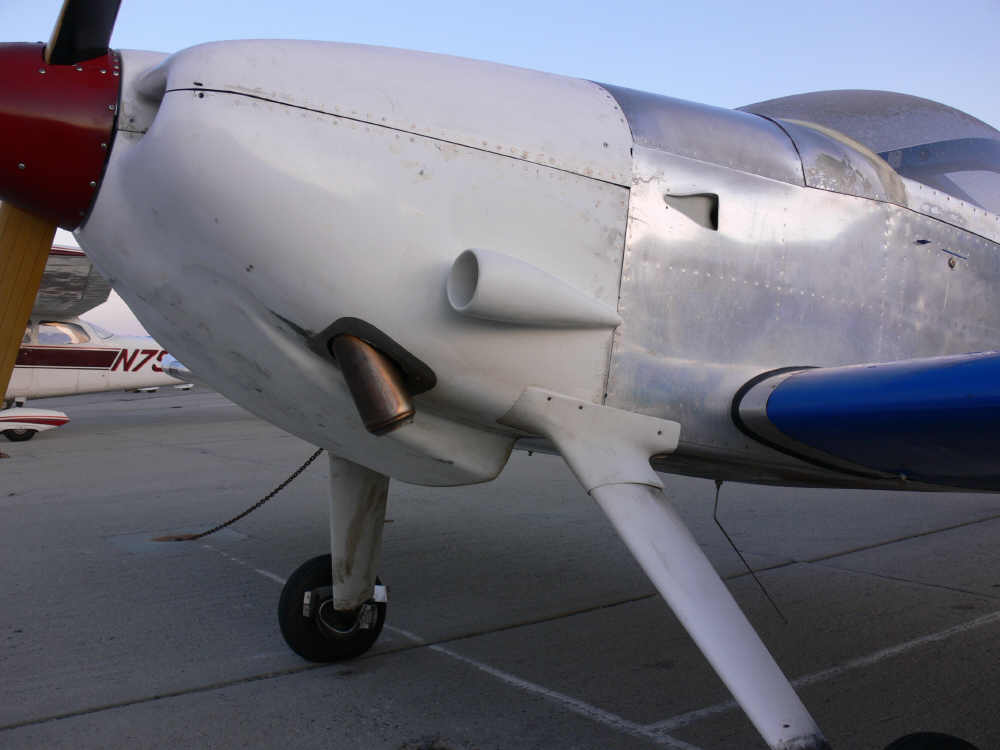
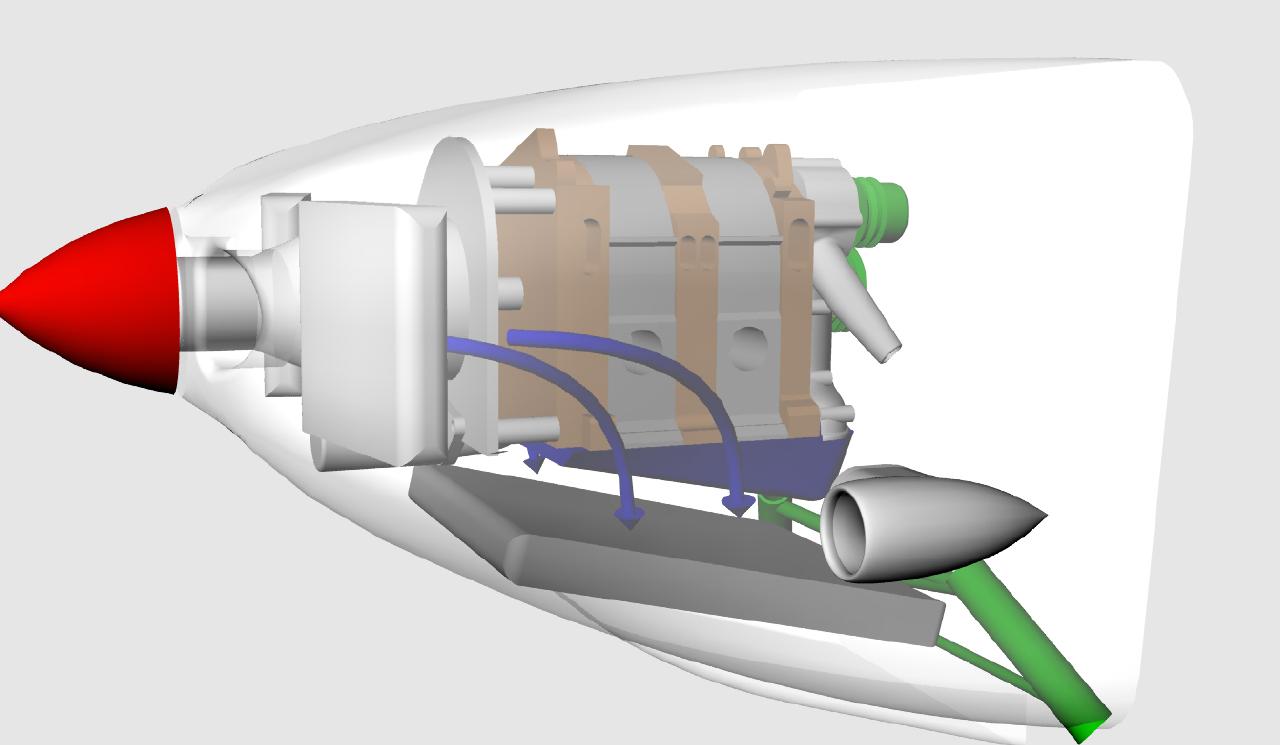
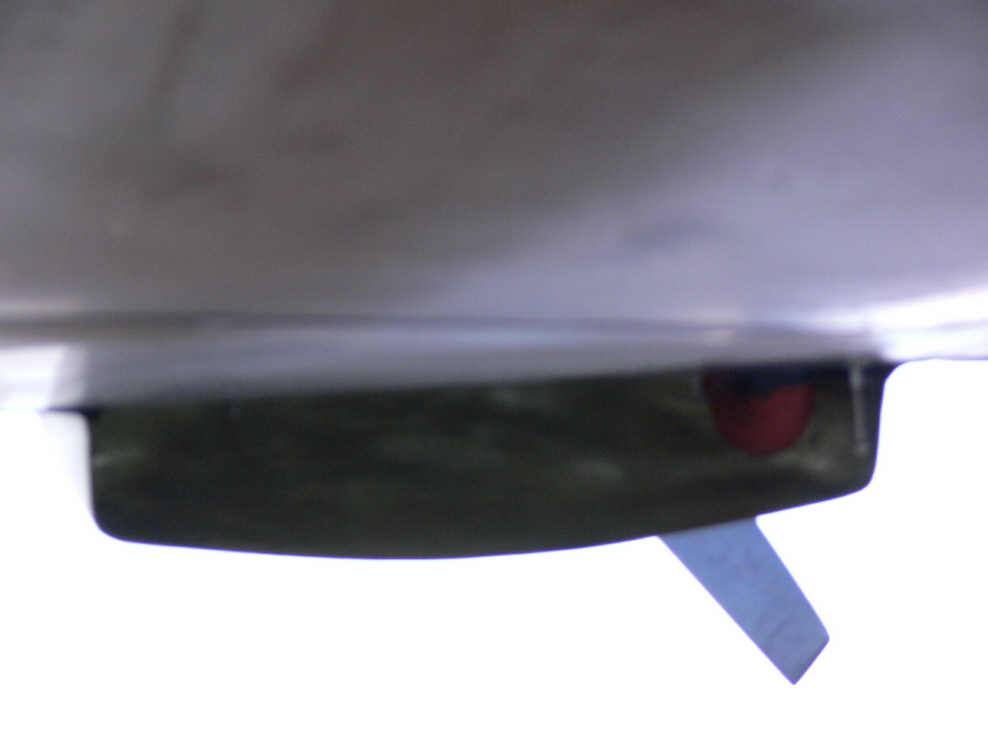
pictures. Note the hole in the cowl for the Burns muffler.
BTW Dave, 12 inches of water is .45 psi 3 inches is .1 psi roughly.
If you do succeed in getting a few inches of water pressure
in the cowl in front of the new rad the force on the cowl trying
to turn it into a balloon will be .1 psi all over the inner service
area of the cowl. lets say the cowl is 40 inches long and 30 by 30 or 100
inches in circumference. That means the surface area is roughly 4000 square
inches give or take a few hundred. At .1 psi that is 400 pounds.
Good luck sealing the joints :)
This is a mistake that almost every body makes. In other words failure
to seal the duct feeding air to the heat exchangers. What little
pressure there is leaks out all the gaps. Ironically Dave did
an excellent job sealing the oil cooler and inter cooler ducts to
the cores.
Paul Lamar ...No rotor no motor.
The Rotary Engine NewsLetter. Powered by Linux.
ACRE NL web site.
http://www.rotaryeng.net
Copyright 1998-2006 All world wide rights reserved.