> Come to think of it, I have to wonder why Mazda has not explored
> turbo compounding for the rotary. Like you said, this engine is a
> perfect
> gas generator for spinning a turbine.
>
> I would think though that in auto applications at the low power
that is
> typical of highway cruise, there is not that much exhaust energy. It
> would have to be a pretty small turbine, but then you would run the
> risk
> of over speeding it in full-throttle acceleration.
> Gordon
You can't over speed a turbine that is connected to your engine output
shaft with a belt.
Hans
Depends on the ratio Hans. At 20:1 over all we will have to limit engine
RPM to 6000. At 6000 engine RPM the turbo will be going 120,000 RPM.
That is fine for testing but I suspect the final drive ratio
will be more like 1.7:1 rather than 2:1 so given a 10:1 traction
drive 7000 engine RPM will give 119,000 turbo RPM.
With a three inch pulley on the traction drive that will allow use to
use a five inch pulley on the e-shaft. 1.666:1 One point six to one.
Paul Lamar ...No rotor no motor.
Paul,
Judging by the detailed specs on your drawings, it seems there is not
much left to do but to turn out the pieces, put them together and go to
the dyno!
Do you have a time line in mind? Things appear to be moving pretty quickly.
And btw, are you going to be using the 13b or Renesis as the test mule?
I would the think the straight exhaust ports on the 13b are going to
give a more energetic stream.
Regards,
Gordon.
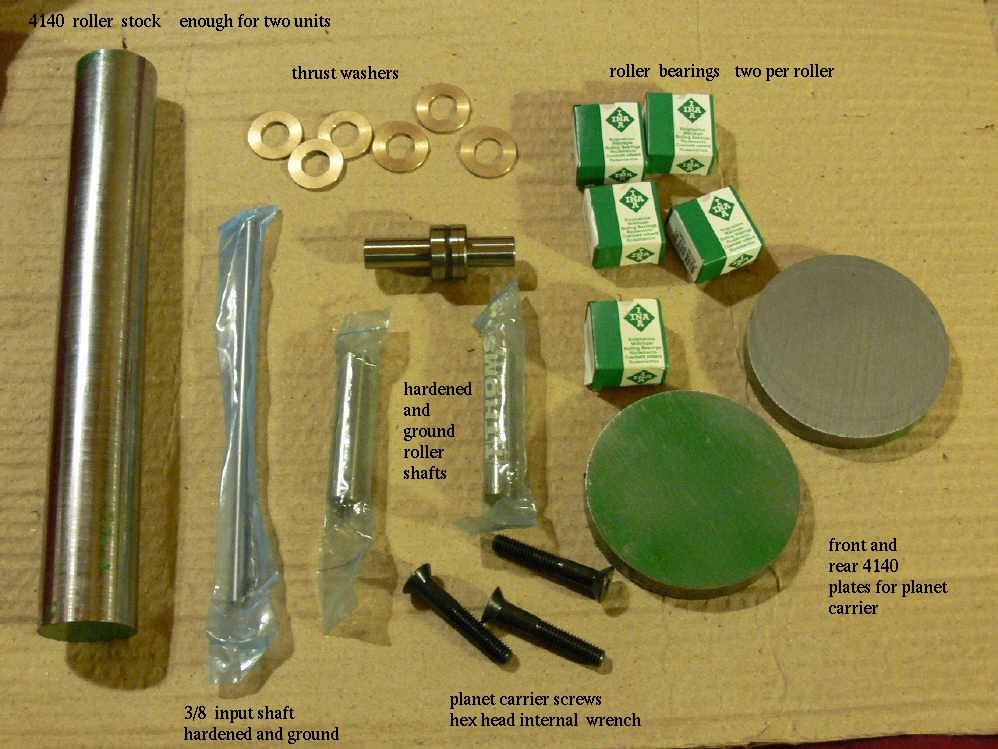
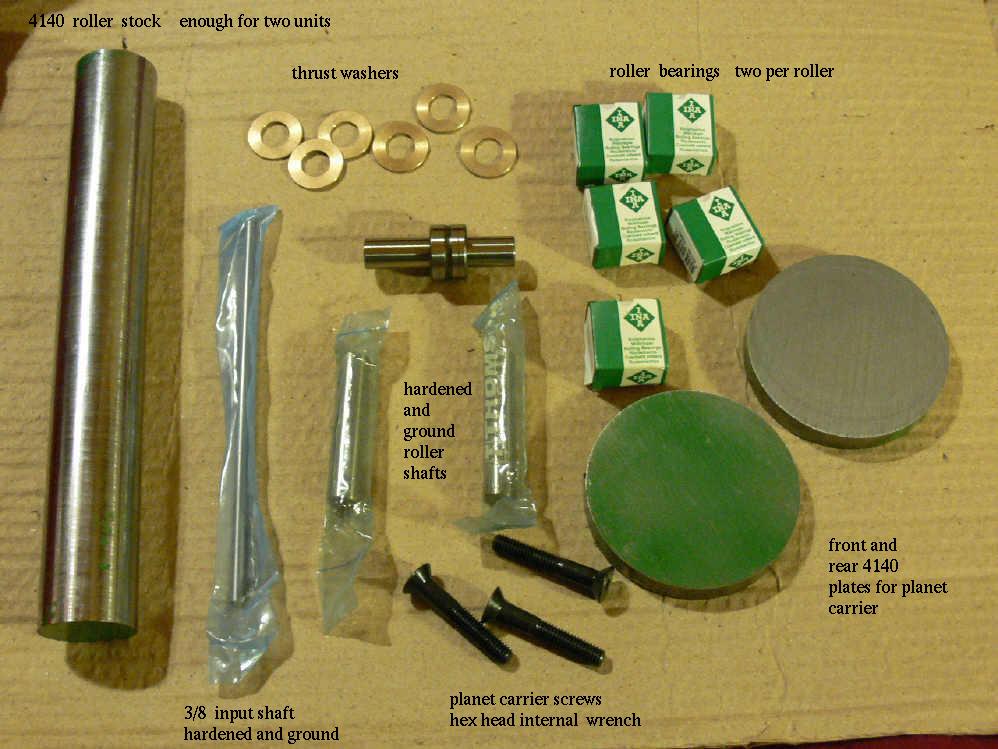
I should have these parts in the machine shop this week. I have most of the
material. We are putting together a deal were we can run the box on someone
else's 13B Turbo II engine that is scheduled to go on the dyno anyway.
If necessary I have a Turbo II engine and a couple of stock 13B turbo
chargers as well as a TO4 to try if necessary.
Paul Lamar ...No rotor no motor.
The Rotary Engine NewsLetter. Powered by Linux.
ACRE NL web site.
http://www.rotaryeng.net
Copyright 1998-2006 All world wide rights reserved.