Hello everyone, As I've been following this design process with
bait on
my breath, I personally don't have the smarts to pull this
off, but
I'm one of those fellows hoping it is better then anyone could
imagine.
I've had the same question that Fred did about not having the
Compressor
installed. Normally aspirated with the TC unit. I've not
purchased my
rotors yet and have been vacillating on the 89 high compression
or the
89 turbo type. I don't have the turbo experience and
subsequently am a
little apprehensive about taking this on. However I really like the
prospect of milking extra horse power out of the exhaust stream. So
based on your comment "why bother". Should I not worry about the
possibility? move forward with the 89' high compression
rotors? But I
guess if I did add the TC unit and a Turbine the high
compression rotors
would not matter anyway. So maybe I've just answered my own
question.
Go with the 89 high compression rotors and when available add the
turbine and TC unit later. Comments T.W.
Well if you go with the high compression rotors you could and
should
limit the boost to 5 psi or less at sea level.
--
Paul Lamar ...No rotor no motor.
WOW - I did not realize the 89 high compression rotors could run
at 40"
MAP - Do I understand that correctly ? So you could TC mildly to
40"
without big problems ?
-dave
--
Best Regards /Mit freundlichen Gruessen,
dave ( at ) arb.net
<http://arb.net> http://arb.net
It is pushing it Dave. You still need to make sure the
air going into the engine intake is less than 140 F.
BTW I lot of people make the mistake of not blowing air through
the inter cooler when a turbo engine is on the dyno and consequently
turbo engines are known for detonating on the dyno.
Paul Lamar ...No rotor no motor.
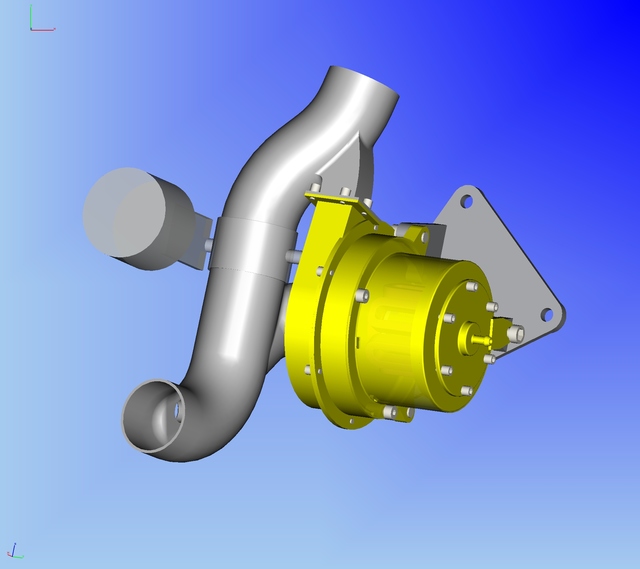
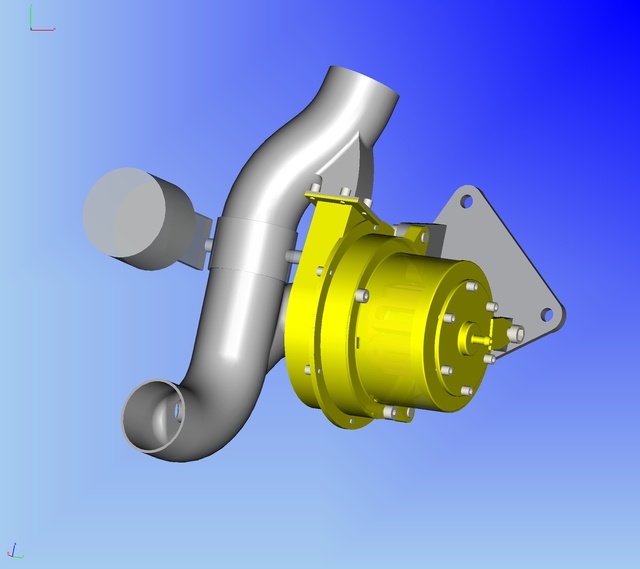
How fast can we turn a water pump (and still have it be efficient)?
How about just have the turbo drive the (engine cooling) water pump
(maybe directly)? We can be confident that the water pump needs to
move the most water when the turbo is working the hardest. A much
better solution than an electrically powered water pump. Arguably
better than having an e-shaft driven water pump.
Matt-
Replying to my own message...
And how about throwing one of these on it too?
http://www.greencarcongress.com/2005/09/tigers_exhaust_.html
Switched reluctance generator. Hmm.
Matt-
-------------------------------------------------------------
The TIGERS—Turbo-generator Integrated Gas Energy Recovery System—consortium (a Foresight vehicle
project) diverts exhaust gases to drive a small switched reluctance generator to create enough
electricity to power a car’s electrical system.
The small turbo-generator is installed in a by-pass waste pipe fitted just below the engine exhaust
manifold. A valve linked to the engine’s management control system allows some of the high-energy
exhaust gases to pass through a turbine to drive the generator, depending on engine load conditions.
Typically the 800ş C gases have a velocity of 60m/s and a mass flow rate of 0.05 kg/s, providing
enough energy to spin the generator at up to 80,000 rpm and create electrical power of up to
6kW—sufficient to handle the car’s electrical systems.
-----------------------------------------------------------------
This is a piston engine with high exhaust valve dumping losses.
No mention of the core engine HP.
They are only extracting 6 Kw or 8 HP from the exhaust.
A 6 Kw alternator does not weigh all that much.
A smaller rotary with exhaust turbine driving an alternator with the rotary
e-shaft driving another alternator would make a fine electric hybrid vehicle.
Or you could feed the HP back into the e-shaft and have only one large
alternator.
Paul Lamar
The Rotary Engine NewsLetter. Powered by Linux.
ACRE NL web site.
http://www.rotaryeng.net
Copyright 1998-2006 All world wide rights reserved.