http://www.autoweek.com/apps/pbcs.dll/article?AID=/20060227/FREE/
302270007/1023/THISWEEKSISSUE
Here is the text, typically lacking in any sort of real
information, who does the hiring over at Autoweek?
Inside Bruce Crower’s Six-Stroke Engine
By PETE LYONS
AutoWeek | Published 02/23/06, 9:35 am et
Advertisement
Bruce Crower has lived, breathed and built hot engines his whole
life. Now he’s working on a cool one—one that harnesses normally-
wasted heat energy by creating steam inside the combustion chamber,
and using it to boost the engine’s power output and also to control
its temperature.
“I’ve been trying to think how to capture radiator losses for over
30 years,” explains the veteran camshaft grinder and race engine
builder. “One morning about 18 months ago I woke up, like from a
dream, and I knew immediately that I had the answer.”
Hurrying to his comprehensively-equipped home workshop in the rural
hills outside San Diego, he began drawing and machining parts, and
installing them in a highly modified, single-cylinder industrial
powerplant, a 12-hp diesel he converted to use gasoline. He bolted
that to a test frame, poured equal amounts of fuel and water into
twin tanks, and pulled the starter-rope.
“My first reaction was, ‘Gulp! It runs!’” the 75-year-old inventor
remembers. “And then this ‘snow’ started falling on me. I thought,
‘What hath God wrought…’”
The “snow” was flakes of white paint blasted from the ceiling by
the powerful pulses of exhaust gas and steam emitted from the open
exhaust stack, which pointed straight up.
Over the following year Crower undertook a methodical development
program, in particular trying out numerous variations in camshaft
profiles and timing as he narrowed the operating parameters of his
patented six-stroke cycle.
Recently he’s been trying variations of the double-lobe exhaust
cams to delay and even eliminate the opening of the exhaust valve
after the first power stroke, to “recompress” the combustion gasses
and thus increase the force of the steam-stroke.
The engine has yet to operate against a load on a dyno, but his
testing to date encourages Crower to expect that once he gets hard
numbers, the engine will show normal levels of power on
substantially less fuel, and without overheating.
“It’ll run for an hour and you can literally put your hand on it.
It’s warm, yeah, but it’s not scorching hot. Any conventional
engine running without a water jacket or fins, you couldn’t do that.”
Indeed, the test unit has no external cooling system—no water
jacket, no water pump, no radiator; nothing. It does retain fins
because it came with them, but Crower indicates the engine would be
more efficient if he took the trouble to grind them off. He has
discarded the original cooling fan.
So far he has used only gasoline, but Bruce believes a diesel-
fueled test engine he is now constructing—with a hand-made billet
head incorporating the one-third-speed camshaft—will realize the
true potential of his concept.
Potential…and Questions
Crower invites us to imagine a car or truck (he speaks of a
Bonneville streamliner, too) free of a radiator and its associated
air ducting, fan, plumbing, coolant weight, etc.
“Especially an 18-wheeler, they’ve got that massive radiator that
weighs 800, 1000 pounds. Not necessary,” he asserts. “In those big
trucks, they look at payload as their bread and butter. If you get
1000 lb. or more off the truck…”
Offsetting that, of course, would be the need to carry large
quantities of water, and water is heavier than gasoline or diesel
oil. Preliminary estimates suggest a Crower cycle engine will use
roughly as many gallons of water as fuel.
And Crower feels the water should be distilled, to prevent deposits
inside the system, so a supply infrastructure will have to be
created. (He uses rainwater in his testing.) Keeping the water from
freezing will be another challenge.
But the inventor sees overriding benefits. “Can you imagine how
much fuel goes into radiator losses every day in America? A good
spark-ignition engine is about 24 percent efficient; ie., about 24
cents of your gasoline dollar ends up in power. The rest goes out
in heat loss through the exhaust or radiator, and in driving the
water pump and the fan and other friction losses.
“A good diesel is about 30 percent efficient, a good turbo diesel
about 33 percent. But you still have radiators and heavy
components, and fan losses are extremely high on a big diesel truck.”
Bottom-line, Bruce estimates his new operating cycle could improve
a typical engine’s fuel consumption by 40 percent. He also
anticipates that exhaust emissions may be greatly reduced. It’s all
thanks to the steam.
“A lot of people don’t know that water expands 1600 times when it
goes from liquid into steam. Sixteen hundred! This is why steam
power is so good. But it’s dangerous…”
The danger of a boiler explosion has long been a factor in
engineering—and in operating—steam powerplants of all kinds, and
Crower is properly wary of the miniature boiler he has conjured up
inside his test engine. That’s one reason he chose to use one
originally manufactured as a diesel, for its inherent strength,
though he installed a carburetor and ignition system so it could
burn gasoline at first.
The original diesel fuel injector system now supplies the water
spray to generate the steam-stroke.
In addition to producing extra power, the injected water cools the
piston and exhaust valve, which suggests to Crower that he could
raise the compression ratio. “I’ve done this many times on regular
engines: 15-to-1 on gasoline for the first five seconds works
pretty good until you get some chamber heat and then suddenly it
gets into pinging. But with the chamber being chilled, I bet 12-,
13-to-1 will be no problem on cheap fuel.
“So what we can maybe do is have fuels that aren’t quite as good…
It’ll save a nickel a gallon not having to keep three grades going.”
As for his hope of lowering emissions, Bruce speculates the steam
might purge “cling-on hydrocarbons” out of the combustion chamber.
“This thing may turn out to be so clean that you won’t have to have
a catalytic converter.
But he admits that’s unknown, saying “there’s a lot of
experimenting still to be done.” Which prospect makes him smile. He
thrives on this kind of challenge.
Bruce’s Background
“You’ve kinda got to be in the cam business and know the dynamics
of engines,” Bruce Crower says about how the idea occurred to him.
And he certainly has that background.
He was building and racing hot rods (and hot bikes), manufacturing
speed equipment and operating his own speed shop in his home town
of Phoenix when he was still a teen.
After moving to San Diego in the 1950s, among other exploits he
dropped a Hemi into a Hudson and drove it to a 157-mph speed record
at Bonneville.
Inevitably, the inventive and inexhaustible Crower built up a major
equipment business in superchargers, intake manifolds, clutches
and, especially, camshafts. He’s also credited with first
suggesting a rear wing to Don Garlits—in 1963, three years before
Jim Hall’s winged Chaparral. Bruce Crower is now in Florida’s Drag
Racing Hall of Fame.
Crower actually had introduced a wing two years earlier, during
practice on Jim Rathmann's 1961 Indianapolis car—five years before
Jim Hall’s winged Chaparral. Bruce had been crewing at the Speedway
since 1954 (Jimmy Bryan, second place), and had been part of
Rathmann's 1960 victory effort. He was likewise on the winning
teams in 1966 (Graham Hill) and 1967 (AJ Foyt). Three decades
later, in 1998, Eddie Cheever won with Crower cams.
Bruce even produced his own complete Indy engine, a flat-8 that
didn’t quite make the field in 1977 and then was rendered obsolete
(due to its width) by the advent of ground-effect tunnels. But the
Crower 8 and its automatic clutch did win an SAE award for innovation.
Today, Crower Cams and Equipment Company employs about 160 people
in five facilities, and manufactures not only cams but crankshafts
and connecting rods—including titanium rods for (unnamed) Formula
One customers.
Bruce Crower can’t be called retired now, but he’s happy to let the
company he founded “roll along” while he “plays with cars.” That’s
how he looks at the intensive R&D work he carries out in the
privacy of his 13-acre horse property near the rural community of
Jamul.
One of several projects is building up Honda S2000 engines for the
Midget raced by his granddaughter, Ashley Swanson. (“I think she’s
on par with Danica Patrick,” says the proud grampa.)
But his prime focus is proving his six-stroke engine is as
revolutionary as he believes it is. “I’ve been trying to find
something wrong with the whole basic idea for almost a year,” he
says, “but I think we’re going to have a very marketable item.”
Then he adds philosophically, “If it turns out to be great, fine.
If it doesn’t, it’s just another year out of my life that I’ve had
a lot of fun doing something.”
----------------------------------
Pete Lyons is a 35 year long friend of mine. If it lacks technical
detail it is
the fault of Auto Week.
Paul Lamar ...No rotor no motor.
Paul --
What exactly are you intending to do with my story—under which you
put your own copyright?
And AutoWeek ran it precisely as I submitted it, no cuts, no
additions, no modifications. I'm sorry if you didn't find all the
technoid stuff you crave, but the project is at a stage far too early
for such info to even be known, let alone published, and anyway, I
didn't intend it to be a technical piece, it's a backgrounder about
the man.
-- Pete
Not to worry Pete. I am not selling it. This is a free newsletter with no advertising
of any kind. I don't make any money from it. On the contrary it cost me money
to run it. Somebody downloaded it from the internet and sent it to me.
Anyway I can figure out the six cycle engine with out your help :)
As long as they spell your name right any publicity is better than none :)
Other than all that how are you doing? If you are still flying pop
in at SZP and look me up. Hangar six Experimental taxiway.
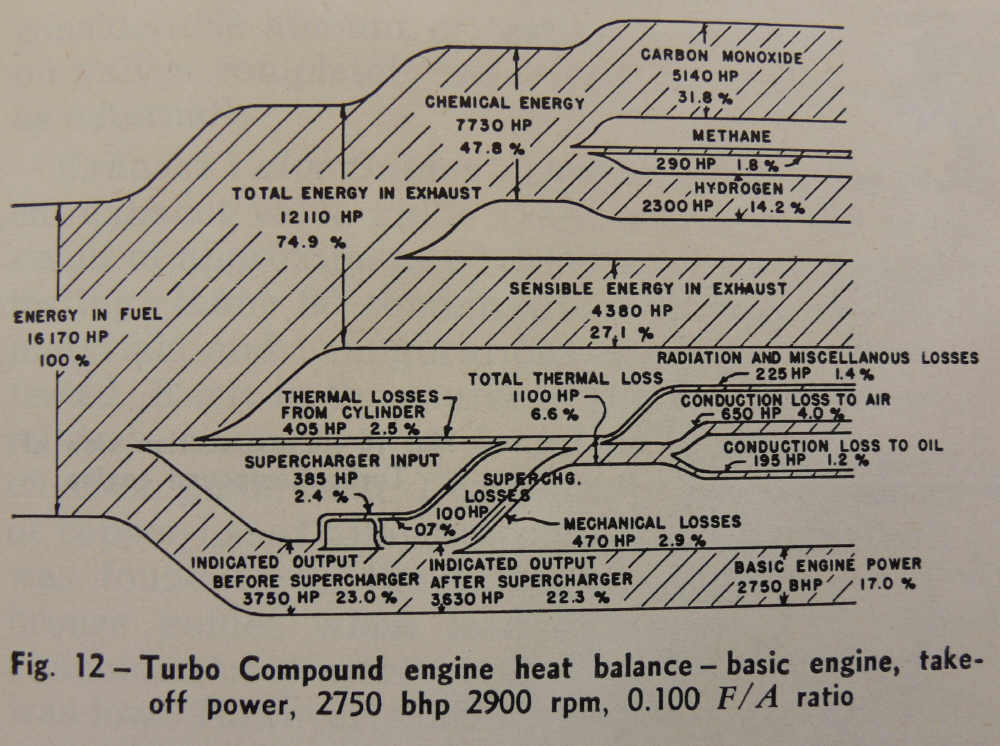
I too am working on a major break trough in
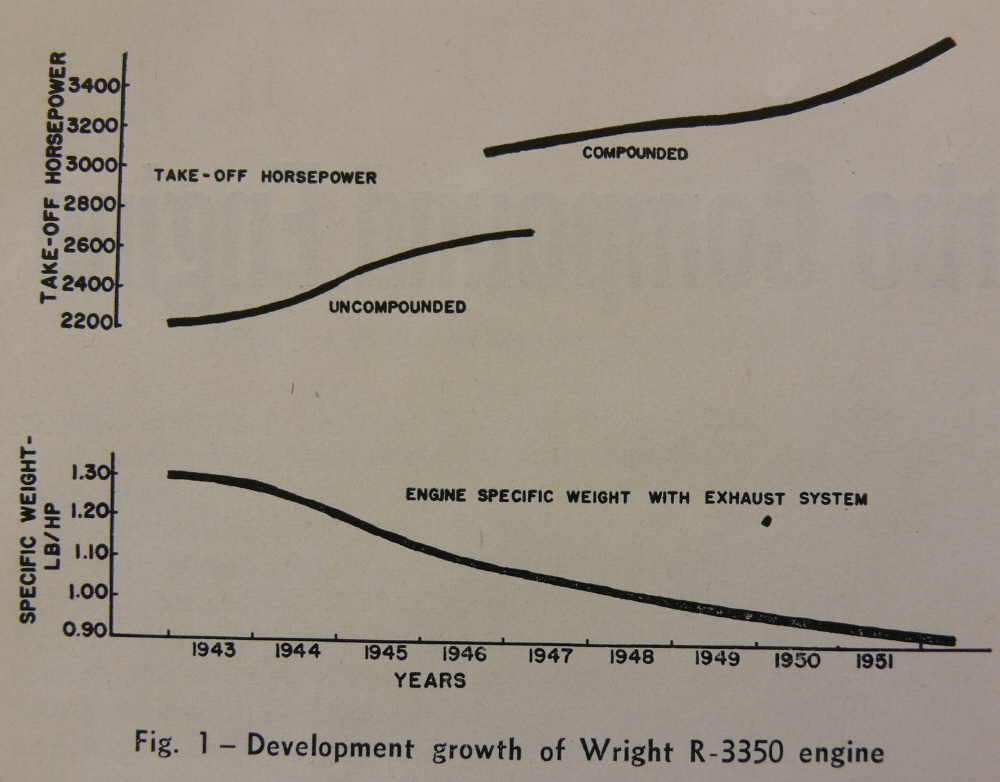
internal combustion engine efficiency using tried and true 60 year old turbo
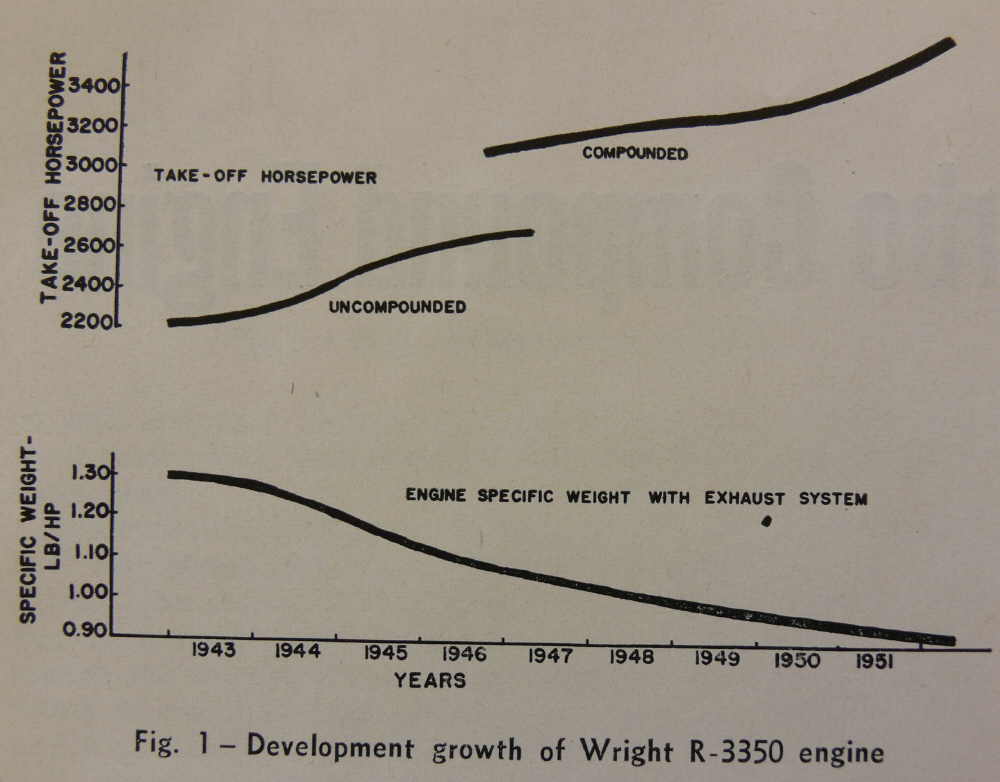
compounding technology. I went to Cal Tech lib and looked up some old data in a dust
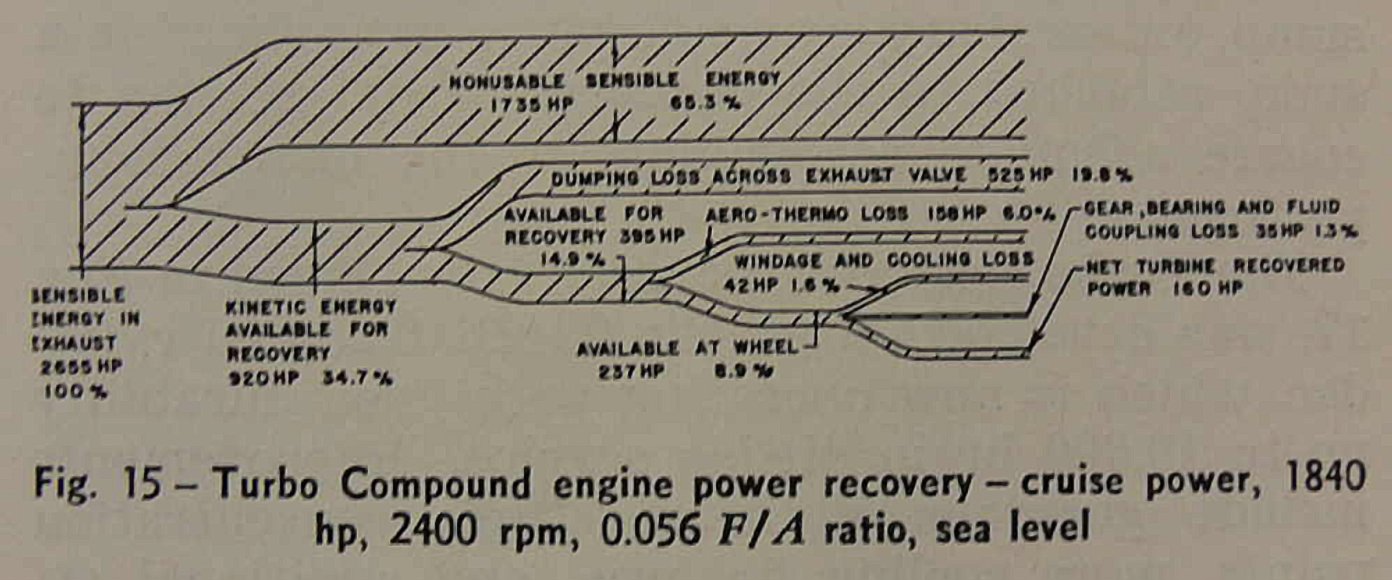
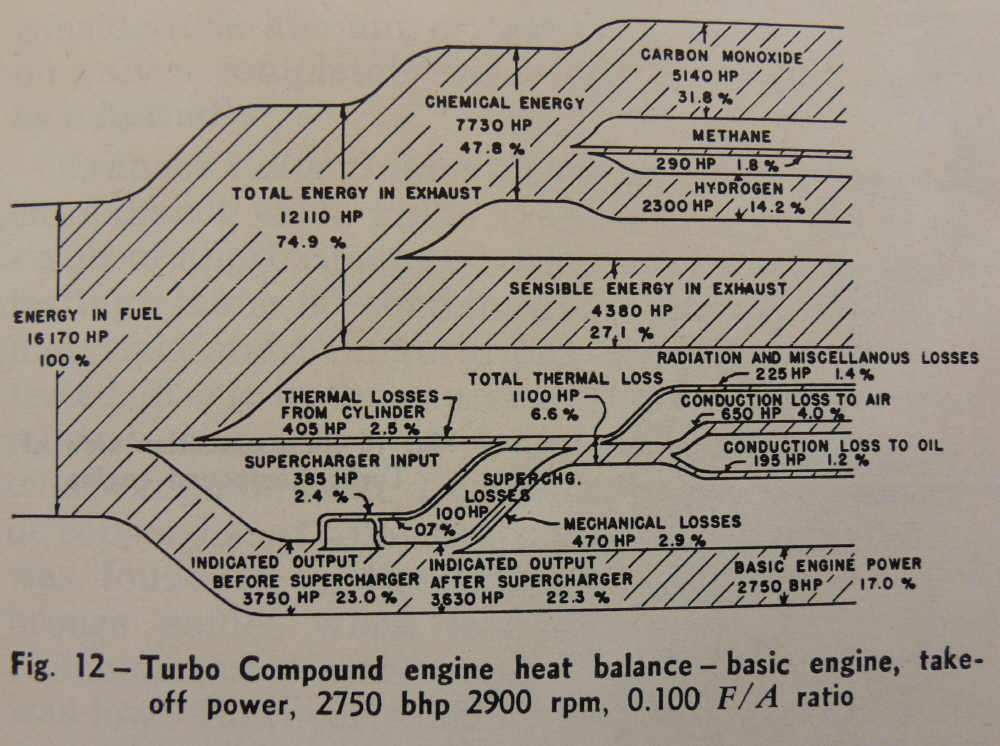
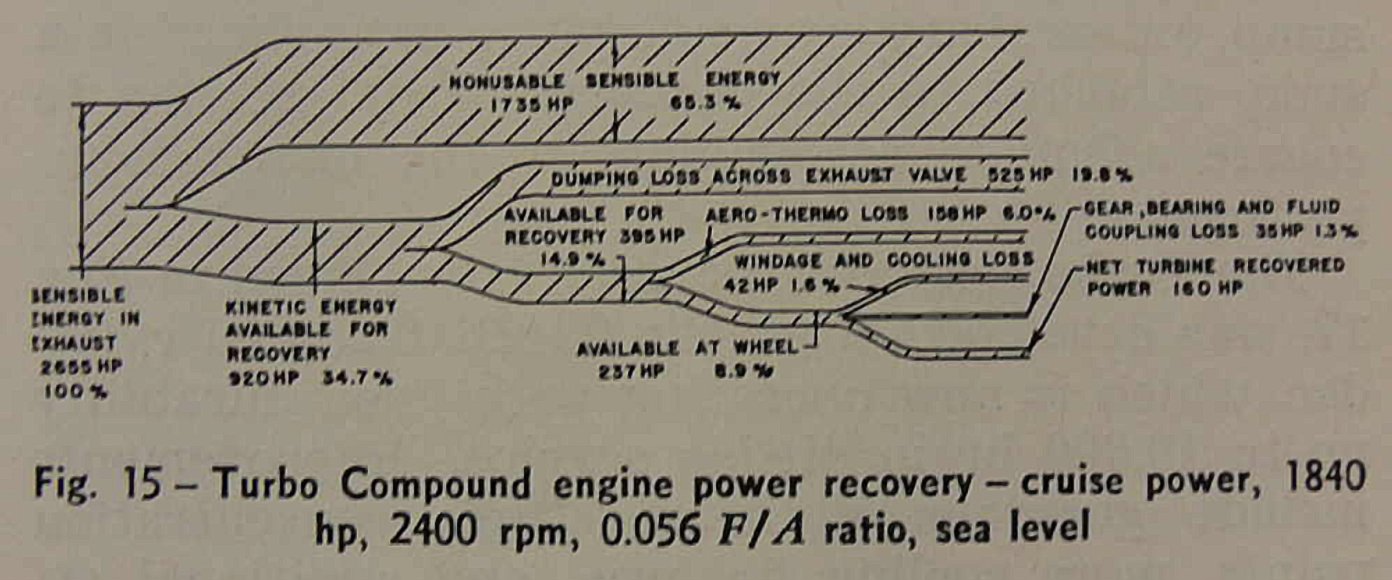
covered 1954 SAE journal on the CW R3350 turbo compound engine. Turns out the
exhaust valve is responsible for a lot of loss in kinetic energy in the
exhaust. That makes the Wankel twice as good for turbo compounding.
Here is the pertinent heat balance chart. I will be giving a forum on
the subject at Sun n Fun and OSH this year as well as writing an SAE paper.
We are working on building and dynoing a Mazda based prototype in Japan and
at Mazdatrix in Signal Hill.
Paul Lamar ...No rotor no motor.
The Rotary Engine NewsLetter. Powered by Linux.
ACRE NL web site.
http://www.rotaryeng.net
Copyright 1998-2006 All world wide rights reserved.