BTW I have one of the connecting rods from the McCulloch turbo-compound
lab engine. I will photograph it and send the pic when possible. The
slipper rods worked well but the FAA made us motor the engine for 25
hours at rated RPM because they thought the rods would fail at the
tabs. The engine was dead smooth when running. On the first run we had
horrendous noise and some vibration. It was determined to be torsional
vibration that was absorbed with a special drive shaft to the dyno. The
first connection to the dyno was too stiff. The dyno was a very large
GE electric DC dyno. Once the crankshaft was decoupled from the dyno
all was well. With the prop there was no direct coupling as the
reduction unit was a friction belt drive with multiple V belts. The
engine was turbine smooth with the prop and reduction unit.
All primary and secondary inertials were balanced by the configuration.
There were some harmonics way out there but too small to be felt. The
slipper rod design works with two-stroke cycle engines because the rods
are in compression except when cranking the engine for starting. At
some very high revs there could be times when the rod would see tension
loads but that would be revs above the design limit. It is too bad all
the engineers who worked on this project are gone. I was an engineering
technician at the time and did dyno work on the project.
Bob Y
----------------------------------------------------------
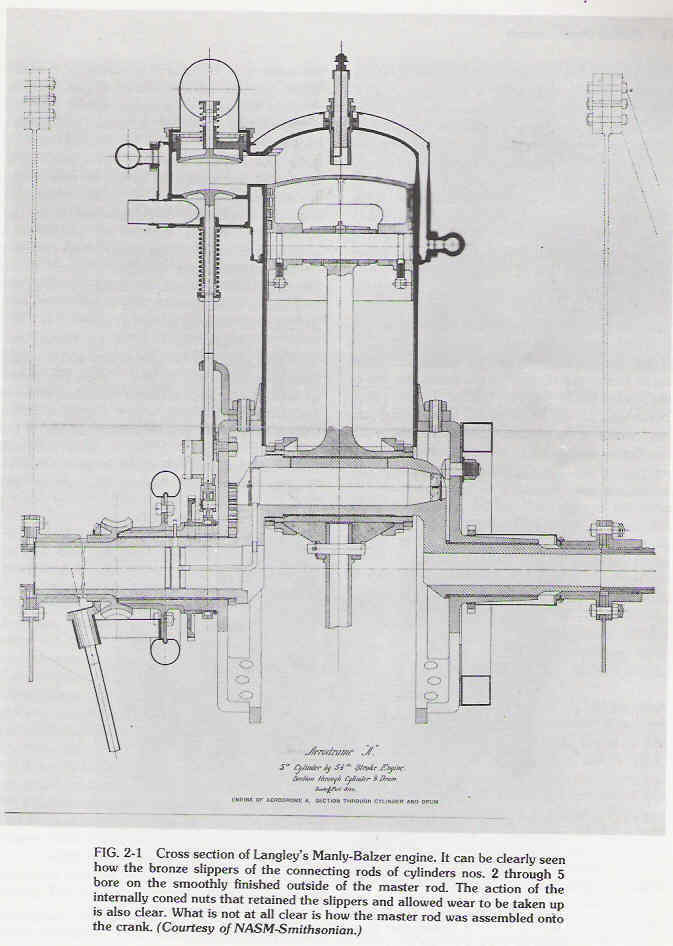
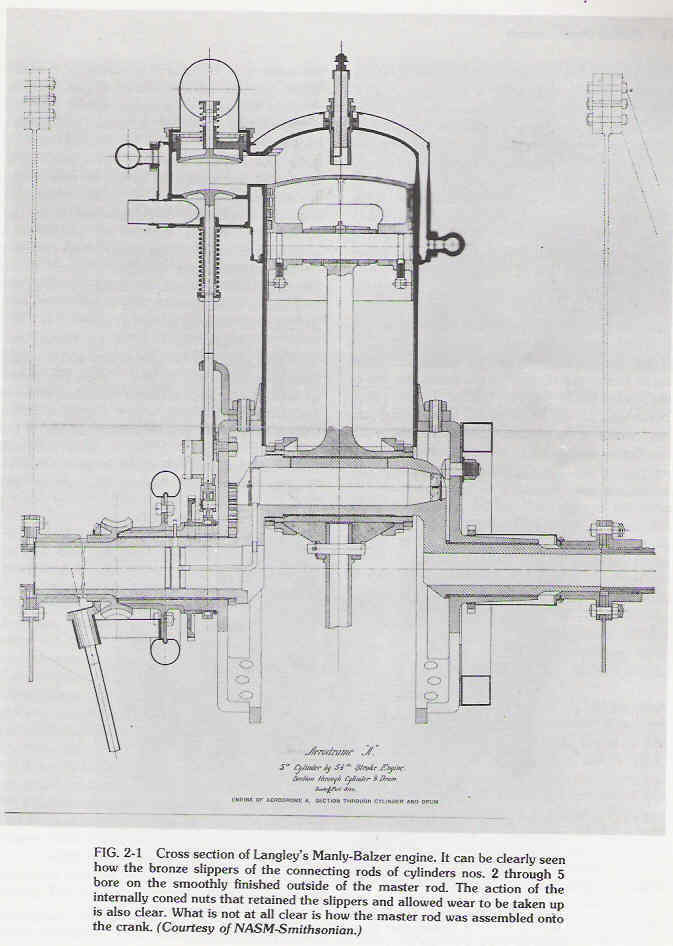
This is the grand daddy of all radial engines. In this scan from
Herschel Smiths book "A History of Aircraft Piston Engines"
the caption by Herschel Smith at the bottom is incorrect.
There is no master rod. That is the trick thing about slipper
rods. All connecting rods bear directly on the crank journal.
They have only a segment of the complete loop we are all familar
with.
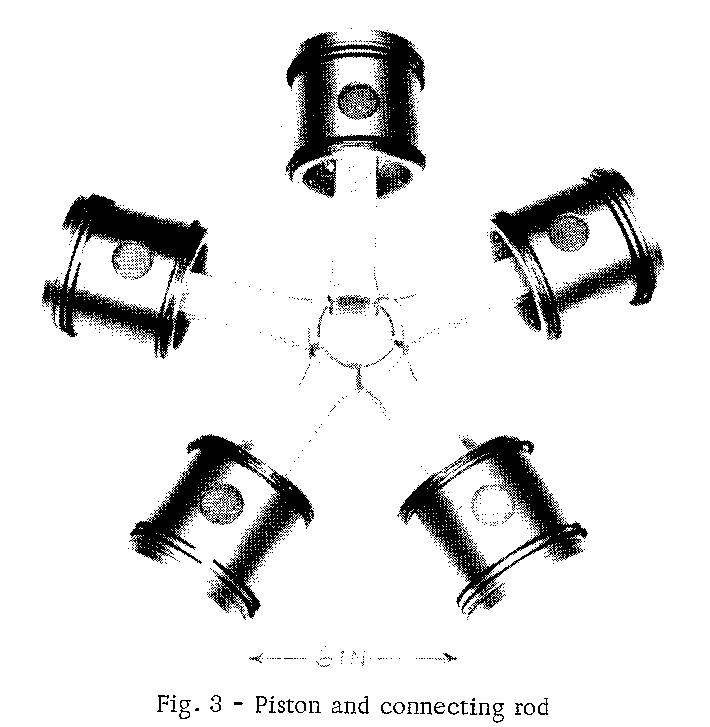
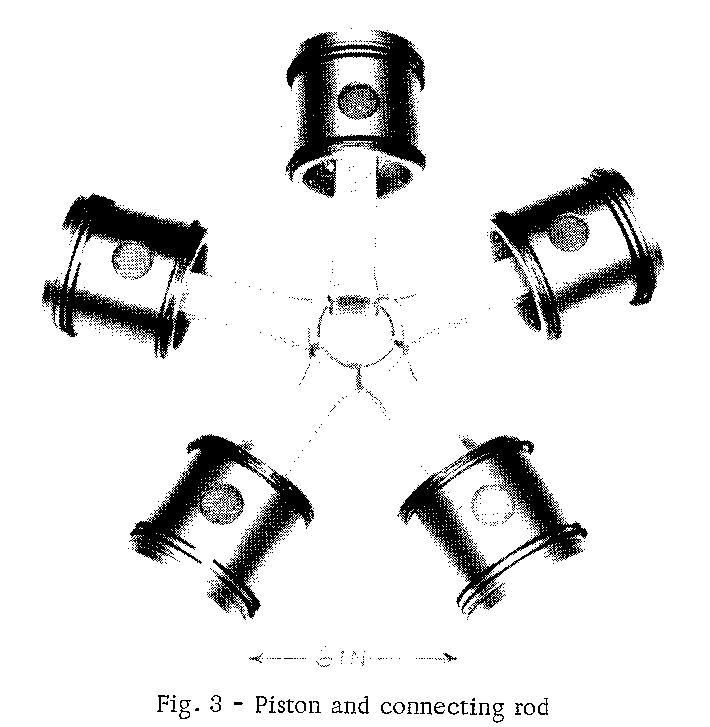
The second picture shows the Mcculloch engine slipper rods.
Paul Lamar ...No rotor no motor.
The Rotary Engine NewsLetter. Powered by Linux.
ACRE NL web site.
http://www.rotaryeng.net
Copyright 1998-2006 All world wide rights reserved.