>
>
> Hi Paul,
>
> Just for info, the front housing is one to two months from first
> test. CNC programming is done and minor pattern corrections were
> made.
> The first handful of potential production housings should be
received
> from the casting shop next week. They must go to the machinist and
> then
> to the flame sprayer. After that, they will be installed into a
> waiting
> all-aluminum peripheral port engine for evaluation and, once they
are
> proven, promotion. We have never promoted the parts in the
> past because we were waiting until we had all three completed. That
> time is now very close. As an aside, I delayed the front housing
> for a
> few years because of the rumors we heard about the Renesis engine -
> potentially making the peripheral exhaust engine obsolete. That is
> now
> clearly not the case, and I plan to build an aluminum side intake -
> peripheral exhaust port engine after the Peripheral intake test
engine
> to determine if we can get better results - power AND bsfc - than the
> Renesis.
>
> To date, we have never had a case of coating lift in service -
> except where other engine failure resulted in extensive damage to
> everything in the neighborhood.
>
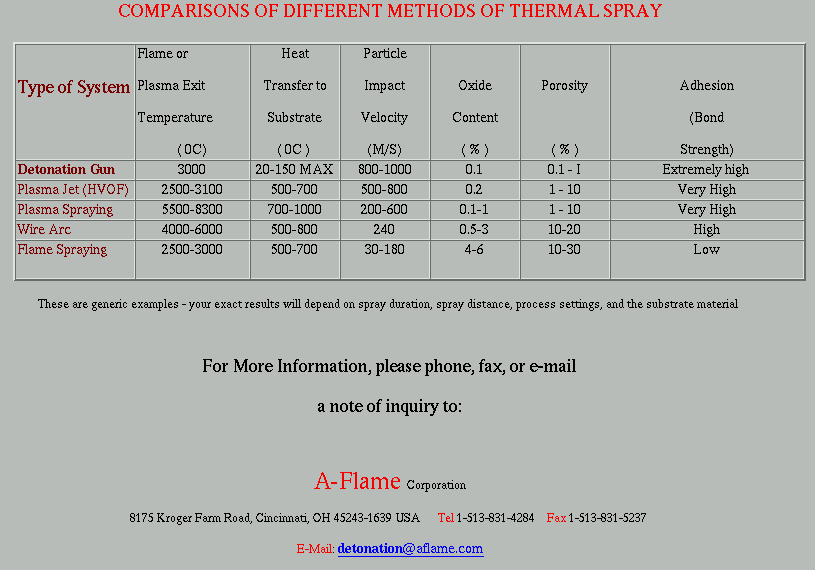
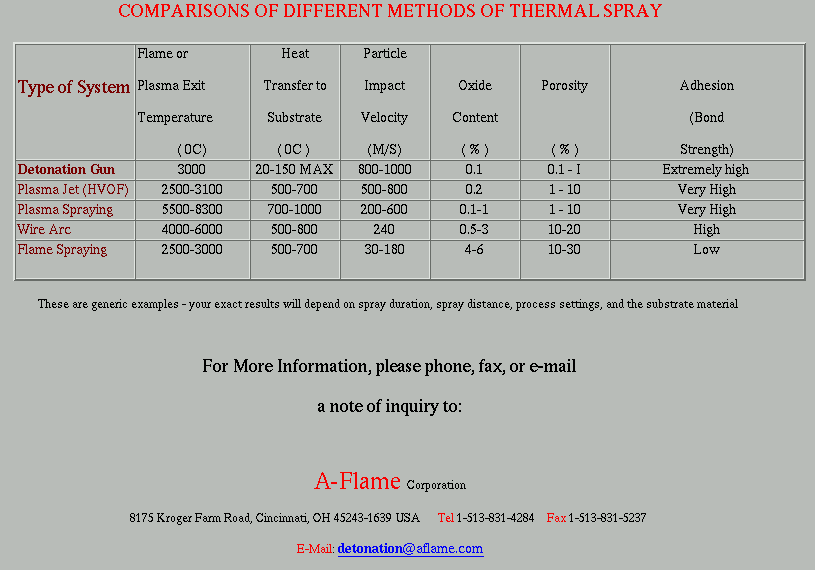
> The flame spray powder is a carbide material. In the past, I was
> not being coy about the material. The flame spray shop simply
didn't
> give me any real spec on the material. We went to them for their
> engineering opinion on what would work best, and they used it. In
> fact,
> the material used changed a couple of times when some powders
went out
> of production. At the very beginning, we were very concerned about
> coatings. The first part we tested (an intermediate housing) had
> different materials on the two sides. We have never been able to
tell
> any difference in wear with any different carbide coating - they
> are all
> so good, it just doesn't matter.
>
> Jim Mederer [Racing Beat]
Jesus, what good news. One of the advantages of not proceeding too
rapidly with the engine is all the good things that come along that
we can eventually buy. In the case of aluminum housings this is a
very big deal for the aircraft conversion. I don't remember how much
weight is saved but it is a lot. Now I will have to build another
motor mount (forth or fifth) because of the CG change. Why does it
seem like progress when the end is no closer in sight? Just
thinking about all that space in front of firewall.... Anyway, I have
been saying to everyone ever since Renesis came out that I thought
the 13B P Port (intake and exhaust) was the better engine for our
purpose. It always seemed obvious to me, but my voice could not be
heard over the Renesis drum beat. One advantage of the Renesis rotor
housing is that it has no ports so we can roll our own instead of
trying to live with less efficient design. Jerry
The Rotary Engine NewsLetter. Powered by Linux.
ACRE NL web site.
http://www.rotaryeng.net
Copyright 1998-2006 All world wide rights reserved.
You are (were) so right Jerry.. Interesting thought on the rotor
housings. How do the coolant passages in the Renesis housings compare
to those of the 13B?
If someone weren't happy about the Racing Beat coating, and don't feel
comfortable with the det-gun coating, would it be possible to just buy a
set of racing beat housings, mill out clearance for a steal wear
surface, and bolt it all together? Maybe Racing Beat would sell
housings that don't have any wear coating.
How thick would the wear surface have to be in order to be rigid enough
to not squish around and make a mess? It still seems like it would be
better if the Al housing were cast around the steal wear plate..
Matt-
Hi Jim,
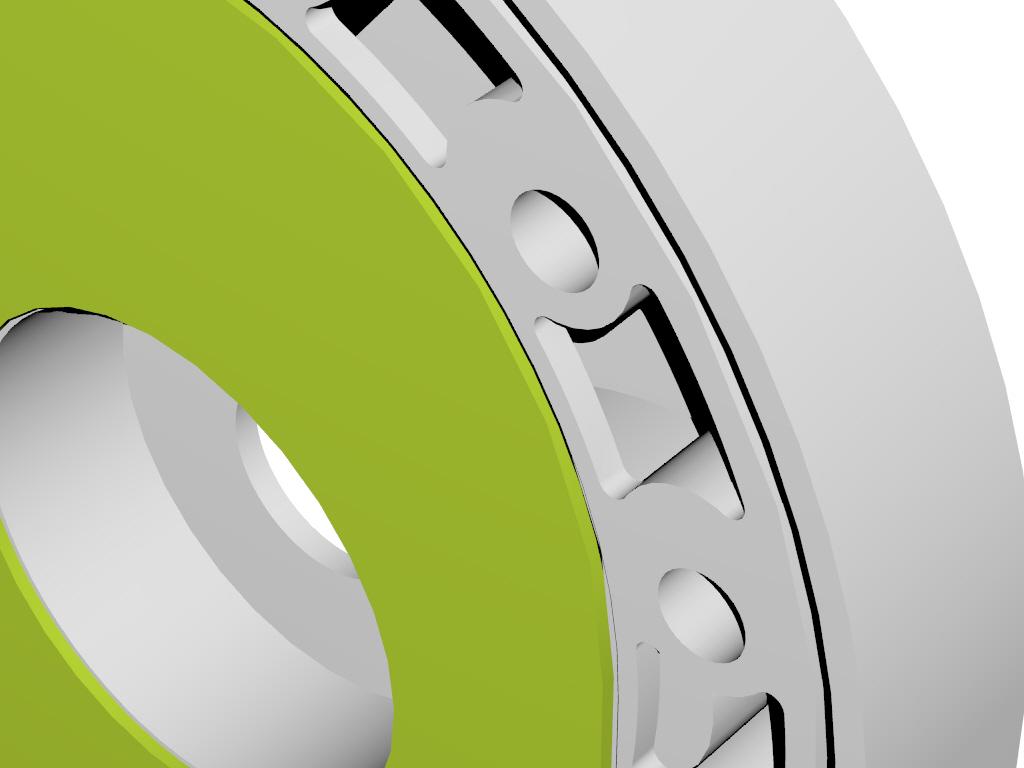
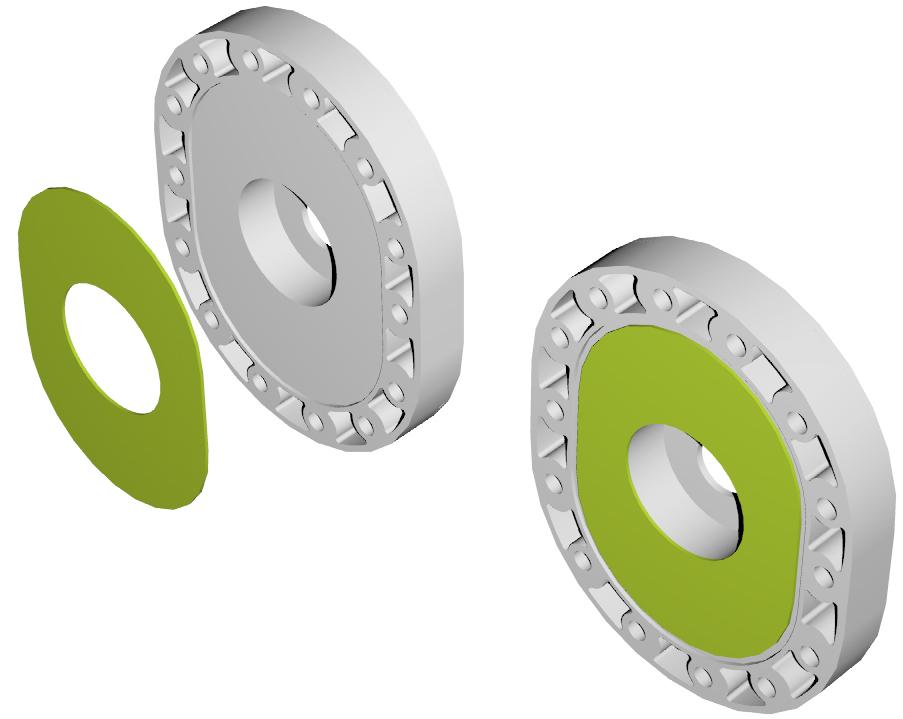
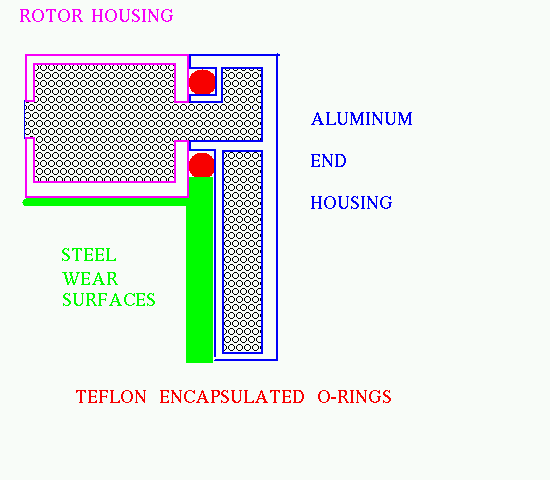
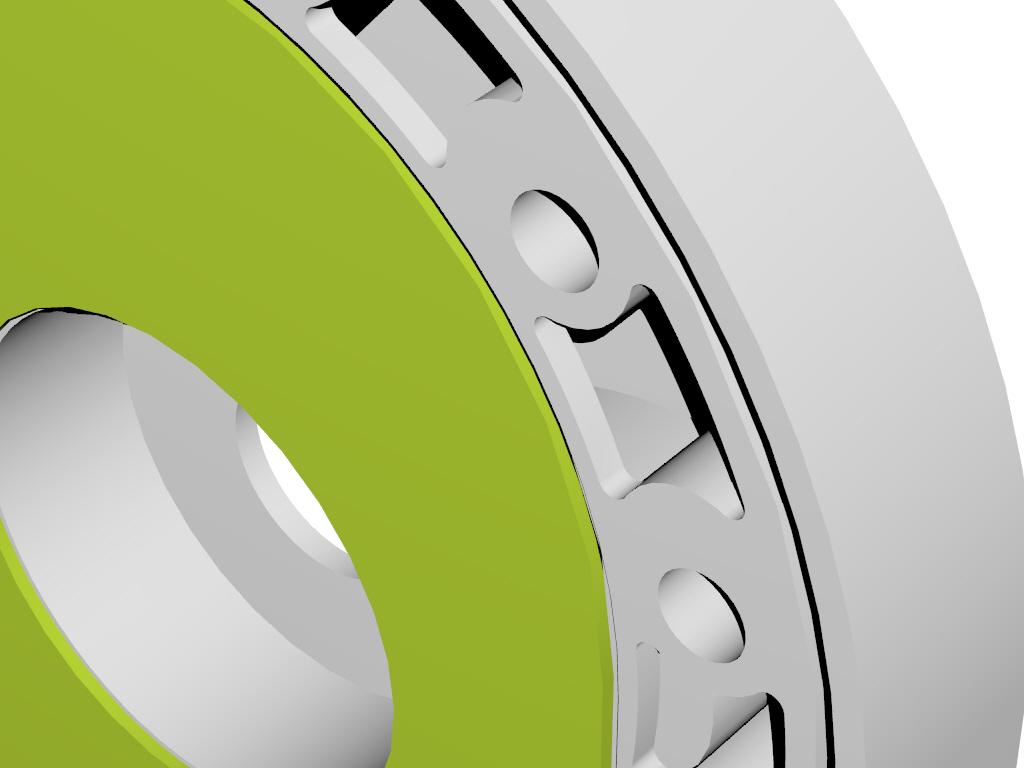
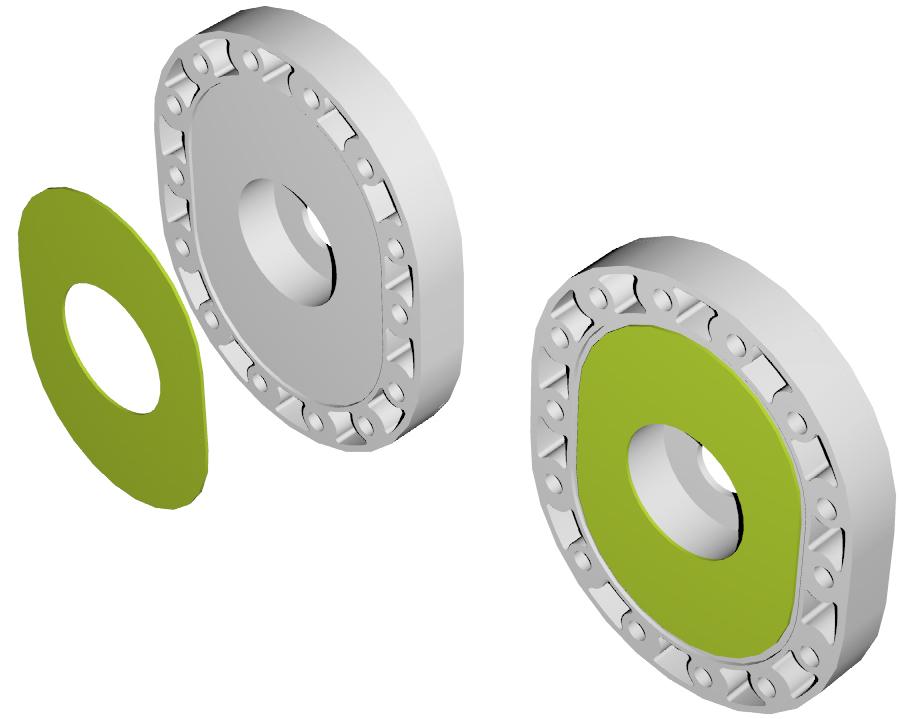
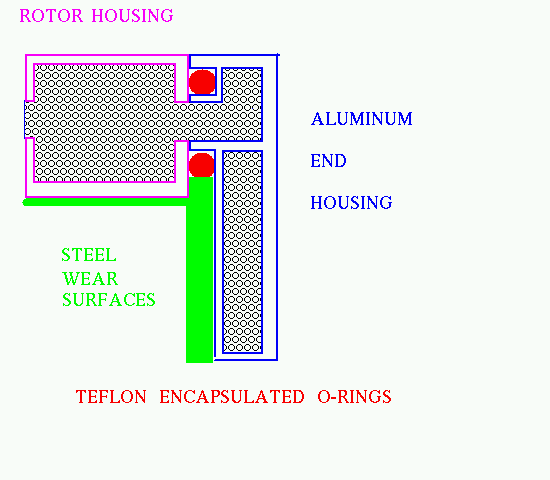
Thanks for the update. Would you consider selling a raw casting
or two for an experiment? Some of the guys want to try something
like this. It would be a hardened and ground sheet of 4130
or some such steel alloy. Roughly .090 thick as a first guess.
It will be locked in place by the main bearing housing bolts
at the center and the rotor housings at the periphery. Perhaps
a stud or two in a blind hole in the center housing. Heat sink
grease can be used between the steel and the aluminum to
enhance heat transfer. Perhaps the steel can be porous chrome
plated instead of hardened and ground which works great for
the rotor housings.
Paul Lamar ...No rotor no motor.
The Rotary Engine NewsLetter. Powered by Linux.
ACRE NL web site.
http://www.rotaryeng.net
Copyright 1998-2006 All world wide rights reserved.