>
> Hi Paul,
>
> Just for info, the front housing is one to two months from
first
> test. CNC programming is done and minor pattern corrections
were
> made.
> The first handful of potential production housings should be
received
> from the casting shop next week. They must go to the machinist
and
> then
> to the flame sprayer. After that, they will be installed into
a
> waiting
> all-aluminum peripheral port engine for evaluation and, once
they
are
> proven, promotion. We have never promoted the parts in the
> past because we were waiting until we had all three completed.
That
> time is now very close. As an aside, I delayed the front
housing
> for a
> few years because of the rumors we heard about the Renesis
engine -
> potentially making the peripheral exhaust engine obsolete.
That is
> now
> clearly not the case, and I plan to build an aluminum side
intake -
> peripheral exhaust port engine after the Peripheral intake
test
engine
> to determine if we can get better results - power AND bsfc -
than the
> Renesis.
>
> To date, we have never had a case of coating lift in service -
> except where other engine failure resulted in extensive damage
to
> everything in the neighborhood.
>
> The flame spray powder is a carbide material. In the past, I
was
> not being coy about the material. The flame spray shop simply
didn't
> give me any real spec on the material. We went to them for
their
> engineering opinion on what would work best, and they used it.
In
> fact,
> the material used changed a couple of times when some powders
went out
> of production. At the very beginning, we were very concerned
about
> coatings. The first part we tested (an intermediate housing)
had
> different materials on the two sides. We have never been able
to
tell
> any difference in wear with any different carbide coating -
they
> are all
> so good, it just doesn't matter.
>
> Jim Mederer [Racing Beat]
Hi Jim,
Thanks for the update. Would you consider selling a raw casting
or two for an experiment? Some of the guys want to try something
like this. It would be a hardened and ground sheet of 4130
or some such steel alloy. Roughly .090 thick as a first guess.
It will be locked in place by the main bearing housing bolts
at the center and the rotor housings at the periphery. Perhaps
a stud or two in a blind hole in the center housing. Heat sink
grease can be used between the steel and the aluminum to
enhance heat transfer. Perhaps the steel can be porous chrome
plated instead of hardened and ground which works great for
the rotor housings.
Paul Lamar ...No rotor no motor.
Hi Paul,
I suppose we can sell uncoated housings. They are .005"
thin/side, so you would have to remove more of the face to add a steel
plate. I believe you will have trouble keeping the steel flat on the
aluminum due to cyclic heating in combustion areas. I think you will
also be challenged to find a way to bolt down the inner area without
subverting oil sealing. If durability is the goal, I think you are
guilding the lily. If heat transfer reduction is the goal, go for it
- but you may be introducing durability problems from the steel plate
(sealing, moving).
Jim Mederer
I think we are willing to find all that out with a couple of
experimental engines running on a dyno or test stand with a prop load.
We can always go up on the sheet thickness incrementally.
Paul: your e-mail exchange with Jim Mederer @ Racing Beat regarding
aluminum end housings for rotary aircraft engines was forwarded to me
asking about the experience Everett and I had with aluminum housings.
We built and tested these for the Powersport prototype engines beginning
in the mid-1980's and into the mid 1990's. This is great news that Jim
is working on these housings. He knows these little engines as well as
anybody. Here are a few notes briefly summarizing our experience with
aluminum end housings of similar configuration.
1. I can't remember if we were traded information with Jim back when we
were dyno and flight testing the various aluminum end housings. We
talked to Jim early in our program in 1986 and 87 but just can't
remember if we stayed in contact or not. As background, we ran the
first Powersport prototype engines in 1988. At first we ran them on
the water brake dyno used for automotive race engines built in the shop
but that did not work well to test the complete engine/reduction
gear/propeller assembly regarding torsional vibration, engine mount,
etc. So Everett worked with the guys at Lycoming and Robinson to design
our dyno. It provides good power, bsfc and other relevant data and
incorporates correcting vanes on the test club/ propeller shroud. Paul,
I can't remember if you visited the shop when we ran the engines on the
new dyno. It was set up to test both Lycoming and rotary engines.
2. Our first test rotary engine and most of the following aluminum
housings used flame-sprayed wear surfaces. The first engine incorporated
dual side ports. It used Hilborn component fuel injection (200 hp @
7300). After these tests we modified the tooling to produce these same
end housing castings with plugged side-ports. We then designed a
ram-tuned, small diameter runner/peripheral port configuration to make
power at lower rpm, and good low speed and idle, ending up with 200 hp @
5900 rpm and idle about 1200 rpm. Weight of this little dry-sump engine
was 167 pounds complete with planetary reduction gear,
ignition...everything but exhaust system.
3. Our experience from 1988-1993 mirrors what Jim reports to date
regarding the different flame-sprayed wear surfaces. We used these
predominately on our early Superlight engines. They all worked very
well. But they involved additional costs (on our limited numbers
produced) due to the required additional machining for a recess in our
castings prior to application and also after application prior to
lapping. I can check my files but as I remember we used 356 for the
castings.
4. We also tested uncoated housings using the Reynolds used by GM for
the old Vega engine without liners. These housings were always
problematic regarding proper surface preparation and galling was a
problem.
5. We tried NiCiSil last. This surface was on the last Superlight test
engine designed, built, dyno'd and test flown in the mid-1990's in
Alan's RV-3. This was a counter-rotating model with engine-mount ears
cast into the end housings. It incorporated our earlier system of
pendulous dampers on the eccentric to protect the straight-cut gear
planetary reduction drive. The NiCiSil worked well. But it is very
thin. The biggest problem was that the wear surface was so thin that
serviceability in the field would be a problem. They required recoating
along with the associated costs. When everything was just right, these
worked well. But they just didn't take abuse as well as the
flame-sprayed housings. Small surface problems with the flame sprayed
surfaces could be addressed without reapplication. The NiCiSil housings
were not as resistant to developmental abuses that always occur along
the way in development.
6. The flame-sprayed wear surfaces could take enormous abuse and scoring
and would still work. The first time I flew the RV-4 to Oshkosh and
back with the first Superlight engine it had been flown for a few years
in that configuration and we knew it had a scored housing before I left.
Coming back from Oshkosh it required adding at least a quart of oil in
the sump each fuel stop to get home but that thing ran very well in that
condition. I have a color slide photograph of that housing after
disassembly (and others I believe) if it would be helpful for Jim.
7. We experienced creep distortion in all the aluminum end housings.
Jim may have already identified this factor and addressed it. It was a
problem with our ram-turned engines, and so we never attempted to use
nitrous on these engines...not to mention concerns the significant rise
in power would detune the eccentric dampers and the cause duress for the
planetary reduction gear. Doubtful if our planetary would have taken
the abuse, even with the straight cut gears that were a significant
improvement on the last iteration. Jim has a lot of experience in
boosted engines so he has a good line on this issue. When we took the
conversion engine with the iron housings out of the RV-4 and put it in
Alan's RV-3, it produced approximately 350 hp on nitrous as configured
for the Sun'n Fun time-to-climb. We disassembled the engine and found
no problems with the power section. But these were very short runs at
this output.
8. Would be very interested in testing a set of Jim's housings on both
dyno and flight testing. We are building a clone of the peripheral port
Iron Eagle (back then it was designated Powersport 200) that we ran last
in my RV-4. Output was 200 hp @ 5900. It includes provisions for the
same 350 hp nitrous set-up we used previously but nitrous will not be
used in early testing. The new RV-3 is ready for the engine following
completion of the dyno program.
9. Following the dyno program the engine will be installed in the RV
and flight tested. If all goes well we hope to do some cross-country
races and possibly other competitions.
Hope you are well.
Steve Beckham
Good hearing from you Steve. Glad to see you are still involved with
the rotary. Thanks for the report. We are having no troubles with
the Ford planetary using Tracy Crook's version along with
with his torsional vibration damper with dozens flying.
The engine will idle below 1000 RPM with no gear box
rattle.
Are you still involved with the new Power Sport?
I took the liberty of adding you to the list. If it gets
too much for you send me email and I will remeove your address
or sign you up on another address.
I would also love to have any slides or pictures, or electronic scans
of same you have, of any work you did back in the old days. I have
a few pictures that I took when I visited the farm way back when.
Now if I understand you correctly you are going to do flight test
on another all alumiunum P-port engine? That is wonderful news and
dozens of people on here would be very much interested in
the results.
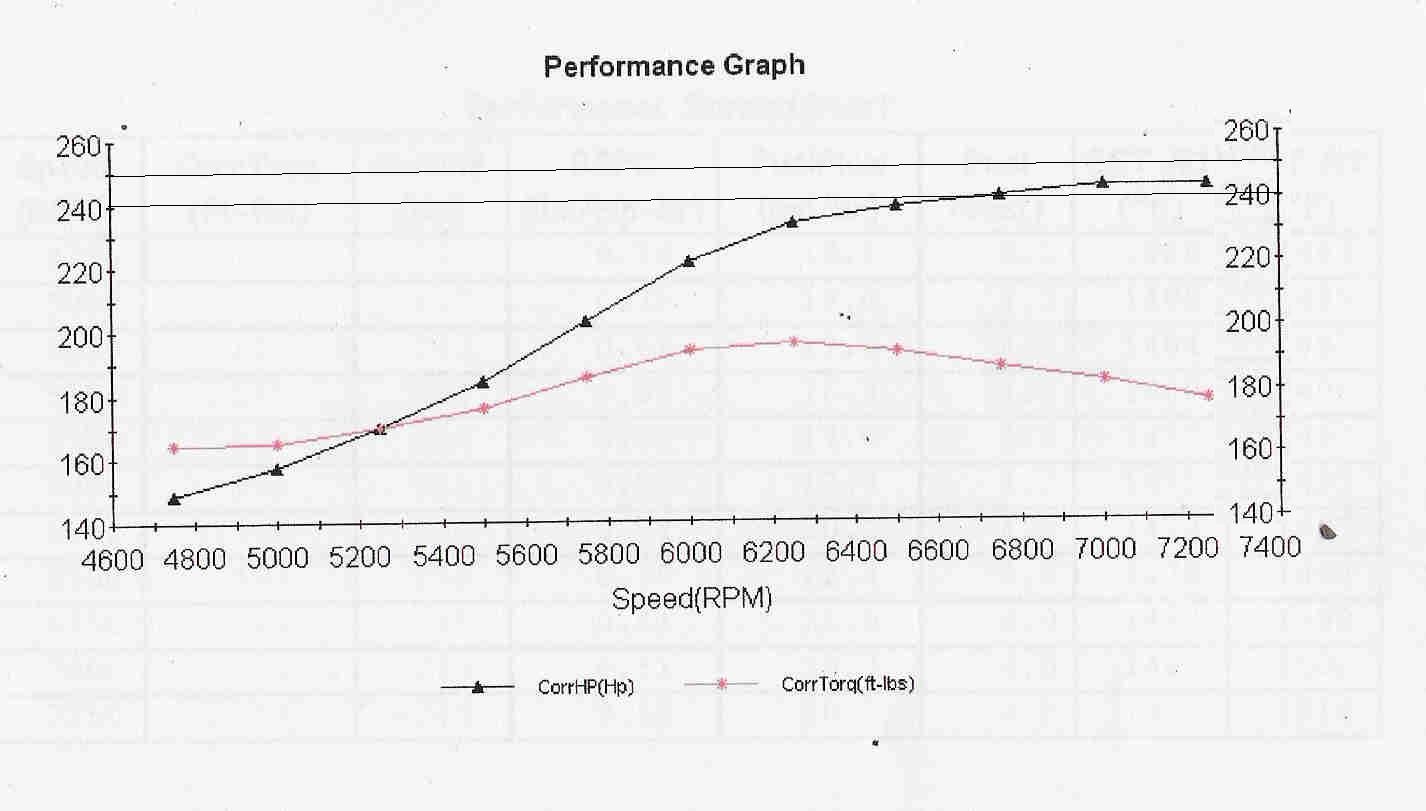
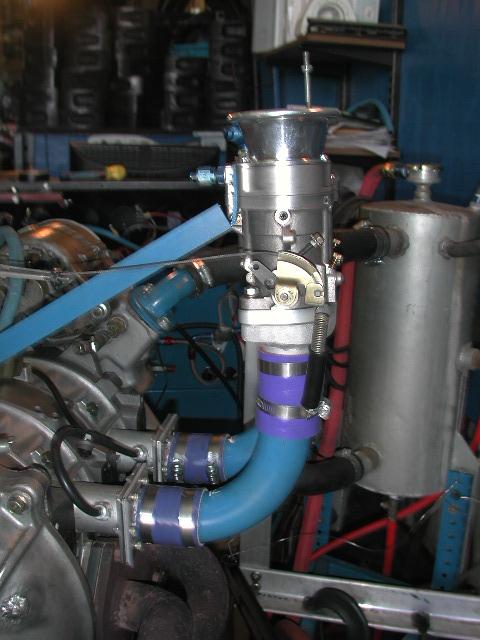
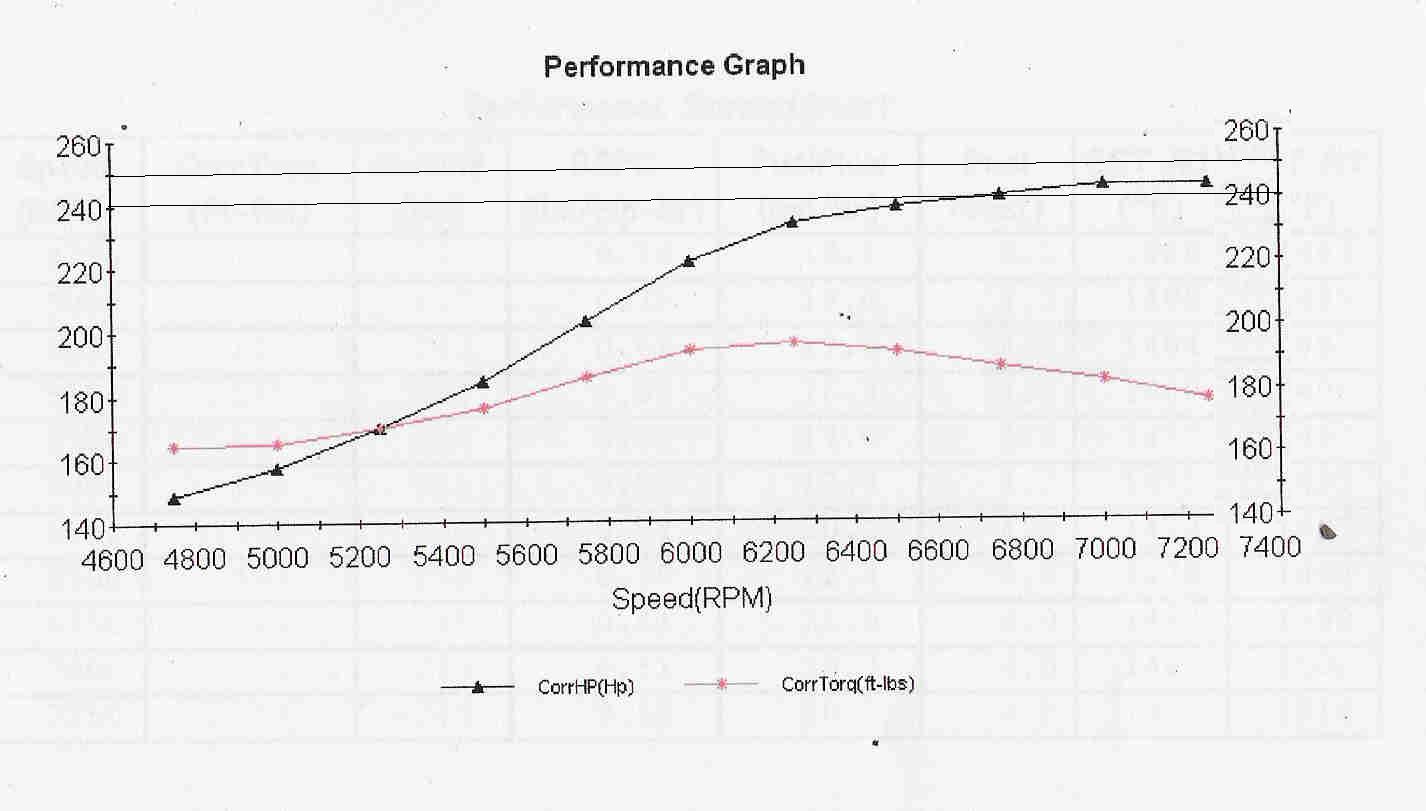
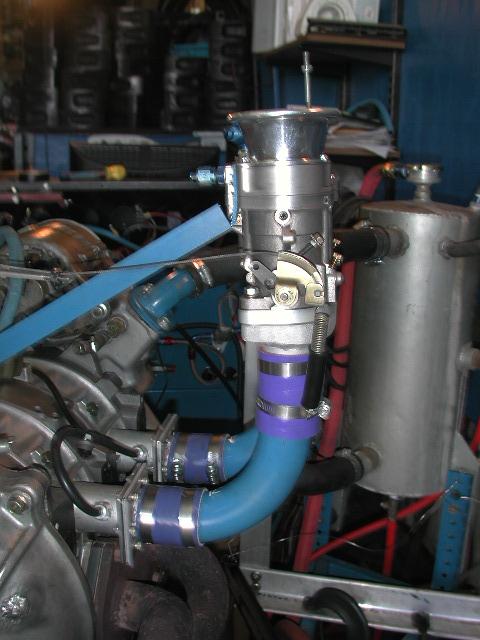
We are getting 240 HP so far on the Mazdatrix dyno using
a Weber carb at 6800 to 7300 RPM. (Most running the 2.85:1
Ford planetary PSRU are using over 7000 RPM for takeoff.)
We will soon have a Tracy Crook EFI and a low cost sheet
metal/Teflon slide throttle version flying.
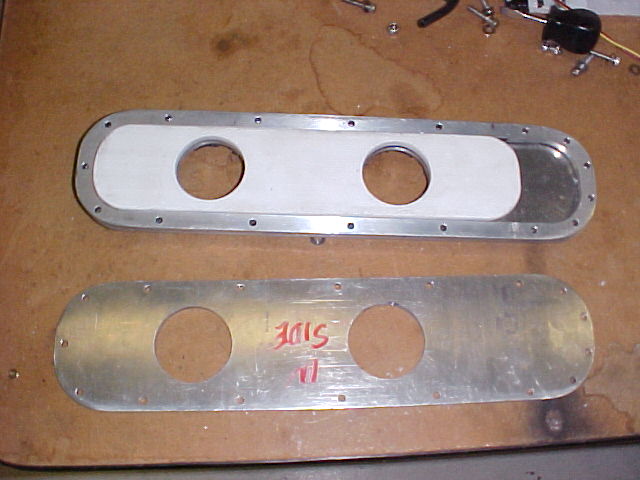
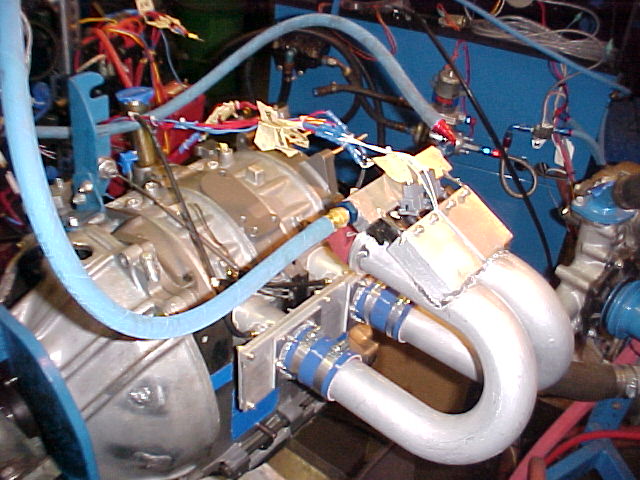
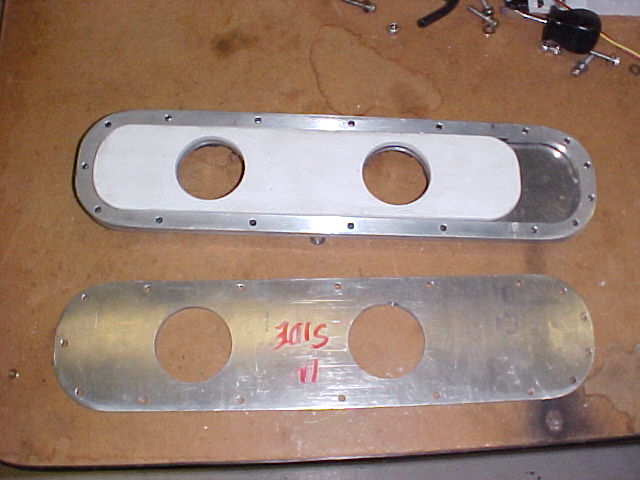
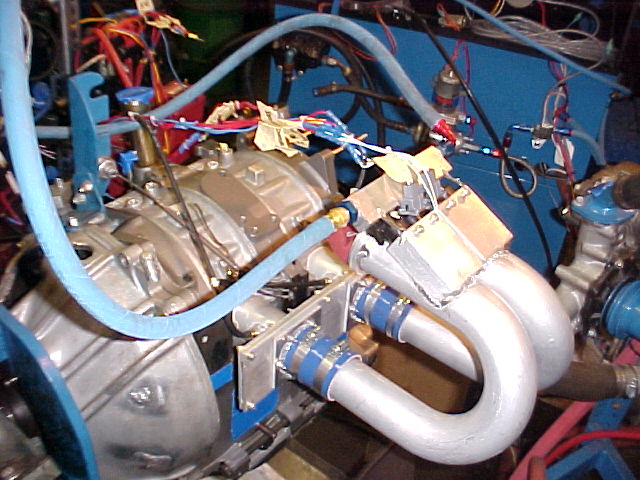
Here is the dyno curve and a few pictures.
Sorry I am so late responding as I have been at Sun n Fun
for the last week. We got a wonderful reception for our plan
to turbo compound the rotary for 20% less fuel burn.
See the web site below for more info on that.
Paul Lamar ...No rotor no motor.
The Rotary Engine NewsLetter. Powered by Linux.
ACRE NL web site.
http://www.rotaryeng.net
Copyright 1998-2006 All world wide rights reserved.