The box is in the NC machine shop.
Should be done when I get back from Sun & Fun.
Next step is build up a turbo II engine and test it on the
dyno.
Here are a few 3D's of the traction drive parts and final
drive.
I may give an AIAA paper on the subject on May 13 in Anaheim Ca.
Paul Lamar ...No rotor no motor.
-----------------------------------------
How does the traction drive unit function? Which parts rub
together to make the traction?
Tim
----------------------------------
In the first 3D the small shaft rubs on the three brown
rollers which in turn rub on the outer ring.
The outer ring is undersized to apply pressure on the
rollers and the small input shaft forming a planetary
reduction unit.
----------------------------------------
As I was preparing for my forum at the Sun n Fun air show in
Lakeland Fl. I had an idea on how best to represent the problem
of using an automotive turbo charger in an aircraft engine.
Automotive turbo chargers are designed to spool up as quickly
as possible. This means the turbine is over sized to accelerate
themselves and the compressor (hence the boost) as fast as possible
for good car acceleration reasons.
This choice of turbine is bad for a simple turbo charged air craft
engine as it leads to turbocharger over speed and turbine failure as
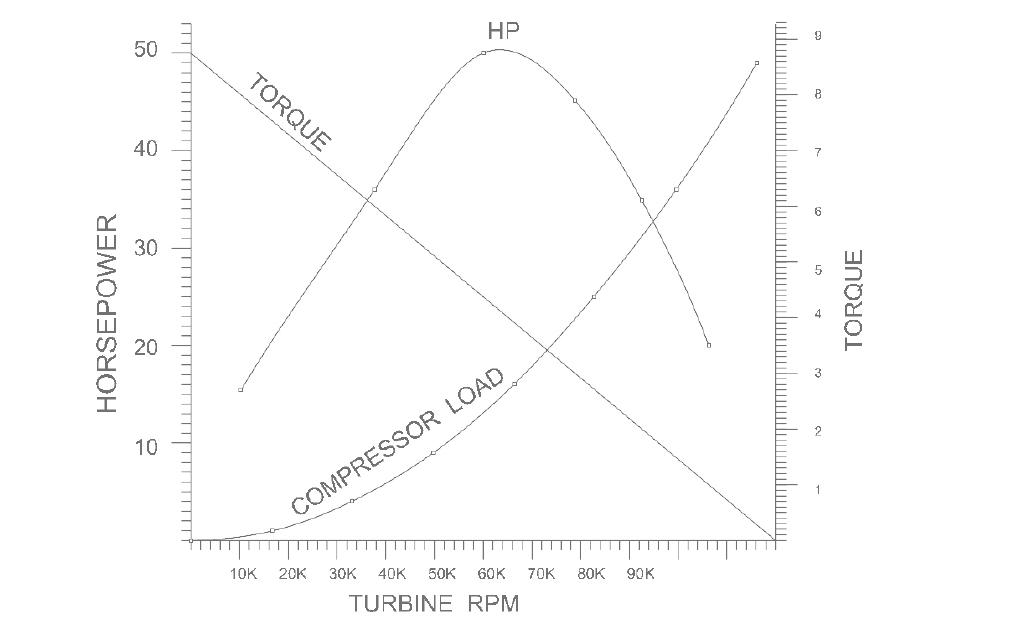
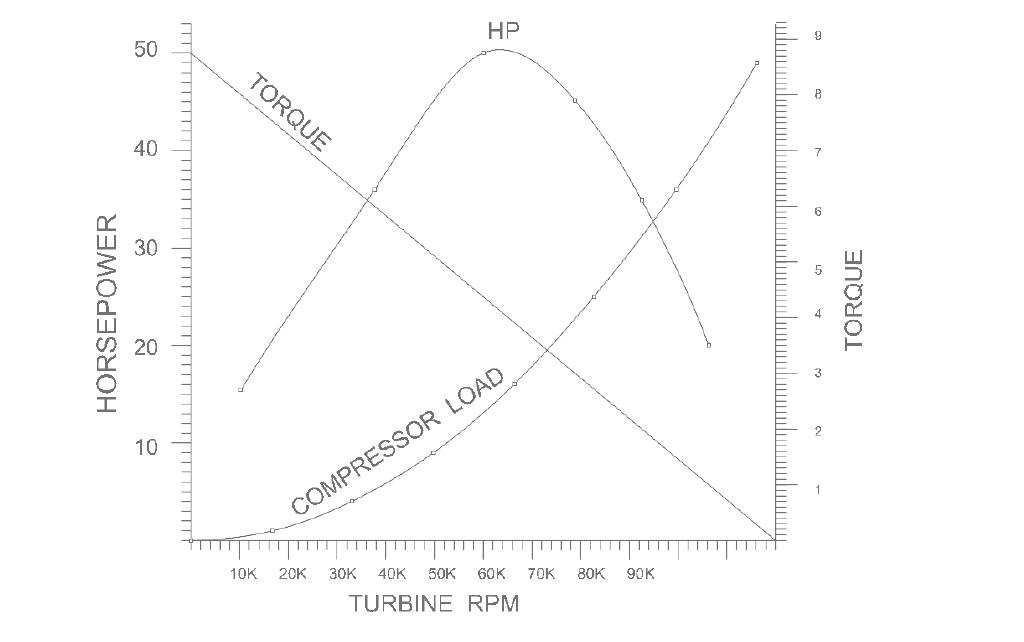
can be seen from this chart. It is good if you plan to
turbo compound the Wankel rotary aircraft engine. The exact
load on the turbine represented by the curved line on the right
is a guess and will vary with the compressor section chosen
by the car manufacturer. In this case Mazda.
Evidence for the truth of the matter is the fact that at
least three Mazda stock turbo charger turbines have been destroyed
so far by aircraft installation. I suspect it is not so
much the high temperature of the rotary exhaust as it is
by the over speeding of the turbo charger.
The centrifugal loads on the turbine blades are enormous
at 90,000 to 120,000 RPM.
More evidence is available by merely installing a larger
compressor section thereby loading down and slowing down
the RPM of the turbo charger which seems to increase the life
of the turbine. There is no loss in max constant speed boost
available. This is what Dave Leonard did successfully.
The chart shows this situation. Gas turbines have max torque
at zero RPM with a straight line drop to zero as the blades
of the turbine reach the same speed as the gas exiting
or squirting out of the nozzle. The torque is given in foot
pounds on the right vertical axis. In this case the gas speed
is assumed to be constant and the combination of gas speed,
blade diameter and area are set to generate a max HP of 50.
The formula, HP = T x RPM / 5250, was used to plot the max HP
of the turbine as a function of RPM. The compressor load
curve is off to the right to insure there is excessive HP to
accelerate the turbo charger way beyond what is necessary
to generate the boost if the turbo charger was running
at a constant RPM.
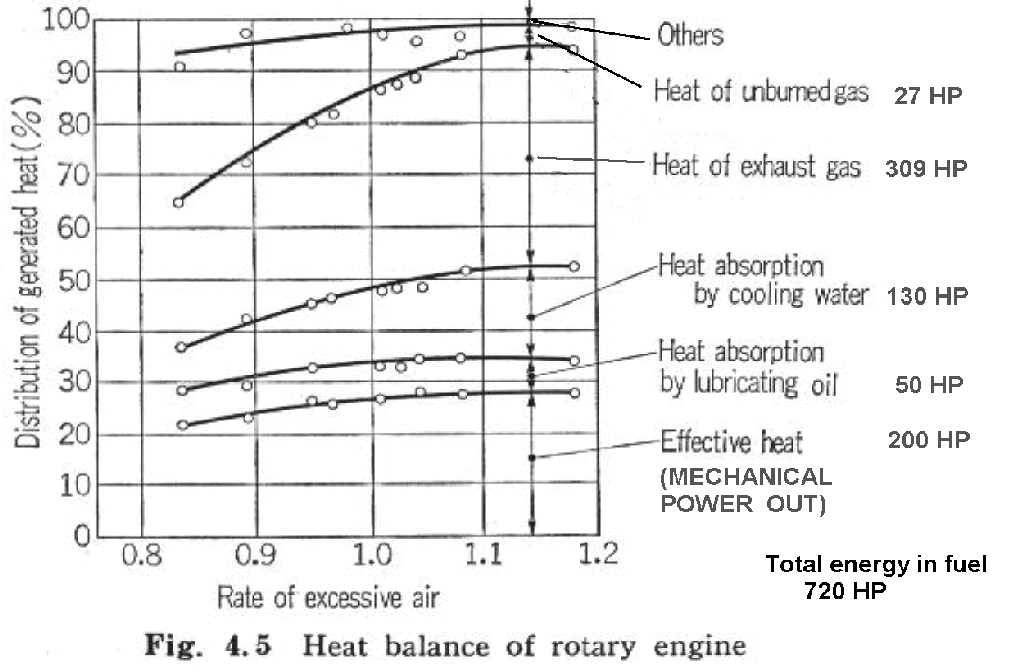
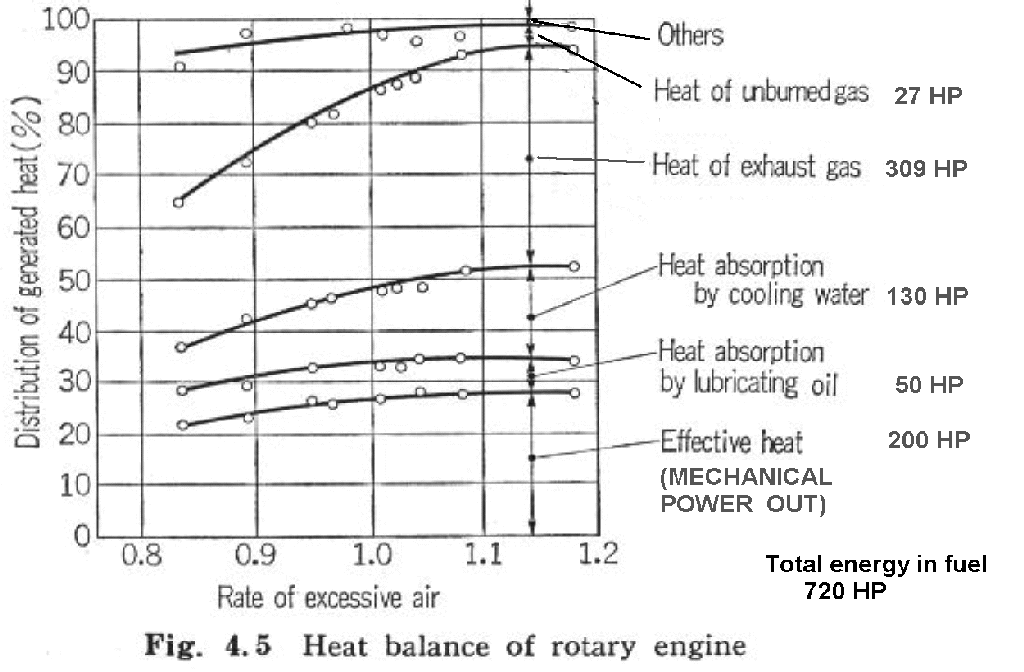
The 50 HP number was chosen as a possible number for
extracting the kinetic energy in the 309 waste HP in the
exhaust of a 200 net HP Mazda rotary engine. I also modified
a Mazda chart by adding HP numbers to the right of the percentages
shown in the second chart to show this relationship. 50 HP
represents a recovery of only 17% of the total heat energy in the
exhaust of a 200 HP rotary engine. 50 HP is also near the
middle of the NASA study range of predicted potential HP in
the rotary engine that they studied.
Given the turbo compound
engine picks up 50 additional HP for no increase in fuel burn
or cooling load the BSFC drops from .46 to .37!!! Right
down there with the best diesel engines and without the
diesel engine weight penalty. This also correlates with
what was obtained 60 years ago by Curtis Wright with
the R3350 TC airliner engine.
Needless to say this bodes well for our attempt to extract some
of this waste energy and put it to use to reduce the fuel
burn.
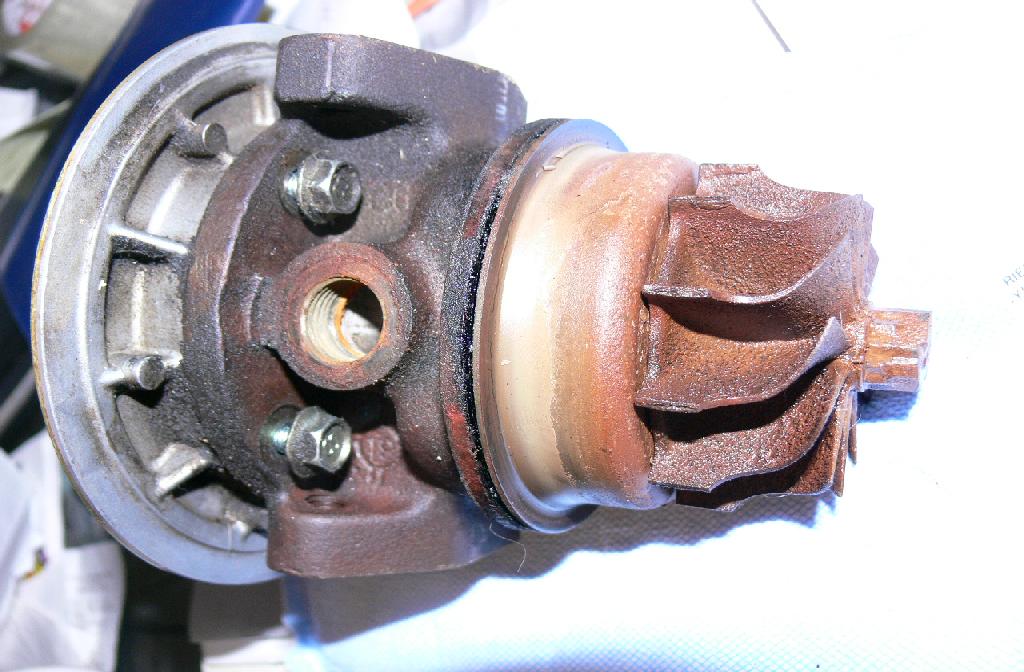
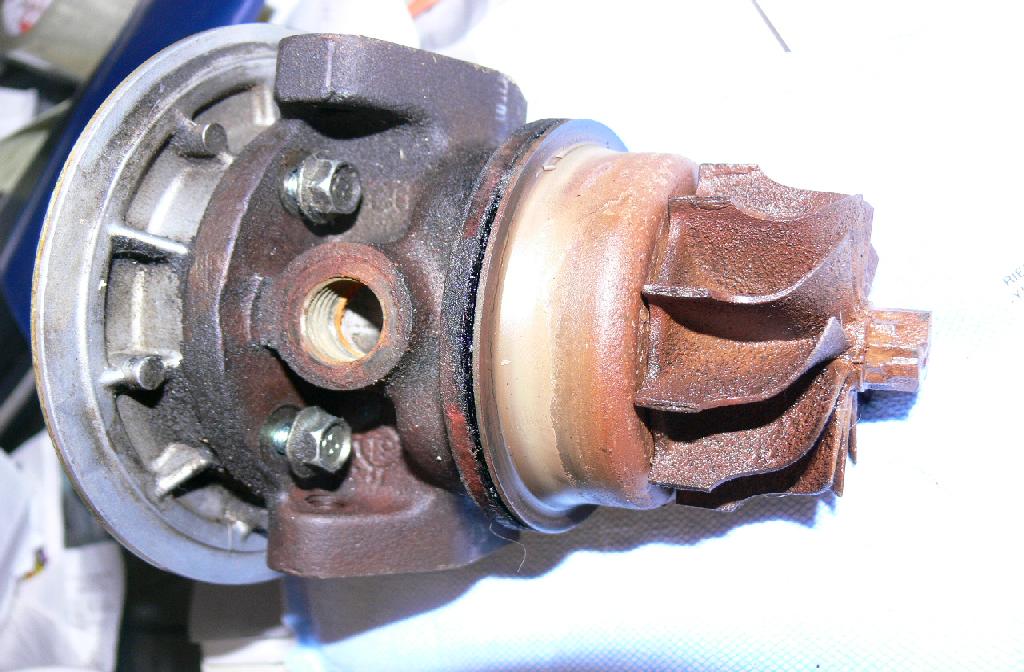
The last picture is of the turbine in a stock 1988 Mazda Turbo
II engine.
Paul Lamar ...No rotor no motor.
The Rotary Engine NewsLetter. Powered by Linux.
ACRE NL web site.
http://www.rotaryeng.net
Copyright 1998-2006 All world wide rights reserved.