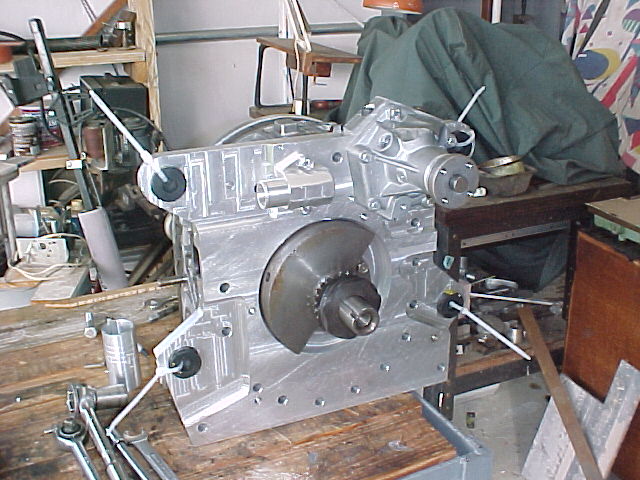
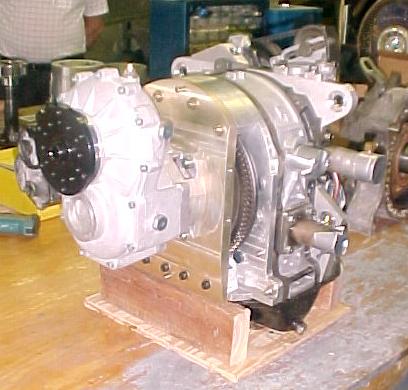
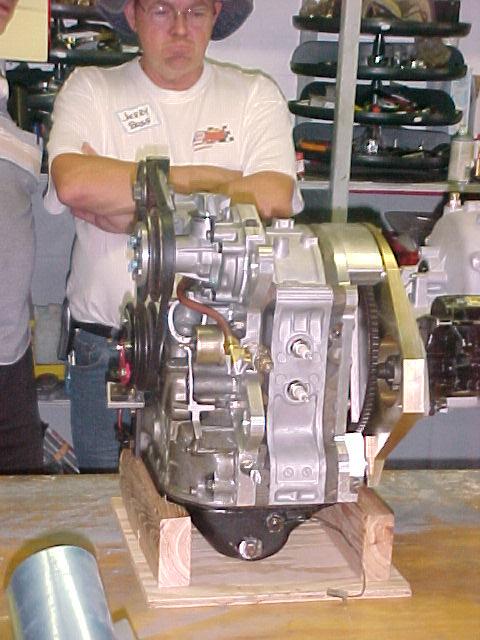
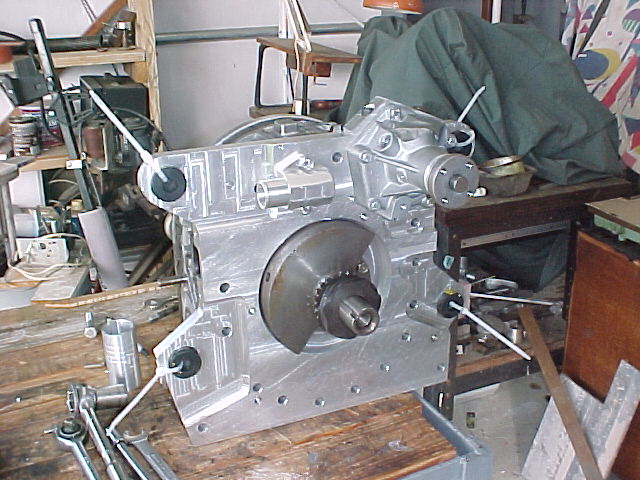
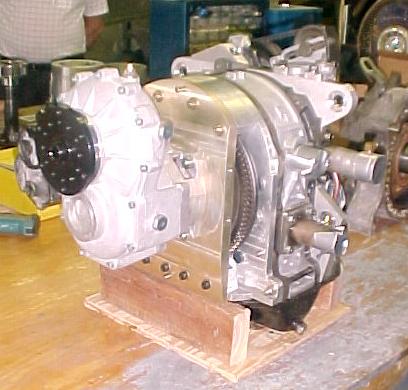
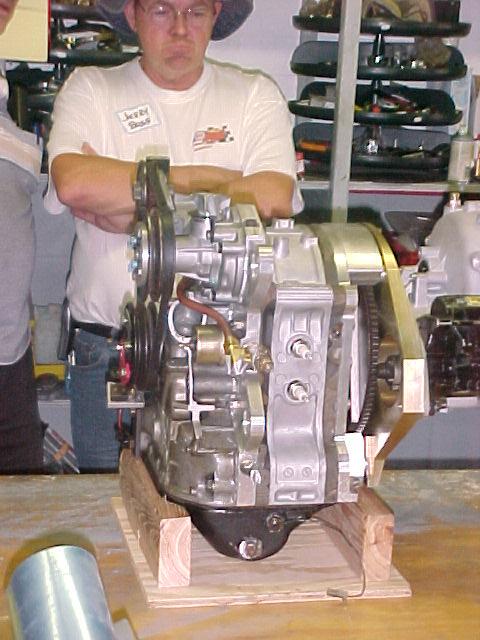
>> I picked up my single rotor 12A project over the weekend and I am
>> interested
>> to know how many guys out there are working on or have single rotor
>> engines.
>> I know most of you are interested in 2 or 3 rotor engines and I do not
>> want
>> to bog down the list, but I do have some questions if there is
anyone out
>> there with a single rotor engine.
>>
>> I noticed that Richard made reference to his single rotor yesterday
in an
>> email to the list.
>>
>> Jeff LeTempt
>> Dragonfly N41GK
> Yes, Jeff, I had my single rotor running for two years now.
> It is a p-port with compound AL side housings. I had been bogged down
for a
> while with building a house, but I am slowly getting back to it
again now.
> The side housings so far are prof-of-principle configuration,
meaning, not
> flyable. This is going to change next with castings being used,
> accommodating final design features.
> For the 12A based version, the FF weight is 170lb.
> I will certainly try to answer your questions if I can.
>
> Richard Sohn
> N-2071U
> Richard,
>
> Thanks in advance for the help. I know nothing about the history of the
> engine that I bought. The Ross 3.17:1 PSRU appears to be new and
unused and
> the engine externally looks very nice. It does not have a starter or
> alternator. The water pump housing has been modified with HUGE anodized
> fittings. It has a thin wall steel tube intake manifold with a Weber
carb.
> No exhaust system. No oil filter or cooler yet. The main pulley is not
> present on the exposed end of the concentric shaft nor is the water pump
> pulley. No ignition system, but it does look like there is a later
model
> distributor installed that just has a few wires sticking out (2 or 3 I
> think).
----------------------------------------------------------
You certainly would not need a distributor, since the plugs normally fire
simultaneously in AC use.
---------------------------------------------------------------
>
> This engine will go on a tricycle gear Dragonfly that was previously
powered
> by a VW 2180. I would like to have a good solid 80 HP for take-off and
> climb (would love to have 100 HP). I am more into the economy cruise
any
> will probably typically cruise using about 60'ish HP. I am not all that
> interested in tweaking every last HP out of the engine, I am way more
> interested in reliability, low maintenance, and longevity. Based on the
> performance of my MK-IIH Dragonfly powered with a L2000 Limbach I
expect a
> cruise speed of about 140 MHP IAS.
>
> I am considering EFI/EI over the carb and ?? ignition. The Tracy
Crook EC2
> looks very interesting right now. I am very interested to hear your
> recommendations on this. The Crook EC2 might add a few hundred $ to the
> total cost, but over the life of the airplane that cost is
insignificant.
-----------------------------------------------------------------------
If you are looking for reliability and low maintenance, I don't think
you can beat a carburetor. All you get with FI is a somewhat better fuel
consumption. There is also no need on the rotary to vary the timing
versus RPM, unless you have a situation where detonation may become an issue.
--------------------------------------------------------------------
> Do you have to do anything special with counterweights to
>balance the engine?
------------------------------------------------------------------
In principle yes! Does the engine have a fly wheel or a flexplate?
Standard balancing components from a two rotor will not work! Generally,
the balance weights have to be bigger than on the two rotor. I am using
a 13B counter weight with added weight on it, and a custom flywheel.
----------------------------------------------------------------------
> Not sure what I will use for a radiator or where I will mount it yet.
> Several Dragonfly builders using water cooled engines (Subaru's) have
been
> very happy with a P-51 style scoop on the belly of the fuselage.
With the
> small size of the engine and the long PSRU, I think it would be
possible to
> mount the radiator(s) in the engine cowl. That would almost certainly
> reduce the weight and complexity of the water cooling system.
>
----------------------------------------------------------------------
At the speed the Dragonfly is capable of, cooling should not be a problem.
-----------------------------------------------------------------------
> There is a partial engine mount that looks like it should work quite
well
> and the oil pan looks very good.
>
> I will probably come up with a few hundred more questions - sorry.
If I get
> to be too much of a pest just let me know.
It would help if you could add a picture>
> Thank you very much for your advice!!
>
> Jeff
>
Jeffrey.letempt@us.army.mil <mailto:Jeffrey.letempt@us.army.mil>
> Dragonfly MK-IIH N41GK
> Rolla, MO
The Rotary Engine NewsLetter. Powered by Linux.
ACRE NL web site.
http://www.rotaryeng.net
Copyright 1998-2006 All world wide rights reserved.
Ignition - I have read a little about ignition timing from Tracy Crook's
conversion manual and newsletters as well as a MegaSpark web site. IIRC
Tracy has a slightly different timing on the leading and trailing spark
plugs. The MegaSpark web page noted very little difference in power if both
plugs were fired at the same time....
- Leading and trailing spark in a roughly stock timing split configuration
gave ~164 RWHP @ 8500.
- Trailing spark only ran very badly (as expected) and power was way down,
EGT was high enough to make the exhaust medium red; that run was aborted.
- Leading and trailing spark firing simultaneously were no different from
stock split until after 6500 rpm or so; even then the difference was almost
negligible.
- Running leading only spark produced about the same power as well, within
error margins.
Is it necessary to retard the ignition on a rotary engine during starting or
is fixed timing ok? I have built a secondary electronic ignition for my
Limbach using Chrysler magnetic pick-ups, GM 4 pin HEI ignition modules and
a Hyundai coil. It is a basic fixed timing waste spark ignition. I have 2
magnetic pick-up mounted on a plate near the prop flange and have a single
steel arm attached to the prop hub. Each pick-up is connected to a GM
ignition module and then connected to side A or B of the 4 cylinder coil
module. Would something like this work on a single rotor engine? What is
the ratio of the distributor shaft to the concentric shaft (or I guess rotor
speed would be the real concern)? If something like my system would work,
where would I mount the pick-ups (using the back side of the concentric
shaft or distributor shaft)? What do you use for ignition?
Engine balancing - I do not have a clue what is inside the PSRU adapter yet.
I am not afraid to say that I am ignorant of what needs to happen with
counterweights. How do you determine how much weight you need to add to the
counterweight? Is there a way to statically balance the rotating
assemblies? Is there a benefit to a flex plate over the flywheel or the
other way around? I can see through the starter hole that there are teeth
on what looks like a flywheel, but that is about all I know at this time.
I did not get any instructions with the engine at all. I need to contact
Ross Aero to see if they can send me installation and maintenance
instructions for the PSRU unless someone can direct me to this information
on the web somewhere.
Any suggestions on what kind of starter to use with this setup (12A and a
Ross 3.17:1 PSRU)? I do not even know which direction the prop is going to
turn...am I really clueless or what? I appreciate your patience with me on
this.
Just so you do not think I am some kind of screwball...I am a (non current)
A&P, recently retired Army helicopter pilot (Scouts Out!!), experimental
airplane builder and flyer, and EAA Chapter 429 President....I just do not
know much about Mazda rotary engines yet. I have read Tracy Crook's
conversion manual, read all but the last 2 of his newsletters (I read a few
pages every night - very interesting stuff), and have watched Bruce
Turrentine's video on rebuilding the 13B rotary engine.
THANKS!!!
Jeff
Jeff, try to limit one question per message. Or at least
one subject per message if more than one question.
Things get too confusing otherwise.
The rotary engine always fires relative to the e-shaft
and always at the same e-shaft angle. Around 20 to 30 degrees
BTDC. A one rotor fires once per rev and a two rotor
twice per rev 180 degrees apart. A 3 rotor fires 120 degrees
apart or 3 times per rev. This is totally unlike a 4 stroke
piston engine that fires relative to the half speed cam shaft.
The engine will run fine with fixed timing and will start fine.
You won't get the lowest fuel burn however. It likes more advance
at high altitude and super lean low and at manifold pressures.
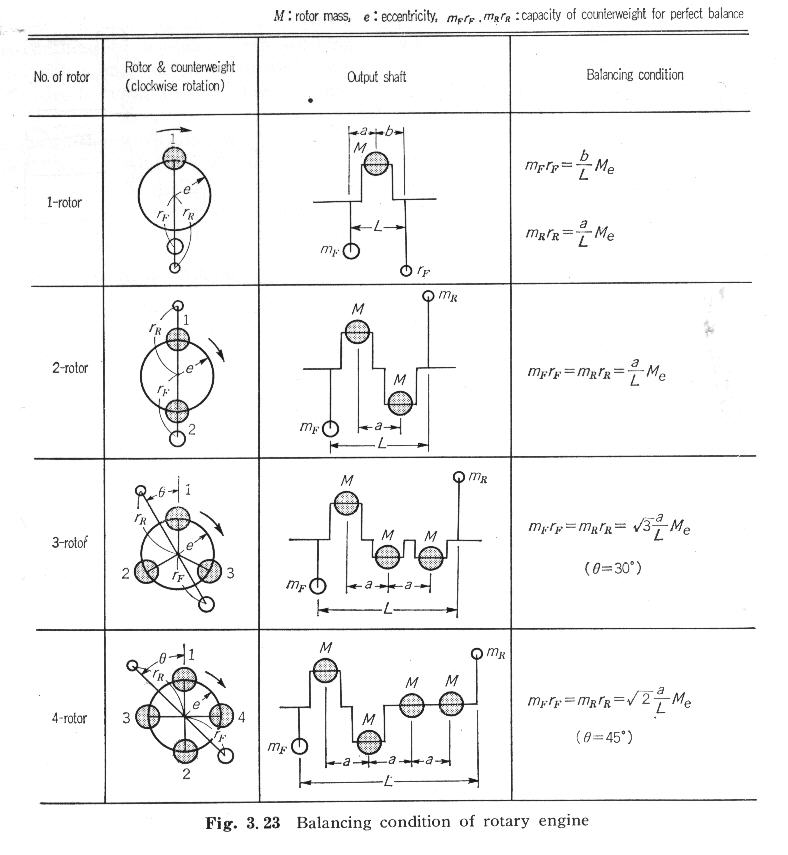
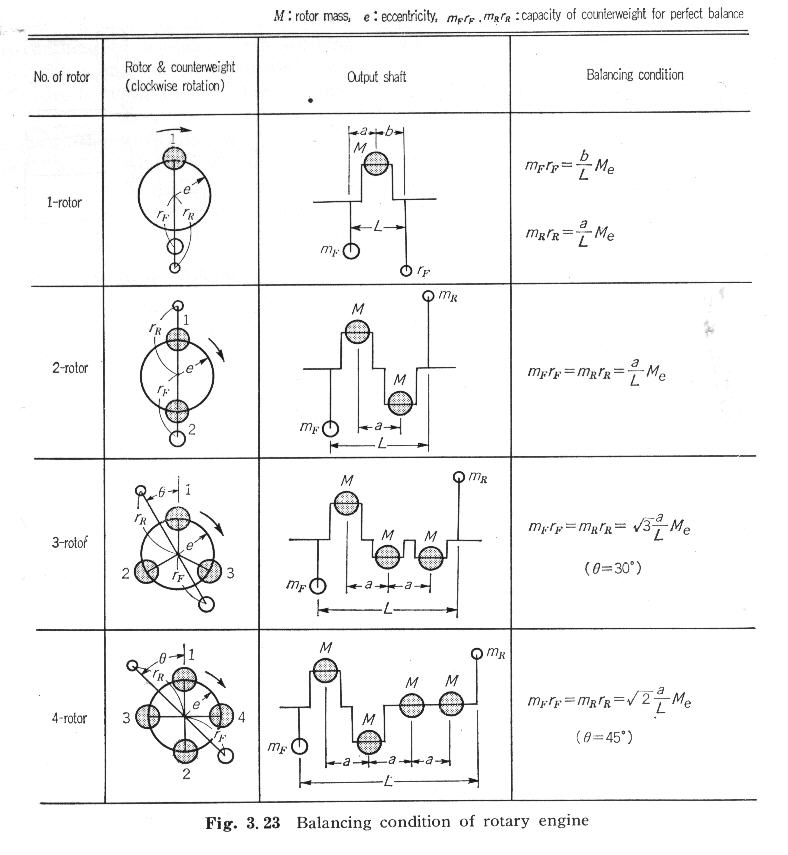
Balance is not trivial as it depends not only on the weight
of the balance weights and their CG position but how far they
are from the rotor center line. Here is the math.
A one rotor can be in static balance and be out of dynamic
balance. This will tend to load one main bearing more than
the other as the rotor will try to tilt out of the vertical
plane.
I don't think Ross Aero is around anymore. People
feed engine oil to the PSRU with a restrictor
and a much larger drain back hose to the engine
oil sump. A needle valve should work. The idea is
to reduce engine oil pressure going to the PSRU
as it is splash lubricated.
We are talking something around .050" but I am guessing.
The prop will turn the same direction as engine rotation
with the 3.17 PSRU.
If I missed any questions send them in separate messages
with appropriate subject headings. Helps later when it
comes time to search for things.
Also see if you can borrow a digital camera and send us some
pictures. I probably have some suggestions to improve the
torque isolator plate.
Paul Lamar ...No rotor no motor.
The Rotary Engine NewsLetter. Powered by Linux.
ACRE NL web site.
http://www.rotaryeng.net
Copyright 1998-2006 All world wide rights reserved.