I had an idea for estimating the HP of a gas turbine.
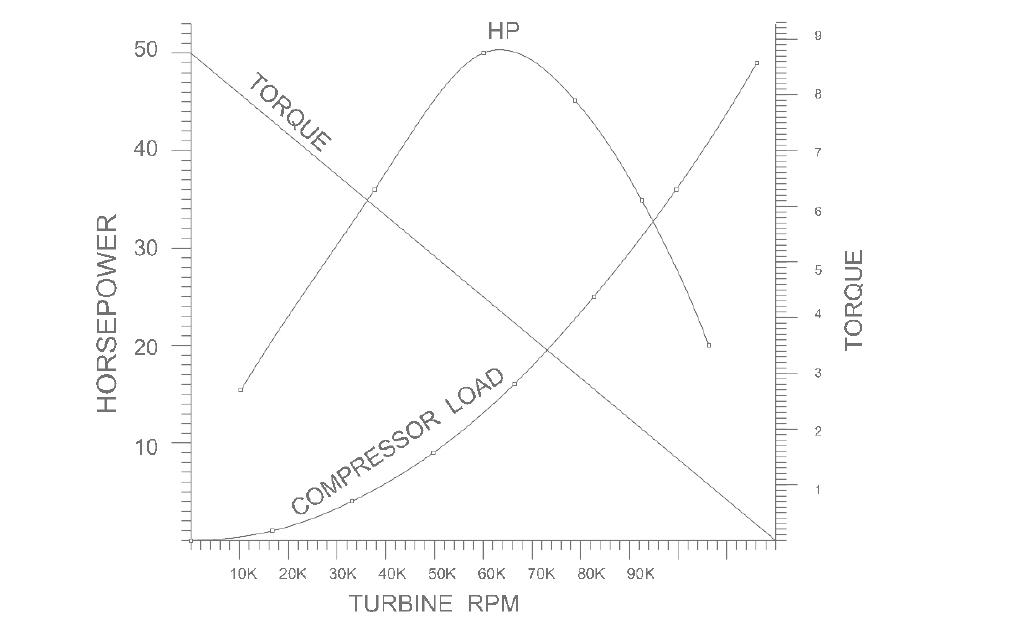
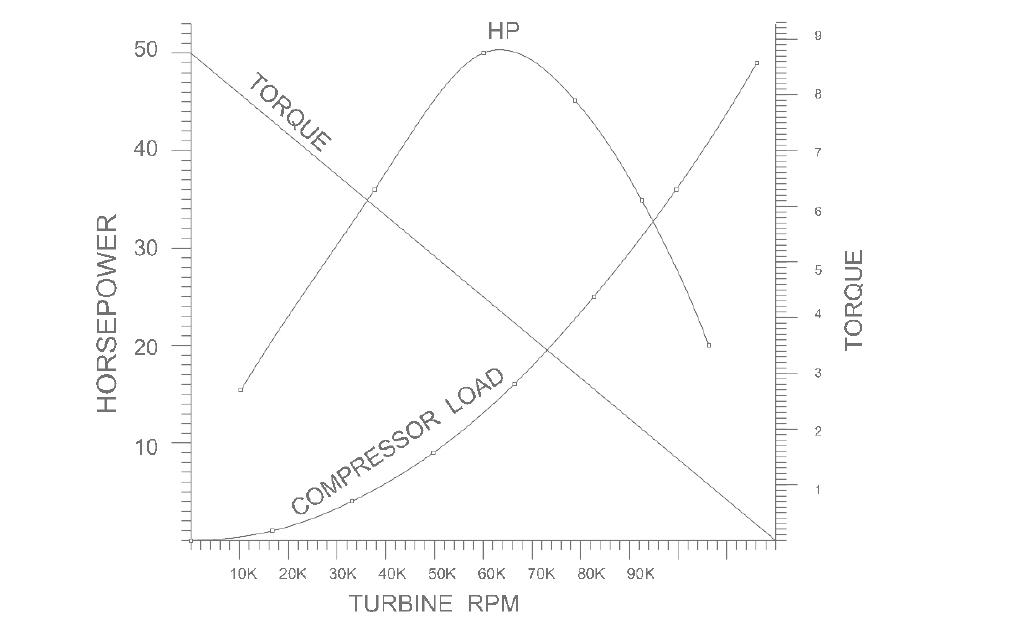
Turbines generate max torque when
the blades are stationary and then there is a straight
line drop off as RPM increases and blade velocity approaches
exhaust gas velocity. See the chart. This chart was a wild
guess on my part so it could be far from the truth.
The following estimate would indicate it is too optimistic.
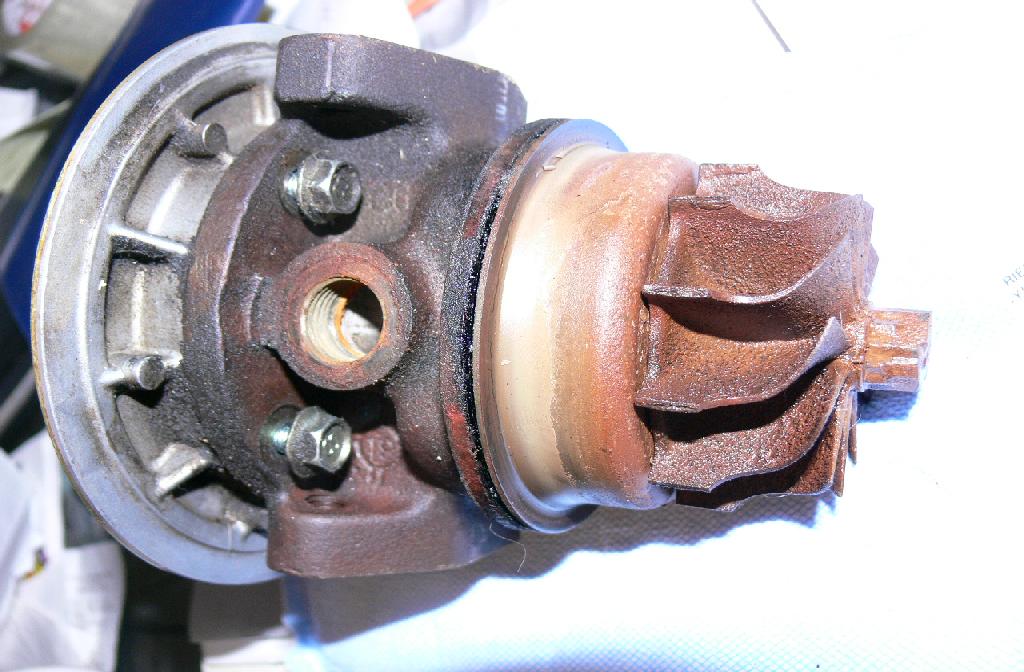
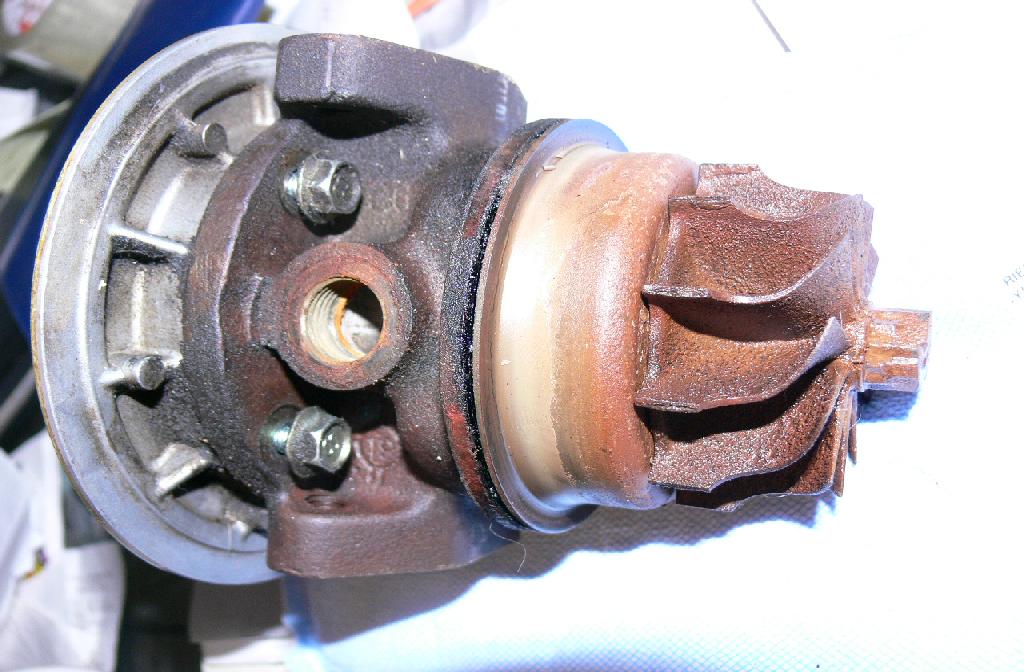
The blade area of this stock Mazda turbo charger turbine is
about .45 square inches not counting the flap. There are
eleven blades for a total area of about 5 square inches. At
600 MPH exhaust gas velocity the dynamic pressure at standard
SL density is 936 pounds per square foot or 6.5 psi above
atmospheric.
6.5 psi times 5 square inches is a force of 32.5 pounds
assuming the blade lift coefficient is one.
The radius of the blades is about 1.25 inches so
the static torque on the turbine is 41 inch pounds
or 3.4 foot pounds.
Mark a point on this chart on the left vertical axis at 3.4
foot pounds. We are almost done. Now we need to figure the RPM
when th blade velocity is the same as 600 MPH. The mean radius is
1.25 inches so the circumference is 7.85 inches or .65 feet.
600 mph is 880 feet per second. That is 52,800 feet per minute
so the RPM is 52,800 divided by .65 feet or 81,230 RPM.
So mark a point on the x axis at 81,230 RPM and draw
a straight line up to the max torque point of 3.4 foot pounds.
Now you must calculate the HP and plot it as a function
of RPM. You are now done.
These numbers are amazingly close to what you see in a real turbo
charger. Actually they are kind of conservative as turbo
chargers consistently rotate faster than 81,000 RPM as most
of the compressor charts indicate. That means either my
gas squirt velocity assumption is too low or my exhaust gas density
assumption is too low. Perhaps the gas squirt velocity is supersonic
so I don't know how to deal with that. I have no idea what
happens in a nozzle when the gas velocity approaches supersonic.
Come to think about it the pressure in the exhaust manifold
is probably the same as the dynamic pressure on the blade
as it is a closed container more or less at zero turbo charger
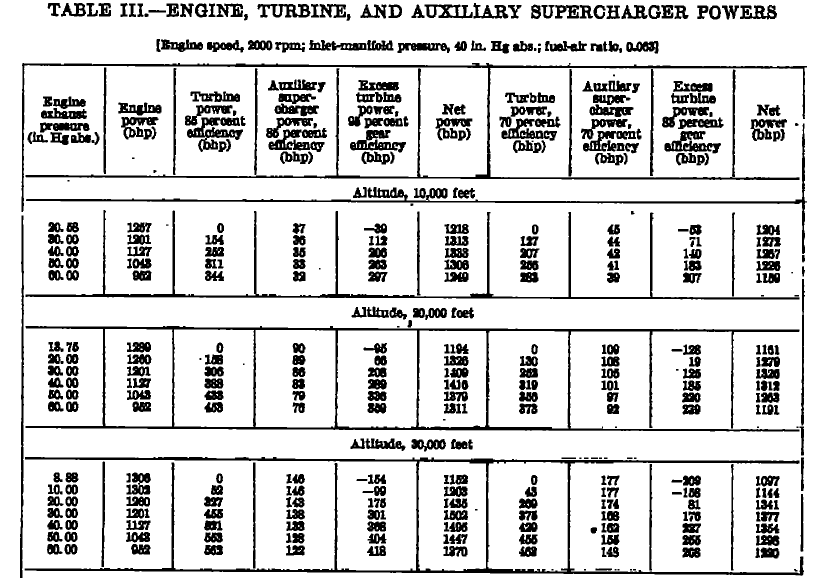
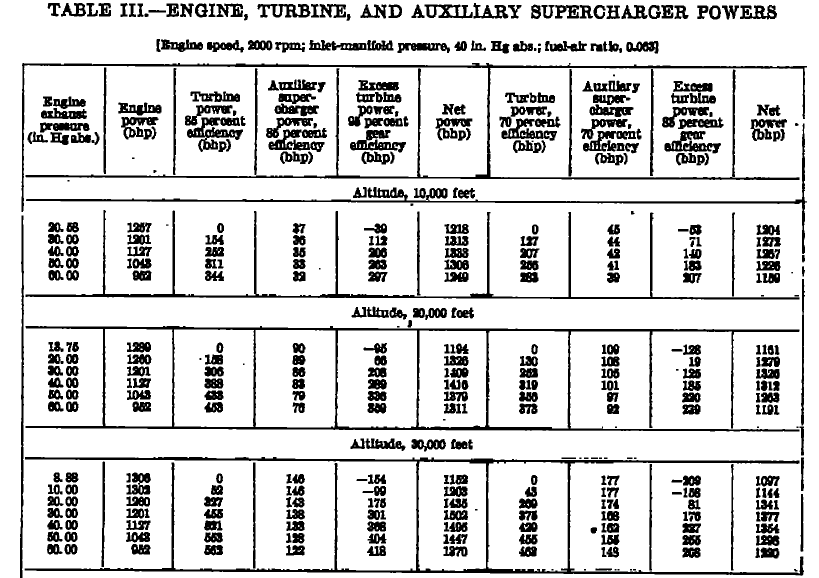
RPM. Exhaust manifold pressures have been
measured at way more than 6.5 psi. First column in third
attachment Table III. 30 inches of Hg is 15 psi atmospheric
pressure and 60 inches of Hg is 15 psi above atmospheric.
I was assuming less than half that at 6.5 psi. Maybe my
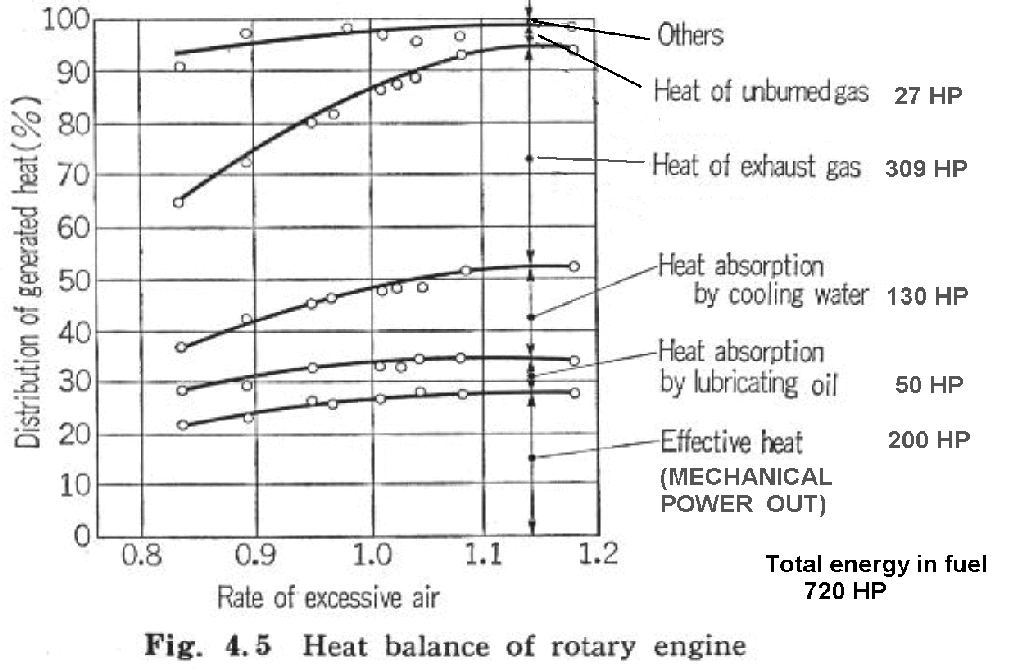
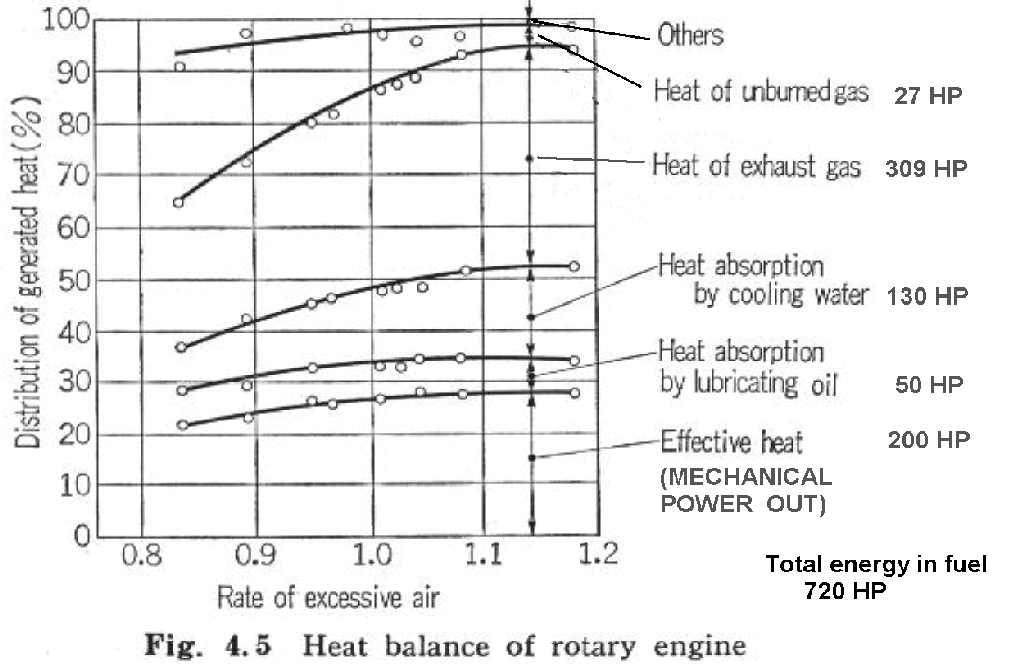
chart is not optimistic after all. The heat balance of the
rotary would indicate it is close to correct.
BTW This is also why the HP from the turbine increases with
altitude as the back pressure on the turbine is reduced.
Other possible errors:
My lift coefficient assumption of one on the blade could
also be too low. Any self respecting wing will will have a
lift coefficient of 1.2 or above.
Another possibility is the blade area chosen is too low
and I need to include the flap area.
Paul Lamar ...No rotor no motor.
The Rotary Engine NewsLetter. Powered by Linux.
ACRE NL web site.
http://www.rotaryeng.net
Copyright 1998-2006 All world wide rights reserved.