snips....
> > All I need is something simple to work on the
> dyno.
> > Turbo charged 2nd gen engine. Ignition is not
> > mandatory as
> > I can lash something up that will fire both
plugs
> 20
> > dgrees
> > BTDC. I can go with the CAS or build an RX8
style
> > trigger wheel and pickup. I am using stock 2nd
gen
> > injectors.
> >
> > I ordered the bare boards from DIY.
> >
> > Is msnsextra code C or 68HC908 asm source?
> >
> > BTW I am thinking two of these could be used in
an
> > airplane
> > with a 37 pin plug on the instrument panel.
Unplug
> > one and
> > plug in the other as a preflight backup check.
> They
> > are cheap.
> >
> > Paul Lamar ...No rotor no motor.
>
> msnsextra is asm. Latest version, and source, is
> available in the zip file found here:
> http://megasquirt.sourceforge.net/extra/files/
>
> Stock 2nd gen injectors can be either high or low
> impedance depending on year, so you may want to
> check
> to see what you've got.
>
> Roger.
>
> Thanks for your help Roger.
> No problem with the injectors. I can figure it
> out. Thats what ohmmeters are for. I spent 20
years
> manufacturing electronic test equipment. I have
some
> injectors I probably need a few more.
>
> BTW where is the s record file for the extra
> version?
> Also where do I get the assembler. Is Motorola
> giving it out for free?
>
> ---------------------------------------------
> I have been looking over the code and it looks
> pretty simple and straight forward.
>
> The extra version source file is four or five
times
> larger than the early source. I think I will start
> with
> the 2001 simple version.
>
> Here is the flow chart. Pretty simple.
>
> A simple way to do the ignition is use two RX8 or
> 3rd gen
> mag pickups and a steel plate with one large
tooth.
> The pickup are oriented 180 degrees apart around
> the e-shaft pulley. One pickup fires the front
rotor
> plugs and the second fires the rear rotor plugs.
> The steel plate is slotted to adjust the fixed
> timing.
> One pickup can also feed the tach signal. No CAS
> required.
>
> Paul Lamar ...No rotor no motor.
That should work, but you'll need some way of
conditioning the VR pickup signal, and then sorting
out the coil charge time. A GM 4-pin HEI module
will
work for this. Will the rotary start OK at fixed
timing, or is some retard needed during cranking?
I'm presently running a twin EDIS ignition system on
my rotary. The EDIS4 module (from an early 90's
Ford
Escort 1.9) was developed by Ford to address the
cpu-intensive task of toothed wheel decoding. It's
a
stand-alone module that will:
1.) Decode a 36-1 wheel/VR sensor combination
2.) Drive two coil outputs each fired every 360
degrees, with 180 deg separation. This works
perfectly for the rotary, as one is front rotor, and
the other rear.
3.) Provide automatic coil charge time and current
limiting.
4.) Offers 'multi-spark' at low rpm (useless for
aviation apps, but a neat idea nonetheless).
The module will run fixed timing with no ecu
connector, or you can connect two wires between the
module and MegaSquirt, and have full control over
ignition timing.
Wiring details here, about 2/3 the way down the
page:
http://www.megasquirt.info/ms2/EDIS.htm
In a previous engine install, I cut 36 teeth into
the
outer rim of the e-shaft pulley, ground one tooth
away, and mounted an industrial VR pickup in-line
with
the rim. You could do the same in short order if
you
have access to a rotary indexing table and a mill.
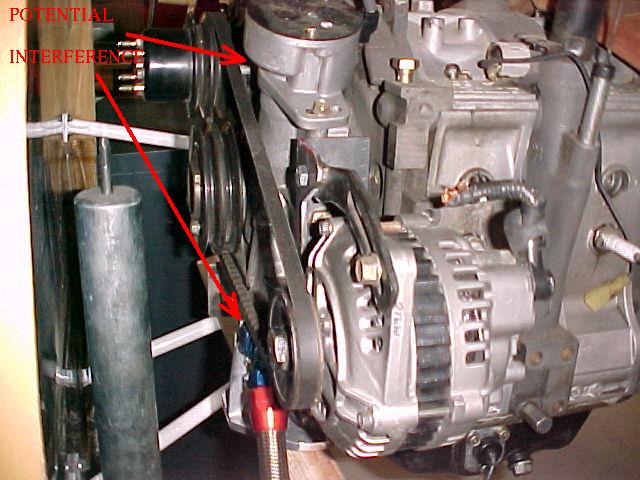
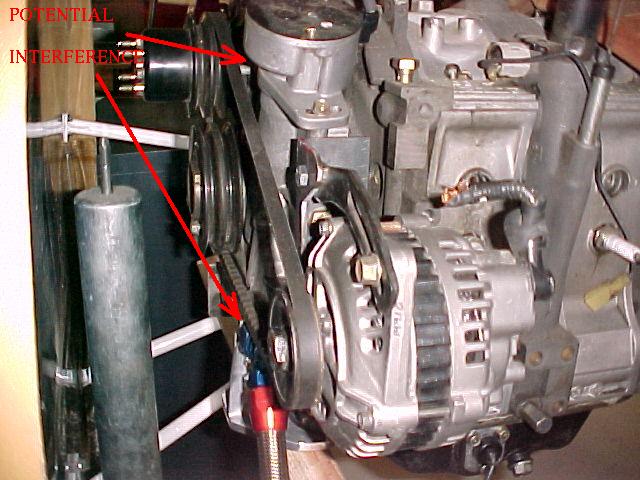
I've attached a couple pics of that setup.
Just to confuse matters even further, I'm now
running
a modified CAS, with 72-2 wheel inside. The 72-2
wheel at 1/2 speed acts identical to a 36-1 on the
e-shaft, so the EDIS modules are happy. I moved the
two stock Mazda VR sensors slightly to give a fixed
split of about 5 degrees between leading and
trailing.
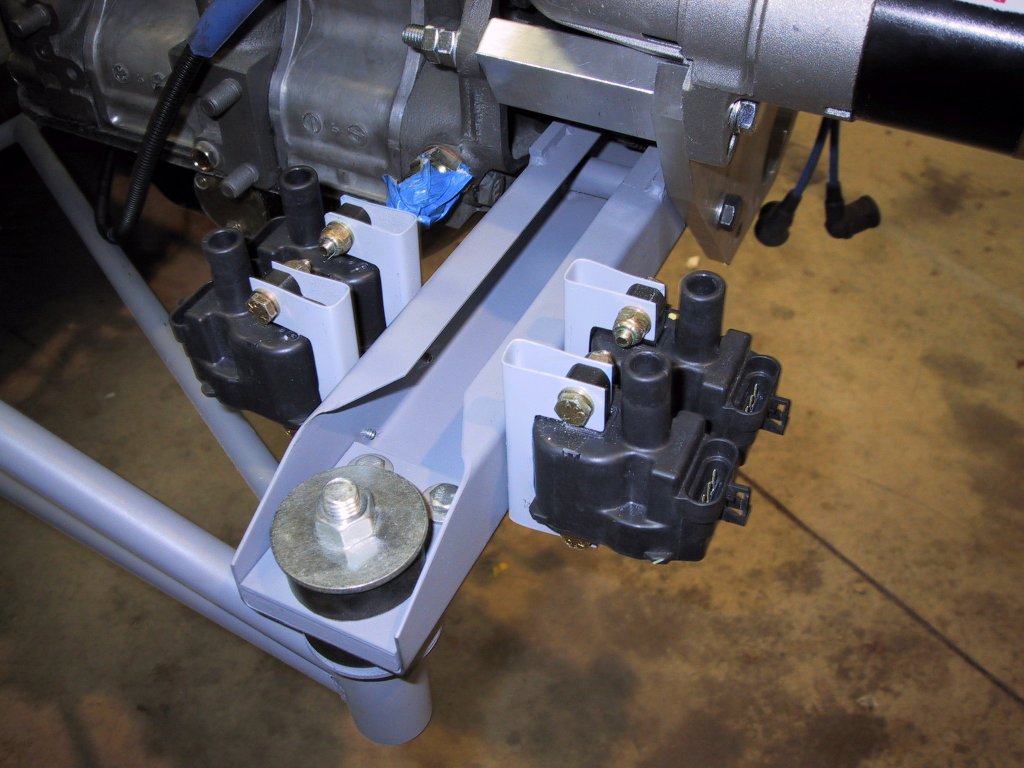
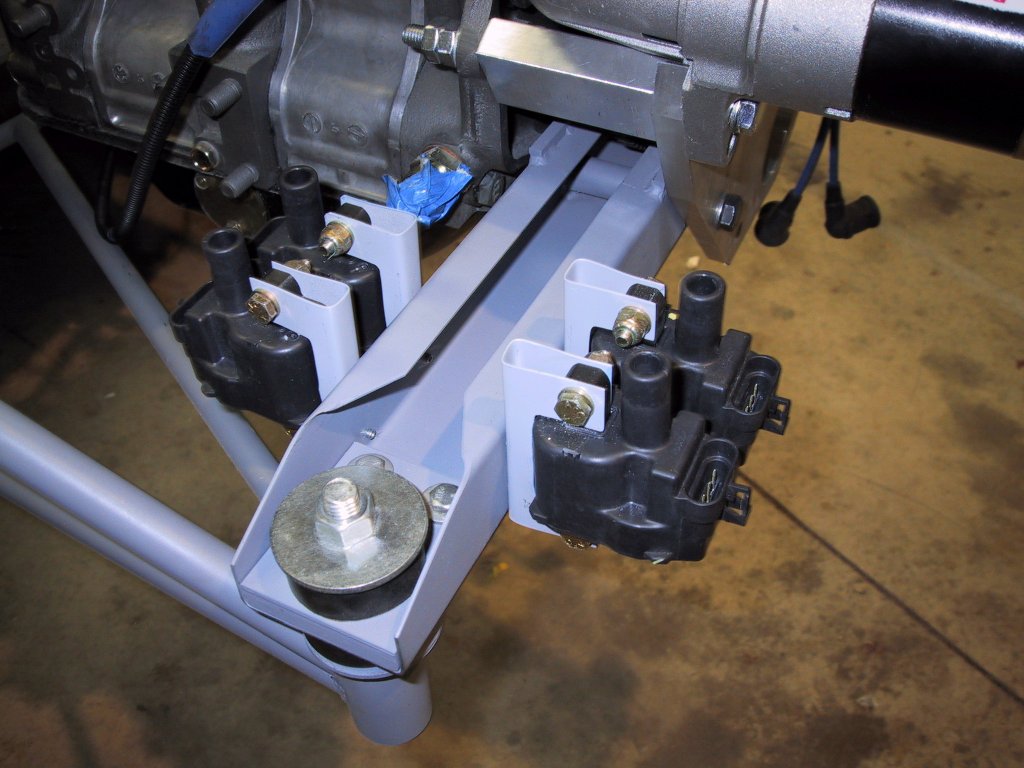
I'm firing four individual coils taken from the
trailing coil packs used on 2nd gen RX7's.
Roger.
I can design and build conditioning circuits.
I think it will start fine on fixed timing. As I
recall
Tracy used fixed timing on his early EFI systems.
The rotary engine
has a lot of rotational inertia. Particularly with a
prop.
Hand propping it would be another matter. Klaus
(LSE) uses
a retard for hand propping his O-200.
If fixed timing is all you need, then mag pickup (VR
sensor in MS-speak) interfaced with GM 4-pin module is
all you need. It'll do the signal conditioning, and
take care of (coil charge time) dwell as well. These
GM modules are available everywhere, and are dirt
cheap. Unless it's for fun, I wouldn't bother
soldering up the equivalent out of discrete
components.
So the tach circuit and early software in the
68HC908 require
36 pulses per rev? If not 36 how many as I can
plasma cut another
No. In my application the EDIS module decodes the 36
tooth signal, and fires the plugs completely
independent of MS. If EDIS receives a timing signal
from MS, then it adjust timing to suit. If it
receives no timing signal, it fires at fixed timing.
The tach circuit and msnsextra will decode a wide
variety of wheels, from 12-1, 36-1, 60-2, and the
conventional 'pulse per firing event' signal from many
distributors.
steel wheel and mag pickup just for the tach circuit
if necessary. I kind of hate to butcher a perfectly
good CAS.
Surplus CAS units are plentiful, so I wouldn't worry
much about that, unless you are particularly attached
to the one you have.
Roger.
It is not that I attached to it. I have a couple. I
would rather do the development so the spark will work
with 3rd gen and RX8 engines. Also it is easier to mount the
alternator on the side of the engine if there is no
CAS installed.
Are you referring to the LS1 type coil per plug module.
Do you have a picture? Is this it?
Paul Lamar ...No rotor no motor.
The Rotary Engine NewsLetter. Powered by Linux.
ACRE NL web site.
http://www.rotaryeng.net
Copyright 1998-2006 All world wide rights reserved.