Paul,
I have seen as small as 3/4" hose used between rad and pump,supposedly
sufficient for up to 200 HP. Just curious if you had any thoughts.
Pros : weight , less cowl space/more clearance from hot exhaust? ,
tighter bending radius if req and less stress on aluminum rad
connections.
Cons : loss in flow but possibly greater heat transfer per volume of
water pumped ?
IMHO I would not do it. The car manufactures use 1 3/8" and 1 1/2"
hose for a reason. If they can save a penny they will do it.
I suspect it ups the HP consumption of the water pump. I know
Mazda went to a lot of trouble redesigning the water pump on the
RX8 engine doing away with a restriction in the flow.
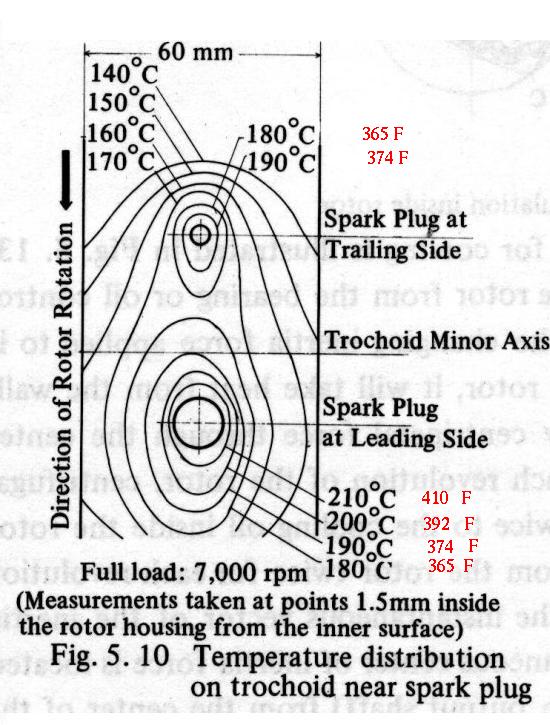
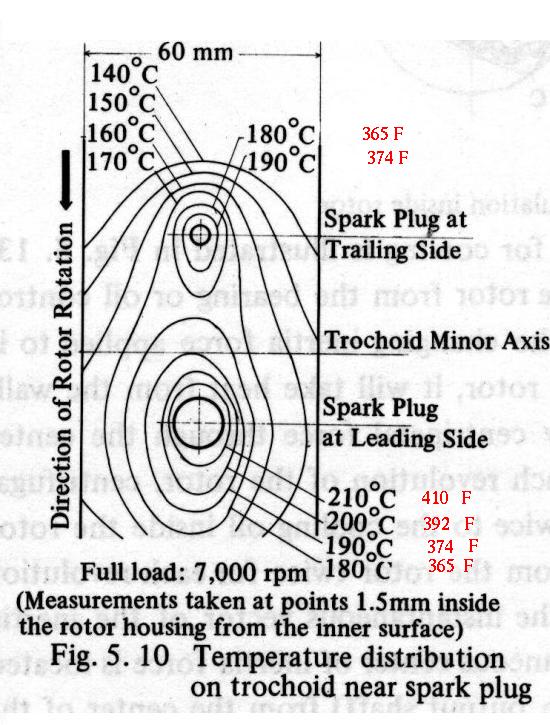
Nobody uses a thermal couple in the aluminum next to
the combustion chamber so it is hard to evaluate those
kinds of changes. All air cooled aircraft engines
have these thermal couples (CHT) for a reason.
You don't want to over heat the aluminum. With restricted
flow of water to the block you won't know if you are affecting
the aluminum properties or not. The water temp may be no higher.
To get a feel for the problem calculate the area of a 3/4
hose compared to a 1 3/8 hose.
Paul Lamar ...No rotor no motor.
Paul,
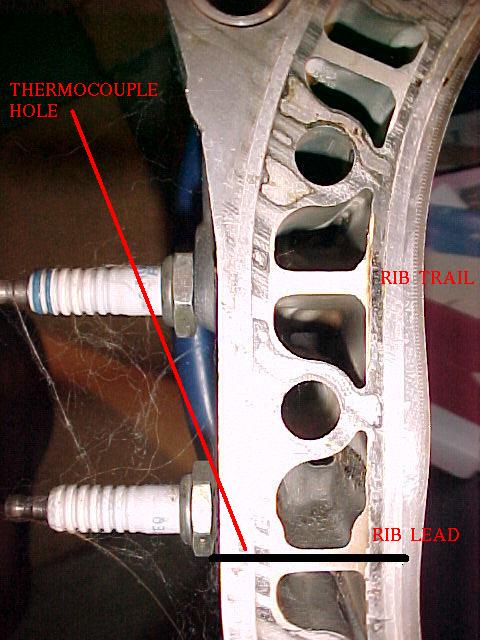
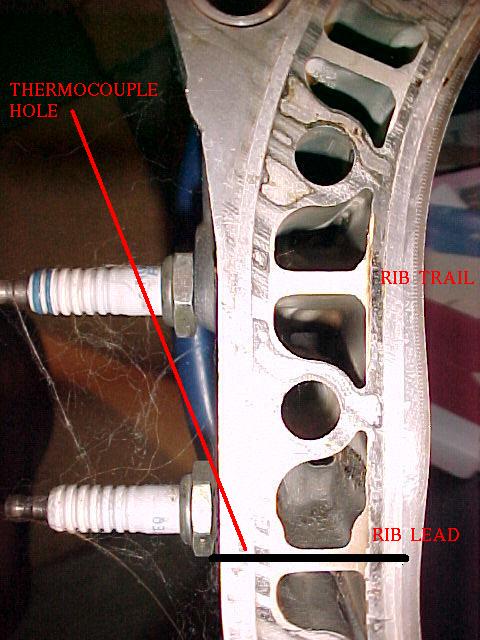
I took your advice on the TC's. When rebuilding my 20B I drilled down
into the web next to each spark plug and have since installed TC's in
each. Those, along with the EGT sensors should provide good data.
Mark S.
Great Mark I can hardly wait to see the data.
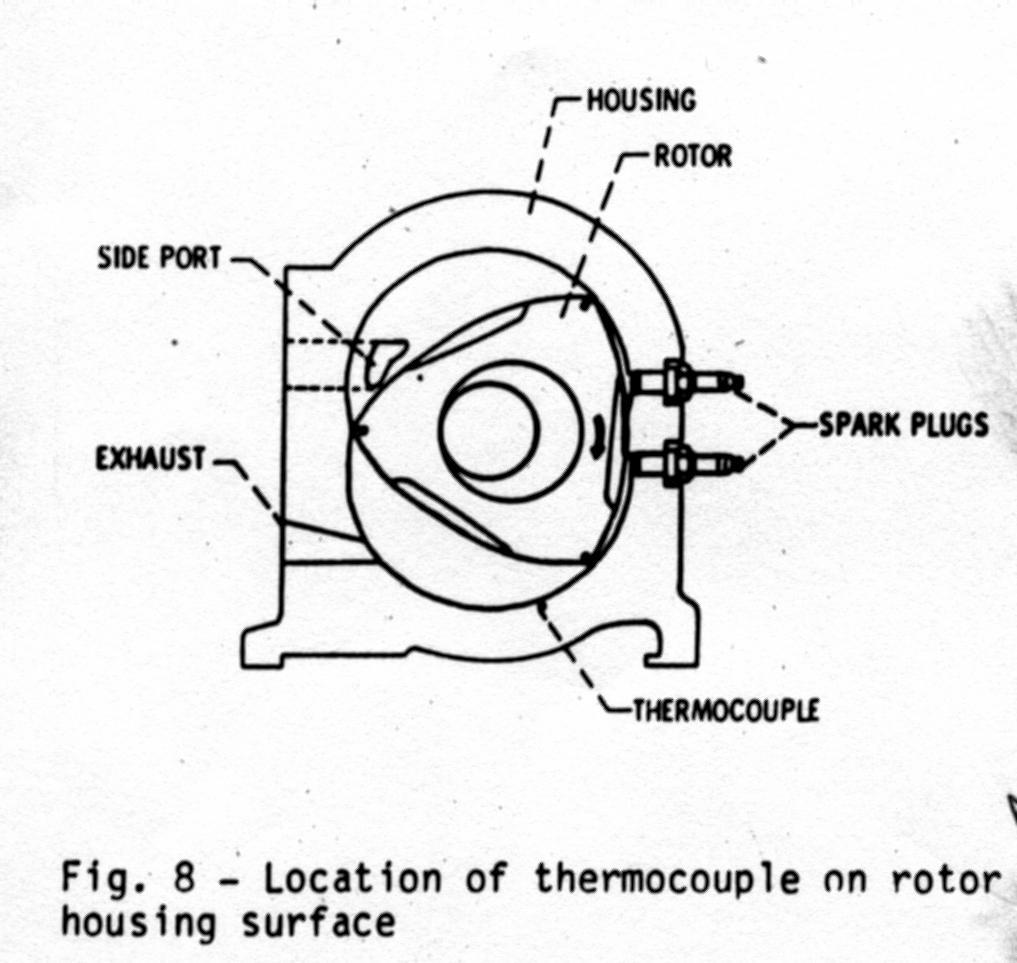
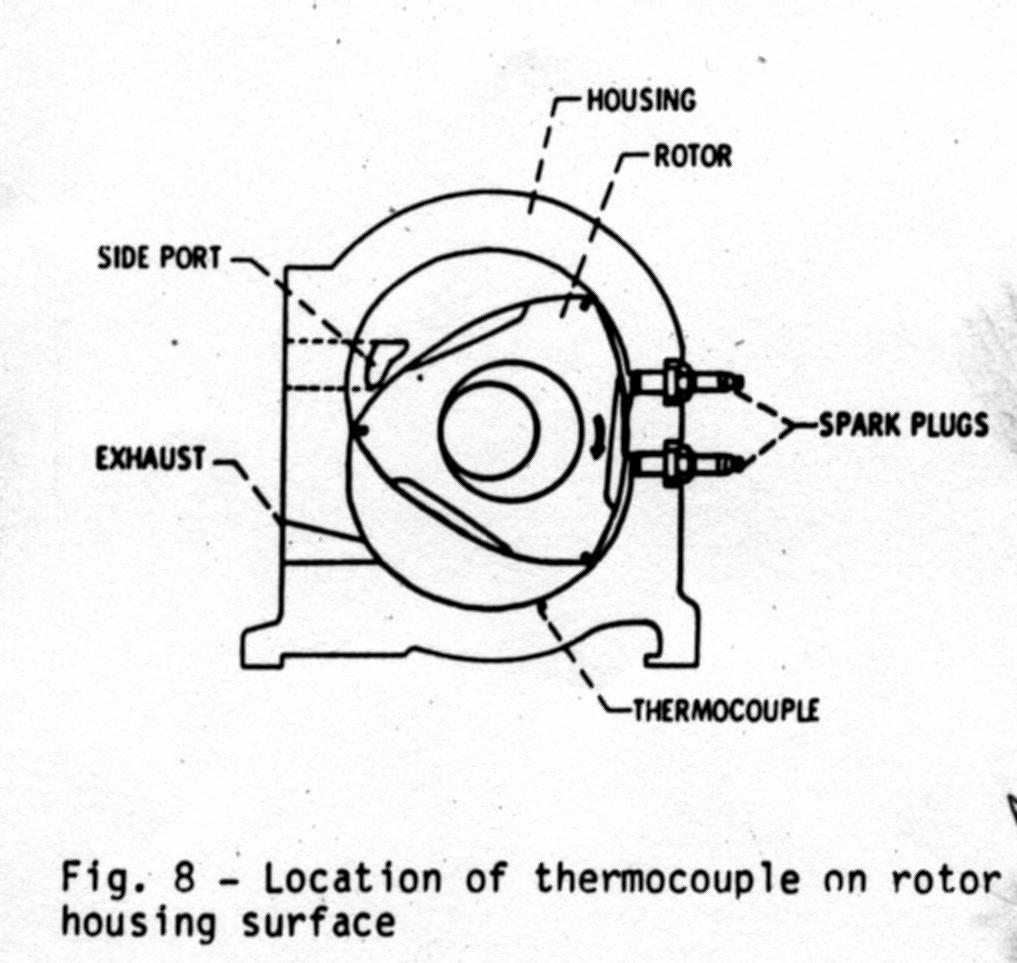
I added a few jpg's for the new guys.
The last jpg is where NASA mis-located the thermal couple :)
--
Paul Lamar ...No rotor no motor.
The Rotary Engine NewsLetter. Powered by Linux.
ACRE NL web site.
http://www.rotaryeng.net
Copyright 1998-2006 All world wide rights reserved.