>
> > The pitch of my old wood propeller which I am retiring is given
> in
> > inches, while my new Warp Drive uses degrees to set pitch. No
> > reference
> > to inches.
> > What is the relationship between the two methods of
> measurement?
> > Can you direct me to reference material (for the layman)?
> > Yvon
> >
> > Good question.
> >
> > --
> > Paul Lamar ...No rotor no motor.
> >
>
> I suggest you call Warp drive with your engine/airspeed/aircraft
> imfo. I was advised to set my prop
> to about 12 degrees...It is now set to 11.5 degrees ! Adjust
> the prop in VERY small increments...
> ,5 degrees or less.If you learn how to correlate degrees
> to pitch please let me know : ))
> Charles in south Mississippi
>
> In order to figure out pitch in inches, you need to know the diameter
> of
> the prop. Think of it like this- the prop is turning through a medium
> where there is no slippage. One revolution of the prop pulls (or
> pushes)
> the airplane how far forward (in inches)?
>
> Get out your trigonometry textbook.
>
> Not trying to be a smartass, but I'd have to dust mine off to give
> you
> an answer, if I knew your prop diameter, but I'm at work and don't
> have
> it here.
>
> Brian Trubee
Thank you all people. I will keep you informed of my progress in
installation and testing.
Yvon.
Hi Yvon,
There is more to a prop than just pitch. Twist is also important.
Here are three examples. You need to add a few degrees
to these numbers to generate thrust.
Note that even at 100 MPH design speed a prop
needs 55 degrees twist. Unfortunately the Warp Drive blade has
very little twist. As speed increases the twist angle also
increases slightly. The IVO prop is also defective
in this regard with very little angle of attack near the hub.
RPM = 2700 MPH = 100
Radius Tang FPS Tang MPH Angle
3.00 71 48.2 64.3
6.00 141 96.3 46.1
9.00 212 144.5 34.7
12.00 283 192.7 27.4
15.00 353 240.9 22.5
18.00 424 289.0 19.1
21.00 495 337.2 16.5
24.00 565 385.4 14.5
27.00 636 433.5 13.0
30.00 707 481.7 11.7
33.00 777 529.9 10.7
36.00 848 578.0 9.8
RPM = 2700 MPH = 150
Radius Tang FPS Tang MPH Angle
3.00 71 48.2 72.2
6.00 141 96.3 57.3
9.00 212 144.5 46.1
12.00 283 192.7 37.9
15.00 353 240.9 31.9
18.00 424 289.0 27.4
21.00 495 337.2 24.0
24.00 565 385.4 21.3
27.00 636 433.5 19.1
30.00 707 481.7 17.3
33.00 777 529.9 15.8
36.00 848 578.0 14.5
RPM = 2700 MPH = 200
Radius Tang FPS Tang MPH Angle
3.00 71 48.2 76.5
6.00 141 96.3 64.3
9.00 212 144.5 54.1
12.00 283 192.7 46.1
15.00 353 240.9 39.7
18.00 424 289.0 34.7
21.00 495 337.2 30.7
24.00 565 385.4 27.4
27.00 636 433.5 24.8
30.00 707 481.7 22.5
33.00 777 529.9 20.7
36.00 848 578.0 19.1
I got kind curios about what happens to the twist if you slow
the RPM to 2100 at 150 MPH for cruise. The optimum
twist changes by almost one degree. Note the
zero thrust angle of attack only changes
by about 2 degrees. See the attached jpg.
Fixed pitch props are very point design
devices. You need to tell the prop guy
what you want to do. Tell him the prop RPM,
the HP at that RPM and the cruise speed you
you wish and probably the drag of the airplane
at that cruise speed. One blade design certainly
does not fit all requirements.
-----------------
ops pasted in the wrong chart.
Here is the corrected jpg. Twist changed only slightly.
Why didn't you guys catch that? :)
Paul Lamar ...No rotor no motor.
Hi Paul,
Maybe you shouldn't mess around with this stuff at 00:20 in the
morning. :) I got the correct chart the first time and the wrong one
the second time. Most days I'm not going to catch anything at 00:20
except some ZZZZ's.
Bob W.
--
http://www.bob-white.com
N93BD - Rotary Powered BD-4 (first engine start 1/7/06)
Custom Cables for your rotary installation -
http://www.roblinphoto.com/shop/
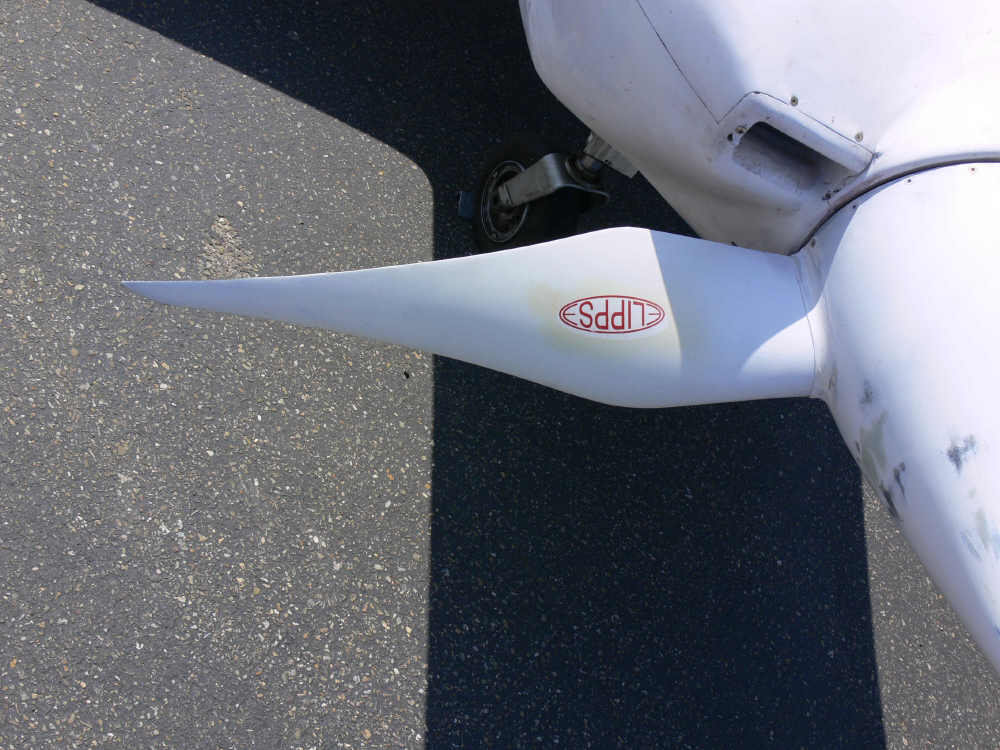
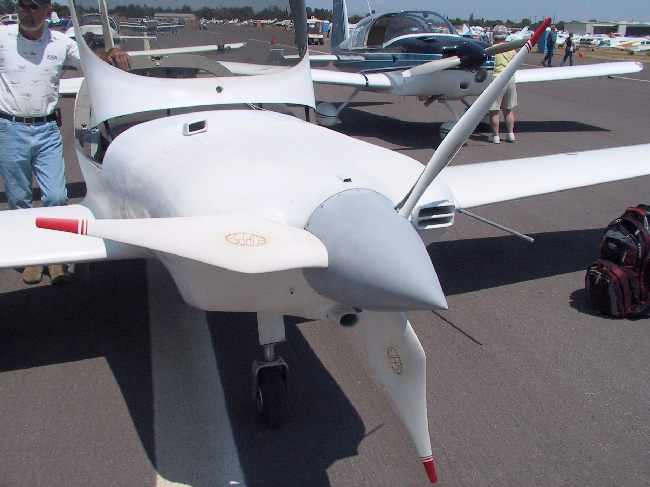
BTW note the low tangential velocity near the hub.
This means the narrow prop blade is not generating a lot
of thrust near the hub. I think this is the rational behind
Paul Lipps prop design. He is compensating for low
velocity by adding a lot of area to the blade.
Further out he narrowed the blade cord to keep
the prop HP consumption in check.
It also helps the cooling air flow greatly no doubt.
Paul Lamar ...No rotor no motor.
The Rotary Engine NewsLetter. Powered by Linux.
ACRE NL web site.
http://www.rotaryeng.net
Copyright 1998-2006 All world wide rights reserved.