Hi Paul,
we are two Italian engineering students (would you excuse our
English...) and we are interested in your test with the Dodge caravan.
We would like to know the specific largenesses (speed, pressure,etc..)
that you have measured and the utility of those measurements. Do you
have other picture or photos of the wood box you putted on the caravan?
We have to design a similar one for a different cooler.
We wish you can help us, best regards.
Giuseppe & Roberto
I assume you have read:
http://www.rotaryeng.net/cooling.html
The test was to verify the results of the wedge shaped
diffuser as described in the Kays & London book compact
heat exchangers,
Main reason I checked Kays & London for their data on the full
scale test rig on top of the Dodge Caravan. I was surprised
how well the simple 2D wedge works because it conflicts somewhat with the
K&M diffuser data. It also seems to preclude using those K&M duct
coordinates for modern thin rads under the cowl. Not
enough room.
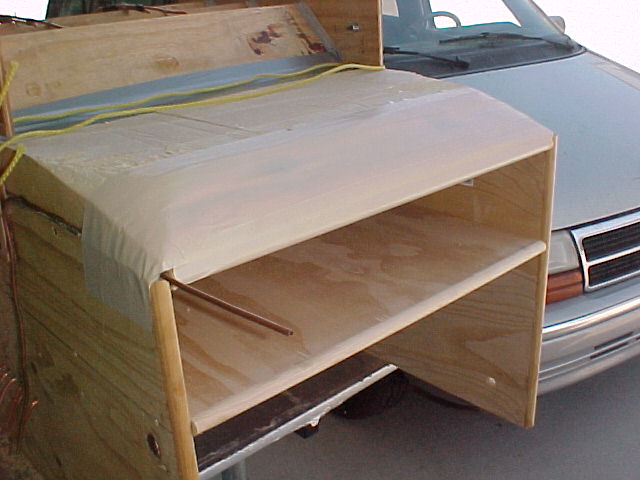
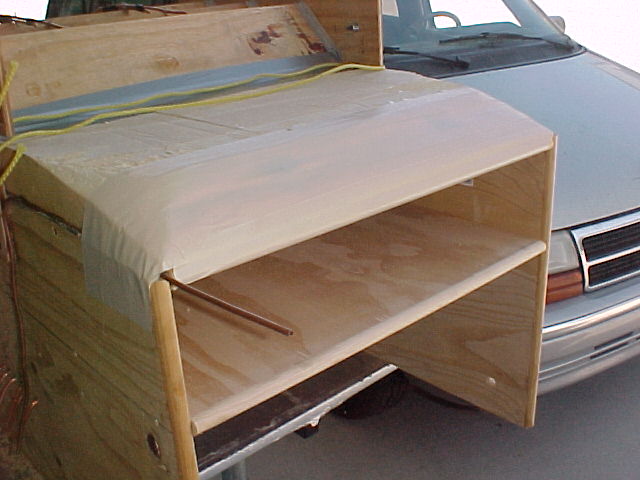
This is made from two pieces of 3/4 ply 18" by 48".
Width is the same as the test rad. In this case
15.5 inches.
The following things can be easily changed:
1: The angle of the rad.
2: The area of the opening by raising and lowering the floor panel.
3: The length of the straight section of duct.
Currently 14 inches. Same as the Ross and Tracy PSRU's.
4: The height of the exit chamber or wall distance back
of the rad. Not yet installed.
5: A cowl flap and its opening angle.
6: The shape of the sheet metal K&M curve causing a difference
in air flow distribution through the rad.
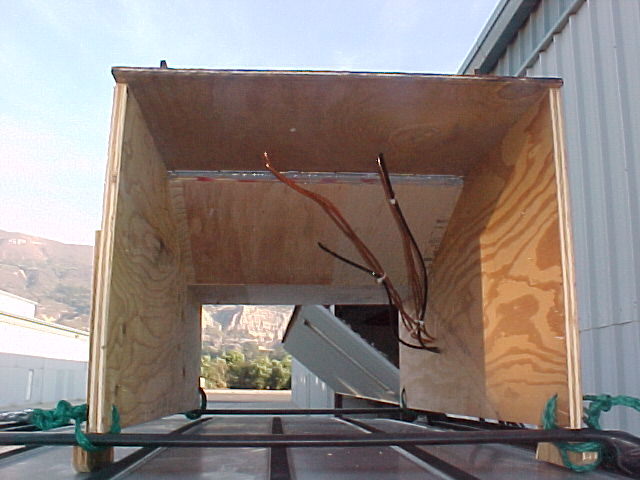
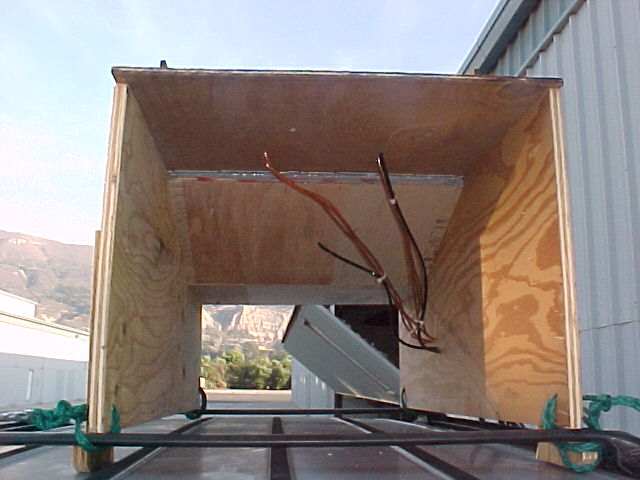
Shown also are the velocity rakes that will be installed behind the
rad. These are made from 3/16 copper tubing from the hardware
store. $12 for 50 feet. Hot glued and taped together for extra
strength. 1/4 inch dia. plastic drip irrigation tubing slips on
this size copper tubing very well.
I will test it first with three sizes of openings and without
the exit chamber and cowl flap.
I used 3/4 half round wood trim to smooth the air going into the duct.
None of this is optimum of course. I just want to get a few
numbers such as rad air flow as a function of input opening area
and effect of back wall distance for future work. It will be installed
on the roof rack of my Dodge Caravan and tested at 80 MPH or so.
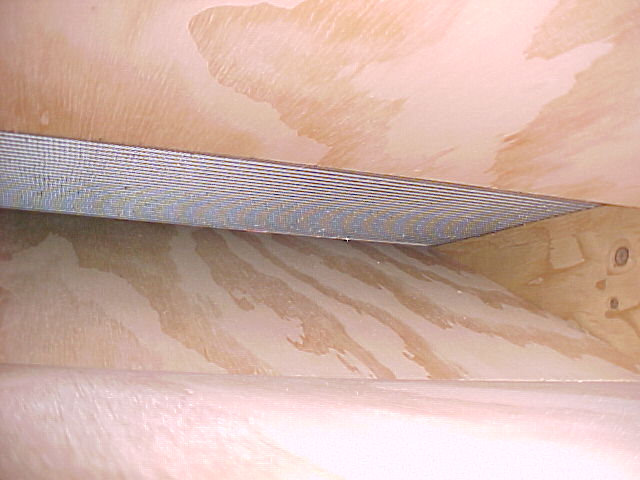
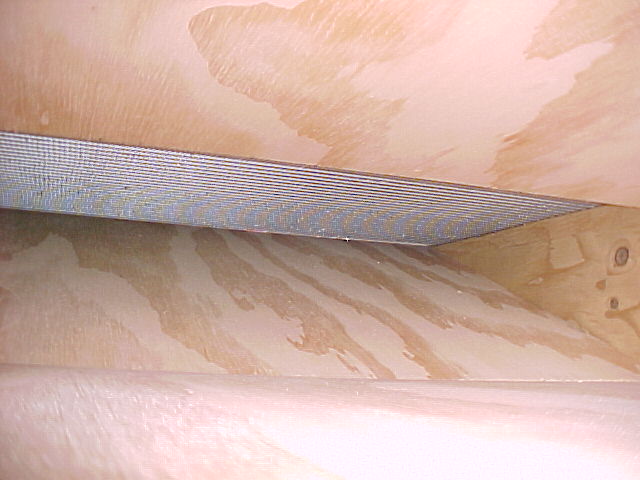
The rad area is about 366 square inches.
The thickness is about one inch. (One row
of water tubes.) The duct intake area
is about 129 square inches. 15.25 by 8.5.
So the intake area is about 36% of
the rad area which is high for a fast
airplane but not bad for a 100 MPH airplane.
With an airspeed of 53 MPH at the reference pito
tube location. I was doing about 70 MPH on
the speedo. I may have had a tail wind,
the pito tube was in the wrong location or
the air was going over the top of the van
at an angle. ( I'll investigate the matter
further.)
Never the less assuming 53 MPH input......
Looking at the back of the rad from the top I got
air flow coming through the rad in MPH:
32.6 21.4 33.2
22.8 24.12 26.9
00.0 00.0 00.00
Obviously I have the sheet metal too close
near the bottom of the rad. A 1/8 inch adjustment
or more is called for. I will do that and run
the numbers again.
If I average the numbers the average flow
coming out of the back of the rad is 27 MPH.
If we assume only 66% of the rad area is working
that means we have an area ratio of 129/241 or 53%
Our air velocity ratio on the other hand is 51% so
the numbers seem to check out.
I modified the curve for the third time and I almost have uniform flow
through the rad. Another 1/8 th or 1/4 inch here and there will do it.
I also added a horizontal top on the exit chamber as close to the rad
as I could get it. The apparent velocity at the top of the rad increased
if you can believe the pito tube results. Obviously they are misleading
as the 40 mph blast out the back of the rad is impinging on the top
panel and increasing the back or static pressure in the exit duct.
I will reconfigure the water manometer to read the static pressure
in that region as well as the true air velocity and report back.
I also beefed up the sheet metal
on the sharp end where it meets the rad. Since the dynamic pressure
at 2 inches of water is roughly .08 psi over a ten inch length,
one inch wide of .025 thin sheet aluminum the force could be
0.8 pounds tending to cause deflection and consequently an air
pressure leak. The devil is truly in the details.
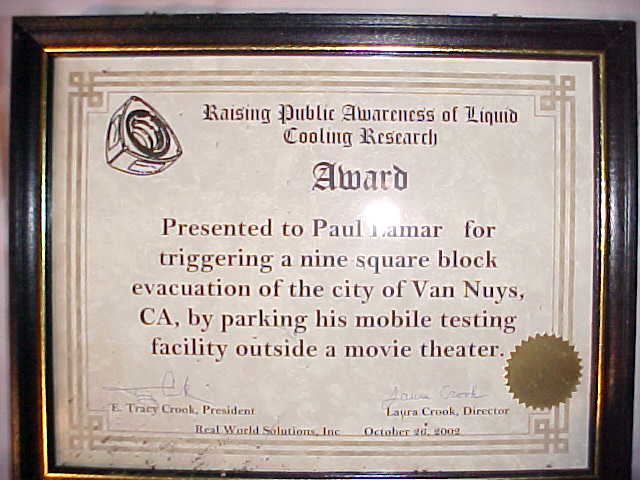
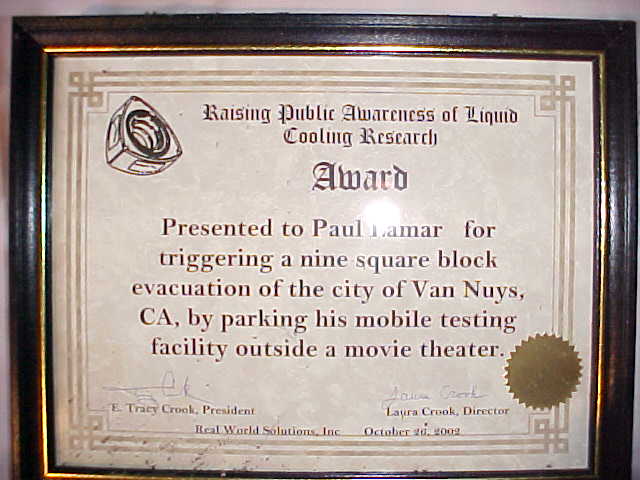
I came back from the hangar this afternoon and met Robin
in Sherman Oaks for dinner and an early K19 movie.
We were half way through the movie when they stopped the film,
turned on the house lights and evacuated the theater.
Not only the theater Robin and I were in but another theater
across the street and the entire shopping center
including the super market. In fact they had cordoned off
a nine square block area around my Dodge Caravan with this box
on the top. The bomb squad was called in. You can guess the rest:-)
When they emptied our theater they did not say why.
We were standing around several blocks away talking to some folks
that were in the other theater and they happened to mention it was
a Dodge Caravan with a plywood box on top. That was a one in a thousand
happenstance. If that had not happened and I had not gone up to the police
and told them it was my Dodge van we would still be there.
I asked the sergeant in charge if he looked at the box in the dark parking lot with
a flashlight. Did he not see and identify the junk water radiator?
He told me he was trained to not make that judgment. Shesss! Any self respecting
car bomber is not going to make it so obvious.
Mikey the Golden Retriever was in the van.
I am surprised they did not bill me $100,000 for all
the two dozen LAPD cops and bomb squad involved. Even
ABC TV showed up.
I would not worry too much about the tax money. The LAPD cops get paid
for hanging out in the donut shops anyway :-). (CHP excepted :-))
I am just glad the bomb squad did not shoot him to get close
to the van. He is pretty protective when he is in the van.
That is his job.
Laura Crook wrote:
Hi Paul - this is a WONDERFUL story! Barry is here working with Tracy and I
made them both come upstairs to read the story and see the picture. I am so
glad that the foolish cops didn't "safely detonate" the device (with your
poor dog inside).
Hope you don't get a $100,000 bill for the wonderful services you received!
Laura
PS - you just made my "special list" for awards at the Rotary Roundup this
year. Will you and Robin be able to make it? October 25, 26, 27
Paul Lamar ...No rotor no motor.
The Rotary Engine NewsLetter. Powered by Linux.
ACRE NL web site.
http://www.rotaryeng.net
Copyright 1998-2006 All world wide rights reserved.