> > Dear Paul,
> >
> > Thank you for editing and distributing such an informative
> > newsletter. I would like to ask whether you (or other
> subscribers)
> > know of a reduction box which combines the output of two
> rotaries
> > into one prop shaft, while enabling individual operation /
> sut-down
> > of each of the two engines?
> >
> > Thank you very much, again.
> > Ronen.
> >
> > How about the Lear Fan 2100. Twin Turboshaft
> > engines driving a single prop. Take a look at this,
> >
> >
> >
>
>
http://www.flyingmag.com/article.asp?section_id=12&article_id=653&print_page=y
>
> >
> > Erik
>
> The Lear 2100 represents a solution that no one could afford. It
was a
> technical success, but the economics of its materials and assembly
> technology just weren't competitive. The twin-pack engine approach
> is very
> attractive on paper, but very difficult to execute in metal. I
> don't recall
> a single production commercial aircraft that has successfully
used the
> concept. The maintenance and vibration issues did some of them in,
> materials problems dogged others. A multi-rotor Wankel might well be
> superior in many areas, but the heat rejection versus packaging
> issues are
> challenging. Such an aircraft would need a variable pitch prop to get
> maximum performance in a one-engine shut-down condition. That means
> each
> engine with an oversized pump or alternator.
>
> George Wright
>
>
> All multi-turbine helicopters are essentially what we are describing
> here.. Multiple power sources driving a single consumer (rotor
> system). And yes, they are expensive..
>
> How about Soloy Dual-pac?
>
>
http://www.soloy.com/dualpac.html
>
> The failmodes which could bring down both powerplants at the same
time
> seem to suggest that you are probably actually reducing reliability
> compared to a single engine.
>
> Airframes with multiple engines really exist for two reasons. The
> first
> is that it's sometimes difficult to get a readily available engine in
> the horsepower value that's required for the size of the load. For
> instance, today, if you want a piston engine which makes more than
> about
> 400hp, your choices are pretty limited. So, hang two of whatever
> you've
> got on the airframe.
>
> That brings us to the second reason to have multiple engines.
Once you
> have two engines mounted, you go around telling everybody about this
> neat invention - a backup engine. What usually isn't discussed in the
> marketing verbiage is how much more likely you are to sustain a
> failure
> (statistically), and how much harder the thing is to fly when one of
> the
> engines craps out..
>
> So, instead of picking two crumby, air cooled rotary engines and
> trying
> to bolt them together, why not just pick one properly sized
rotary and
> be done with it?? If that's not enough power, pick a three of four
> rotor version... :)
>
>
> Happy Monday.. er Tuesday.
>
> Matt-
>
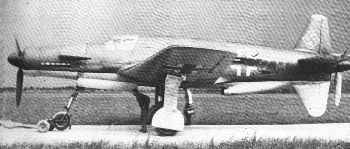
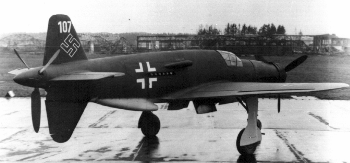
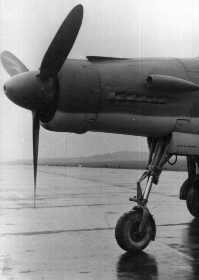
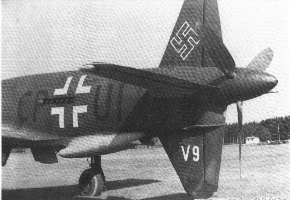
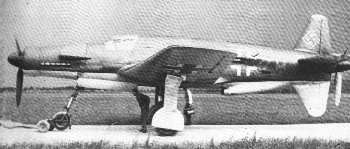
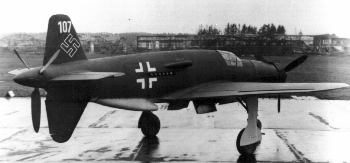
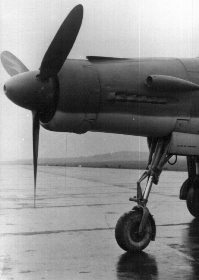
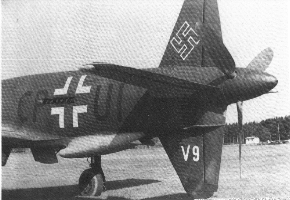
> What I like about Learfan is the tail-mounted prop -- a la
Dornier 335
> from WW2.
>
> What Lear should have done was mount another engine and prop on the
> nose. This would give a very nice axial-thrust twin with all the
> advantages of his idea, but without the complexities of the gearbox,
> which ultimately was the big stumbling block.
>
> A twin of this design (front and rear engine and prop) using rotary
> turbocompound engines could be a very nice airplane indeed.
>
> Regards,
>
> Gordon.
>
Rutan did just that with the Defiant. The world has not beaten a path to
his door. Dornier did not return to the concept when they were
allowed to
build aircraft again. I suspect it has to do with the introduction
of the
turbo-prop engine.
__________________________________________________
The Defiant was a canard configuration of course, so it's a bird of a
slightly different feather.
What I'm talking about is a strictly conventional layout, like the
Do335, which is regarded as the highest-performing piston airplane ever
produced. In flight tests in 1944, initial production models achieved
maximum speed of 474 mph and could climb to 26,000 feet in just 14
minutes. This performance easily outpaced anything that the Allies
posessed and has never been equalled in any piston airplane since.
There is a nice little writeup on the Do335 here:
http://www.aeroflight.co.uk/profile/d335hist.htm
The fact that the Do335 achieved such performance is testament to the
efficiency of the layout. While having a second, front-mounted prop is
not quite as efficient overall as the single rear-mounted prop which
operates in undisturbed air, as in the Learfan, it does not give up that
much.
The rotary engine would be a natural for this configuration because its
compact size would allow mounting far aft in the fuselage, thereby
requiring a driveshaft of only moderate length. And with another engine
in front, the cg would work out nicely.
With the fuel efficiency of twin turbocompound rotaries of say, 500 hp
each, and a light carbon fiber airframe of say 6000 pounds max weight,
this would be a remarkable performer in all respects: cruise speed,
range, and payload.
Regards,
Gordon.
The Rotary Engine NewsLetter. Powered by Linux.
ACRE NL web site.
http://www.rotaryeng.net
Copyright 1998-2006 All world wide rights reserved.