I note that nobody has mentioned using or at least ensuring that they
have ram air charging.
Regardless of whether turbos are used or not ram charging the air is
cheap and will help with
making sure that as much air as possible is forced into the intake
system. The faster you fly
the more ram air charging works. It is pretty is simple in practice
should not have a major
impact on drag when flying but should help in both performance and fuel
economy.
The pictures of engines in planes etc. It appears that ram air charging
has been neglected.
Regards David
Several people use ram air charging. Unfortunately too few.
I have certainly advocated it for years.
As an engineer you see things differently than most people.
They don't understand or fully appreciate what you are saying
no matter how many times you explain it or how many 3D's you do
so they don't bother adopting it. The bottom line is it takes
smarts to understand and recognize smarts. Most people have to
learn by error or mistake. That is why, by and large, it is a
waste of time giving advice.
However I do it anyway :)
Yes you are right......... :)
Ah Ha, I do remember seeing a couple of these, I had forgotten.
However, it appears that like you have said, it is often neglected
or forgotten. So a little jog of the memory can't hurt. Of course
these are not the only ways of doing it, could be a closely contoured
scoop or all sorts of other ways, it is simply a matter of deciding
how and where you might like to locate it ensure it gets the right
air flow into it and there you are. The very nature of them has become
pretty common on a large number cars nowadays and in a large number of
classes of motor racing. I just forgot these pics that had appeared in
the past.
I can't remember "Ram Air Charging" being specifically mentioned in the
recent past. Of course there is a lot to read in all the messages.
Regards David
I probably need to add some to this stuff to the web site.
--
Paul Lamar ...No rotor no motor.
How do you determine the size of the scoop? -Jeff
---------------------------------------------------
Very good question. If the scoop area is such that
the engine can use all the air coming in at a given
speed (say 200 MPH) then no positive pressure will
be generated. For a quick example lets say the airplane
is flying at 300 feet per second and the scoop opening
is one square foot. That is a volume of 300 cubic feet
per second. If the engine consumes 300 cubic feet per second
than no positive pressure will be generated. If it consumes
less than 300 cubic feet per second than positive pressure
will be generated. The positive pressure generated
will be limited to dynamic pressure at 300 FPS best case.
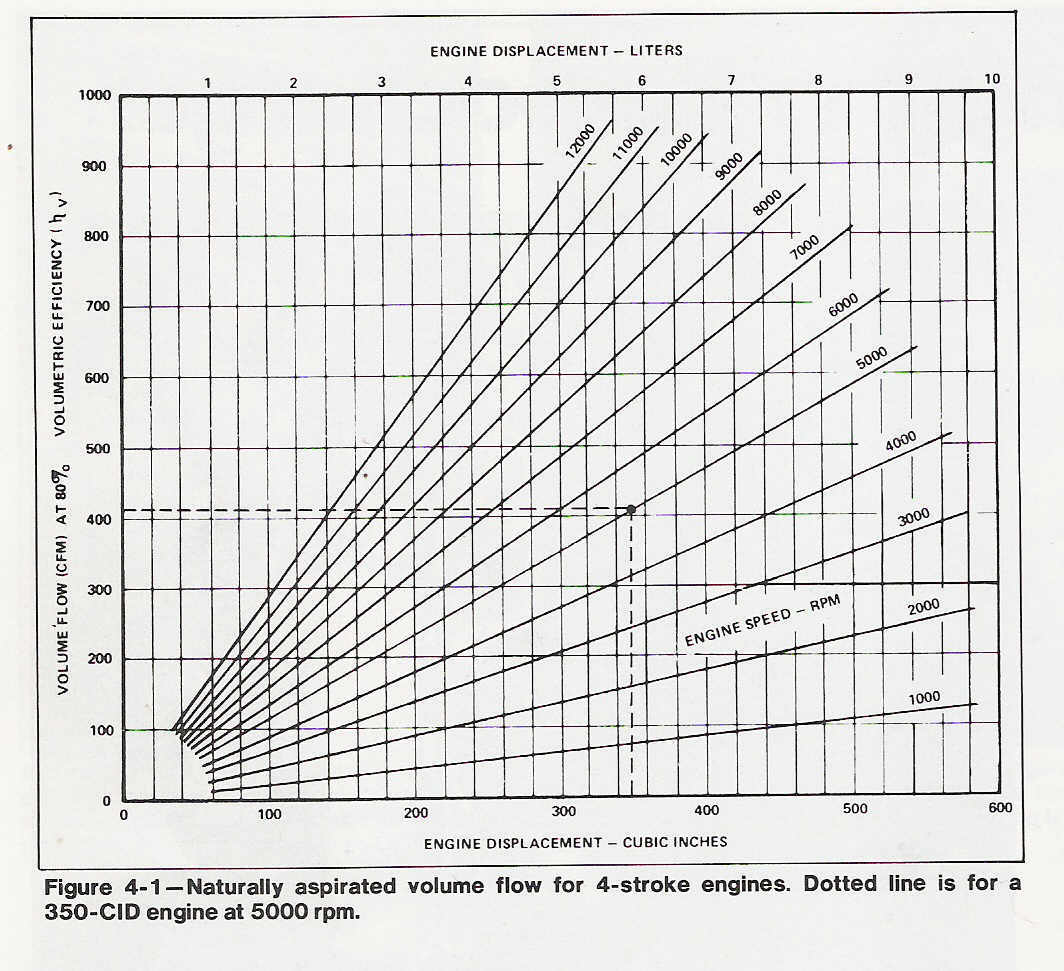
A 200 HP 160 cubic inch rotary at 5000 to 6000 RPM consumes
roughly 300 cubic feet of air per MINUTE or only 5 cubic
feet per second! The opening would then be only .016 square feet
or 2.4 square inches or about 1.75 inches in diameter
in theory. There are some skin friction involved
in the intake duct so you might want to make it larger
than that to avoid pressure loss in the intake system.
Lets say 2.5 inches in diameter for a net zero pressure
effect at 300 FPS. These comments apply to throttle
bodies as well.
OK Lets say we want to generate positive pressure.
We will then have to make the scoop larger than that.
Dynamic pressure at 300 FPS or 205 mph is 109 pounds per
square foot or .76 psi. Roughly speaking that is about 1.5 inches
of HG. HP would then be improved by about 5%.
This increase in manifold pressure correlates well with
what a Mooney does with its ram air valve on as I recall
on the one I flew.
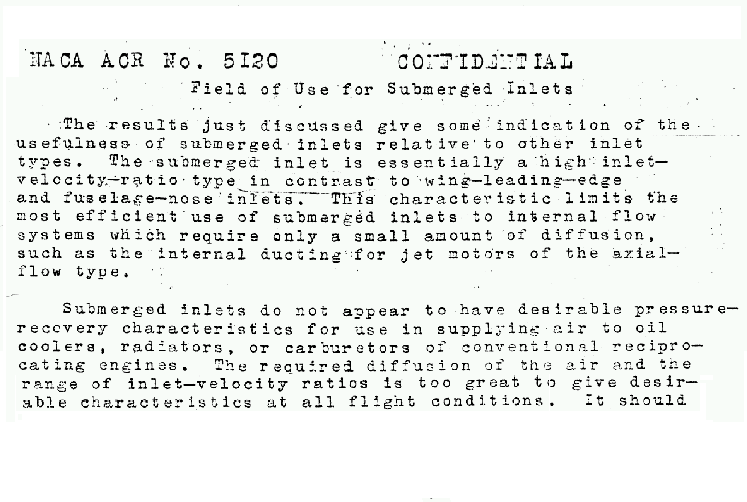
BTW ram air scoop openings should be perpendicular to
the air stream. Flush openings like NACA ducts do not
generate this level of dynamic pressure. If they did air
would be merely diverted above or around the opening.
See the attached comments from the original NACA duct tech paper.
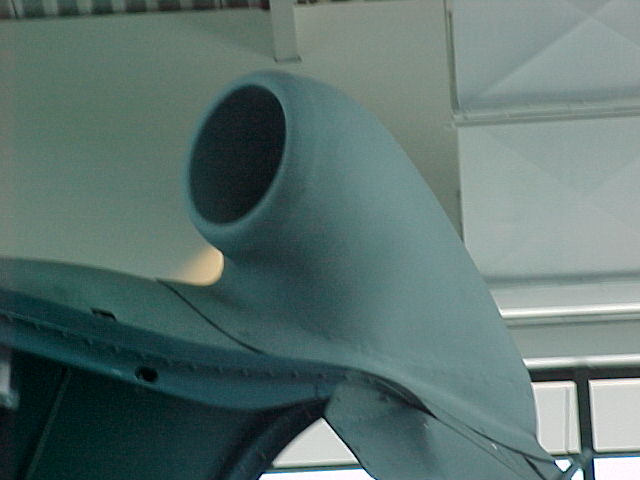
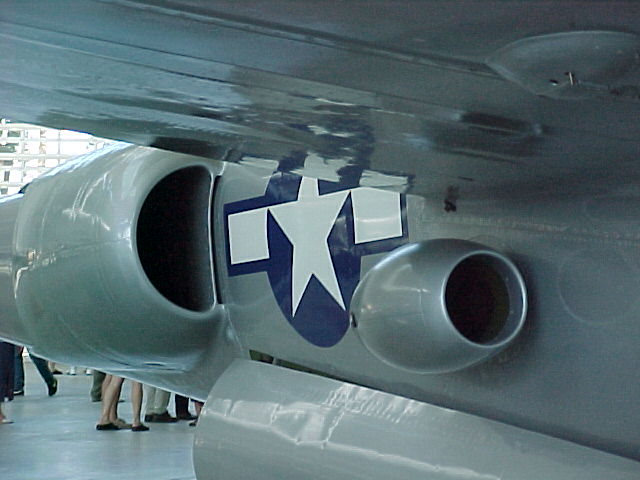
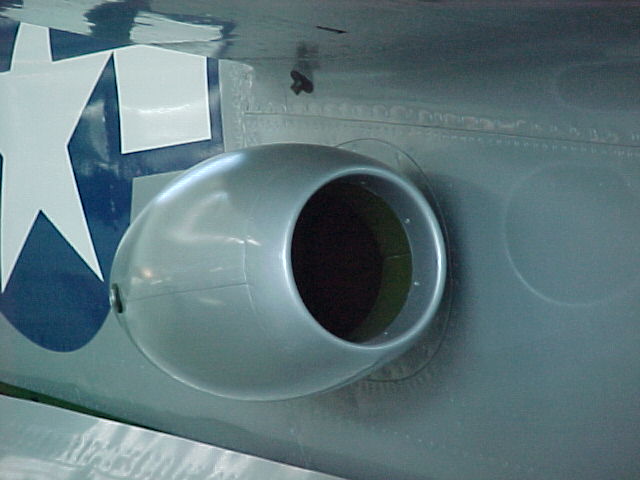
Here is the ME 109 and P38 ram air scoops.
Remember these are 400 MPH airplanes so the scoops look
small for the amount of power. (Roughly 1500 HP) Dynamic
pressure is four times as high at 400 MPH as it is at 200 MPH.
Paul Lamar ...No rotor no motor.
The Rotary Engine NewsLetter. Powered by Linux.
ACRE NL web site.
http://www.rotaryeng.net
Copyright 1998-2006 All world wide rights reserved.