A few days back you said that you could not recommend the Power Sport
PSRU. What are your reasons? Which would you recommend at this time,
and why?
Thanks,
Philip Groetz
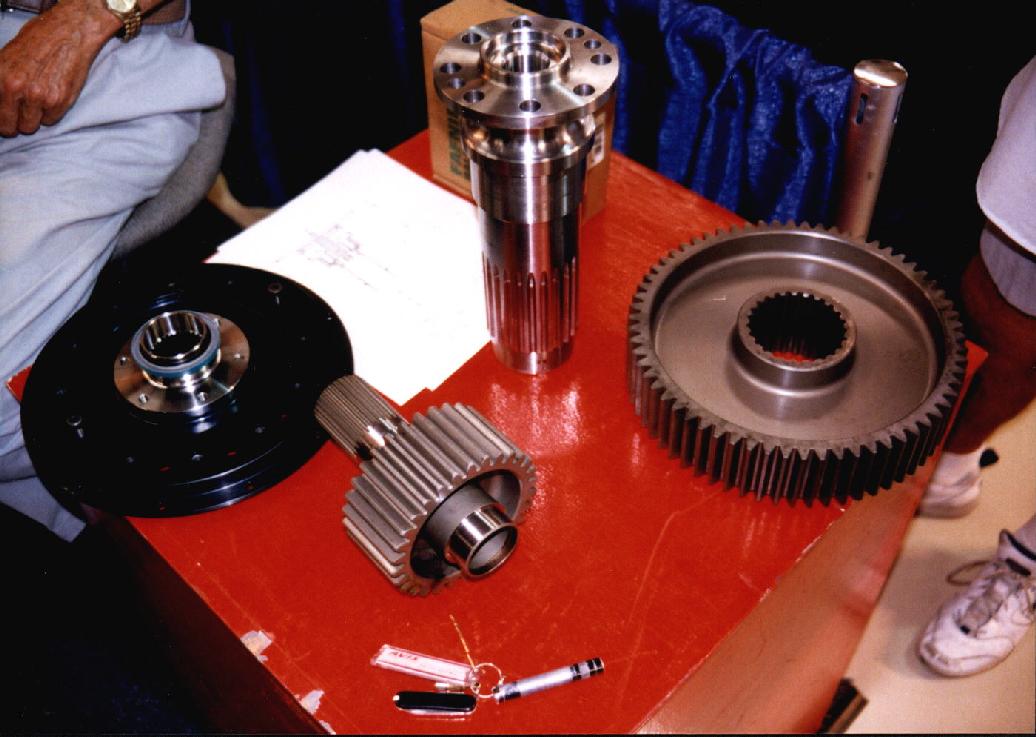
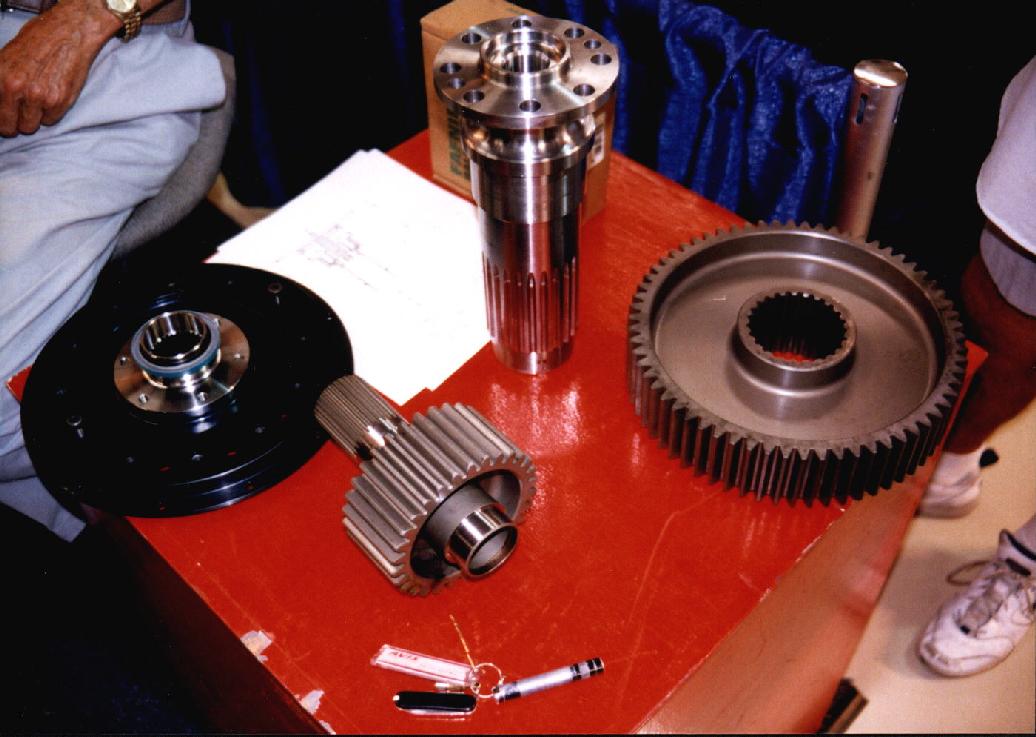
Long story. Any spur gear transmission has high gear separating
forces. This causes the over hung internal ring gear to deflect
away from the pinion gear assuming the pinion gear is supported
on both sides. If not they both deflect. This leads to uneven
tooth wear and a very heavy and stiff ring gear. It also leads
to a heavy and stiff gear box case.
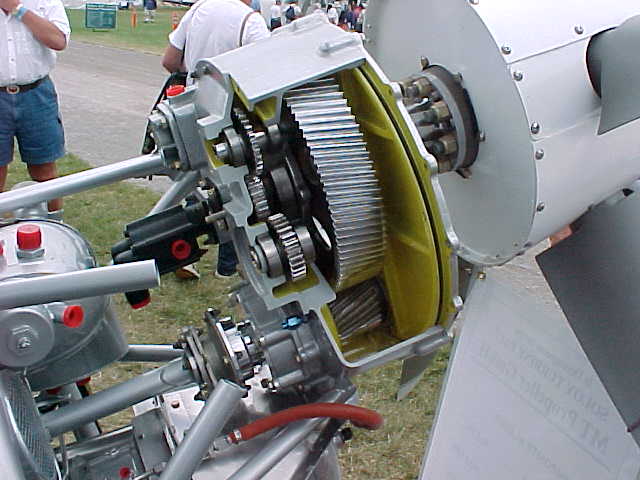
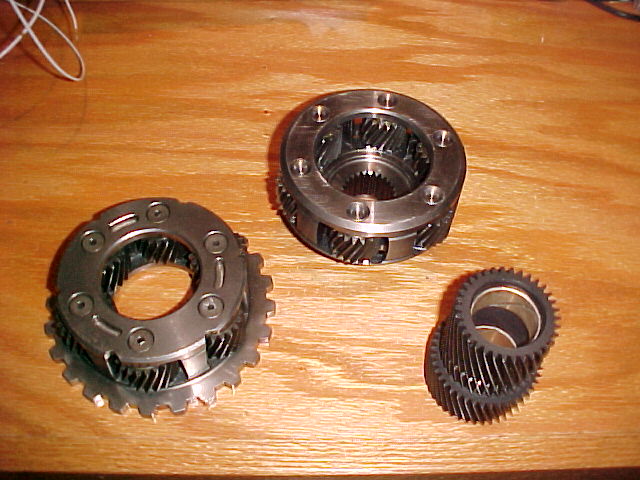
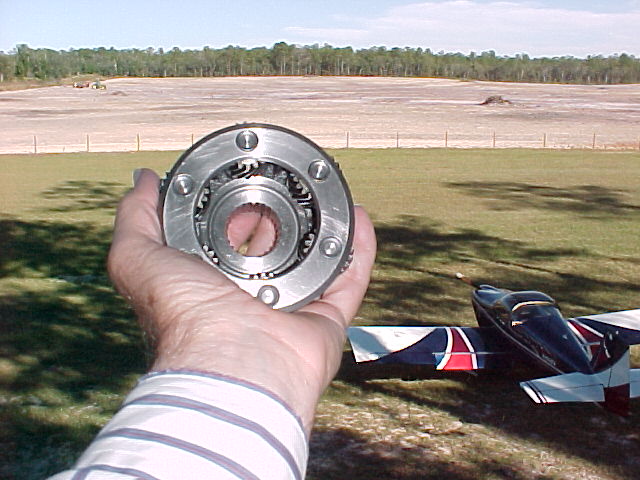
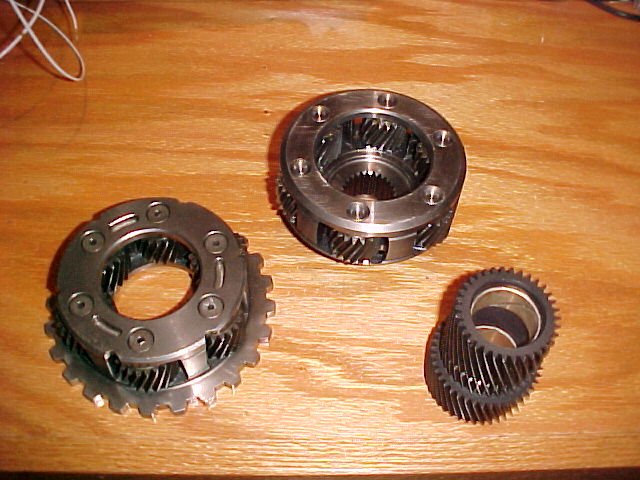
In a planetary gear box all these separating forces are
contained by the steel ring gear... not the gear box case.
The gear box itself can be much lighter in weight.
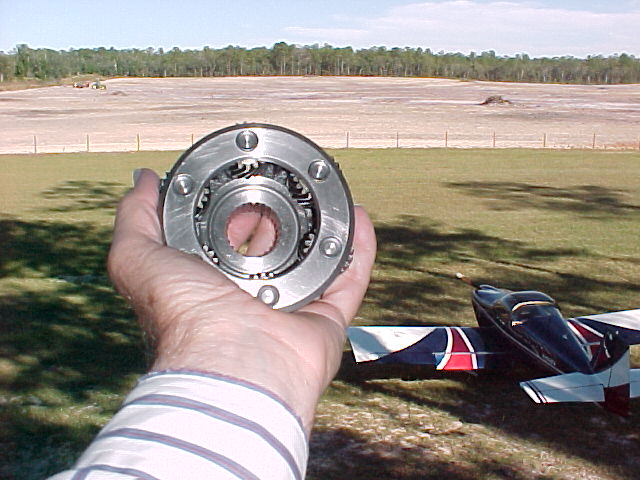
Problem two. For a given torque load the line contact length
is about one third as long as a six pinion planetary box all other
things being equal. Lets say the pinion gear is one inch wide
on a six pinion planetary. The line contact length is therefore
six inches. If the pinion gear is only two inches wide on a spur
gear transmission the line contact length is only two inches.
Therefor the spur gear box operates with much higher compressive
stresses in the all important line contact area. Over stressing
leads to gear tooth spalling(s?) and tooth fracture failure in the
cantilevered beam bending mode. This leads to much larger and
heavier gears and a larger gear housing.
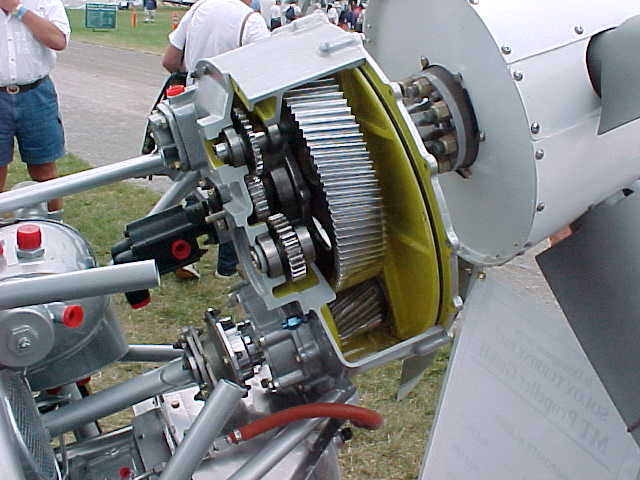
For these reasons just about all successful geared aircraft engine gear boxs
have been planetary's for the last 100 years. The V engines have
been the exception due to the need to raise the prop thrust line.
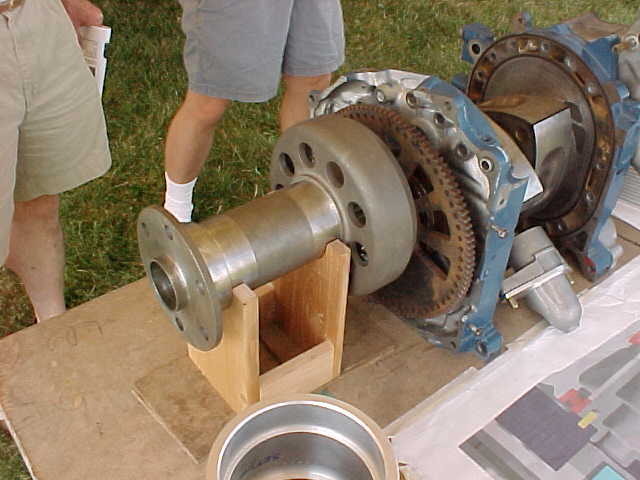
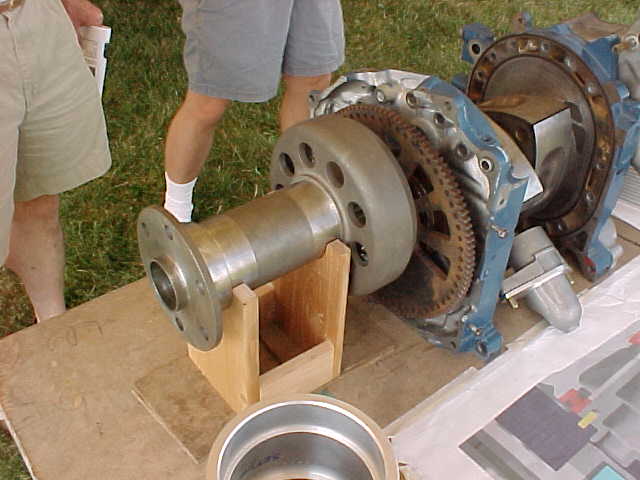
Also for the price you can buy a six pinion planetary Mistral gear
box that will accommodate a hyd constant speed governor and prop.
Paul Lamar ...No rotor no motor.
The Rotary Engine NewsLetter. Powered by Linux.
ACRE NL web site.
http://www.rotaryeng.net
Copyright 1998-2006 All world wide rights reserved.